
Where the Earth Speaks in Fire: The Living Crater of Mount Yasur, Vanuatu (2026)
In 1774, Captain James Cook stood on the deck of the Resolution and watched a column of crimson fire pulse against the Pacific night. His journal entry for that August evening describes “a volcano that throws up vast quantities of fire and smoke with a terrible noise.” What Cook witnessed was Mount Yasur, a pyrotechnic spectacle that has been erupting almost continuously for the past 800 years. But what he couldn’t have known was that the local Ni-Vanuatu people had long called this mountain Yasur—”the old man” in their language—and considered him a living ancestor whose fiery breath was both a warning and a gift.
The Story Behind Yasur’s Active Crater, Vanuatu
Yasur’s story is one of geological persistence and deep cultural continuity. Unlike many volcanoes that sleep for centuries between eruptions, Yasur has been in a near-constant state of Strombolian activity since at least the 13th century—you can track its explosions in the oral histories of the area’s tribes. The volcano sits on the southern edge of Tanna Island, part of the Pacific Ring of Fire, where the Australian Plate slides under the Pacific Plate. This subduction zone produces the magma that Yasur vents with rhythmic regularity, sometimes every few minutes, sometimes after longer silences. Geologists estimate that the current cone formed after a major eruption around 1774—the very year Cook arrived—reshaping the landscape and leaving behind the steep, red-black crater walls you see today.
The cultural history runs equally deep. For the people of Tanna, particularly the John Frum movement and the traditional kastom groups, Yasur is not merely a landform but a living presence. You’ll hear elders speak of Mahukwan, the spirit that dwells within the crater, who communicates through the explosions. When the volcano’s activity changes unpredictably, shamans interpret it as displeasure or warning. This relationship goes beyond mythology: during the devastating Cyclone Pam in 2015, when the entire island lost power and communications, many locals found their way home by following the glow of Yasur’s nightly eruptions. The mountain became a beacon when modern technology failed.
A turning point came in 1974 when the first commercial flights began bringing tourists to Tanna’s airstrip. Villagers around the mountain had to negotiate a delicate balance: they wanted to share the wonder of their living volcano, but they also needed to preserve its sanctity. Today, the entire area is managed by a community-based tourism association, and your entrance fee (7,000 VUV, about USD 60) goes directly to local villages. This model—where you contribute to the very community that protects the site—is one of the most sustainable examples of volcano tourism anywhere in the world.
Neighborhood by Neighborhood
Port Resolution & the Volcanic Coast
Your first real encounter with Yasur’s domain often begins at Port Resolution, a small bay named after Captain Cook’s ship and located just 4 kilometers east of the volcano. This is the closest settlement to the crater, and it’s where you’ll find the most dramatic views of Yasur’s red glow reflected on the ocean at dusk. The village consists of scattered bamboo-and-thatch bungalows, a handful of guesthouses like the eco-friendly Tanna Lodge, and a government-run tourism office where you arrange your guided hike. What strikes you immediately is how intimate the scale is: there are no paved roads, no neon signs, just the sound of waves and the occasional BOOM from the mountain. Locals here, mostly from the Nife clan, offer cultural tours that include dancing, kava ceremonies, and stories of the volcano’s origin. The best time to explore this neighborhood is late afternoon, when the light turns golden and you can see the source of the smoke plume streaming over the bay. Most tourists overlook the coastal experience in their rush to the crater, but savvy visitors know that sitting on the black sand beach at twilight, watching Yasur spit fire while flying foxes glide overhead, is a memory that rivals the crater rim itself.
Lenakel & the Market Town
About 30 minutes north on bumpy roads sits Lenakel, Tanna’s main commercial hub and the closest town to the island’s only airstrip. You’ll likely pass through Lenakel on your way from the airport to your accommodation. This is not a destination in itself—it’s a dusty collection of trade stores, a hospital, and the island’s largest market, where you can buy fresh papayas, kava roots, and woven baskets from women selling under corrugated iron roofs. The real value here is the Nakamal (kava bar) scene: around 5:00 PM every afternoon, locals gather at the “White Sands” nakamal to drink shells of kava (150 VUV per shell). You’ll be invited to join, but be warned—traditional kava is a muddy, earthy-tasting sedative that numbs your tongue and relaxes your limbs. The experience is as much about community as the drink itself; you’ll see men (and a few women) sitting on tree stumps, sharing stories, and sometimes offering you a shell as a gesture of welcome. Lenakel also has a tiny airport store selling batteries, snacks, and SIM cards—your last chance to buy supplies before heading toward the volcano zone.
Yakel & the Kastom Village
Nestled into the forested slopes west of Yasur lies Yakel, one of Tanna’s most traditional villages, where the inhabitants deliberately maintain a pre-contact lifestyle. You won’t find electricity, running water, or modern clothing here—men wear penis sheaths called nambas, women wear grass skirts, and children run barefoot through the ferny paths. A visit to Yakel is not a spectacle but a genuine cultural exchange: the village opened to tourists in the 1990s as a way to generate income while preserving kastom (traditional law and custom). Your arrival will be met with a conch shell call, and you’ll be guided through the village by a local elder who explains the roles of each hut, the meaning of the fire pits, and the importance of the yam gardens. You’ll see a sacred stone that locals believe was placed by the spirit of Yasur to stabilize the volcano. The highlight is a short kastom dance performance (about 20 minutes), where men stamp and chant in unison, their bodies painted with red earth and white clay. It’s raw, primal, and deeply moving. A small village fee of 1,500 VUV (about USD 13) goes entirely to the community. Plan to spend at least two hours here, and bring small gifts—school supplies, fishing hooks, or candies for children, not money.
The Local Table: What Ni-Vanuatu Actually Eat
Food on Tanna is simple, seasonal, and deeply tied to the land. You’ll quickly learn that the staple is laplap, a dense pudding made from grated yam, taro, or banana, mixed with coconut cream, wrapped in banana leaves, and slow-cooked in a buried oven with hot stones. It’s often filled with chunks of chicken, flying fox, or even crab, giving it a savory, earthy richness that surprised you at first. For breakfast, locals eat taro dumplings (boiled taro balls) with sweetened coconut milk, or sometimes just a hand of bananas. Lunch and dinner revolve around what was harvested that day—fresh seafood from the reef, wild greens from the forest, and chicken or pork on special occasions.
Your best bet for an authentic meal is at Mary’s Cafe in Port Resolution, a family-run thatched hut where Mary herself cooks laplap in the traditional underground oven (the kavea) every evening around 6:00 PM. For 500 VUV, you get a generous portion of laplap with whatever protein is available, served on a banana leaf with your fingers. Don’t expect menus or waiters—just show up, say hello, and sit with the family on woven mats. The secret is to arrive early (before 5:30 PM) to watch her prepare the fire and stone layering; it’s a ritual that has been practiced for centuries. Another must-try is buau, a fermented coconut pudding that is tangy, sour, and bewilderingly delicious—you’ll find it at the Lenakel market from Auntie Esther’s stall on Fridays and Saturdays. Travelers often discover that the food here is not about complexity but freshness and generosity; the same coconut cream that sweetens your laplap is the cream from nuts picked that morning.

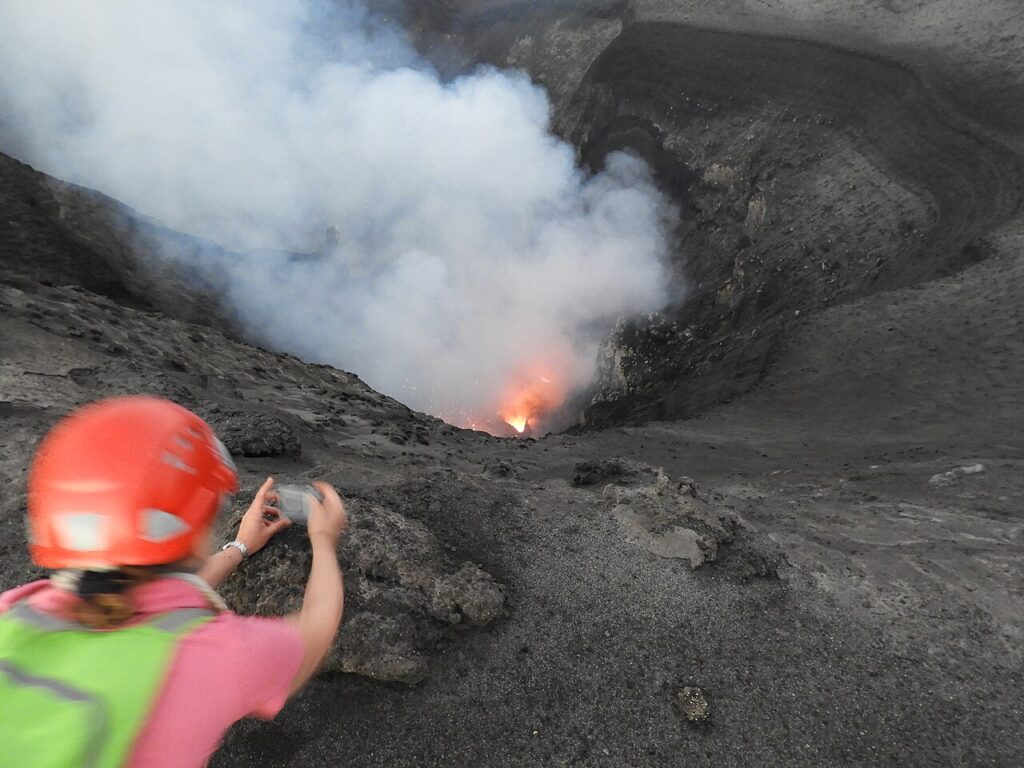
Photography doesn’t get harder than this, Yasur’s Active Crater, Vanuatu
Art, Music & Nightlife
The creative pulse of Yasur’s region is expressed not in galleries but in ritual and everyday life. Music is central: men play bamboo slit-drums called tamtams that resonate across the valleys, and the deep, hypnotic beat is used to communicate between villages. You’ll hear this sound most powerfully during the annual Toka Festival, held in July or August (dates vary by moon phase), when hundreds of dancers from across Tanna gather near Lenakel to perform traditional war dances, love songs, and planting rituals. The costumes alone are worth the journey—men wear towering headdresses of red feathers and leaves, while women are adorned with necklaces of shell and pig tusks. For a quieter artistic encounter, visit the small craft market at the Mount Yasur parking area, where you can buy intricately woven pandanus mats (from 2,000 VUV), carved wooden clubs (called nalot), and jewelry made from volcanic stone. Nightlife is virtually nonexistent—there are no clubs or bars on Tanna—but the nightly eruptions of Yasur provide an unmatched after-dark spectacle. Many guesthouses organize evening crater-viewing from a safe vantage point near Port Resolution, complete with a campfire and kava. This is where you’ll hear the real stories: locals recounting how the volcano saved an ancestor from enemies by covering the path with ash, or how a particular eruption coincided with a chief’s death.
Practical Guide
- Getting There: Fly into Bauerfield International Airport (VLI) in Port Vila, then connect via Air Vanuatu to Tanna’s White Grass Airport (TAH). Flights take about 40 minutes and cost around 12,000–18,000 VUV one-way. Book at Skyscanner
- Getting Around: The only practical transport is shared pickup trucks called “bush taxis.” From the airport to Port Resolution costs about 3,000 VUV per person (30 min). From Port Resolution to Yasur’s crater entrance is 1,500 VUV per person (20 min). Negotiate before you ride.
- Where to Stay: For volcano proximity, stay at the bungalows of Yasur View Guesthouse (from 5,000 VUV/night with meals). For more comfort, try Tanna Lodge in Port Resolution (from 8,000 VUV/night). For a cultural immersion, sleep at Yakel Village’s guest hut (3,000 VUV/night with shared facilities). Check Booking.com
- Best Time: The dry season from May to October offers the clearest skies for crater views. Avoid February–April (cyclone season) and December–January (school holidays, busiest). Visit in June or September for ideal conditions.
- Budget: A moderate budget is 15,000–25,000 VUV per day (USD 130–220) including accommodation, transport, meals, and crater entry fee. Budget travelers can manage on 10,000 VUV/day by staying in village huts and eating local markets.
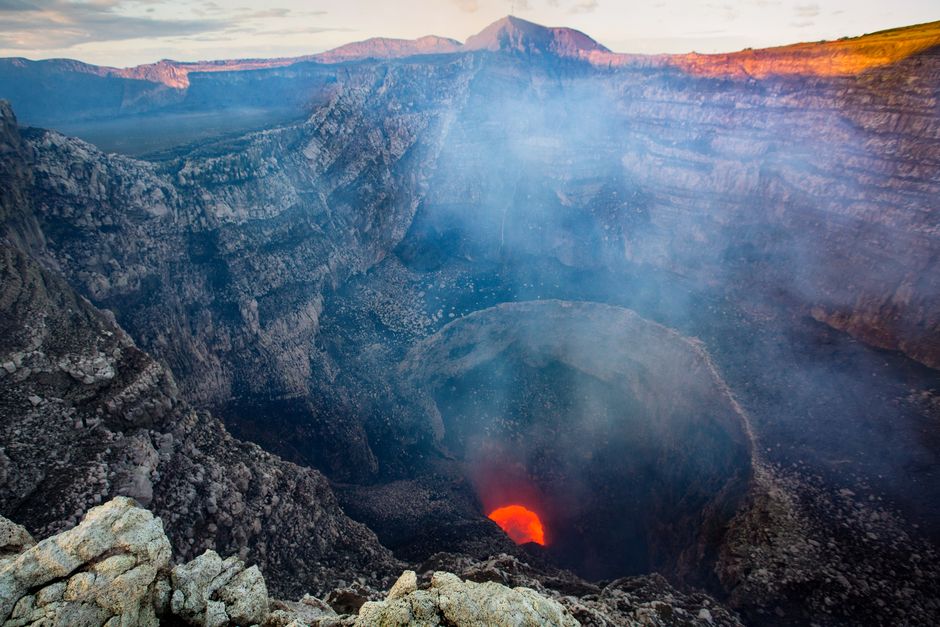
Dramatic aerial view of Masaya Volcano’s active crater in Nicaragua emittin…, Yasur’s Active Crater, Vanuatu
What Surprises First-Time Visitors
The first surprise, always, is the sound. You’ve seen videos, you’ve read descriptions, but nothing prepares you for the sheer physicality of a volcanic explosion from just 200 meters away. It’s not a boom—it’s a deep, chest-rattling thud that seems to hit you in the gut before you hear it. Every few minutes, a fountain of orange-and-red lava arcs upward, hissing and crackling like a celestial fireworks display. You’ll instinctively flinch the first few times, then laugh at yourself. What’s even more surprising is the calm afterward: the smoke clears, the birds chirp again, and you realize you’re standing on the edge of an active crater feeling utterly safe, guided by experienced local rangers who know every tremor of their mountain.
Travelers often overlook how remote Tanna truly is. There are no ATMs on the island, no Wi-Fi outside of Lenakel’s sporadic 3G, and power failures happen almost daily. This means you must prepare—bring cash (VUV) in small denominations, download offline maps, and pack extra batteries for cameras. But that very isolation is the island’s charm. You’ll spend evenings by lantern light, sharing stories with other travelers and locals, disconnected from the world above the ash-colored trees. One visitor described it as “the most peaceful surrender to nature I’ve ever experienced.” The volcano becomes your clock, your nightlight, your constant companion.
Another pleasant shock is the warmth of the Ni-Vanuatu people. In a place where the ground shakes and the sky glows red, you expect a certain wariness, but instead you’re met with smiles and a genuine desire to share their home. A local guide might take you to his family’s yam garden after the hike, pressing a freshly roasted yam into your hand. This is not a transaction—it’s hospitality. By the time you leave, you’ll have learned a few phrases in Bislama (“Halo, yu oraet?”) and likely made a friend. That human connection, more than the lava, is what lingers longest.
Your Yasur’s Active Crater, Vanuatu Questions
Is it safe to stand so close to an active volcano? Yes, with proper guidance. Mount Yasur is a Strombolian volcano, meaning its eruptions are relatively mild—lava fountains reach 50–100 meters high, but the crater rim is safely positioned upwind of the main vent. Local guides assess wind direction and gas levels before every hike, and they’ll move you to a safer observation point if conditions change. The main risks are not from lava but from falling on loose scree (wear sturdy shoes) or inhaling volcanic gas if winds shift—hence why you should always follow your guide’s instructions. Thousands of visitors go each year without incident.
How long do you need to spend on Tanna to truly experience Yasur? At a minimum, three full days. Day 1: arrive, settle near Port Resolution, and take the afternoon crater hike (about 2–3 hours up and down, plus 1 hour at the rim). Day 2: visit Yakel village in the morning, then relax on the black sand beach, and optionally do a sunrise crater hike for those who want to see the volcano in daylight. Day 3: explore Lenakel market and fly out. But if you can manage 4–5 days, you’ll have time for a second crater visit at night (far more dramatic), a cultural demonstration at Port Resolution, and a trip to the nearby underwater volcanic vents at Sulfur Bay.
What should you pack for a Yasur excursion? Bring a strong headlamp (the hike back is in darkness), closed-toe hiking boots, a windproof jacket (the wind at the rim can be fierce and cold), and a buff or scarf to cover your mouth from ash. Do not bring a selfie stick or tripod without checking with your guide—some operators ban them for safety and cultural reasons. A good pair of binoculars is worth the weight: you’ll see the lava bombs freeze into black glass mid-air. Camera-wise, a DSLR with a fast lens and a tripod is ideal for night shots, but most smartphones can capture the glow if you set them on long exposure (use
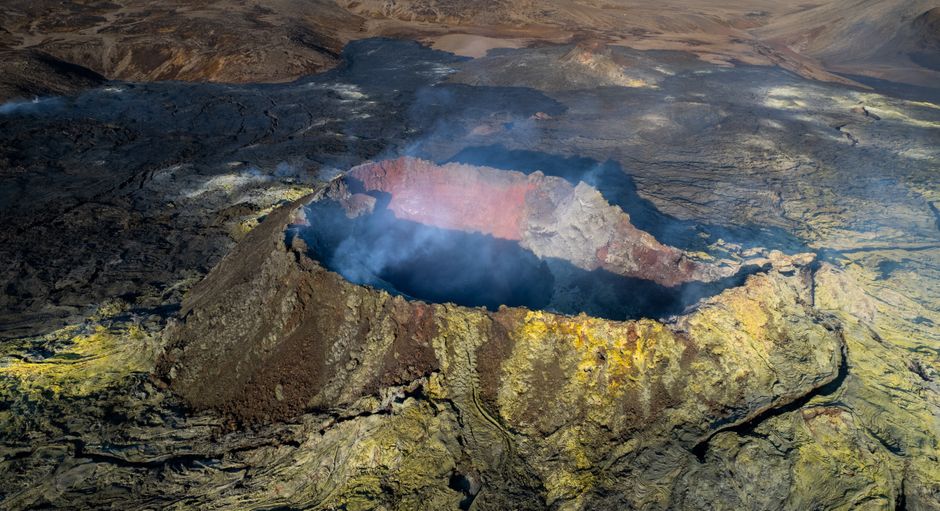
A breathtaking aerial view of a volcanic crater in Grindavik, Yasur’s Active Crater, Vanuatu

