
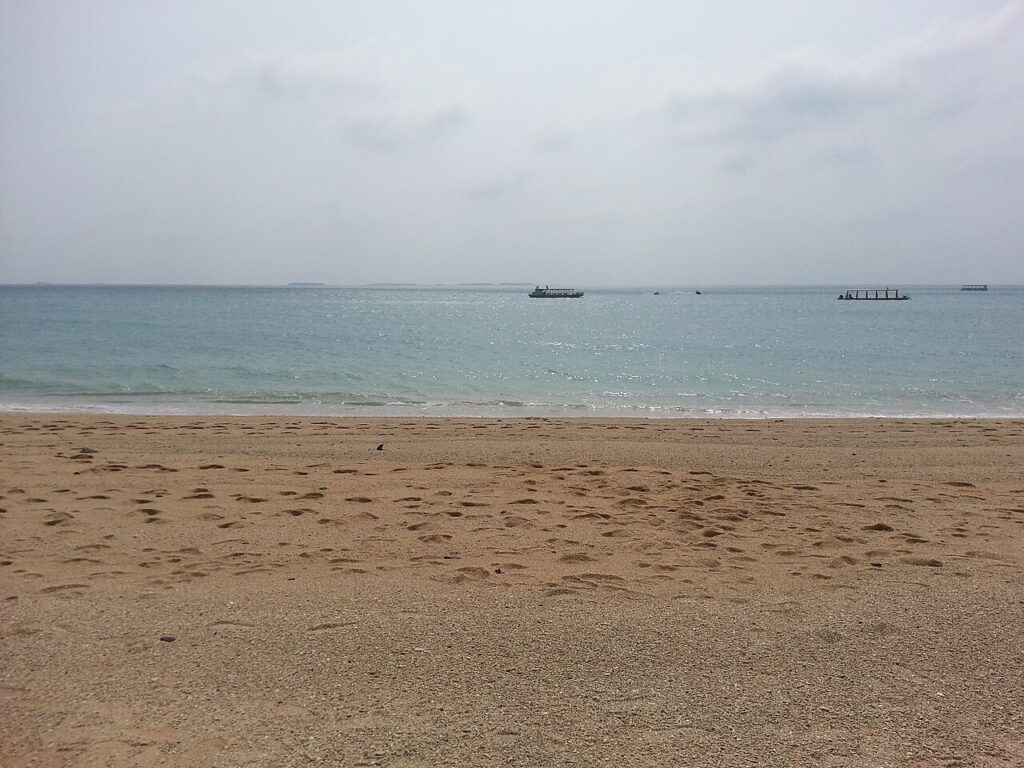
Where Wind and Coral Carve History: Why Penghu’s Islands Cast a Spell You Won’t Shake (2026)
In 1281, as the Yuan Dynasty sent a fleet of more than four thousand ships against Japan, a young fisherman named Wu Yuanli watched from the shores of what is now Magong. He could not have known that this cluster of ninety basalt-and-coral islands, where the wind howls with a voice as old as the sea, would become a crossroads of empires. From Dutch traders in the 1620s to Ming loyalists, from Japanese occupation to the roar of military bases, Penghu has been shaped by those who dared to land. Today, you will find its soul in the stone walls built to break the wind, in the seawalls that hold back the tides, and in the eyes of fishermen who still navigate by the stars.
The Story Behind the Pescadores
Long before the Portuguese named these islands “Pescadores” or “fishermen’s islands” in the 1540s, Penghu was already a waypoint. Archaeological evidence shows human activity as early as 4,000 BCE, but the real story begins with the Han Chinese migration during the 7th century. By 1387, the Ming Dynasty, wary of pirates and foreign incursions, forcibly evacuated the islands, leaving them abandoned for nearly two centuries. You will find this period echoed in the empty watchtowers that dot the coastline, a reminder of a time when these islands were considered too dangerous to inhabit.
The Dutch arrived in 1622, building a fort on the main island—Fort Zeelandia’s predecessor—only to be driven out by Ming forces under the command of General Yu Zigao. The islands then became a refuge for Ming loyalists fleeing the Qing takeover, and later, a strategic outpost for the Qing dynasty. The Japanese, from 1895 to 1945, left a quieter mark: you can still see their influence in the stone lighthouses and the island’s fishing infrastructure. But it was the return of the Kuomintang in 1949 that truly reshaped modern Penghu. For decades, the islands bristled with military installations, and many visitors are surprised to learn that until the 1990s, large swaths of the coast were off-limits. Today, those bunkers and barracks have been repurposed into art spaces, cafes, and memorials. Travelers often discover that the weight of history here is not in grand monuments but in the quiet resilience of everyday life—the women rebuilding seawalls after typhoons, the fishermen patching nets at dawn, the children playing among basalt pillars that have stood for millions of years.
Neighborhood by Neighborhood
Magong: The Cradle of Island Life
Magong is the heart, the only real city on the archipelago, and where you will likely begin your journey. The old town, known as Zhongyang Old Street, is a tangle of narrow lanes lined with century-old houses built from coral and basalt. You can smell the sea here, mingled with the scent of incense from the Tianhou Temple, the oldest of its kind in Taiwan, dating to 1592. Walk these streets in the early morning, around 6 a.m., when the fish market comes alive with the auction of the night’s catch. The air is thick with salt and the sharp, clean scent of freshly caught squid. By 9 a.m., the old men gather at the Four Eyes Well—a 17th-century water source with four holes, one for each cardinal direction—to argue about politics and the price of fish. Your best bet for understanding Magong is to simply get lost. Turn down any alley that catches your eye. You might stumble upon the Shihli Beach, where the black sand and the relentless wind create a landscape that feels more like a planet than a city. Be sure to visit the Penghu Living Museum, open 9 a.m. to 5 p.m. except Mondays, where you can see a traditional Penghu house reconstructed in its entirety—a 20 NT dollar entry fee buys you a glimpse into a life defined by wind and stone.
Shanshui: The Golden Curve
Shanshui, on the southern coast of the main island, is a stark contrast to Magong’s urban bustle. This is where you come for the beaches. Shanshui Beach, a crescent of golden sand backed by low hills, is the most famous in Penghu. But savvy visitors know the real magic happens at sunset. Arrive around 5:30 p.m., buy a bag of boiled peanuts from the stall near the entrance (40 NT dollars), and watch the sky turn to coral. The water here is surprisingly clear, and the swim is gentle. Locals recommend visiting during the week, when the beach is nearly empty. The small fishing village behind the beach has a few homestays and seafood restaurants; the Penghu 101 Seafood House at No. 41-1 Shanshui is a family-run spot where you can order the daily catch for about 300 NT dollars per person. Your best strategy is to let the owner choose for you—she has been cooking her grandmother’s recipes for forty years. If you are up for a morning adventure, the Shanshui Guanyin Pavilion, a small temple perched on a hill at the eastern end of the beach, offers a panoramic view of the entire coastline. The sunrise from this spot, around 5:15 a.m. in summer, is one of the island’s best-kept secrets.
Xiyu: The Ancient Edge
Xiyu, also known as Hsiyu or the Western Township, is the most dramatic part of Penghu. Connected to the main island by the Penghu Cross-sea Bridge, a 2.5-kilometer span that gives you vertigo when the wind gusts, this is where you will find the raw, untamed face of the archipelago. The landscape is dominated by columnar basalt formations—ancient volcanic rock that formed into honeycomb-like pillars after cooling 12 million years ago. The most impressive is the Da’an Gorge, a coastal cliff where the basalt columns rise 50 meters from the sea. Plan to spend three hours here: park your scooter by the entrance (free), and follow the wooden boardwalk to the viewing platforms. The wind is fierce; hold onto your hat. Continue north to the Xiyu Lighthouse, built by the British in 1875, a white-washed stone structure that still operates on a kerosene lamp system. The keeper, a third-generation lighthouse keeper named Mr. Chen, used to give tours, though they are now by appointment only. The village of Erkan, just south of the bridge, is a cluster of traditional Penghu homes made from coral stone. Unlike the more commercialized villages, Erkan feels lived-in. You will see women shelling shrimp in their doorways, old men playing chess in the shade of banyan trees. Travelers often discover that the best meal on Xiyu is at Ah Ji’s Oyster Omelet (No. 8, Erkan Village), where an oval omelet, glistening with fresh oysters and fried to a golden crisp, costs 80 NT dollars. Wash it down with a bottle of Taiwan Beer, and you will have found the very definition of simple, soulful island fare.
The Local Table: What Denizens Actually Eat
You have not truly experienced Penghu until you have eaten like a local. This means embracing the sea’s bounty, but also understanding that the wind and the sun have shaped the island’s cuisine as much as the ocean. The defining ingredient is the Penghu oyster—smaller, saltier, and more intense than any you will find on the mainland. Locals eat them raw, fried, grilled over hot coals, or steamed in their own liquor. But the true soul of Penghu food is the “sweet potato and yam,” which grows in the thin, sandy soil and forms the basis of almost every traditional dish. You will find it in the form of “yam cakes” (fan lai kueh), steamed and filled with pork and bamboo shoots, or as “yam balls,” deep-fried and served with a chili dip.

A historic map of Taiwan during Qing dynasty, Penghu Islands, Taiwan
The quintessential dish you must seek out is “Penghu-style congee” (Penghu chaozhou), a thin rice porridge studded with fresh clams, shredded squid, and the local “wind-ripened” sweet potato. The best version of this is served at the Magong Night Market, specifically at the stall run by Mama Chen’s Family Kitchen ( No. 100, Zhongyang Street). Arrive before 6:30 p.m., or you will stand in line for an hour. The congee, at 120 NT dollars per bowl, is served with a side of pickled daikon and a spoonful of fiery chili oil. You will taste the island in every bite: the salt of the sea, the sweetness of the sand, and a faint trace of the wind that has, for centuries, defined this place. For something sweet, do not leave without trying “peanut candy” (hua sheng tang), made from local peanuts that are roasted and then compressed into a brittle, almost toffee-like candy. The best is sold at the Penghu Famous Peanut Candy Shop at No. 16 Minzu Road, a family business that has been operating since 1920. A single block, wrapped in wax paper, costs you 150 NT dollars and tastes of caramelized earth.
Art, Music & Nightlife
Penghu’s creative scene is defined by its isolation. There is a quiet, introspective quality to the art here, a kind of stubborn beauty that refuses to be loud. The Penghu Artist Village, located in a cluster of former military dormitories near Magong Harbor, is the epicenter. You will find galleries selling prints, ceramics, and woodcarvings, all inspired by the basalt and the sea. Every August, the village hosts the Penghu International Art Residency, a month-long program where artists from Japan, Korea, and Europe come to work with local materials. The result is an evolving exhibition that you can wander through for free. For music, you have to time your visit right. The annual Penghu Ocean Festival, held from late May to early July, fills the island with music, food, and fireworks. But the real magic is the traditional “Beiguan” music, a form of Chinese opera percussion that you can still hear in the small temples of Magong’s old town. If you hear it, follow the sound. There is no set schedule, but on festival days—especially during the Ghost Month in August—the temple courtyards come alive with musicians and puppet shows.
Nightlife in Penghu is about the sea, not the clubs. After 9 p.m., the crowds gather along Magong’s Fisherman’s Wharf to watch the fishing boats bob in the harbor. The street vendors set up grills: you can buy skewers of squid, shrimp, and fish balls for 50 to 80 NT dollars each, and sit on the seawall, talking to strangers. If you need a drink, the Bar on the Sea (No. 5, Xinsheng Road) is a two-story barge anchored in the harbor, serving Taiwan Beer for 80 NT dollars and a surprisingly good local highball made with osmanthus syrup. It closes by midnight, so don’t expect an all-night rager. You are here for the island’s rhythm, and the island prefers calm tides.
Practical Guide
- Getting There: Fly directly from Taipei Songshan Airport (40 minutes, ~2,500 NT one-way), Taichung, or Kaohsiung. Uni Air and Mandarin Airlines each offer multiple daily flights. Book at Skyscanner
- Getting Around: Scooter rental is your best bet (400-600 NT a day; you will need an International Driver’s Permit). Bicycle is a slower but deeply rewarding alternative. Public buses connect Magong to Shanshui and Xiyu but run sporadically. A taxi from Magong to Shanshui costs around 200 NT. Ferry service from Magong harbor connects outlying islands: Qimei (50 minutes, 350 NT round-trip) is a must for its basalt scenery.
- Where to Stay: Magong offers the widest range of hotels and homestays. For beach access, choose Shanshui. For seclusion and dramatic landscapes, Xiyu is your spot. Check Booking.com
- Best Time: April to June is perfect: the weather is warm, winds are moderate, and the Penghu Fireworks Festival lights up the spring sky. August to October is also good, but watch for typhoons. November to March is the “wind season” where gusts can exceed 100km/h—many shops and beaches are closed, but you will have the island to yourself if you don’t mind the gales.
- Budget: Plan on 1,500-2,500 NT per day for a comfortable mid-range experience, including accommodation, food, and transport. Budget travelers can do 1,000 NT per day if they stay in hostels and eat street food.
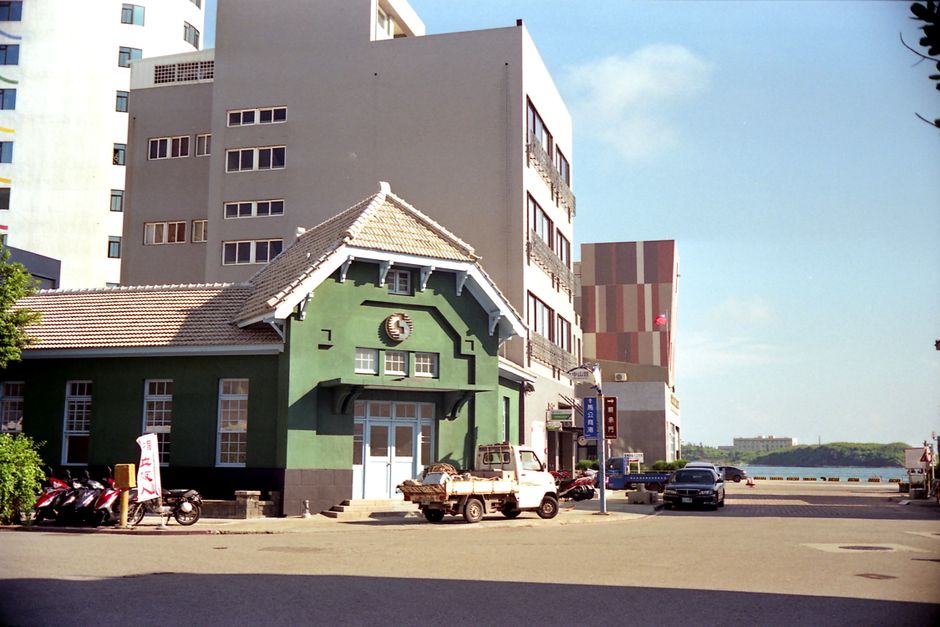
Charming historical green building in Magong City, Penghu Islands, Taiwan
What Surprises First-Time Visitors
The first and most profound surprise is the wind. It is not a gentle breeze; it is a presence. You will feel it in your bones, a constant, rushing sound that never stops. During the winter months, it can knock you sideways and make a scooter ride feel like a voyage across the ocean. Travelers often arrive expecting a tropical paradise but find a landscape that is almost severe: basalt cliffs, low-scrub vegetation, and a sea that is often a deep, steely gray rather than a postcard blue. This is not the Maldives. It is something older and more honest.
The second surprise is the warmth of the people. You expect islands to be friendly, but not like this. In the villages, locals will wave you over, offer you tea, and insist you share a meal. The isolation forged a deep culture of hospitality. If you look lost, someone will walk you to your destination, even if it is a kilometer out of their way. The third surprise is how utterly quiet the islands can be. There are no high-rise hotels, no nightclubs, no neon-lit malls. The loudest sound is the wind and the sea. You will find yourself speaking in a lower register, your own voice feeling suddenly too loud. It is a kind of silence that heals something you didn’t even know was broken.
Your Penghu Islands Questions
How many days do you need to explore Penghu properly?
You should plan for at least five full days. Three days will let you hit the highlights: Magong’s old town, Shanshui Beach, and the basalt columns of Xiyu. But to truly experience the islands, including a day trip to Qimei for its legendary double-heart stone weirs and another day to simply wander, you need a full week. The secret is not to rush; Penghu rewards those who slow down, who sit at a fishing village and watch the tide change, who eat congee at dawn and walk the empty beaches at dusk.
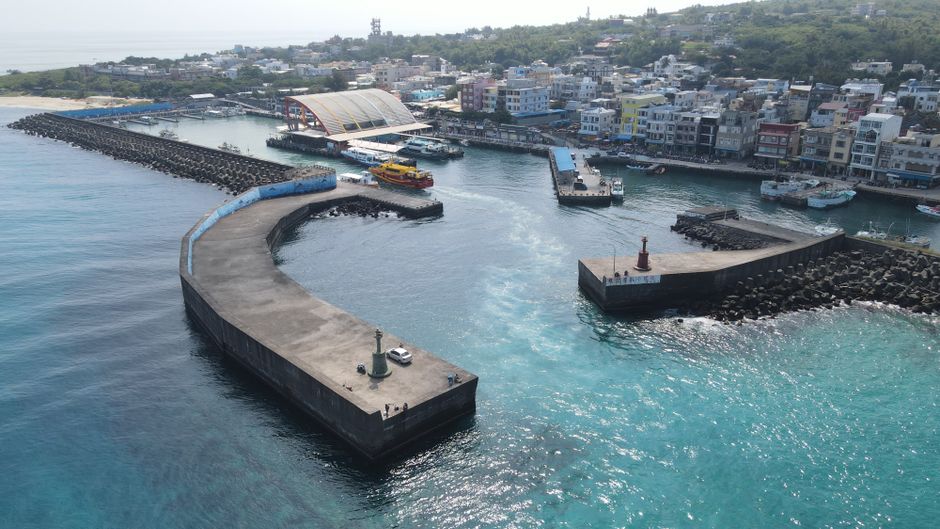
Captivating aerial shot of a bustling coastal harbor with colorful building…, Penghu Islands, Taiwan
Is Penghu safe for solo travelers and women?
Extremely safe. Penghu has one of the lowest crime rates in all of Taiwan. Solo travelers, including women, walk everywhere without worry, even at night. The main concern is not safety from people but from the elements—always wear sun protection (the sun is brutal even on cloudy days) and carry a windbreaker. If you rent a scooter, drive carefully on the windy coastal roads; locals are accustomed to the conditions but you are not. Your best bet is to carry a small flashlight for evening walks on unlit paths and always let your homestay know your rough itinerary.
What is the one thing you should not miss?
The double-heart stone weirs of Qimei Island. These are ancient fish traps, built from coral and basalt, that form perfect heart shapes in the shallows. You can see them from a viewing platform on the island’s southern cliff, but your best experience is at low tide, around 6:30 a.m. for the sunrise or 5:00 p.m. for sunset. The ferry from Magong to Qimei dep

