
The Quiet Heart of Dubai: Why Ras Al Khor Rewrites What You Know About the City (2026)
In 1985, Sheikh Rashid bin Saeed Al Maktoum looked across the muddy flats at the eastern end of Dubai Creek and made a decision that would quietly reshape the city’s soul. While Dubai was already racing toward skyscrapers and shopping malls, he set aside 6.2 square kilometers of salt flats, mangroves, and tidal lagoons as a protected reserve. Today, you will stand in the same spot and watch thousands of flamingos turn the water pink at sunset—a living reminder that this city never forgot its desert and sea.
The Story Behind Ras Al Khor, UAE
Long before the Burj Khalifa pierced the sky, Dubai’s lifeblood flowed through Dubai Creek—the narrow saltwater inlet that divides the city into Bur Dubai and Deira. For centuries, fishermen and pearl divers navigated these waters, and the area now called Ras Al Khor (meaning “the head of the creek”) marked the easternmost reach of their journeys. The tidal flats here were rich with fish, crabs, and crustaceans, sustaining generations of coastal families who built their lives around the creek’s rhythm.
By the 1970s, Dubai’s breakneck development threatened these wetlands. Reclamation projects, construction, and urban sprawl pushed the natural shoreline back. But a 1985 decree by Sheikh Rashid protected the Ras Al Khor Wildlife Sanctuary, preserving what remained of the creek’s natural end. In 2007, the site earned Ramsar designation—a global recognition of its importance for migratory birds. Travelers often discover that this sanctuary, just fifteen minutes from Downtown Dubai, is the single most important wintering site for waterfowl in the entire Arabian Gulf region.
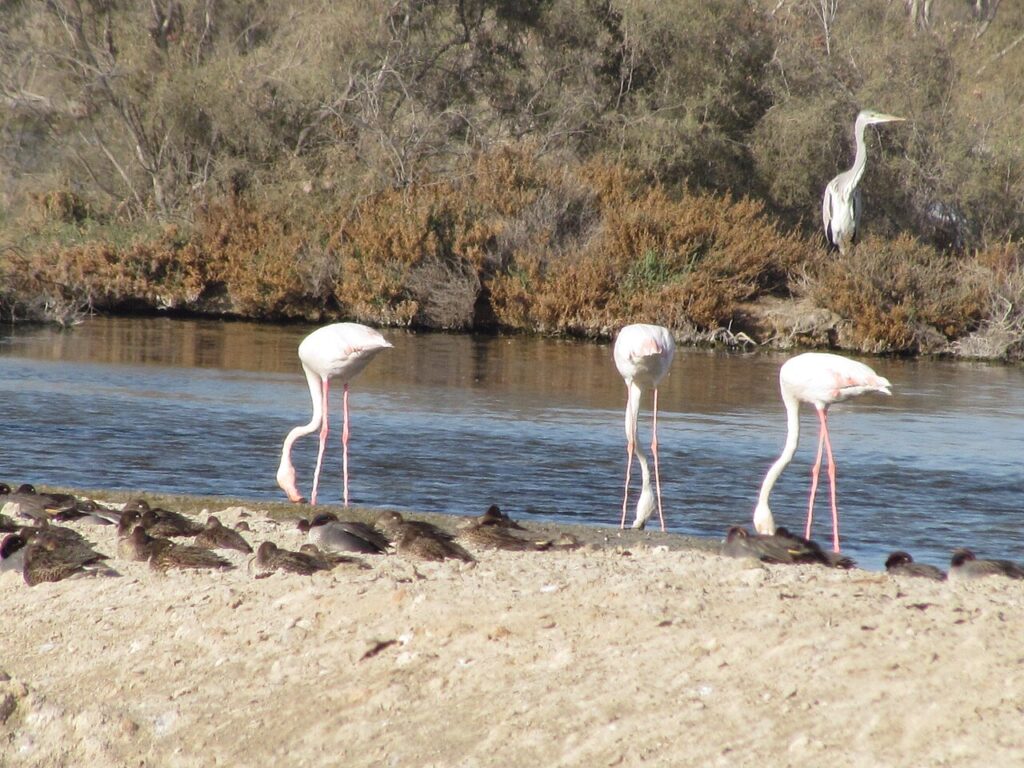
What makes Ras Al Khor truly remarkable is what it represents: a deliberate choice to preserve wildness in a city that often feels engineered to perfection. Over 450 species of birds have been recorded here, including ospreys, herons, and the star attraction—the greater flamingo. Locals recommend visiting between November and March, when up to 10,000 flamingos gather to feed on the salt-tolerant algae and brine shrimp that give them their distinctive pink color. You will find that the sanctuary has become a quiet pilgrimage site for anyone who needs to remember that Dubai’s story began with water, not steel.
Neighborhood by Neighborhood
Al Jaddaf: The Industrial Romance
Al Jaddaf sits on the southern bank of Dubai Creek, directly west of Ras Al Khor. For decades, this was Dubai’s industrial backbone—a gritty district of warehouses, workshops, and dry docks where wooden dhows were built by hand using techniques passed down for centuries. Today, you will find Al Jaddaf in a fascinating transition. The old boatyards still operate along Al Jaddaf Waterfront, where you can watch craftsmen shape teak planks with hammer and chisel, the smell of sawdust and marine varnish hanging thick in the air. But new cultural landmarks have arrived: the Saruq Al Hadid Museum, housed in a restored fort, holds 3,000-year-old artifacts from the Iron Age. The Dubai Culture & Science Authority runs evening heritage walks here from October to March. Your best bet is to visit on a Thursday morning, when the boatbuilders are most active and the waterfront cafes serve karak chai for just 3 dirhams. Walk down Al Jaddaf Street and you’ll encounter a surprising mix of old pearl traders’ villas with carved wooden doors and modern apartment towers, their balconies draped with bougainvillea. This is not a polished tourist zone—it’s a real, working neighborhood where you can still feel Dubai’s pre-oil pulse.
Umm Ramool: The Quiet Observer
Directly east of Ras Al Khor, the residential district of Umm Ramool offers a different kind of intimacy. This is a neighborhood of low-rise villas, wide sandy streets, and the kind of stillness that feels almost sacred. Most tourists never venture here, which is precisely its appeal. You will find the Ras Al Khor Viewing Hides accessible from Umm Ramool’s eastern edge—three wooden blind structures built on stilts above the lagoon. The most popular, the Flamingo Hide, allows you to stand within 50 meters of the birds without disturbing them. Locals recommend arriving at dawn (the gates open at 7:30 AM Saturday to Thursday) when the light is soft and the birds are most active. The neighborhood itself is primarily Emirati, with few restaurants or shops catering to outsiders. But you will find small grocery stores selling fresh dates and laban, and if you walk down the quiet streets in the late afternoon, you’ll see children flying kites and families picnicking in the small parks. Seasoned travelers prefer Umm Ramool for its authenticity—it is a place where you can witness everyday Emirati life unfold without any performance.
Dubai Festival City & Garhoud: The Creek’s Urban Edge
On the northern bank of the creek, the districts of Dubai Festival City and Garhoud face Ras Al Khor from across the water. This is the commercial and residential counterpoint to the sanctuary’s wildness. Dubai Festival City is a planned waterfront development with a marina, luxury hotels, and the enormous Festival Plaza mall. But what savvy visitors know is the promenade that runs along the creek’s edge. From here, you have a straight-on view of the flamingos feeding in the shallows, with the Dubai skyline rising behind them. The nightly Imagine light and water show (free, 7:30 PM and 8:30 PM) uses the creek as its stage, but far more breathtaking is the golden hour light that turns both birds and skyscrapers the same warm amber. Garhoud, just behind Festival City, is an older residential area with tree-lined streets and a surprising collection of South Asian restaurants. You will find some of the best Kerala-style fish curry in Dubai at the small canteens near Garhoud Bridge. For a different perspective, take an abra (traditional wooden boat, 2 dirhams per ride) from the Festival City jetty across the creek to Al Jaddaf—the five-minute crossing gives you an unforgettable view of the sanctuary’s mangroves from the water.
The Local Table: What Denizens Actually Eat

Dafan Al Khor – Ras al Khaimah – United Arab Emirates, Ras Al Khor, UAE
The food culture around Ras Al Khor is rooted in the creek’s history as a fishing ground and trading port. You will find that the defining ingredients here are the same ones that sustained the area for centuries: fresh fish from the Gulf, rice from India, spices from Zanzibar, and dates from the inland oases. The catch of the day is still sold at the Fish Market in Al Jaddaf, where you can buy hamour (local grouper) or kingfish for around 30–40 dirhams per kilo. Locals recommend taking your purchase to Al Khayam Restaurant on Al Jaddaf Waterfront—they will grill it for you over mangrove wood for a modest handling fee. The result is a meal that tastes of the creek itself: smoky, briny, and utterly simple.
The one dish you must seek out is machboos—the Emirati national dish of spiced rice with meat or fish, scented with dried lime (loomi) and saffron. The best version near Ras Al Khor is at Al Fanar Restaurant & Cafe in Dubai Festival City. This family-run spot serves traditional Emirati home cooking in a setting that mimics a 1960s Dubai house, complete with wind towers and wooden doors. Order the machboos with hamour for 75 dirhams—the rice is fluffy, the fish flaky, and the loomi gives it a tangy depth you won’t find anywhere else. You should also try the regag bread, a paper-thin crepe cooked on a dome-shaped griddle, which you can buy fresh from street stalls in Garhoud for 2 dirhams each. Travelers often discover that the best time to eat is late afternoon, when families gather in the parks near the creek for picnics—you are welcome to join, and sharing food is considered a blessing.
Art, Music & Nightlife
The creative energy around Ras Al Khor is quieter and more introspective than Dubai’s flashy club scene, but it has a depth that rewards patient exploration. The Al Jaddaf Waterfront has become a hub for public art installations, with rotating exhibits from Emirati and international artists displayed along the promenade. Every February, the Dubai Art Season brings a series of open-air installations to the creek banks—you can walk from Al Jaddaf to the sanctuary viewing hides and encounter sculptures made from reclaimed fishing nets and driftwood. The Saruq Al Hadid Museum also hosts regular calligraphy workshops (every Saturday, 50 dirhams, 10 AM to 12 PM) where you can learn the ancient art of Arabic script from master calligraphers.
For music, you must experience the occasional pearl-diving songs performed by older Emirati men in the boatyards of Al Jaddaf. These rhythmic chants, called al-fijri, were sung by divers to coordinate their work and lift morale during long days at sea. There are no regular performances for tourists—you have to ask around and listen for the sound of voices rising from the dockyards. Alternatively, check the schedule at The Irish Village in Garhoud, which hosts Emirati folk music nights every second Thursday of the month (free entry, 8 PM). Nightlife here is not about loud clubs. Instead, you will find rooftop lounges along the Festival City promenade where you can sip mint tea and watch the flamingos sleep, their heads tucked under their wings, as the city lights flicker to life across the water. The best view is from the rooftop terrace of the InterContinental Dubai Festival City—order a fresh pomegranate juice (35 dirhams) and stay until the last light fades.
Practical Guide

View of Dubai Marina’s iconic architecture and waterfront on a clear day., Ras Al Khor, UAE
- Getting There: Dubai International Airport (DXB) is the closest gateway, just 10 minutes from Ras Al Khor. Emirates, flydubai, and over 100 international airlines serve the airport. Book flights at Skyscanner. The journey from DXB to the sanctuary is 15 minutes by taxi.
- Getting Around: Taxis from any point in Dubai to the Ras Al Khor viewing hides cost 15–30 dirhams. The Dubai Metro runs to Al Jaddaf station (Green Line) and Dubai Festival City station (Green Line), with a feeder bus (F70) connecting to the sanctuary entrance. The abra ferry across the creek costs 2 dirhams and runs from 7 AM to midnight daily. Your best bet is to rent a car for the day—rates start at 80 dirhams from local agencies in Garhoud.
- Where to Stay: For proximity to the sanctuary, stay in Al Jaddaf (Park Inn by Radisson, from 200 dirhams per night) or Dubai Festival City (InterContinental, from 500 dirhams). For budget options, the hostels in Garhoud start at 80 dirhams per night. Check Booking.com for current rates.
- Best Time: November to March. Temperatures range from 18–28°C comfortable, and migratory birds are in peak numbers. Avoid June to September when daytime heat exceeds 45°C and the flamingos have left for cooler climates.
- Budget: 250–400 dirhams per day (approximately $70–110 USD) covers taxi transport, two meals at local restaurants, entrance fees (the sanctuary is free), and a comfortable hotel. A thrifty day can cost as little as 150 dirhams if you eat street food and use public transport.
What Surprises First-Time Visitors
Most travelers arrive in Dubai expecting relentless opulence—gold-plated everything, endless shopping malls, and a city that has erased its past. Ras Al Khor shatters that expectation within minutes. You will stand at the Flamingo Hide and hear nothing but the rustle of feathers and the distant call of birds, while the Burj Khalifa shimmers on the horizon like a mirage. The contrast is startling: one of the world’s most artificial cities has preserved one of its most authentic wild spaces. Locals often say that the sanctuary is where Dubai comes to breathe, and you will feel that exhale yourself.
The second surprise is how accessible the wilderness feels. You do not need a 4×4 or a guide. The viewing hides are connected by paved paths that are wheelchair friendly, and the entire sanctuary is open free of charge. You can take a taxi from your hotel, walk 200 meters, and suddenly be alone with ten thousand flamingos. The third surprise is the quality of light. Because Ras Al Khor sits at the junction of desert, creek, and urban development, the sunsets here are otherworldly—golden light reflects off the water, bounces off the salt flats, and paints the distant towers in shades of rose and copper. You will find yourself staying well past the posted closing time (sunset, daily), unwilling to leave. Bring your camera, but also bring your patience. The real magic of Ras Al Khor reveals itself slowly, in the quiet moments between bird calls and the soft lap of water against the mangroves.
Your Ras Al Khor, UAE Questions

A vibrant flock of flamingos takes flight above a calm waterbody in Dubai, Ras Al Khor, UAE
Is Ras Al Khor free to enter, and do I need to book in advance?
Yes, the Ras Al Khor Wildlife Sanctuary is completely free to enter. You do not need to book in advance for the viewing hides—simply arrive at the entrance gate on Oud Metha Road between 7:30 AM and sunset, Saturday to Thursday (closed Friday and public holidays). The three hides (Flamingo Hide, Mangrove Hide, and Lagoon Hide) operate on a first-come, first-served basis. Your best bet is to arrive early, before 9 AM, especially on Saturdays when local families visit. Each hide can accommodate about 20 people comfortably, and you can spend as long as you like. Binoculars are available for borrowing from the visitor center—just leave your ID as a deposit.
What should I wear and bring to the sanctuary?
Dress for the weather, but remember that you will be standing in an open, exposed wetland. In winter (November to March), a light jacket is essential—the creek breeze can feel chilly at dawn and sunset. In summer, wear lightweight, breathable fabrics, a wide-brimmed hat, and bring more water than you think you need (there are no shops inside). Do not wear bright colors; muted greens, browns, and beiges will help you blend in and see more birds. Closed-toe shoes are essential—the boardwalks can get muddy, and there are small crabs on the path. The most important thing to bring is quiet patience. Travelers often discover that the best sightings come when you sit still for at least 30 minutes. Do not forget your camera with a telephoto lens (200mm minimum) for flamingo shots, and avoid flash photography as it startles the birds.
Can I visit Ras Al Khor as part of a day tour from Dubai, or is it better to go independently?
Independent visits are far more rewarding. While several tour operators offer “Dubai Creek and Wildlife” packages (typically 200–350 dirhams per person, lasting 3 hours), you will find that the sanctuary’s magic is in its stillness—something group tours often rush through. Your best bet is to take a taxi from your hotel (15–25 dirhams from Downtown Dubai), arrive at 7:30 AM when the gates open, and spend a full

