
Huarmey, Peru Weekend: Seafood, Sunbaked Ruins & Solitary Pacific Sunsets (2026)
The salt wind hits you first—that deep, iodine-rich breath of the Peruvian Pacific. You step off the bus from Lima and the noise of the capital evaporates, replaced by the crash of waves and the distant clatter of a ceviche chef’s knife against a wooden board. Huarmey doesn’t shout; it hums. Travelers often discover this coastal town as a quiet alternative to the northern beach circuit—a place where pre-Inca history meets fresh seafood and near-empty shores. You have 48 hours to soak it all in.
Quick Facts Before You Go
- Best Months: December to April—Peru’s summer months bring warm, clear skies and calm seas. The rest of the year is overcast and cooler, though still pleasant for ruins-hiking.
- Currency: Peruvian Sol (PEN). As of early 2025, 1 USD = roughly 3.75 soles. You’ll find ATMs at the Plaza de Armas, but bring enough cash for beachside stalls.
- Language: Spanish. English is rarely spoken beyond the occasional hotel receptionist. Locals recommend learning a few phrases—your efforts will earn you big smiles.
- Budget: A comfortable weekend costs around 150–250 soles (USD $40–$67) per day, including a mid-range hotel, three meals, local transport, and a tour.
- Getting There: Fly into Lima’s Jorge Chávez International Airport (LIM), then take a 4-hour bus to Huarmey. Multiple companies run the route (Cruz del Sur, Movil Tours). Round-trip bus tickets run 60–100 soles. Book at Skyscanner for flights to Lima.
Day 1: The Ruins & The Reef
You wake in your hotel room to the sound of chickens and generators—Huarmey’s morning soundtrack. The air is already warming as you walk toward the Plaza de Armas, where the first food carts are heating oil for picarones (sweet potato doughnuts). Today is about two very different Huanney treasures: a thousand-year-old castle of the dead, and a living reef full of marine life.
- Morning (8-11am): Head to El Castillo de Huarmey, an archaeological complex dating back to the Wari culture (approx. 700-1000 AD). Entrance is 10 soles. You’ll climb the adobe-and-stone structure—not a castle in the European sense but a ceremonial and funerary pyramid. Local guides (tip 10–15 soles) will show you the mummy bundles and pottery fragments still embedded in walls. Most tourists skip this ruin; the secret is that you’ll likely have the entire site to yourself.
- Lunch: Walk to Cevichería Mary (Jr. 28 de Julio 245). Order the mixto ceviche (25 soles)—a platter of fresh fish, squid, shrimp, and octopus marinated in lime, served with cancha (toasted corn) and sweet potato. Locals recommend splashing on a little more rocoto sauce if you can handle the heat.
- Afternoon (1-5pm): From the cevichería, grab a mototaxi (5 soles) to Playa Tortuga, a crescent-shaped beach 15 minutes south. Swim in the calm waters or walk the rocky headlands where tide pools hide starfish and hermit crabs. By 3pm, the sun bakes the sand; savvy visitors bring a shade umbrella and a book. If you’re adventurous, ask a local fisherman to take you out on his boat for 40 soles—they’ll show you the sea lion colonies just off Punta Tortuga.
- Evening: Sunset is around 6:15pm. Walk back toward the malecón (oceanfront promenade) and find Restaurante El Faro (Av. Costanera 123). Order the arroz con mariscos (35 soles) and a cold Cusqueña beer. The atmosphere is simple—plastic chairs, a breeze, and the lighthouse blinking. After dinner, stroll the plaza for an ice cream from Heladería Huarmey (3 soles per scoop).

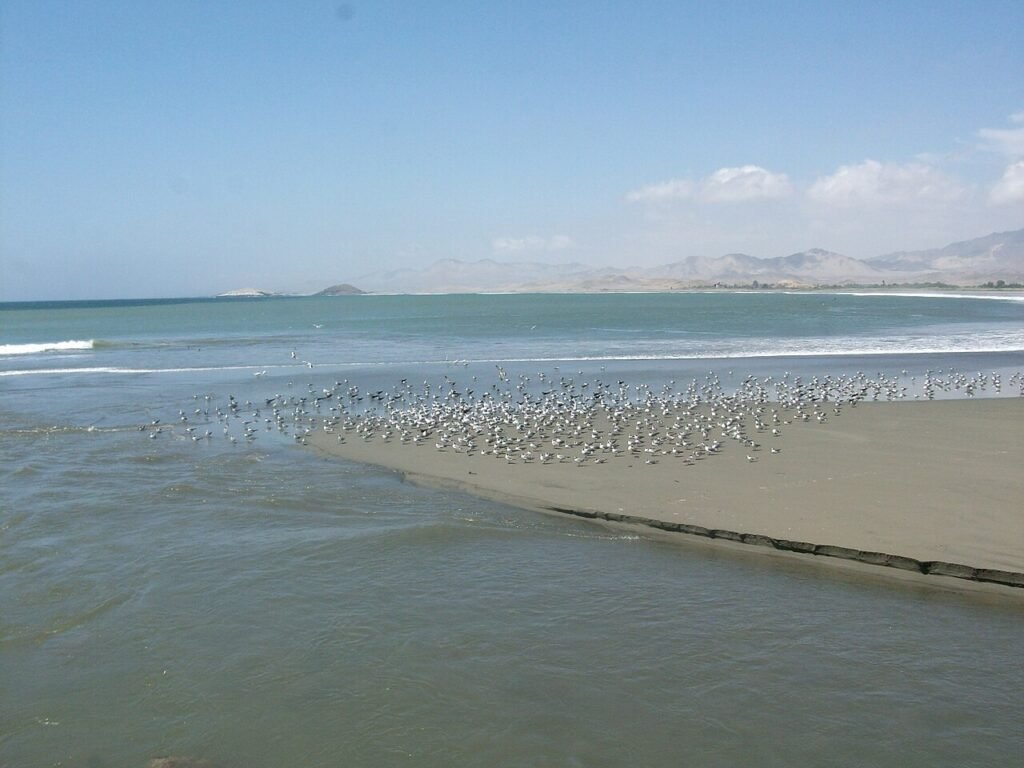
Pelícanos Peruvianos en Puerto Huarmey, Ancash, Perú, Huarmey, Peru
Day 2: The Lagoon & The Last Bite
Your second day is built around one of Peru’s least-visited natural wonders: a coastal lagoon where birds outnumber people by a thousand to one. Travelers often describe this as the most peaceful morning they’ve spent in Peru. You’ll need to start early before the inland heat peaks.
- Morning (7-10am): Take a mototaxi (15 soles) to Laguna de Villa, a brackish lagoon 20 minutes north of town. Entrance is 5 soles. The water is glassy at dawn; you’ll see flamingos, egrets, and Andean gulls wading at the edges. Walk the 2km perimeter trail—it takes about an hour at a leisurely pace. Bring binoculars if you have them; seasoned photographers know that the light between 8 and 9am is perfect for bird shots.
- Midday (11am-1pm): Return to town for breakfast at El Huarique (Jr. Bolívar 88). Locals recommend the chicharrón de pescado (fried fish, 18 soles) served with yuca and pickled onion. It’s hearty and keeps you full for the next activity. Insider tip: arrive by 10:45am to snag a table under the awning before the lunch rush.
- Afternoon (2-5pm): Explore the artisan market on Jr. 2 de Mayo. It’s small—about a dozen stalls—but you’ll find handwoven textiles, mate burilado (carved gourds), and silver jewelry. Prices are half what you’d pay in Lima. A chullo hat runs 15–20 soles; a carved gourd costs 10–30 soles depending on size. Most stalls accept cash only. Vendors will haggle if you buy multiple items—try offering 80% of the first price.
- Final Evening: Your farewell dinner is at La Casa de la Ceviche (Av. San Martín 340). Order the pulpo al olivo—grilled octopus in a creamy olive sauce (42 soles). It’s the best dish in town, according to every local I met. Pair it with a chilcano (pisco, ginger ale, lime —15 soles). Save room for picarones from the cart on the corner outside (5 soles for three). The plaza is lively until 10pm on weekends; grab a bench, watch kids chase pigeons, and let the salty air sink in.
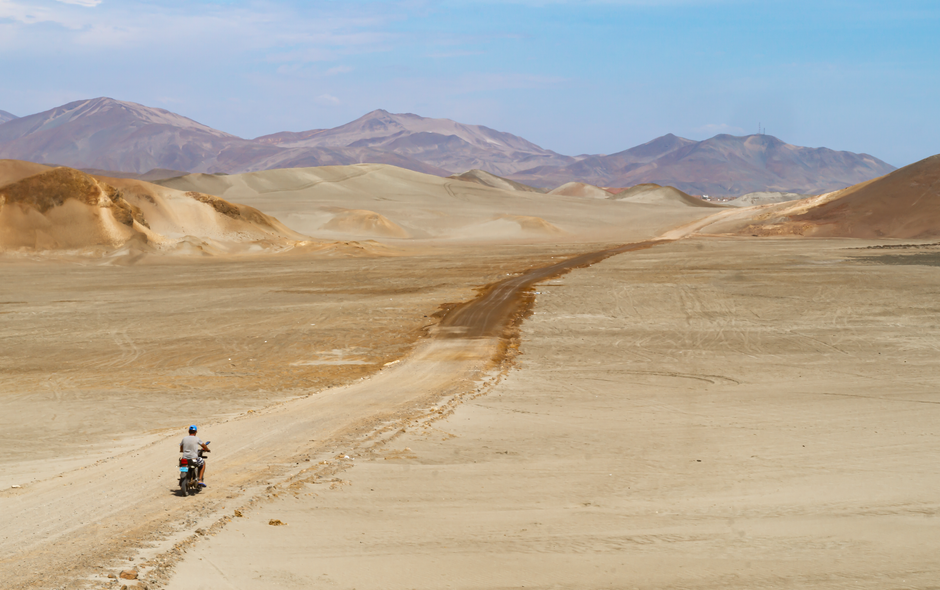
A lone motorcyclist traverses the sandy dunes of Huarmey, Huarmey, Peru
The Food You Can’t Miss
Huarmey’s culinary heart beats in its cevicherías—open-air shacks where fishermen arrive at 7am with the morning catch. You’ll find counters lined with lime halves, rocoto peppers, and giant bowls of cancha. The standard ceviche (20–25 soles) is a masterpiece of acid and heat, but don’t stop there. Try the sudado de pescado (fish stew in a cilantro-tomato broth, 30 soles) at Cevichería Mary, where the owner’s grandmother has been boiling the same recipe since the 1980s.

Explore the ancient adobe architecture of Chan Chan, Huarmey, Peru
Street food here is underrated. On weekends, a vendor sets up at the corner of Jr. 28 de Julio and Jr. Progreso, selling anticuchos (beef heart skewers) for 5 soles each. The secret is the peanut-chili sauce they brush on just before serving—smoky, nutty, and gently fiery. If you see a line of locals, join it. For dessert, look for the woman near the church with a portable fryer; her picarones (sweet potato and squash doughnuts drizzled with spiced honey syrup) are the best in town—4 soles for a plate of four.
For a sit-down dinner, your best bet is La Casa de la Ceviche, where the chef trained in Lima before returning home. The standout is the arroz con pato (rice with duck) during Sunday lunch—tender duck leg cooked in dark beer and served with cilantro rice and a side of salsa criolla. It’s 38 soles and sells out by 1pm, so arrive at noon. The terrace overlooks the ocean; you’ll hear the waves and the clink of glasses as the afternoon stretches into evening.
Where to Stay for the Weekend
Huarmey is small, so your choice of neighborhood is simple: beachside or town center. For the beachside experience, consider Hotel El Faro (Av. Costanera 150, doubles from 120 soles). Rooms are basic but clean, and you’ll fall asleep to the sound of the Pacific. The rooftop terrace is perfect for sunset with a beer from the minibar. It’s a 10-minute walk to the Plaza de Armas and three minutes to the beach. Book via Booking.com for rates that sometimes dip below 100 soles in shoulder season.
For a more central location, try Hostal Huarmey (Jr. 28 de Julio 410, doubles from 80 soles). It’s run by a family who live on-site; they’ll happily store your bags and give you a hand-drawn map of the best cevicherías. The rooms are airy, with ceiling fans and hot water—a luxury in these parts. Weekend breakfast (included) is simple: bread, jam, butter, and instant coffee, but you’re a block from the market where fresh fruit costs 2 soles.
If you want an Airbnb, there are about a dozen listings in and around Huarmey. Most are apartments or guesthouses near the beach, from 50 to 150 soles a night. Look for places with “terraza” in the title—a private rooftop is worth the extra 20 soles. Check Airbnb for last-minute deals, but book at least a week ahead in summer (January–March).
Before You Go: Practical Tips
- Getting Around: Mototaxis (three-wheeled rickshaws) are the main transport. Fares start at 5 soles within town, 15 soles to beaches or Laguna de Villa. Agree on the price before hopping in. Walking is easy between the plaza and the malecón—the whole town is walkable in 20 minutes.
- What to Pack: 1) A sun hat—the UV index is fierce even on cloudy days. 2) Cash in small denominations—many stalls and mototaxis accept only coins and small notes. 3) Sandals with a strap—the sand at Playa Tortuga can be burning hot. 4) A light jacket for evenings; the ocean breeze turns chilly after sunset year-round.
- Common Tourist Mistakes: Mistake #1: Visiting on a Monday—many restaurants and the Laguna de Villa are closed or have limited hours. Plan for Friday arrival and Sunday departure. Mistake #2: Assuming you can use credit cards everywhere—most beach shacks, mototaxis, and markets accept only cash.
- Money-Saving Tip: If you’re staying three or more nights, buy a combo ticket at the Huarmey tourist office (on the plaza, open 8am-1pm). For 30 soles, you get entry to El Castillo, Laguna de Villa, and the municipal museum—a saving of 15 soles over individual entry fees.

