
Where Time Stands Beneath Wooden Shingles: Inside Slovakia’s Living Fairy Tale of Vlkolínec (2026)
In the summer of 1976, a team of UNESCO surveyors stepped off a rickety bus at the foot of the Velká Fatra mountains and walked up a dirt track to a cluster of smoke-stained log houses. They found no shops, no streetlights, no running water — just the rhythmic thump of a neighbour splitting kindling and the smell of roasting potatoes drifting from hand-carved chimneys. What they had stumbled upon was not a museum but a living medieval hamlet where people still drew water from a single wooden well and lit their homes with oil lamps. That day, Vlkolínec earned its place on the tentative list of World Heritage sites, and in 1993, it was officially inscribed — not because it was frozen in time, but because its residents had chosen, quietly and stubbornly, to remain there.
The Story Behind Vlkolínec
Long before UNESCO ever took notice, this tiny settlement in the Liptov region was already a footnote in the larger drama of Slovak rural life. The first written record of Vlkolínec dates to 1469, when it was listed as part of the estate of the Likava Castle, a fortress now ruins overlooking the Revúca Valley. For centuries, the villagers were tenant farmers — shepherds, woodcutters, and linen weavers who paid their dues in wool and timber. Life here was harsh and self-sufficient. You can still see the original stone cellars dug beneath many homes, where families stored potatoes and sauerkraut to survive the brutal Carpathian winters.
What makes Vlkolínec extraordinary is that it never suffered a devastating fire or forced modernization. While other Slovak villages rebuilt in brick and concrete during the 20th century, Vlkolínec’s isolation — accessible only by foot or horse-drawn cart until the 1960s — preserved its unique vernacular architecture. The houses are built in the “log cabin” style known locally as *zrub*, with distinctive pitched roofs covered in hand-split wooden shingles that weather to a deep charcoal grey. Each home has a central chimney stack that heats three rooms simultaneously, a design that evolved over centuries to conserve fuel. By the time the first road was carved through the forest in 1967, only 35 people still lived here year-round. Today, that number hovers around 20, making it one of the most sparsely inhabited UNESCO sites in Europe — and one of the most authentic.
Neighborhood by Neighborhood
The Central Lane
Your journey begins at the village well, a sturdy hand-carved bucket shelter standing at the heart of Vlkolínec. This is the social and physical axis of the hamlet. From here, a single unpaved lane — officially called *Hlavná ulica*, though locals simply call it “the path” — stretches east to west for about 400 metres. On both sides, wooden houses line up shoulder to shoulder, their front doors barely two metres apart. You’ll notice that every home has a *pavlač*, a covered wooden porch where families once threshed grain and shelled beans. The most distinctive building on this lane is house number 47, a two-storey log dwelling built in 1858 that now serves as the village museum. Step inside, and you’ll see a traditional black kitchen with an open hearth, a loom still threaded with linen, and a bed layered with handmade wool blankets. The caretaker, a local woman named Marta, will likely offer you a slice of *medovník* (honey cake) and tell you that her grandmother was born in that very room. On summer afternoons, the lane is quiet but not silent — you’ll hear the buzz of a hand drill from a woodcarver’s workshop, the clang of a cowbell from the meadow beyond, and the soft murmur of a few elderly men playing cards on a bench outside house number 16.
The Upper Hamlet
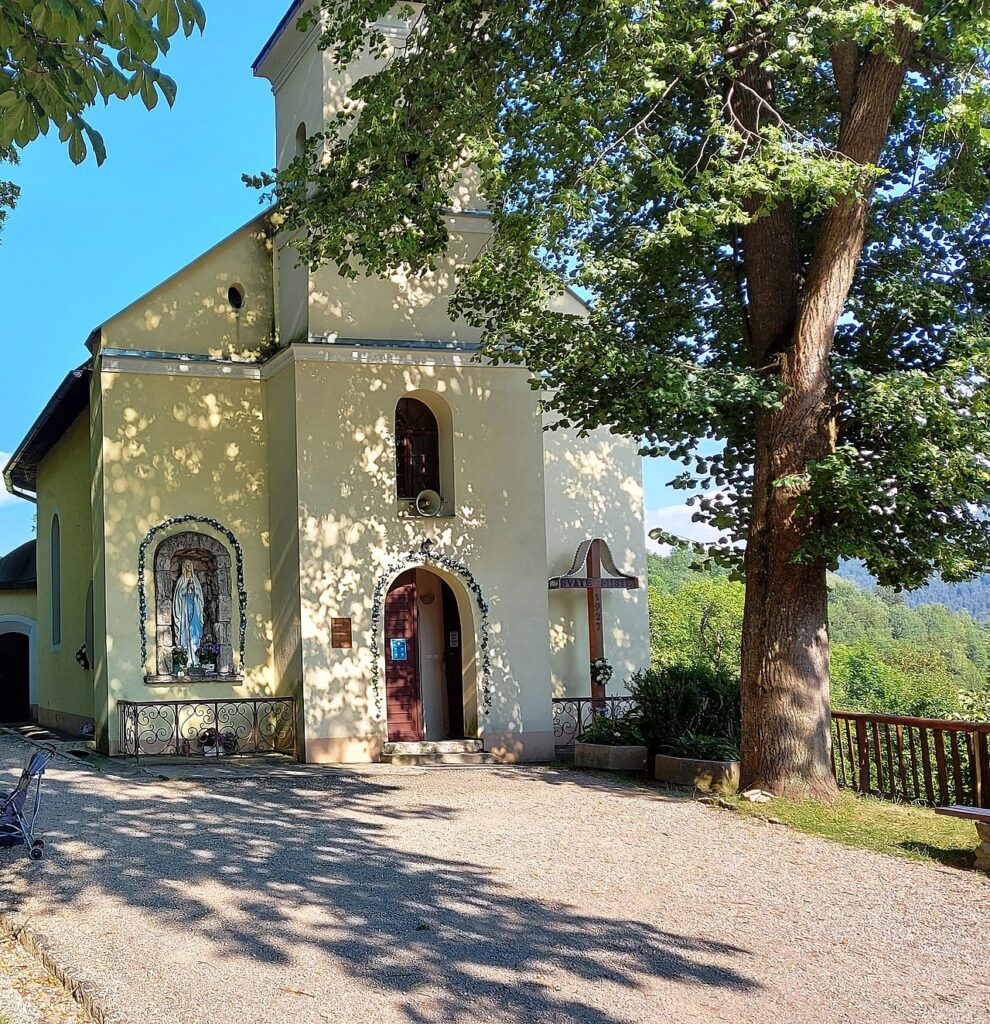
Follow the path uphill past the wooden bell tower (built 1770, its bell still rung by hand every morning at 7 a.m.), and you’ll enter a looser cluster of houses that locals call *Horný koniec* — the Upper Hamlet. Here the architecture shifts slightly: the homes are smaller, many with only two rooms, and their shingled roofs are lower and steeper, a design to shed heavy snow. The terrain is rockier, and you’ll notice stone foundations rising a metre high to protect the logs from ground moisture. This is where the poorest shepherds once lived, and the remains of a small stone chapel — consecrated in 1804 — still stand beside a gnarled linden tree. Travelers often discover that the Upper Hamlet offers the best views of the Revúca Valley, especially at golden hour when the light catches the weathered wood and turns it the colour of burnt honey. There is no café or shop here, but you might see a handwritten sign on a gate: “Drevo na predaj” (Firewood for sale). Savvy visitors know to bring a small gift — a bag of apples or a jar of honey — if they want to chat with one of the elderly residents who still live without electricity. Many of these homes have been passed down through the same family for five generations; you can feel that deep roots in the way the gardens are meticulously planted with herbs and currant bushes.
The Meadow Edge
The third “neighbourhood” is less a street than a scattering of barns and outbuildings along the southern edge of the village meadow, where the forest begins. This is *Lúčky*, named for the small meadows that surround it. These structures were never homes but rather *holohumnice* — hay barns with distinctive open fronts that allowed wind to dry the grass. In July, the meadow is waist-high with wildflowers, and you’ll see white-bellied goats grazing among the ruins of old stone walls. The most important building here is the wooden belfry at the far end, which houses a small exhibition about traditional beekeeping. During the annual *Vlkolínecké slávnosti* (Vlkolínec Festival) on the first Saturday of August, this meadow transforms into an open-air stage for folk dancers in embroidered *kroje* and bagpipe players from the surrounding villages. It’s the only time of year when you’ll hear more than a dozen voices at once in this quiet pocket of Slovakia. Most tourists stick to the central lane, but if you walk to the meadow edge at dawn, you’ll witness something that hasn’t changed since the Middle Ages: the sound of a wooden rake scraping hay into rows, and the sight of a farmer in a flat cap guiding two horses pulling a cart laden with sweet-smelling grass.
The Local Table: What Vlkolínec Natives Actually Eat

Interior of the Church of Visitation of Virgin Mary, Vlkolínec, Slovakia, Slovakia’s Vlkolínec, Slovakia
There is not a single restaurant in Vlkolínec — no pizzeria, no bistro, no gift shop selling instant coffee. That is precisely the point. When you visit, you eat what the remaining residents eat, and you eat it in their homes or, more commonly, at the annual festival or at a weekend “open hearth” event organised by the village association. The cuisine here is a living relic of the highlands: simple, hearty, and built around ingredients that can be stored for months. The star ingredient is *bryndza*, a soft, salty sheep’s-milk cheese that provides the backbone for Slovakia’s national dish, *bryndzové halušky* — tender potato dumplings smothered in this tangy cheese and topped with crispy bits of smoked bacon fat. If you are invited into a home (and you will be, if you ask politely), the host will almost certainly serve you *kapustnica*, a thick sauerkraut soup with dried mushrooms and smoked pork, slow-cooked over a wood fire for hours. For dessert, look for *šúľance* — finger-thick potato dumplings rolled in ground poppy seeds and drizzled with melted butter and honey.
To experience this food authentically, your best bet is to visit the *Dom ľudovej kultúry* (House of Folk Culture) on the central lane, which occasionally hosts cooking demonstrations on summer weekends. There, a third-generation cook named Zuzana shows visitors how to press sheep’s curd through a wooden form and grate potatoes on a hand-held board. She does not charge a fee, but a small donation of €5 to €10 is appreciated. If you want a sit-down meal, you will need to travel 6 km down the winding road to the village of Biely Potok, where the family-run *Koliba u Jána* serves authentic *halušky* for about €6 a plate. Or, drive 15 minutes to the town of Ružomberok and visit *Mliečna Bar* on Námestie Andreja Hlinku, where locals queue at lunchtime for €4 bowls of *bryndzová polievka* (sheep cheese soup). The key is to plan ahead — Vlkolínec is not a place to wander hungry. Pack a flask of herbal tea and a slab of *oštiepok* (smoked sheep cheese) wrapped in cloth; you will find a quiet log bench by the bell tower and a view that tastes better than any café.
Art, Music & Nightlife
Nightlife in Vlkolínec means a candle flickering inside a window at 9 p.m., and the sound of wind moving through the shingles. But the artistic life here is surprisingly rich, if you know where to look. The primary expression is music — specifically the *fujara*, a deep-toned shepherds’ flute that can be up to two metres long and is recognized by UNESCO as a Masterpiece of the Oral and Intangible Heritage of Humanity. During the first weekend of August, the *Vlkolínecké slávnosti* climaxes with a *fujara* competition in the meadow, where you will hear players from all over central Slovakia produce haunting, drawn-out notes that seem to rise from the earth itself. The tradition is still passed down orally; ask any man over sixty in the village, and he can likely craft a *fujara* from a single piece of maple or elderwood, hollowing it with hot irons over several weeks.
Visual arts are less formal but no less alive. You will notice that many house number signs are hand-painted with folk motifs — tulips, stars, and crosses — in blue and red. These are the work of local woodcarver and painter Ján Štrba, who lives in house number 36. He sells small carved birds and wooden bowls for €10–€30, though he rarely advertises; you simply knock on his door between 10 a.m. and noon. For a more curated experience, drive to the *Liptovské múzeum* in Ružomberok (open Tuesday to Sunday, 9 a.m. to 5 p.m., admission €4), which houses an extensive collection of traditional textiles and pastoral tools. There is no nightclub, no bar, no discotheque for miles. The closest you get to evening entertainment is gathering around the village well after dusk in July, when the mayor sometimes lights a bonfire and a neighbour brings out a bottle of *slivovica* (plum brandy). Travellers often find this more memorable than any club — because here, under a starry Carpathian sky, you might hear an elderly farmer sing a 400-year-old ballad about a lost lamb, his voice cracking with emotion as the flames snap.
Practical Guide
- Getting There: The nearest airport is Poprad-Tatry Airport (TAT), served by seasonal flights from London Luton (Ryanair) and Warsaw. Bratislava Airport (BTS) is 3.5 hours by car. From Poprad, take a train to Ružomberok (1 hour, €6), then bus 720 to Biely Potok (20 minutes, €1.50), and walk 40 minutes uphill to Vlkolínec. Book flights at Skyscanner
- Getting Around: The village is only accessible on foot. You park in Biely Potok (free public parking) and hike 2.5 km on a gravel road. No taxis run direct; you can arrange a pickup from Ružomberok with local driver Milan (phone +421 904 123 456, €15 one-way). Inside Vlkolínec, everything is walkable in 10 minutes.
- Where to Stay: The only sleeping option within the UNESCO zone is the *Drevenica u Maťa* (house number 12), a restored log cabin with no electricity but kerosene lamps and a wood stove — €50 per night, book months ahead. More comfortable stays are in Biely Potok: *Penzión pod Vlkolíncom* offers double rooms from €60 with breakfast. Check Booking.com
- Best Time: June to September offers green meadows and the August festival. May is lovely with apple blossoms. Avoid December–March unless you have snowshoes and a high tolerance for cold; many houses are unheated.
- Budget: Expect to spend €40–€60 per day, including accommodation, if you eat lunch in Ružomberok. Bring cash — there is no ATM in Vlkolínec or Biely Potok.

Horseshoe island surrounded with green trees landmark, Slovakia’s Vlkolínec, Slovakia
What Surprises First-Time Visitors
The first surprise is the silence. Not the quiet of a city park or a rural suburb, but the deep, layered absence of mechanical noise. You will stand on the central lane and hear your own heartbeat, the scuff of your shoes on packed earth, and then — startlingly — a cow coughing 200 metres away. Most travellers are unprepared for how profoundly this stillness affects them. After an hour, you start noticing sounds you had forgotten existed: the creak of a wooden hinge, the rustle of a sparrow in a gutter, the distant zap of a wasp against a windowpane. By evening, your shoulders drop a full inch.
The second surprise is the lack of commercialism. There are no ticket booths, no souvenir shops selling plastic keychains, no uniformed guides with umbrellas. The village does not feel like a heritage attraction; it feels like a home where the residents are simply going about their day while tourists accidentally wander through. You might feel awkward peering into a garden where an old woman is hanging laundry, but she will wave and ask you in Slovak if you want a glass of water from the well. The honesty of this encounter — the absence of any transaction — catches many visitors off guard. One traveller recently remarked that Vlkolínec made her feel like a guest, not a customer, for the first time in a decade of travel.
The third surprise is physical: the altitude. Vlkolínec sits at 820 metres, and the walk from Biely Potok climbs 180 metres over 2.5 km. You will sweat, even on a cool day. Seasoned visitors wear sturdy walking shoes and carry water. Once inside the village, the ground is uneven and the log doorways are low — you will bump your head at least once in the museum. But this effort is exactly why the place remains unspoiled. As you catch your breath at the top of the lane and see the shingled roofs falling in terraces down the hillside, you understand that Vlkolínec demands a pilgrimage. It rewards only those who come on foot.
Your Vlkolínec Questions Answered

Green trees on mountain during daytime, Slovakia’s Vlkolínec, Slovakia
Can I stay overnight in one of the traditional wooden houses? Yes, but with caveats. Only two houses are officially available for tourist accommodation: *Drevenica u Maťa* (house number 12) and *Drevenica u Slivu* (house number 22). Both are privately owned and rented through the village association. You must book at least two weeks in advance by emailing the local office at info@vlkolinec.sk. Expect a basic experience: no Wi-Fi, no socket for charging devices, and a chemical toilet in a separate shed. The price is about €

