
Bolivia’s Uyuni for Adventurers: Salt Flats (2026)
The wind whips across the Salar de Uyuni at 3,656 meters, and you feel it in your bones—a sharp, dry cold that cuts through your jacket. Your boots crunch on the salt crust as you walk, the sound echoing in the vast, white silence. Then, the sun cracks the horizon, turning the endless mirror of water and salt into a blazing sheet of copper and gold. You’re standing on the world’s largest salt flat, and for a moment, you feel like the only person on Earth. This is Uyuni—a place that doesn’t just push your limits, it erases them.
The Main Event: Sunrise Salt Flat & Mirror Effect Tour
Your best bet for the ultimate adrenaline-meets-otherworldly-beauty experience is a pre-dawn salt flat tour. Start from the town of Uyuni at 4:00 AM sharp. You’ll bounce in a 4×4 across the endless white expanse for about 45 minutes to reach the remote heart of the Salar. Here, during the rainy season (December to April), a thin layer of water turns the salt flat into the world’s largest natural mirror—a perfect, unbroken reflection of the sky. The difficulty level is easy physically, but the altitude and cold demand respect. Temperatures can dip to -15°C (5°F) before sunrise. Cost: approximately 150–200 Bolivianos (USD $22–29) per person for a shared tour, including transport and a guide. The best time of day is just before sunrise—arrive by 5:30 AM to watch the show unfold. Bring at least three layers, a windproof outer shell, thick gloves, a warm hat, and sturdy boots. Your camera is non-negotiable, but don’t forget a fully charged battery—cold drains it fast.
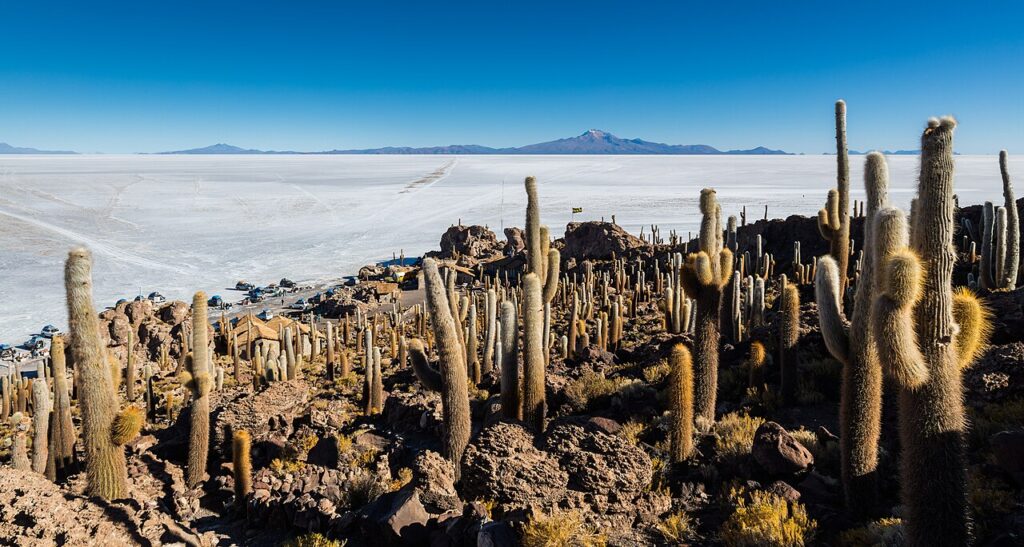
Insider tip: Most tourists head straight to Incahuasi Island (Isla del Pescado) for the classic “dinosaur footprints” photo. Savvy visitors know you should skip the crowds and ask your guide to take you to a remote, nameless patch of salt flat where you can be completely alone. Travelers often discover that the real magic isn’t just the reflection—it’s the silence. You can hear your own heartbeat in the open air, and the horizon stretches 360 degrees with zero interruptions. This is not a sight; it’s a sensory reset. The tour usually wraps up by 8:30 AM, and you’ll roll back into town buzzing with a quiet, profound awe.
Activity #1: High-Altitude Mountain Biking on the Salar
If you crave an adrenaline rush with a side of altitude, this is your ride. Book through Condor Trekkers or Salt Flat Biking Uyuni, both reputable operators in town. The adventure starts at the edge of the Salar, where you’ll be fitted with a full-suspension mountain bike, helmet, and gloves. You’ll pedal across the salt crust—which can feel like a gravel road at times, smooth and fast at others—for about 20 kilometers (12.4 miles) toward the distant silhouette of Cerro Tunupa. The difficulty is high: the altitude sits at 3,656 meters (12,000 feet), and the thin air will have you gasping for breath within the first 500 meters. Plan for 4–5 hours total, including stops. Cost is around 400–600 Bolivianos (USD $58–87) per person, which includes a guide, bike rental, and transport back. Best season for biking is the dry season (May to November), when the salt is firm and traction is reliable. What to bring: a hydration pack (2 liters minimum), high-energy snacks, sunscreen, sunglasses with straps, and a buff for dust. Seasoned travelers prefer early morning starts (7:00 AM) to avoid the wind that picks up by noon. The sensation of gliding across an infinite white plain, with only the sound of your tires and your breath, is one you’ll replay in your mind for years.
Activity #2: Summit Cerro Tunupa (5,432 m / 17,821 ft)
For seasoned hikers and altitude veterans, Cerro Tunupa is the ultimate challenge near Uyuni. This dormant volcano towers over the northern edge of the Salar, and its summit offers a panoramic view that stretches across Bolivia, Chile, and even Argentina on a clear day. Start your trek from the village of Tahua, accessible by a 45-minute drive from Uyuni (your guide will arrange transport). You’ll begin climbing at around 5:00 AM to reach the summit by midday, before the afternoon winds become dangerous. The climb is technical but non-roped—think steep scree slopes, loose volcanic rock, and exposure to the elements. Difficulty is hard, and you must be comfortable at altitudes above 5,000 meters. Cost: 250–350 Bolivianos (USD $36–51) per person for a guided group. The local guides from Tahua are highly recommended—they know the mountain’s unpredictable weather patterns and will carry extra oxygen and first aid. What to bring: trekking poles (essential for stability), crampons or microspikes for icy sections above 4,500 meters, at least 3 liters of water, high-calorie snacks, and a windproof jacket. Locals recommend starting the hike with coca leaves—a traditional remedy for altitude sickness—which you can buy at any market in Uyuni for a few Bolivianos. The summit is not a tourist destination; it’s a climber’s prize. You’ll feel the burn in your lungs and legs for days, but the 360-degree view of the salt flat below, impossibly white and vast, makes every step worth it.
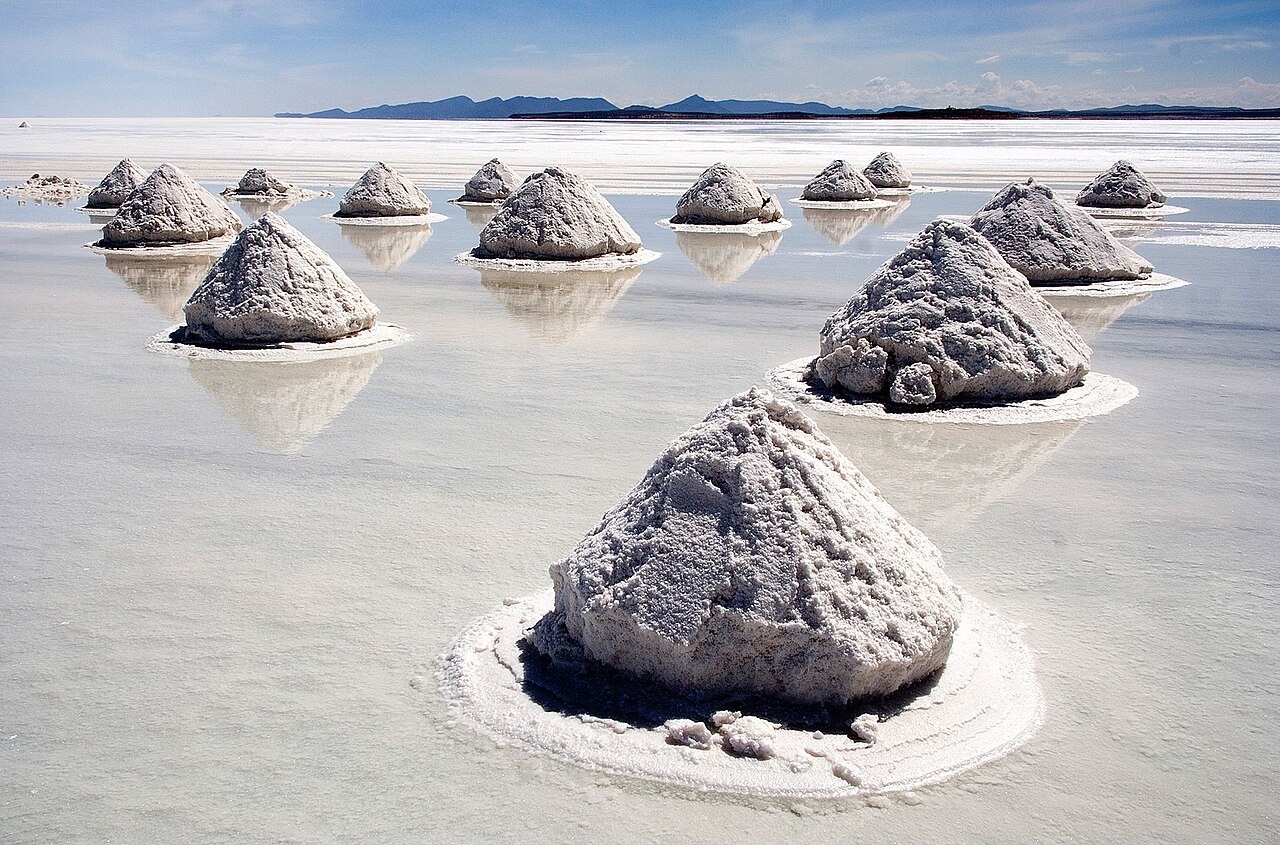
Salt mounds in Salar de Uyuni, Bolivia’s Uyuni, Bolivia
Refuel: Where Adventurers Eat
After a day of altitude and adrenaline, your body needs real fuel. Start with Restaurant La Posta on Avenida Ferroviaria. This local favorite serves a hearty salteña de carne (a baked empanada with spicy meat, olives, and egg) for just 8 Bolivianos ($1.15 USD). Travelers rave about the pique a lo macho—a monster plate of beef, sausage, fried potatoes, and onions smothered in a spicy sauce—for 45 Bolivianos ($6.50 USD). It’s not fancy, but it’s authentic and perfect after a long day. For something lighter, Pizzeria El Pueblito on Calle Potosí offers wood-fired pizzas with llama meat toppings—a local twist you won’t find anywhere else. A large pizza costs around 60 Bolivianos ($8.70 USD) and serves two hungry adventurers. Don’t skip the api con pastel (a warm purple corn drink with fried pastries) from a street vendor near the central market—it’s a sweet, warming pick-me-up after a cold morning on the salt flat. For a sit-down dinner with international flare, Hotel Jumari Restaurant (also a great place to stay) serves quinoa soup, trout from Lake Titicaca, and llama steak in a cozy, wood-paneled dining room. Mains range from 50 to 80 Bolivianos ($7–12 USD). Locals recommend the hot chocolate—thick, rich, and made with local cacao—for 15 Bolivianos ($2 USD).
Base Camp: Where to Stay
Active travelers need a base that supports early starts, gear storage, and reliable breakfast. Hotel Jumari Uyuni (Avenida Ferroviaria s/n) is your best bet for comfort and convenience. Rooms start at 450 Bolivianos ($65 USD) per night for a double, including a buffet breakfast that opens at 5:30 AM—perfect for your 4:00 AM tours. They also offer secure storage for bikes and luggage. Book through Booking.com. For budget-conscious adventurers, Hostal Las Bóvedas on Calle Colón offers dorm beds from 80 Bolivianos ($11.50 USD) and private rooms from 200 Bolivianos ($29 USD). Guests appreciate the hot showers (a luxury after a freezing morning), the communal kitchen, and the on-site tour desk. They also pack a box breakfast for early departures. For a truly unique experience, consider the Hotel de Sal Luna Salada, located right on the edge of the salt flat, about 25 minutes from town. Rooms are built entirely from salt blocks—walls, floors, even beds. Doubles start at 600 Bolivianos ($87 USD) per night, and the included dinner and breakfast are hearty. The real draw, however, is the stargazing from your private terrace. No light pollution, no noise, just the Milky Way stretching overhead. Book both options through Booking.com for transparent pricing and cancellation policies.

Sports utility vehicles on desert under cloudy blue sky during daytime, Bolivia’s Uyuni, Bolivia
Gear & Prep Checklist
- Altitude preparation: Acclimatize in Uyuni for at least 24 hours before any strenuous activity. Coca leaves, available at any local market, are your friend. Take them as a tea or chew them gently (ask a local to show you the proper technique).
- Layered clothing system: Base layer (merino wool), mid-layer (fleece or down jacket), outer shell (windproof and waterproof). Temperatures range from -15°C (5°F) at dawn to 20°C (68°F) by midday.
- Sun protection: SPF 50+ sunscreen, UV-protective sunglasses with a strap (the reflection is brutal), and a wide-brimmed hat. Many travelers underestimate the sun at altitude—you can burn in 15 minutes.
- Hydration system: A hydration bladder with at least 2 liters capacity, plus electrolyte tablets. Altitude dehydrates you faster than you realize. Add a leak-proof water bottle as backup.
- Safety gear: A first-aid kit with blister treatment, antiseptic, pain relievers, and anti-diarrheal medication. Pocket-sized satellite messenger or GPS device is not essential but highly recommended for solo hikers or cyclists.
- Fitness requirement: You should be able to walk or cycle at moderate intensity for 4–6 hours at altitude. Cardiovascular fitness matters more than raw strength. Practice with elevation training or stair climbing for at least a month before your trip.
- Safety consideration specific to Uyuni: The salt flat can be blindingly bright at midday—you must wear sunglasses or risk snow blindness. Also, guides warn against venturing off-trail in the rainy season (December to April). The salt crust can be thin in places, and you can sink into the mud beneath. Always stick with your guide or a marked route.
Getting There & Around
- Flights: The nearest airport is Uyuni Airport (UYU), with daily flights from La Paz (LPB) on BoA (Boliviana de Aviación) and EcoJet. Flight time is about 50 minutes. Prices range from 600 to 1,200 Bolivianos ($87–174 USD) round trip. Book at Skyscanner for the best deals. From La Paz, you can also take an overnight bus (12 hours) for 120–200 Bolivianos ($17–29 USD) with Todo Turismo or El Dorado—a budget option that deposits you in Uyuni at 6:00 AM, ready for a day of adventure.
- Local Transport: Uyuni town is small and walkable, but most activities require a 4×4. Your tour operator will provide pick-up and drop-off. For independent travel, you can rent a mountain bike from Salt Flat Biking Uyuni for 150 Bolivianos ($22 USD) per day, or hire a private driver for around 800 Bolivianos ($116 USD) for a full day of custom exploration. Most tours include transport from your accommodation. For reaching the salt flat on your own, a taxi from the town center costs about 30 Bolivianos ($4.35 USD) each way.
- Best Season: For adventure activities, the dry season (May to November) is ideal for mountain biking, hiking, and climbing—the salt is firm, trails are clear, and skies are reliably blue. For the mirror effect (the flooded salt flat), visit during the rainy season (December to April). Specifically, December to March gives you the best reflections, but expect afternoon thunderstorms and muddy roads. The shoulder months of April and November offer a sweet spot: some mirror effect without monsoon-style rain. Note that Cerro Tunupa is safest to climb from May to August, when snow is minimal and winds are calm.

A body of water with mountains in the background, Bolivia’s Uyuni, Bolivia
Is Bolivia’s Uyuni Worth It?
Honestly? Yes—but only if you’re the right kind of traveler. Uyuni is not a luxury destination. It’s raw, dusty, high, and at times uncomfortable. You’ll sleep in basic hostels, eat simple food, and freeze your fingers off before sunrise. But if you crave experiences that are genuinely untouched by mass tourism—a place where you can still feel like an explorer—then Uyuni delivers in a way that Machu Picchu or the Atacama Desert simply can’t match. The salt flat alone is worth the journey: there is nothing else on Earth like it. Travelers who love solitude, photography, and physical challenge will find Uyuni unforgettable. If you’re looking for five-star hotels, fine dining, or easy strolls, skip it. But if you want to mountain bike across a prehistoric lake bed, summit a 5,432-meter volcano, and stargaze under the clearest skies you’ll ever see, this is your destination. Locals recommend planning for at least four full days: two for the salt flat and its mirror, one for Cerro Tunupa,

