
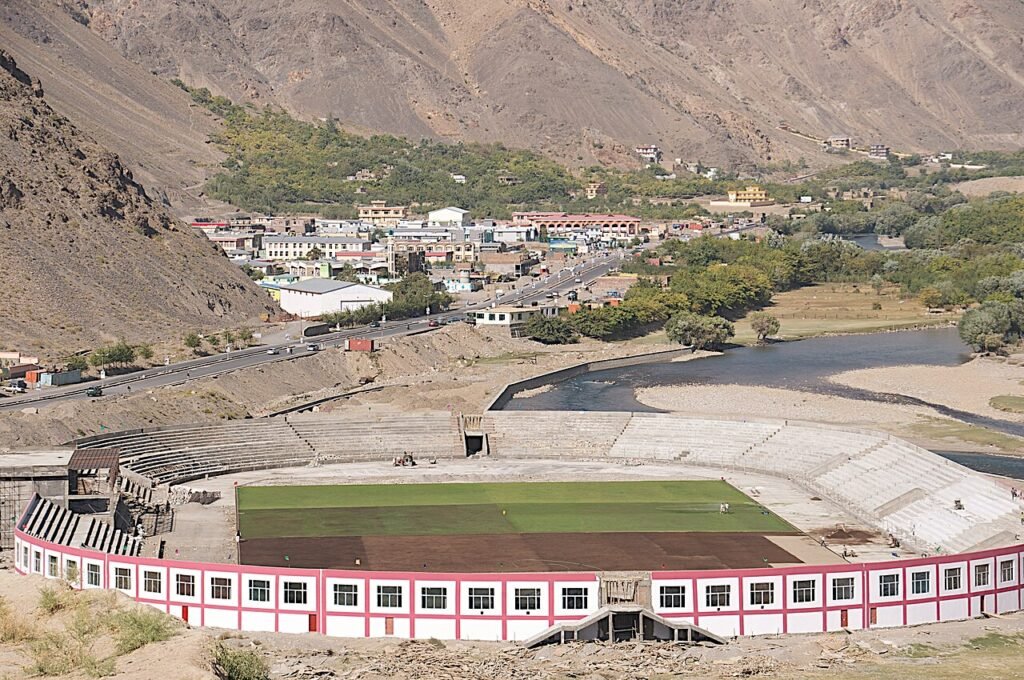
Where the Mountains Hold Their Breath: The Panjshir Valley, Afghanistan’s Enduring Heart (2026)
On a cold September morning in 2001, two assassins posing as journalists detonated a bomb hidden in a video camera, killing Ahmad Shah Massoud—the legendary “Lion of Panjshir”—just two days before the attacks that would reshape the world. The valley he had defended for a quarter century went into mourning, but it never surrendered. When you stand at the base of his glass-domed mausoleum in Bazarak, watching the Panjshir River tear through the gorge below, you’ll understand why the valley’s name translates to “Five Lions”—and why their legend refuses to fade.
The Story Behind the Panjshir Valley
The Panjshir has been a fortress for over a thousand years. When Genghis Khan’s armies swept through Central Asia in the early 13th century, the valley’s steep canyon walls and narrow passes turned his cavalry into lambs for the slaughter. Locals still tell stories of the Mongol horde abandoning their siege after losing hundreds of horses in the river gorge. The valley’s isolation is the source of its power—a natural citadel of granite and ice that has humbled everyone from the Mughals to the Soviet Red Army.
You might not know that the valley’s modern history pivots on emeralds. In the 1980s, while the Soviet Union poured over 100,000 troops into the Afghan conflict, the Panjshir’s remote emerald mines became the financial engine of the resistance. Massoud’s fighters traded stones for weapons on the world market, funding a war machine that held off the Red Army through a combination of mountain warfare and sheer stubbornness—a defense so effective that the Soviets launched nine separate offensives against the valley between 1980 and 1985, none of which succeeded. In the 1990s, Massoud became defense minister and held the valley as the Taliban crushed the rest of the country. To travel to Panjshir today is to walk into a landscape where history is not a museum exhibit but a living memory.
Neighborhood by Neighborhood

A scenic view of the Panjshayr River Valley, Panshir Valley, Afghanistan
Bazarak: The Valley’s Beating Heart
You’ll likely begin your journey in Bazarak, the administrative capital, a dusty yet dignified town sprawled around a central commercial strip. The main road—roughly the only paved artery—is lined with small shops selling flatbreads, bolts of cloth, and the valley’s famous pomegranates stacked in bright crimson pyramids. The defining feature here is the Martyrs’ Memorial, a soaring modernist structure with a blue-tinted dome that looks both strangely futuristic and deeply mournful. You’ll find it perched on a hillside above the town, where guards patiently wave visitors toward the tomb of Massoud, often marked with fresh flowers left by local women. At the Friday bazaar, plan to wander the stalls between 9 a.m. and noon, when farmers from surrounding villages descend with mulberries, pistachios, and handwoven kilims. It’s a place where you’ll hear more Dari than Pashto, a reminder that Panjshir is one of Afghanistan’s most proudly Tajik valleys.
Rukha: Where Resistance Became a Household Word
A fifteen-minute drive upstream brings you to Rukha, a compact district of stone-and-mud homes that travelers often describe as the valley’s cultural soul. This is where Massoud’s forces established their forward bases, and where you’ll find the remnants of cave-like bunkers dug into the cliffsides. Rukha’s streets feel older, more intimate—narrow alleyways where children chase each other past wooden doors carved with geometric panelwork. Stay close to the river, and you’ll discover the terraced orchards that define the local economy; apricot and walnut trees cling to the hillsides with improbable determination. Locals recommend the late-afternoon tea houses along the riverbank, where you can sit on floor cushions, drink green tea spiced with cardamom, and watch fishermen cast nets for the silver trout of the Panjshir.
Anjuman Valley: The Roof of the World
For the adventurous, the upper reaches of Anjuman offer an entirely different Panjshir—a raw, windswept highland where the valley widens into a glacial bowl beneath the 4,500-meter peaks of the Hindu Kush. You’ll need a rugged four-wheel-drive vehicle and a local guide (budget around $40 to $60 for a day trip from Bazarak). This is a land of summer pastures, where semi-nomadic shepherds move their flocks between high-altitude camps and where you’ll see wild flowers blanketing the hillsides in June. There are no shops or formal hotels here; the only place to sleep is a shepherd’s guestroom, a humbling experience in which you share thin blankets and a wood stove with a family that insists you take the warm spot nearest the fire. It’s not comfortable—you’ll eat the same broth-soaked bread as your hosts, and the nearest toilet is a windswept rock—but travelers who make the trip describe it as the most profound overnight stay in all of Afghanistan.
The Local Table: What Valley Residents Actually Eat
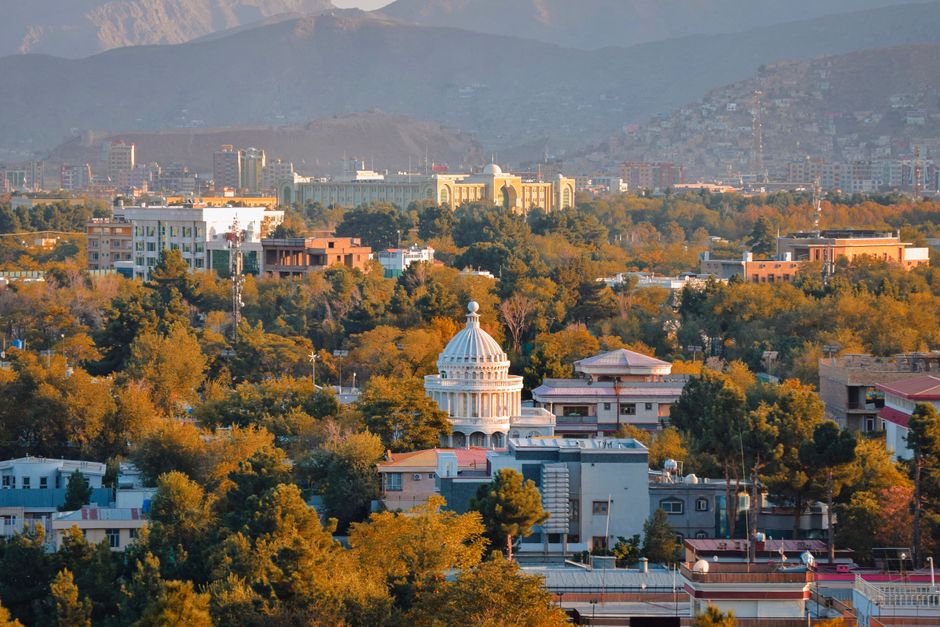
Explore Kabul’s urban landscape from above, Panshir Valley, Afghanistan
Food in the Panjshir is a celebration of resourcefulness. Because of the valley’s narrow terrain, agriculture concentrates on tree crops and river-fed gardens rather than broad wheat fields, so you’ll eat by the seasons. In spring, the young leaves of the nash (a bitter green endemic to the region) appear in qorma-e-nash, a slow-cooked stew thickened with sour plum. By summer, cherry orchards burst open, and travelers discover that Panjshiri housewives dry the excess fruit for the punishing winter months. The staple bread is a heavy, stone-baked flatbread called daudi, denser than Kabul’s whitened naan and best eaten fresh off the tandoor with homemade white cheese.
If you sample only one dish, seek out Kabuli pulao at a guesthouse in Rukha, where it is prepared the traditional way: basmati rice layered with caramelized carrots and raisins, buried over a shallow pit of coals in a sealed pot, then crowned with tender lamb that has been simmered for hours with cardamom and cloves. A generous plate costs around $3 to $5, and your host will insist you finish the tea that follows—a sugary green variety that locals say “washes the tiredness from your bones.” For the adventurous, there’s also the valley’s river trout, grilled whole with a simple smearing of salt and crushed coriander. You’ll find it at family-run guesthouses and at the riverside stalls near Bazarak’s main bridge, where the fish are netted while you wait.
One unique Panjshiri specialty you must ask for is damperdiet, a butter-slathered bread baked into the embers of a cooking fire until golden and crisp, then served with honey from the alpine bee farms above the Anjuman valley. The honey here—dark, smoky, and almost molasses-thick—is considered a quiet luxury by Afghans nationwide. Visitors often discover that it’s the simplicity of the meal, the bread, the cheese, the tea, on a worn carpet overlooking the river, that lingers in memory long after the trip.
Art, Music & Nightlife
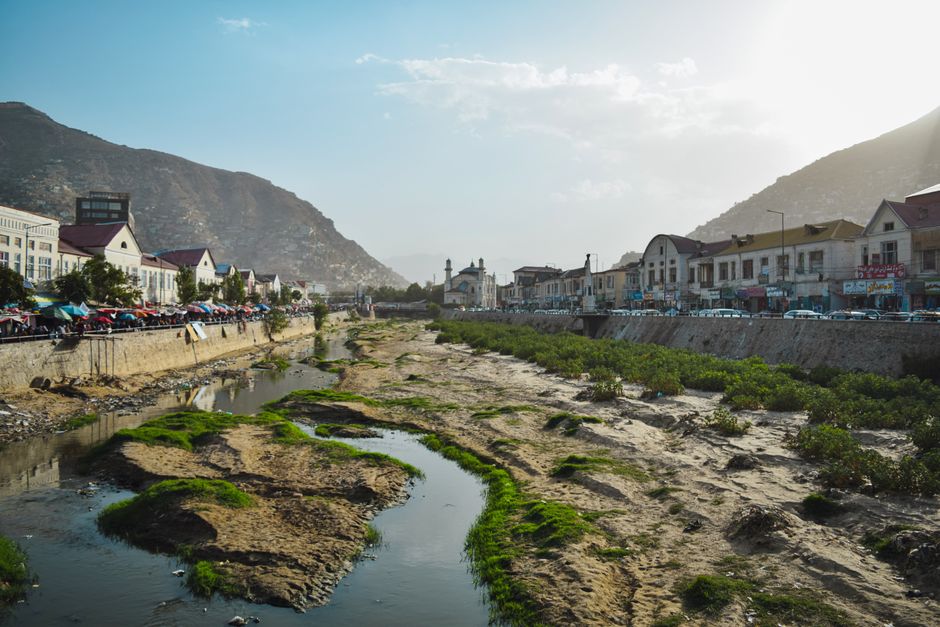
Scenic view of Kabul, Afghanistan featuring a dry riverbed and urban buildings., Panshir Valley, Afghanistan
Nightlife in the traditional sense—bars, clubs, late-night concerts—does not exist in Panjshir, and you should adjust your expectations accordingly. What the valley lacks in neon, it makes up for in the raw, electric pulse of its oral arts. Panjshir is famous for its landay, the two-line folk couplets that has been described as Afghanistan’s poetic heartbeat. At weddings, which in the warmer months happen nearly every Friday, you’ll hear women sing landays to the rhythm of a frame drum, their verses trading between celebration and bittersweet defiance. If you’re invited to a wedding from a Russian to a Danish cousin, accept. It’ll be a night of dancing, henna, and lamb grilled over open coals that you’ll not soon forget.
The valley’s most important artistic site is the Massoud Museum in Bazarak—a small, evocative structure that houses the commander’s personal belongings, handwritten notes, and the Soviet helmet that famously saved his life during an assassination attempt in 1984. You’ll also hear the rubab, a double-chinned lute whose gut strings produce a warm, resonant twang. In the evenings, older men in the tea houses of Rukha will sometimes produce a rubab and play slow, aching melodies passed down through their families for generations. There is no festival calendar in the Western sense, but if you travel in mid-March, you’ll experience Nowruz, the Persian New Year, when locals set up flower markets and prepare sumanik, a sweet wheat pudding eaten to mark the victory of light over darkness.
Practical Guide
- Getting There: The nearest international gateway is Kabul International Airport (KBL), served by Kam Air and Ariana Afghan Airlines with connections from Dubai, Istanbul, and Tashkent. Book at Skyscanner, but note that from Kabul you’ll drive—it’s a three-and-a-half to four-hour journey through the Salang Pass, the legendary 2.6-mile tunnel that cuts through the Hindu Kush. You’ll need a reputable Afghan guide and a sturdy vehicle with a hired driver (around $60 to $80 each way).
- Getting Around: Shared taxis (old Corollas packed with locals and luggage) run from Charikar town to Bazarak for about $3 to $5 per passenger. Inside the valley, you’ll rely on hired SUVs or, for short hops, donkeys and footpaths. Plan to walk—the side valleys hide the valley’s best views and most convivial tea houses.
- Where to Stay: There are no formal hotels, only guesthouses run by families and local organizations. In Bazarak, the Panjshir Guesthouse and the Massoud Guesthouse offer clean rooms for $20 to $30 per night including meals. In Rukha, ask about the Family Guesthouse run by the Rahmani family, where you’ll sleep like a guest in their home for $15 a night. Check Booking.com for the few listings that appear, but expect to finalize arrangements through a local contact.
- Best Time: April through June brings lush green terraces and pleasant days (15-25°C), while September and October offer clear skies, golden light, and the pomegranate harvest. July and August can be hot and dusty; December through February brings heavy snow.
- Budget: Plan on $30 to $50 per day for accommodation, food, and local transport. A full guided tour with driver/guide and all meals runs

