
Tamale, Ghana’s Stunning Culture, Crafts & Culinary Adventure (2026)
While crowds flock to Accra’s beaches, Tamale, Ghana delivers an authentic, unfiltered immersion into the vibrant culture of the north for a fraction of the cost. Here, for under $40 a day, you can explore sprawling craft villages, witness master weavers at their looms, and savor street food that tells a story, all while experiencing the legendary hospitality that defines the “Gateway to the North.” This is where Ghana’s soul beats strongest, away from the tourist trail.
Why Tamale, Ghana Stands Out

A train traveling down train tracks next to a building, Tamale, Ghana
- Historic Architecture: The Central Mosque, built in the 1940s with striking Sudanese architectural influences, is a city landmark and a testament to the region’s deep Islamic heritage.
- Cultural Scene: The annual Damba Festival, a vibrant celebration of the birth of the Prophet Mohammed featuring horse riding, drumming, and dancing, is a spectacle of color and devotion you won’t find in the south.
- Local Specialties: You must try Tuo Zaafi (TZ), a smooth, sticky staple made from millet or sorghum, served with a flavorful green leaf soup—it’s the ultimate northern comfort food.
Pro Tip: The absolute best time to visit is during the dry season from November to March. The weather is hot but bearable, and the Harmattan winds have usually subsided by January, offering clear skies. This period also avoids the heavy rains (July-September) that can make rural road travel challenging.
Map of Tamale, Ghana
Use these interactive maps to explore Tamale, Ghana and plan your route:
📍 View Tamale, Ghana on OpenStreetMap
🗺️ Open Tamale, Ghana in Google Maps
Planning Your Trip: Practical Essentials
Getting There and Around
- By Air: Tamale International Airport (TML) has direct flights from Accra on Africa World Airlines and PassionAir (approx. 1-hour flight). Taxis to the city center cost about 30-40 GHS. Book flights at Skyscanner for best deals.
- By Train: There is currently no passenger rail service to Tamale. Long-distance travel is dominated by buses and shared taxis.
- By Car: Driving from Accra takes 10-12 hours via the N6 highway. Roads are generally good but be prepared for occasional livestock crossings. Secure parking is available at most hotels. Compare car rentals at RentalCars.com.
- Local Transport: The city is navigated by inexpensive shared taxis (called “drops,” 3-5 GHS per short trip) and motorbike taxis (“okadas,” 2-4 GHS). Always agree on the fare before getting in. For day trips, hiring a private taxi for 4-6 hours costs around 150-200 GHS.
Best Time to Visit
Timing is key for a comfortable Tamale experience. The climate is hot year-round, but the dry season offers the best conditions for exploration and festivals.
| Season | Weather | Highlights |
|---|---|---|
| Dry Season (Nov–Mar) | Hot and dry, 30-38°C (86-100°F). Minimal rain, dusty Harmattan winds possible Dec-Feb. | Ideal for all sightseeing and village trips. Major festivals like Damba occur. Peak tourist season for the north. |
| Rainy Season (Apr–Oct) | Very hot with high humidity, 25-35°C (77-95°F). Heavy rains, especially Jul-Sep. | Lush, green landscapes. Fewer visitors. Some rural roads may be impassable. Lower prices. |
| Shoulder (Late Mar/Apr & Oct) | Transitional, still hot with sporadic rains beginning or ending. | A good balance—you might catch the end of the dry season or early rains with fewer crowds. |
Budgeting for Tamale, Ghana
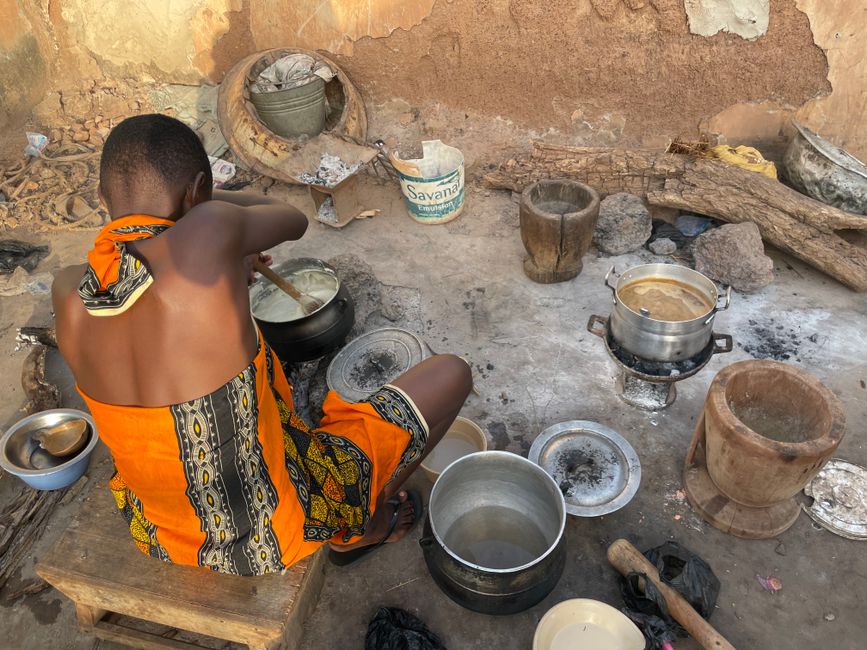
A woman prepares food outdoors in a traditional setting in Ghana, Tamale, Ghana
| Category | Budget | Mid-range | Luxury |
|---|---|---|---|
| Accommodation | Guesthouse: 80-150 GHS/night | 3-star hotel: 200-350 GHS/night | 4-star/boutique: 400-700 GHS/night |
| Meals | Street food/local chop bars: 10-25 GHS | Restaurant meals: 30-60 GHS | Hotel fine dining: 80+ GHS |
| Transport | Shared taxi/okada: 10-20 GHS/day | Private taxi hire: 50-100 GHS/day | Private car & driver: 200+ GHS/day |
| Activities | Market visits, mosque viewing (free) | Craft village tours: 50-80 GHS | Private guided cultural tours: 150+ GHS |
| Daily Total | 100-200 GHS ($8-$16) | 330-590 GHS ($26-$48) | 830+ GHS ($67+) |
*Based on approximate exchange rate of 1 USD = 12.4 GHS (subject to change).
Top Attractions and Must-See Sights
| Attraction | Description | Hours | Entry Fee |
|---|---|---|---|
| Tamale Central Market | A sprawling, sensory overload of commerce where you can find everything from handwoven baskets to shea butter and fresh produce. | Daily, 7 AM – 6 PM | Free |
| Tamale Central Mosque | The iconic, pyramid-roofed spiritual heart of the city; non-Muslims can admire the exterior and may be allowed to enter the courtyard respectfully. | Outside of prayer times (approx. 9 AM-12 PM, 2-4 PM) | Free (Donation appreciated) |
| Cultural Centre (Centre for National Culture) | The hub for local arts, with workshops, a small museum on northern traditions, and craftspeople often working on-site. | Mon-Fri 8:30 AM – 5 PM, Sat 9 AM – 2 PM | 5-10 GHS |
| Dalun Weaving Village | A short drive away, this village is famous for its traditional loom weaving of beautiful “fugu” or “smock” cloth. Watch artisans at work. | Daylight hours | Free (Expect to pay for guides/tours) |
3-Day Itinerary: Tamale, Ghana’s Highlights & Hidden Gems
Day 1: Immersion in the City’s Pulse
- Morning (7-9 AM): Start early at the **Tamale Central Market**. The morning light and cooler temperatures make exploring the vibrant fabric stalls and spice sections a delight. Your best bet is to go with a local guide (arranged through your hotel for ~50 GHS) to navigate the maze and learn about the goods.
- Afternoon (12-3 PM): Visit the **Cultural Centre** to see traditional crafts. For lunch, head to **Vienna City Restaurant** near the Jubilee Park for a reliable and clean buffet of local dishes like jollof rice and groundnut soup (approx. 25 GHS).
- Evening (6-8 PM): Take a stroll around the **Tamale Central Mosque** as the sun sets, casting a golden glow on its unique architecture. For dinner, savor authentic northern cuisine at **Mama’s Restaurant** (a local institution) and order the Tuo Zaafi with goat meat (approx. 30 GHS).
Day 2: Crafts & Village Life
- Morning (8 AM): Hire a taxi for the day (~200 GHS) and drive 30 minutes to **Dalun Weaving Village**. Watch master weavers create intricate smock cloth on wooden looms. You can buy directly from the artisans here.
- Afternoon (1 PM): Continue to **Kukuo** or **Gumbihini**, villages known for traditional pottery. See the fascinating process from clay digging to firing. Have a simple lunch at a village chop bar—try “wasawasa” (fermented yam balls).
- Evening (6 PM): Return to Tamale. For a relaxed evening, enjoy dinner at **Chilly Bowl**, known for its grilled tilapia and chicken in a pleasant garden setting (approx. 40 GHS).
Day 3: History & Natural Escape
- Morning (7 AM): Take a shared taxi (about 10 GHS) or private car to **Larabanga** (2-hour drive), home to Ghana’s oldest mosque, a 15th-century Sudanese-style mud-and-stick structure. Also visit the mysterious **Larabanga Stone**. Hire a local guide at the site (20 GHS).
- Afternoon (12 PM): En route back, stop at the **Mole National Park** gate (another 30 mins from Larabanga). Even if you’re not on a safari, you can sometimes see elephants and baboons near the park’s hotel watering hole. Have lunch at the **Mole Motel** restaurant (approx. 35 GHS).
- Evening (6 PM): Return to Tamale. For your final dinner, experience the bustling atmosphere of a **night food market** near the taxi rank. Grab some kelewele (spicy fried plantains) and grilled meat as a perfect farewell snack.
Cultural Insights & Etiquette
- Language: Dagbani is the main local language. English is widely understood in the city. Useful phrases: “Na-a” (Hello), “M-bala” (Thank you), “Antire” (Goodbye).
- Customs: Always greet people properly before asking questions or taking photos. Use your right hand for giving and receiving items, including money. Seeking permission before photographing people is not just polite, it’s essential.
- Tipping: Not mandatory but appreciated. Round up taxi fares. For guides, 10-15% of the tour cost is a good guideline. In restaurants, a 5-10% tip is welcome if service charge isn’t included.
- Dress Code: Modesty is key, especially in this predominantly Muslim city. Cover shoulders and knees. Light, loose-fitting natural fabrics (cotton, linen) are most comfortable for the heat.
- Business Hours: Shops generally open 8 AM – 5 PM, with a break around 1 PM. Friday afternoon is prayer time, so many businesses close for a few hours. Major Islamic holidays will see widespread closures.
Where to Eat: Tamale, Ghana’s Best Bites
Tamale’s food scene is deeply traditional, centered on hearty grains like millet, sorghum, and rice, paired with rich, savory soups and grilled meats. Dining is often a communal and casual affair.
Must-Try Local Specialties
- Tuo Zaafi (TZ): The iconic northern dish—a smooth, stretchy paste served with a green “ayoyo” or “bra” leaf soup, often with goat or beef. For an authentic experience, go to **Mama’s Restaurant** or any busy local chop bar at lunchtime.
- Wasawasa: Fermented yam balls served with a spicy tomato sauce, onions, and fried fish. It’s an acquired taste but a true local staple. Best tried at the **Cultural Centre’s** food stalls or street vendors.
- Fulani Yogurt (Kindirmo): A tart, refreshing yogurt sold by Fulani women, often in calabashes. It’s a perfect, probiotic-rich treat in the heat. Look for vendors near markets or major roads.
Restaurant Recommendations by Budget
| Type | Restaurant | Specialty | Price Range |
|---|---|---|---|
| Budget | Star 100 Restaurant (Central) | Massive, delicious local buffet plates | 15-25 GHS |
| Mid-range | Rafiki’s Restaurant & Lodge (Kalpohin Rd) | Reliable mix of Ghanaian and continental dishes in a clean setting | 30-50 GHS |
| Fine dining | Mariam Hotel Restaurant (Central) | The best upscale option in town for well-prepared local and international cuisine | 60-100 GHS |
Where to Stay
Accommodation in Tamale ranges from basic guesthouses to a few comfortable, business-style hotels. Most are centrally located, making exploration easy. Compare prices and book at Booking.com or Airbnb for apartments.
Best Neighborhoods for Accommodation
- City Centre (Around Central Mosque): The most convenient location for markets, transport, and main sights. Can be noisy and bustling. Ideal for budget travelers and those who want to be in the heart of the action.
- Kalpohin/Sagnarigu Area: A quieter, more residential area with some of the better mid-range hotels (like the Modern City Hotel). It’s a short taxi ride from the center and offers more space and greenery.
- Along the Airport Road: Home to higher-end options like the Mariam Hotel. This area is more spread out, so you’ll rely on taxis, but it offers modern amenities and often pools.

Busy street market in Tamale, Tamale, Ghana
FAQs: Your Tamale, Ghana Questions Answered
1. Is Tamale, Ghana safe at night?
Tamale is generally considered safe. Violent crime against tourists is rare. However, take standard precautions: avoid walking alone in poorly lit, isolated areas at night, use registered taxis after dark, and keep valuables discreet. Petty theft like pickpocketing can occur in crowded markets, so stay alert.
2. What currency is used and are credit cards accepted?
The currency is the Ghanaian Cedi (GHS). Carry plenty of cash, as credit cards are only accepted at a few upscale hotels and restaurants. ATMs are available in the city center (Ecobank, GTBank, etc.), but it’s wise to withdraw cash in Accra before flying up, as ATMs can sometimes run out.
3. How do I get from the airport to the city center?
Tamale Airport is close to the city. The most straightforward options are the official airport taxis, which charge a fixed rate of about 30-40 GHS for the 10-15 minute ride to most central hotels. There is no public bus. For hassle-free arrival, you can book a private airport transfer at GetYourGuide for convenience.
4. Do I need to speak the local language?
No. English is the official language of Ghana and is widely spoken in Tamale, especially in businesses, hotels, and by younger people. Learning a few basic Dagbani greetings (like “Na-a” for hello) will, however, earn you
Related Guides
Explore more destinations similar to Tamale:

