
Sauraha, Nepal on a Budget: How to Live Like a King for $35/Day (2026)
While a single game drive in Kenya’s Masai Mara can set you back $150, Sauraha, Nepal offers you the chance to spot one-horned rhinos, wild elephants, and royal Bengal tigers for under $20. You’ll discover that $25 here buys you a clean room, three hearty meals, a jungle safari with an expert guide, and enough leftover for a cold Everest beer at sunset over the Rapti River. That’s the kind of math budget travelers dream about.
7 Free Things to Do in Sauraha, Nepal
- Sunset at the Rapti Riverbank: Every evening, around 5:00 PM, travelers and locals alike gather on the sandy banks of the Rapti River, directly behind the main strip near Hotel Wildlife Camp. You’ll watch the sun sink behind the Sal forests while crocodiles bask on the opposite shore. Bring a book or just sit in silence — it’s the most peaceful ritual in Sauraha, and it costs absolutely nothing.
- Self-Guided Village Walk: Wander into the Tharu villages just a 10-minute walk east of the tourist center. You’ll see traditional mud-and-thatch homes, women weaving bamboo baskets, and children playing cricket in the dusty lanes. The Tharu people have lived here for centuries, and their hospitality will remind you why slow travel beats rushed itineraries every time.
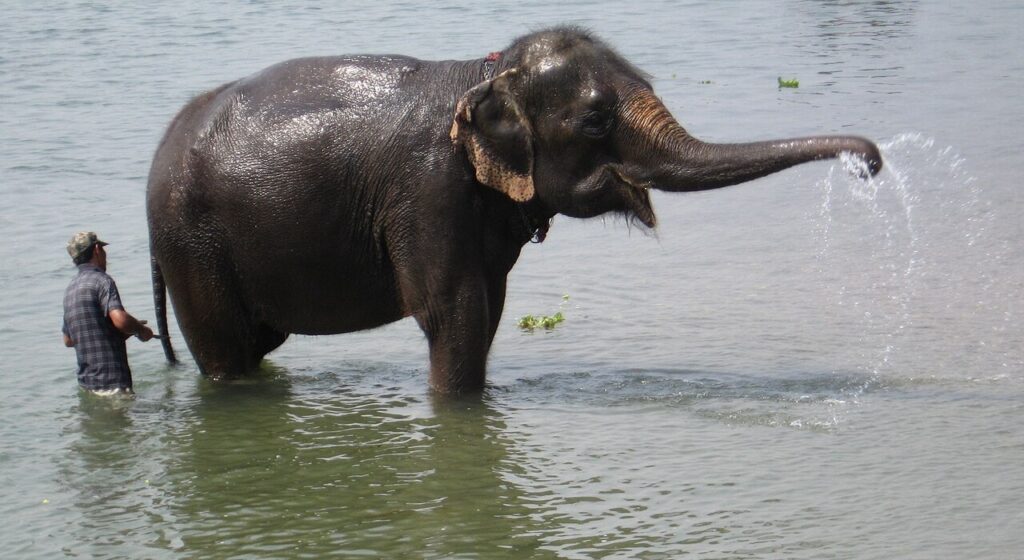
- Elephant Breeding Center Observation (from outside): While the official entry fee is 200 NPR (about $1.50), savvy visitors know you can watch the elephants being bathed in the nearby river each morning around 9:00 AM for free. The mahouts lead the elephants down to the water, and you can stand on the bank and photograph the scene without paying a rupee.
- Birdwatching Along the Chitwan National Park Buffer Zone: Grab your binoculars and walk the dirt paths along the park’s eastern boundary. You’ll spot kingfishers, egrets, black storks, and if you’re lucky, the elusive hornbill. Locals recommend going at dawn (around 6:00 AM) when the air is cool and the birds are most active. The trail starts near the Sauraha checkpoint.
- Tharu Cultural Museum Visit: Housed in a traditional Tharu longhouse on the main road, this tiny museum showcases artifacts, photographs, and tools that tell the story of the region’s indigenous community. Entry is free, though a small donation of 50-100 NPR is appreciated. The curator, a retired schoolteacher named Ram, will happily explain the exhibits to you in English.
- Cycle the Village Roads: Many guesthouses lend you a bicycle for the price of a smile and a promise to return it by evening. You’ll pedal past rice paddies, water buffalo wallows, and small tea stalls where a cup of chai costs just 10 NPR. The loop from Sauraha to the nearby village of Bachhauli takes about 45 minutes and offers views of the Himalayas on clear winter mornings.
- Stargazing from the Rapti Riverbed: After 9:00 PM, when the last restaurants close and the street dogs settle down, the sky above Sauraha puts on a show. With minimal light pollution, you’ll see the Milky Way stretching overhead. Locals often point out the Southern Cross, visible from March to October. Bring a blanket and lie on the warm sand — it’s the most romantic free activity you’ll find.
Cheap Eats: Where Locals Actually Eat
Forget the tourist restaurants on the main strip — your best bets are the tiny dhabas and street stalls where the Tharu families and rickshaw drivers eat. Start your morning at Sunny’s Kitchen, a hole-in-the-wall shop tucked behind the bus stop. Here, you’ll get a plate of freshly made vegetable momos (steamed dumplings) for 80 NPR ($0.60) and a cup of spicy ginger chai for 20 NPR. Sunny, the owner, has been serving travelers since 2005 and will remember your order the next day.
For lunch, walk to Ganesh Dal Bhat, an unassuming pink building on the road to Bharatpur. You’ll eat a thali — rice, dal, two vegetable curries, and pickles — for 150 NPR ($1.10). The secret is that they serve unlimited refills, so bring your appetite. Locals recommend arriving before 1:00 PM, when the food is freshest and the dal still steaming hot.
Dinner at Everest MoMo House, on Sauraha’s main lane just past the post office, is a ritual for frugal travelers. The owner, Rajesh, serves jhol momos (dumplings in a tangy tomato soup) for 120 NPR ($0.90) and fried rice stuffed with vegetables for 100 NPR. You’ll share a plastic table with trekking guides and rickshaw wallahs, and you’ll leave full, happy, and richer by less than $2.
For a sweet treat, stop by Chitwan Sweets, a dairy shop near the bus stand, where you can buy a bowl of creamy curd (yogurt) topped with crushed pistachios for 40 NPR ($0.30). It’s the perfect post-safari refreshment, and the owners have been making it fresh daily since 1998.

Müllentsorgung in Sauraha., Sauraha, Nepal
Getting There Without Going Broke
- Cheapest Route: From Kathmandu, take a local bus from the Gongabu Bus Station to Bharatpur. The journey takes 6-7 hours and costs 400 NPR ($3.00). From Bharatpur’s central bus stand, hop on a shared jeep to Sauraha (50 NPR, 30 minutes). Total door-to-door expense: $3.50. The tourist buses from Kathmandu’s Thamel district charge 800-1000 NPR but drop you right at Sauraha’s main gate.
- Pro Tip: Book your bus ticket one day in advance at the Gongabu station ticket counter, not through your guesthouse, which adds a 200 NPR commission. Travelers often discover that the 7:00 AM bus runs emptier and stops less frequently than the 9:00 AM service.
- From the Airport: Bharatpur Airport is the nearest, served by Buddha Air and Yeti Airlines from Kathmandu (flights start at $85 one-way, 25 minutes). The cheapest transfer from the airport to Sauraha is the local bus from Bharatpur’s main stand (50 NPR), but your best bet is to share a jeep with other travelers — expect to pay 100-150 NPR per person versus 1,000 NPR for a private taxi.
Compare flights at Skyscanner

Rhinoceros on green grasses during daytime, Sauraha, Nepal
Budget Accommodation Guide
Your best neighborhood for budget stays is the area directly behind the Rapti Riverbank, where guesthouses cluster in the quiet lanes away from the main road. Hotel Wildlife Camp (booking.com link below) offers fan rooms with shared bathrooms for $5 a night, and the rooftop terrace gives you wide-angle views of the river and the forest beyond. If you’re willing to spend a few dollars more, Rhino Lodge (airbnb.com link below) offers private AC rooms for $12 with hot showers and free breakfast — the owners, a Tharu couple named Sita and Krishna, will treat you like family and help you book safaris at local prices, not tourist markups.
For the cheapest dorms, Backpackers Inn Sauraha charges $3 a night for a bed in a four-person dormitory, with free Wi-Fi and filtered drinking water. The catch is that the walls are thin, so pack earplugs. Solo travelers appreciate that the common area has a book exchange and a noticeboard where you can find other budget travelers to split safari costs.
If you’re a couple or small group, consider Green Park Chitwan, where a private bungalow with a balcony overlooking the river costs $25. The property has a garden hammock and a small pool, and you’ll feel like you’ve stumbled into your own private slice of the jungle. Book through Booking.com or Airbnb to compare rates and read recent reviews.

A large elephant standing under a wooden structure, Sauraha, Nepal
Money-Saving Tips Specific to Sauraha, Nepal
- Buy your Chitwan National Park entry ticket at the visitor center, not through a middleman: The park entry fee is 1,500 NPR ($11.50) for foreign nationals, but many guesthouse owners and touts will charge you 2,000-2,500 NPR and pocket the difference. Walk to the ticket office at the park entrance yourself. It’s a 10-minute walk from the main strip, and you’ll save $5 instantly.
- Negotiate safari packages directly with guides, not agencies: A full-day jeep safari from a tour agency costs 4,000-5,000 NPR. But if you walk to the park gate between 6:00 AM and 7:00 AM, you’ll find licensed guides waiting for day work. They’ll offer you the same tour for 2,500-3,000 NPR. Always agree on the route (ask for the “Kumroj sector” for best wildlife sightings) and confirm that the price includes the jeep, driver, and guide.
- Bring your own water bottle and fill up at guesthouses: Bottled water costs 20 NPR in shops, but it adds up. Most guesthouses have filtered drinking water stations and refilling your 1-liter bottle costs 10-15 NPR. Over a three-day stay, you’ll save about 150 NPR ($1.10) — enough for an extra serving of momos.
- Eat where the rickshaw drivers eat: The cheapest food in Sauraha isn’t found on the main tourist strip. Walk to the small lane behind the bus stand, where the dhabas serve dal bhat for 150 NPR and chow mein for 120 NPR. These joints close by 8:00 PM, so plan your dinner accordingly.
- Visit during the shoulder season (February-April or September-November): Room rates drop by 30-40% compared to peak season (October-December and April-May). You’ll also find fewer crowds and more willing guides. A room that costs $12 in November can be negotiated down to $7 in February. Just bring mosquito repellent during these months.
Is Sauraha, Nepal Worth It on a Budget?
Absolutely — and here’s the honest truth. What you sacrifice by going cheap in Sauraha is mainly convenience and comfort in accommodation: thinner mattresses, shared bathrooms, and earlier meal times. But what you still get is the full safari experience, the same wildlife sightings that luxury package tourists pay ten times more for, and the warmth of Tharu hospitality that no amount of money can buy. You’ll share a canoe with a Czech backpacker and a Swiss photographer, watch a rhino emerge from the grass at dawn, and feel the sweat on your back as you pedal a borrowed bicycle through rice paddies. Travelers often discover that the best stories from Sauraha come not from the five-star lodges but from the shared tables at Everest MoMo House and the quiet moments on the Rapti riverbank. So pack light, bring your sense of adventure, and get ready for a budget experience that feels anything but cheap.

