
San Vito, Costa Rica Weekend: Italian Coffee (2026)
The first thing you notice isn’t the emerald hills or the mist that rolls through town like a quiet secret—it’s the smell. Roasting coffee beans drift from a tiny ventanita on Avenida 2, mingling with wood smoke and the sweet, almost citrusy perfume of blooming orchids from the gardens spilling over every fence. The mountains — where you’ll spend your next 48 hours — feel like a world apart from Costa Rica’s beach crowds. San Vito is where Ticos go to breathe deep, drink exceptional coffee, and watch the clouds paint the valley in shifting shades of silver and green.
Quick Facts Before You Go
- Best Months: December through April is your window. The dry season makes the roads to Wilson Botanical Garden and the coffee fincas accessible, and you’ll catch the clearest sunrise views over the Coto Brus valley. May through November brings daily mist and rain—beautiful, but you’ll need rain gear.
- Currency: Costa Rican colón (CRC). As of this writing, the exchange rate hovers around 520 colones to 1 US dollar. Many places near the Panama border will also accept US dollars, but you’ll get a better rate paying in colones. Carry small bills—rural shops rarely break large notes.
- Language: Spanish is the primary language. English is spoken in hotels and the biological station, but travelers discover that a few phrases of Spanish—”¿Cuánto cuesta?” and “gracias”—open every door in town.
- Budget: Plan for $40–$60 per person daily if you’re eating at local sodas and staying midrange. If you’re splurging on guided tours, nicer lodges, and sit-down dinners every night, budget $80–$110.
- Getting There: Fly into Juan Santamaría International Airport (SJO) in San José. Direct flights from major US hubs run 4–6 hours. From San José, you’ll drive about 4.5 hours south on the Interamericana, passing palm plantations and climbing into cooler, cloud-wrapped highlands. Book flights at Skyscanner
Day 1: The Italian Legacy & The Garden of Giants
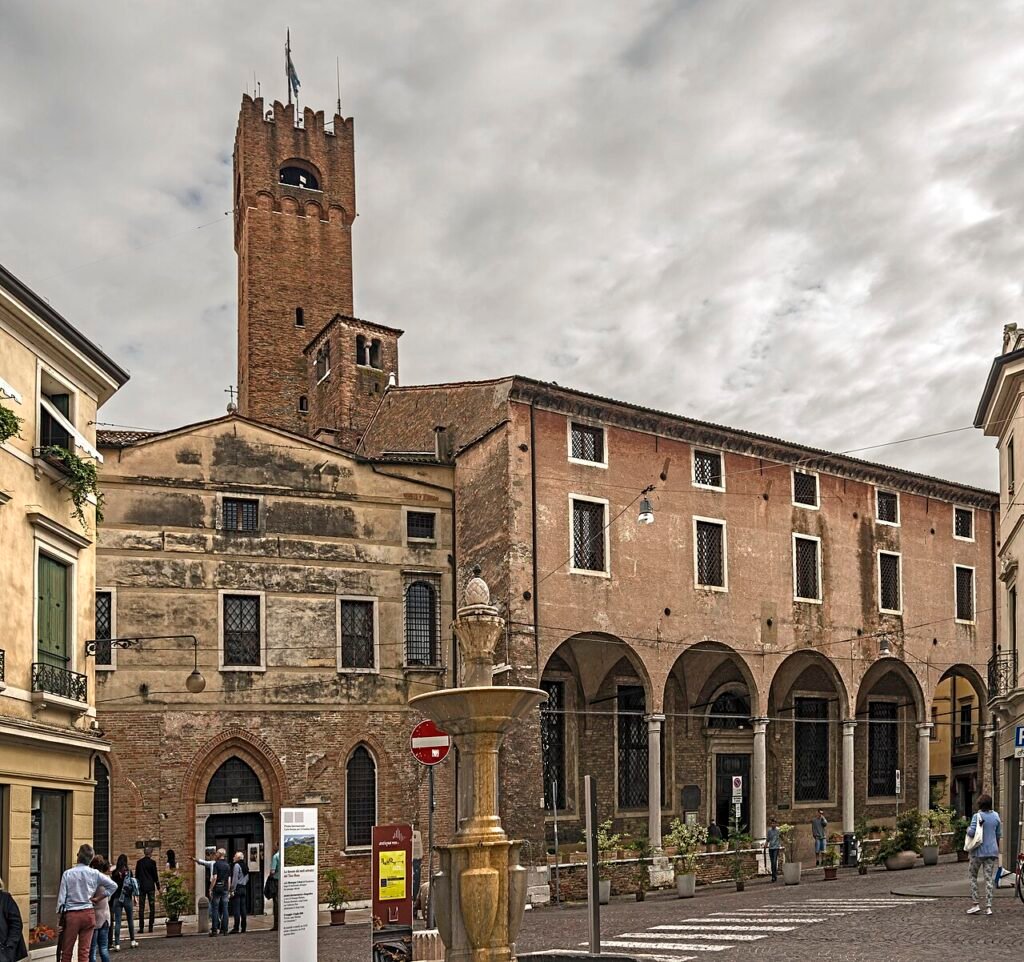
You wake to roosters crowing, a sound that feels ancient and right. San Vito’s story begins in 1952, when 400 Italian immigrants, recruited by the Costa Rican government to settle this untamed southern frontier, arrived with nothing but suitcases, farming tools, and their grandmothers’ recipes. Today you’ll feel that heritage in the town’s architecture—red-tiled roofs, stone walls, the unmistakable outline of the Casona—and taste it in the espresso served at morning bakeries. Your first day weaves between that history and the crown jewel of the region: the Wilson Botanical Garden.

San Vito (Pergine Valsugna, Trentino, Italy), Saint Vitus church, San Vito, Costa Rica
- Morning (8–11am): Start at the Feria de San Vito, the weekend farmers market held every Friday and Saturday on Calle 4. It sets up by 5am, but the best hour is 8, when the mountain mist lifts and vendors display piles of mangoes, purple corn, hand-rolled tortillas, and the famous Coto Brus coffee beans. Grab a chorreado—traditional coffee dripped through a cloth sock—from Doña Marta’s stall for about 1,000 colones ($2). Wander the aisles, taste the fresh cheese, and share a smile with the farmers who’ve been selling here since 1954. You’ll also find queso turrialba, plantain chips, and the town’s famous homemade Italian sausages—a direct gift from those first settlers.
- Lunch: Walk three blocks to Soda y Restaurante La Cascada, a local institution on Avenida Central. Order the casado (a traditional plate with rice, beans, plantains, salad, and your choice of chicken, fish, or pork) for 4,500 colones ($9). Regulars will tell you to get the chicharrón—crispy pork belly that’s been crackling on the same street corner for three decades. Pair it with a fresh fresco de mora, a blackberry drink made from berries grown in the cool hills above town.
- Afternoon (1–5pm): You cannot leave San Vito without visiting the Las Cruces Biological Station and Wilson Botanical Garden. It’s a 15-minute drive from town (a taxi costs about 7,000 colones, or $14 one-way). The garden sprawls across 13 hectares of terraced tropical greenery, holding one of the largest collections of palms and orchids in Central America—over 1,000 species of orchids alone. You’ll follow winding paths past bromeliads, a lily pond, a bamboo grove so dense it feels like a green cathedral, and hummingbirds that zip past your shoulder like living jewels. Entrance is $15 for foreigners, $8 for Costa Rican residents. The self-guided trail takes about 2.5 hours; bring a light jacket—the garden sits at 1,200 meters and the breeze can surprise you. The late-afternoon light is magic; photographers will want to stay until 4:30, just before closing. Drift back into town and stop at the little viewpoint at the edge of the cemetery—locals call it “El Mirador del Italiano”—where you’ll see the patchwork valley below, a quilt of coffee, cattle, and emerald forest.
- Evening: For dinner, you’ll discover Trattoria San Vito, an unassuming spot a block from the central park. A local Italian family runs it—third-generation descendants of the original 1952 settlers—and they serve a plate of handmade gnocchi in a rich four-cheese sauce for 7,000 colones ($14) that would make a nonna weep. Finish with a slice of their lemon torta, then walk to Parque Central, where families gather around the gazebo while kids chase each other across the warm concrete. Grab a seat on a bench, and you’ll hear the marimba sounds drifting from the cultural center on weekend evenings. Locals recommend staying until the lights of the town twinkle across the valley like scattered fireflies. It’s a quiet, soulful end to a full day.
Day 2: Coffee Country, Cloud Forest & A Final Feast
Day two starts with a different rhythm—slower, intentional, like the steam rising from a fresh cup. Travelers often discover that San Vito’s real magic lies beyond town, in the network of coffee fincas and cloud forest trails that surround it. Today you’ll walk among coffee bushes that have been tended by the same families for three generations, then ascend into the misty treetops where quetzals still glide between oak branches, and end with a meal that tastes like the region’s history on a single plate.

Captivating aerial shot of Iglesia de la Inmaculada in Heredia, San Vito, Costa Rica
- Morning (7–10am): Head to Café Finca La Esperanza, a working coffee farm about 20 minutes from town on the road toward Ciudad Neily. You’ll need to arrange your tour the day before (call +506 2773-3111 or check with your hotel; they’ll happily book for you). The 9am tour costs $25 and includes a walking visit through the coffee plants, the misty drying patios, and a taste of their signature medium-roast beans. You’ll see the whole process—from cherry to cup—and hear the story of the farm’s founding in the 1960s by a Swiss immigrant who traded machinery for land. The coffee itself is extraordinary: bright acidity, notes of chocolate and the sweetest orange. Buy a bag of beans (around $10 for 500 grams) before you leave. If the farm is full, your backup is Coopemonte, the local coffee cooperative, where they offer a similar tour and tasting for $18.
- Midday: Your main attraction is the Sendero Bosque Nuboso, a cloud forest trail that starts from the Las Cruces Biological Station’s lower entrance. While Wilson Garden gets the visitors, savvy travelers know this trail—it’s less crowded, requires no entrance fee beyond the $15 station pass, and offers some of the best birding in the region. Plan to arrive by 10:30am, before the tour groups, and you’ll likely have the mossy paths to yourself. The 2.5-kilometer loop takes about two hours, crossing a suspension bridge over a rushing creek, and passes through old-growth oak forest dripping with orchids, ferns, and the iconic resplendent quetzal’s favorite feeding trees. The mist moves in and out like a breath; one moment you’re viewing the valley, the next you’re inside a cloud. Bring your binoculars—visitors regularly spot toucans, trogons, and if you’re lucky, the quetzal itself. The key is patience: locals recommend standing still for five minutes at the “Quetzal Mirador” marked on the trail, listening for the bird’s distinct, soft two-note call.
- Afternoon (1–4pm): Take a short walk through the town’s Italian-influenced neighborhood, Barrio Italia, which hugs the hillside west of the central park. The streets still feel like a Ligurian village—narrow lanes, stone staircases, brick ovens visible through open kitchen windows. Visit Panadería La Montana, a tiny bakery that’s been making crusty bread and foccacia since 1968; a loaf costs just 1,500 colones ($3), and the smell of rosemary and olive oil is your invitation in. Then head to the artisan market at Casa de la Cultura, where local women sell embroidered textiles, wooden coffee scoops, and hand-painted ceramic bowls depicting the region’s birds and butterflies (small items from 3,000–8,000 colones, $6–$16). The building itself is a beautifully restored 1954 farmhouse, one of the first structures built by the Italian settlers.
- Final Evening: Your last dinner deserves a view. Drive (a 25-minute ride) to Hotel Villas Los Lagos, perched above town, where the open-air restaurant looks across the valley as the sunset paints the horizon in gold and violet. The menu leans Italian-Tico, and you will want the rincon de San Vito—a slow-braised beef stew simmered with local coffee, tomatoes, and herbs, served with mashed potatoes and sautéed greens, for 9,500 colones ($19). Pair it with a glass of Costa Rican red wine from the highlands, and save room for the homemade gelato, crafted in an Italian ice cream machine that’s been running since the 1980s. After dinner, step onto the terrace. In the clear night air, the stars come out in numbers you rarely see in North America or Europe—a silver river across the sky. The mist rolls up from the valley, and you’ll understand, in that quiet moment, why the Italians who founded this town never left.
The Food You Can’t Miss
San Vito’s food is a rare hybrid—a love letter from Italy written in Costa Rican ingredients. Travelers often discover that the best meals here happen in the simplest places: a metal counter where a woman slides gallo pinto (rice and beans fried in Lizano salsa) onto a plate at 6am, or a whitewashed soda where the daily special is scratched on a whiteboard in Spanish. Breakfast at Soda Típica El Buena Vista on Calle 2 is a rite of passage: a plate of gallo pinto, fried eggs, homemade white cheese, and a sweet-plantain side, all for 3,000 colones ($6). The coffee is local, strong, and served the Tico way—with steamed milk on the side if you ask.
For lunch, you’ll want a casado, as mentioned, at La Cascada. But the street food gem is the empanada de queso y chiverre—a cheesy, slightly sweet turnover sold by a vendor on the corner of Avenida 3 and Calle Central from 2pm until she runs out, usually around 4. At 800 colones ($1.50), they’re a steal, and you’ll watch locals line up for them like it’s a life-or-death matter.
For your one splurge, reserve a table at Trattoria San Vito’s Saturday dinner service. Beyond the gnocchi, their ossobuco alla Coto Brus—veal shank braised with Chilean wine and local herbs, served over saffron risotto—is the best Italian food you’ll find in southern Costa Rica, and a delicious echo of the town’s founders. A full dinner with wine will come to about 25,000 colones ($48) for two, a bargain compared to San José.

Stunning aerial view of Iglesia San Rafael, San Vito, Costa Rica
Where to Stay for the Weekend
You have three distinct neighborhoods to choose from, each with a different flavor. If you want to wake up in the middle of nature, book a garden-view room at the Las Cruces Biological Station’s guesthouse. For $60–$85 per night, you get a simple, spotless room, three meals a day included in the rate, and after-hours access to the botanical gardens when it feels like the whole world belongs to you. It’s not luxury—it’s immersion. Book via Booking.com or directly through their website at tropicalstudies.org.
If you prefer being in town, the Hotel Dantica is the best midrange pick—a charming, stone-and-wood property on the edge of Barrio Italia with clean double rooms at $55–$75 a night, including a simple breakfast of tropical fruit and handmade bread. You’ll fall asleep to the sound of crickets and the occasional dog bark, and wake to mist rolling through the cypress trees. Look for it at Booking.com.
For a romantic splurge, the hills above town offer the elegant Hotel Villas Los Lagos, where your private bungalow has a porch facing the Coto Brus valley. Rooms start at $95 and include the pool and the view that money can’t buy. Business travelers and honeymooners alike will find it the perfect base for stargazing and slow mornings. Book a villa at Airbnb or Booking.com.
Before You Go: Practical Tips
- Getting Around: A rental car is your best bet for exploring the coffee farms and the forest trails—consider a 4×4, since some roads near the gardens are gravel and muddy in the rainy season. Rental costs run $40–$60 per day from SJO. If you prefer buses, the Tracopa line runs direct from San José to San Vito (4.5 hours, about $10 one-way), and within town, taxis are plentiful and cheap: most rides cost 1,500–3,000 colones ($3–$6). For Wilson Garden or the cloud forest trail, taxis will wait for you for an hour at no extra charge if you agree on a fare up front.
- What to Pack: 1) A lightweight rain jacket or poncho—rain is always possible, even in the dry season’s shoulders. 2) Comfortable hiking shoes with good grip; the garden paths can be slippery, and the cloud forest trail demands traction. 3) Binoculars—best purchase you’ll make for

