
San Vicente del Raspeig, Spain Weekend: University Charm (2026)
The tram door hisses open, and you step into the dry Levantine air carrying the faint scent of jasmine from a nearby garden. A student whizzes past on a bicycle, shouting something in Valencian to a friend, and the rhythm of the town enfolds you—neither the frantic pulse of Alicante city nor the sleepy quiet of inland villages, but something perfectly in between. You’ve arrived in San Vicente del Raspeig, a university town with a working-class soul and a plate of arroz con costra that will haunt your dreams long after you leave.
Quick Facts Before You Go
- Best Months: March to June and September to November, when temperatures hover between 18–28°C and the post-Summer crowds have vanished. July and August can spike above 35°C, which is fine for day-trippers but oppressive for serious exploring.
- Currency: Euro (€). Roughly €1 = $1.08 USD. ATMs are plentiful, but bring a Visa or Mastercard as Amex acceptance is spotty.
- Language: Spanish (Castellano) and Valencian (Valencià) are co-official. English is spoken at the university and some tourist-oriented spots, but locals appreciate a simple “bon dia” (good morning) or “gràcies” (thank you).
- Budget: €65–95 per day moderate (mid-range lunch, coffee, museum entrance, tram, dinner with wine), €40–60 budget (menu del día, street food, self-catering).
- Getting There: Fly into Alicante-Elche Airport (ALC), just 14 km south. Direct flights from London take 2.5 hours; from Madrid, the high-speed AVE train runs to Alicante Terminal in about 2 hours 15 minutes, then you hop on the TRAM to San Vicente. Book at Skyscanner for the best flight deals.
Day 1: The Town That Strikes Matches & Minds
You start the morning at Mercado Municipal de San Vicente, a lively covered market that locals call “la plaça” even though it’s officially a market hall. The first thing you notice is the clatter of knives on cutting boards, the smell of salt cod and cured ham, and the sight of retirees arguing passionately over the price of tomatoes. This is not a tourist market—this is where real San Vicenters shop, and you are now, for a moment, one of them.
- Morning (8–11am): Grab a café con leche and a “coca de llanda” (the local sponge cake, studded with aniseed and lemon zest) at Bar La Plaça, a no-frills spot on the market’s outer ring. Cost: €3.50 total. Then wander through the market stalls: look for “mistos” (matches) sold as a novelty—the town once housed the largest match factory in Spain, Fábrica de Mistos del Sureste, which operated from 1850 until its closure in 1998. You can still spot matchstick motifs on shop signs and the town’s emblem. Entry to the market is free; plan to spend about €5–€8 on a small bag of oranges or local almonds from the stalls.
- Lunch: Walk five minutes to El Rincón de Pepe (Calle San Vicente, 22) and order the signature dish: arroz con costra. This is a Valencian rice specialty baked with a crust of beaten egg, and Pepe’s version is legendary—saffron-infused rice, rabbit, chicken, and a golden-brown lid that shatters under your spoon. Cost: €15 for a single portion with the tray-sized serving. Pair it with a glass of local Fondillón wine (a sweet Alicante red, €4 per glass).
- Afternoon (1–5pm): Walk off the rice at the University of Alicante campus, a 15-minute stroll south. The star attraction is the Biblioteca General, a brutalist concrete-and-glass building that looks like a spaceship. Enter the reading room—you’ll find students dozing on beanbags, the low hum of laptops, and the occasional guitar strum from a courtyard. Then head to the Museo de la Biodiversidad (free, open until 2pm on weekends) for a quirky collection of taxidermied Mediterranean wildlife. Alternatively, if you prefer urban exploration, walk Calle Mayor, the old commercial spine of the town, and browse Ultramarinos Vicente, a shop that has sold olive oil, vinegar, and hand-blown glass bottles since 1923.
- Evening: Take the TRAM (Line 2) to Alicante’s El Barrio neighborhood—a 20-minute ride for €2.50. Dinner is at La Taberna del Gourmet (Calle San Francisco, 8), where you order the “pulpo a la gallega” (octopus, €12) and watch Alicante’s version of tapas culture unfold: plates passed from table to table, laughter cracking through the smoke of a sizzling grill. After dinner, climb up to Castillo de Santa Bárbara—the lift is free after 8pm, and the view over the illuminated city and the dark Mediterranean will be the postcard you’ll never actually send because it can’t capture the warm wind in your hair.

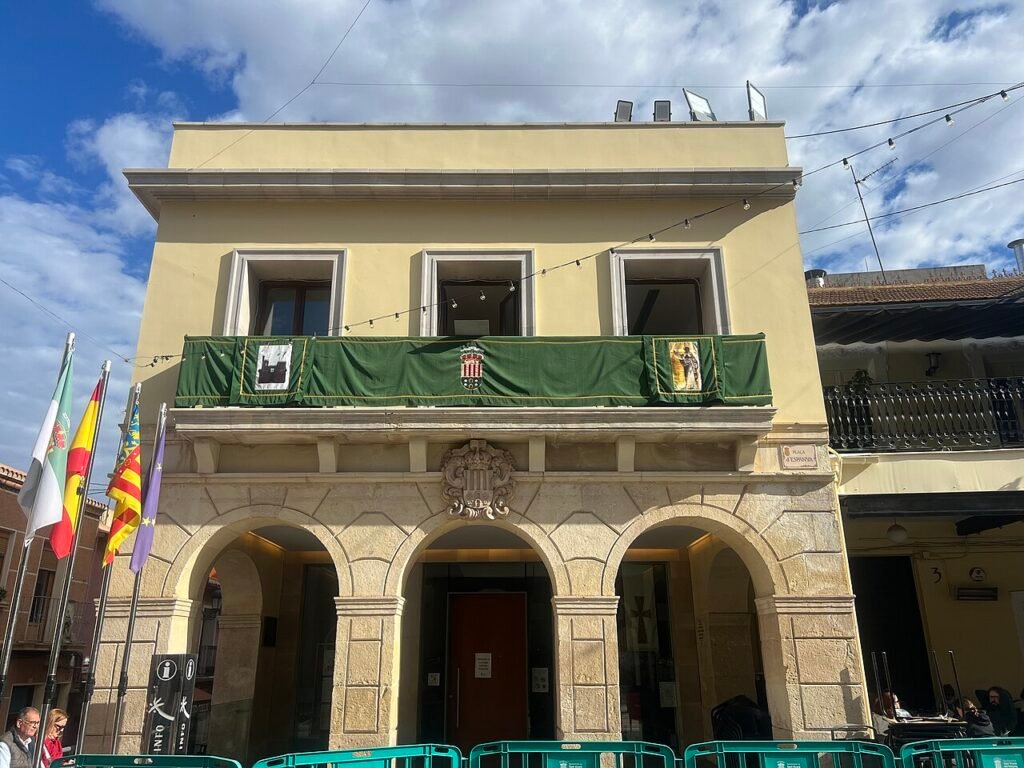
Old Town Hall located in the Plaza de España during the patron saint festiv…, San Vicente del Raspeig, Spain
Day 2: The Quiet Corners & The Feast That Stays
Sunday in San Vicente moves at the pace of a siesta that’s already started. Shutters stay down until 10am, the tram hums less frequently, and the town exhales after a late Saturday. You’ll discover that this is exactly the day to explore the areas most tourists rush past—the cemetery with its matchstick-wielding angel, the hidden chapel, the bakery that’s been baking the same bread for 80 years.
- Morning: Walk to Ermita de San Vicente Ferrer, a small 18th-century chapel perched on a hill just behind the town. The walk up (about 10 minutes from the market) takes you through a scruffy patch of Mediterranean scrub—pines, rosemary bushes, and cicadas that whirr like electrical wires. Inside the chapel, you’ll find a wooden statue of San Vicente, the town’s patron saint, holding a matchstick instead of the usual cross—a local quirk that only insiders know. Entry is free. For breakfast, head to Pastelería Juanelo (Calle San Juan, 12) for a “coca de mistos”—a sweet pastry shaped like a matchstick, dusted with sugar and filled with chocolate cream. Cost: €2.80.
- Midday: The main attraction this morning is the Porrat de San Vicente—if you’re visiting in November around the festival dates (the last weekend of November). This centuries-old street market fills the town with vendors selling anything from counterfeit football shirts to live chickens, ceramic pots, and, yes, matches by the kilo. Insider tip: go before 11am to avoid the crowds and snag the best “buñuelos” (fried dough balls, €1 for a bag of five) from the stall run by the ladies from the local parish. If you’re not here in November, visit the Mercado de los Sábados instead—a smaller but lively weekly market on Avenida de la Libertad, Saturdays 9am–2pm. Look for the man selling handwoven “esparto” baskets—he’s been there since 1972.
- Afternoon: Spend the afternoon in the barrio de la Loma, a residential quarter with quiet streets lined with lemon trees. Stop at La Tetería de la Loma (Calle Hoya, 5) for a pot of “té de hierbas locas” (crazy herb tea, €3.50)—a blend of locally harvested thyme, rosemary, and lemon verbena. The owner, a retired biology teacher named Cristina, will tell you about the time she found a fossilized sea urchin in her garden—proof that the entire area was once underwater. Then walk down to Parque La Torreta, a small park with a view of the Alicante coastline in the distance.
- Final Evening: Make your farewell dinner at El Casino (Calle Mayor, 18), a proper old-school Spanish “sociedad gastronómica” that opens its doors to the public on Sundays. Order the “conejo al ajillo” (garlic rabbit, €14) followed by “arroz con leche” (rice pudding, €5) that tastes exactly like your grandmother’s—if your grandmother were Valencian and knew how to caramelize sugar with a blowtorch. The dining room is all dark wood, white tablecloths, and the quiet murmur of elderly couples who have been coming here for 40 years. After dinner, take the tram one last time to the Alicante Beachfront (Parque del Mar) and walk along the promenade until the lights of the city smear into the reflection on the water. You’ll leave San Vicente with a full stomach and a secret: it’s the kind of town that grows on you slowly, like jasmine in a courtyard, until you wonder why you ever underestimated it.

Beautiful view of the Basilica of San Vicente in Ávila, San Vicente del Raspeig, Spain
The Food You Can’t Miss
You came for the paella, you stayed for the arroz con costra, and you’ll leave craving the “coca de llanda” that’s sold by the slice from a paper napkin at the market. The food in San Vicente del Raspeig is a love letter to a time when meals took hours and ingredients came from the plot of land your cousin owned. The signature dish, as you’ll discover, is not paella but arroz con costra—a rice dish that’s baked in a terra-cotta dish with a lid of beaten egg that puffs up like a soufflé. The best version is at El Rincón de Pepe (€15 for a single portion), where the rice is cooked with rabbit, chicken, and saffron, and the egg crust is so golden and crisp it crackles like a leaf underfoot. Locals recommend ordering it with a side of “all i oli” (garlic and oil emulsion, €2) and drizzling it over each spoonful.
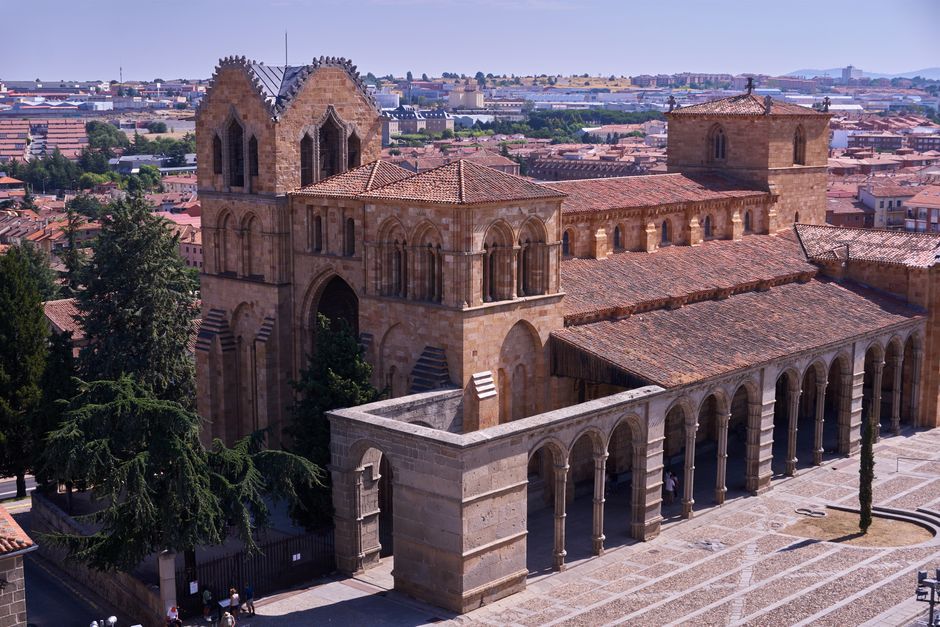
Panoramic view of a historic cathedral in Ávila, San Vicente del Raspeig, Spain
For street food, you can’t ignore the “buñuelos” sold at the Porrat de San Vicente (November only) or from a permanent stall at the market: fried dough rings dusted with sugar, best eaten while standing and trying not to burn your tongue. A bag of five costs €1, and they’re the best €1 you’ll spend all weekend. For a proper sit-down dinner, you’ll find the traditional “casa de comidas” spirit alive at La Cueva (Calle la Fuente, 3), a restaurant that’s been serving “cocido sanvicentero” (a chickpea stew with pork and chorizo, €12) since 1958. The waiters wear white shirts and black trousers, the wine comes in a porrón (a glass pitcher you pour directly into your mouth), and the dessert is always a “flan de queso” (cheese flan, €4) that wobbles like a happy memory.
Seasoned travelers know to look for the “mercado de la tierra” (farmers’ market) that pops up on the first Saturday of each month at the university campus. Here, you’ll

