
San Vicente de Chucurí, Colombia Weekend: Cocoa Trails (2026)
The first thing you notice is the smell—not exhaust or street food, but the deep, earthy aroma of cacao wafting from a hillside finca at dawn. You’re standing in the main square of San Vicente de Chucurí, a town of 35,000 souls tucked into the green folds of Santander’s mountains, and a rooster is competing with the distant roar of a waterfall. Locals sip coffee on wooden benches under the ceiba trees, and the mist is already burning off the surrounding peaks. Over the next 48 hours, you will taste the finest cacao in Colombia, plunge into jungle pools, and walk trails that few foreign travelers have ever set foot on.
Quick Facts Before You Go
- Best Months: December through March and July through August—the driest windows for hiking waterfalls without mudslides. Avoid April–May and October–November, when trails turn to rivers.
- Currency: Colombian peso (COP). As of mid-2025, roughly 4,000 COP to 1 USD. You’ll want 20,000–50,000 COP notes for small purchases.
- Language: Spanish. English is spoken virtually nowhere outside the main square’s two hotels. Download Google Translate’s offline pack for Spanish before you arrive.
- Budget: 120,000–200,000 COP per day covers private transport, three meals, coffee stops, and a mid-range hotel. Travelers on a shoestring can do 80,000 COP if they skip guides.
- Getting There: Fly into Bucaramanga’s Palonegro Airport (BGA), about 2.5 hours northeast. Direct flights from Bogotá cost around $60–$90 and take 50 minutes. From the airport, catch a shared taxi to Bucaramanga’s main bus terminal, then a direct bus to San Vicente (18,000 COP, 2 hours). Book flights at Skyscanner.
Day 1: Cacao & Cobblestones
- Morning (8–11am): Walk to the Parque Principal at Calle 12 between Carreras 7 and 8, grab a tinto (black coffee with panela) at Café Chucurí—a kiosk on the southeast corner since 1962—for just 1,500 COP. Then take a 10-minute mototaxi ride (4,000 COP) to Finca Cacaotera El Porvenir, a working cacao farm that has been in the Rincón family since 1898. You arrive at 9am for their Chocolate Experience tour (35,000 COP per person, 2 hours). Don Justo, the 72-year-old patriarch, will walk you through the entire process: splitting a cacao pod open with his machete, explaining how the beans ferment in wooden boxes lined with banana leaves for seven days, and finally roasting them on a clay comal. You will taste a single-origin sample—70% dark with notes of red berry and honey—that makes everything you’ve ever called “dark chocolate” taste like candy by comparison.
- Lunch (noon): Hop a mototaxi back to town and head to Restaurante La Casona at Calle 11 #7-32, a converted colonial house with a courtyard full of bougainvillea. Order the bandeja chucureña (18,000 COP): a local riff on the classic bandeja paisa, with grilled chorizo, chicharrón, a fried egg, beans, rice, and—the secret—a slice of cacao-and-panela glazed pork belly. Locals recommend washing it down with agua de panela con limón (2,000 COP), a hot sugarcane drink with fresh lime that cuts the richness.
- Afternoon (1–5pm): Cascada La Pampa, a 45-meter waterfall about 25 minutes from town by mototaxi (15,000 COP one-way, negotiate before you go). Visitors often discover the trailhead at the end of the village of La Pampa—ask any local to point you to “el sendero de la cascada.” The hike is 40 minutes each way through secondary cloud forest, with butterflies the size of your palm and the constant whir of cicadas. Bring swim trunks because the pool at the base is deep enough for a plunge. Most tourists skip this because the trail is unmarked, but that’s exactly why you should go: on a Saturday afternoon in peak season, you might see three other people. The water is cool—around 22°C—so brace yourself, but the shock of it against your skin after the humid walk is one of those moments you replay later.
- Evening (7pm onward): Dinner at El Caminante on Carrera 7 #10-14, a family-run spot with red-checkered tablecloths frequented by locals celebrating birthdays and anniversaries. Order the trucha al ajillo (trout in garlic butter, 22,000 COP), served with patacones (twice-fried plantains) and a simple salad. The fish comes from a trout farm just outside town—you can taste the freshness in the flake. After, stroll down the Calle del Comercio (Carrera 8) where, come nightfall, vendors set up grills and fry empanadas de cacao (3,500 COP each)—a local invention: the dough is made with cacao mass, and the filling is shredded beef and potato. You’ll smell them before you see them, a scent like roasted almonds meets grilled meat. Grab one and sit on a bench in the plaza, watching kids play football under the streetlights and couples dance to vallenato from an open doorway.

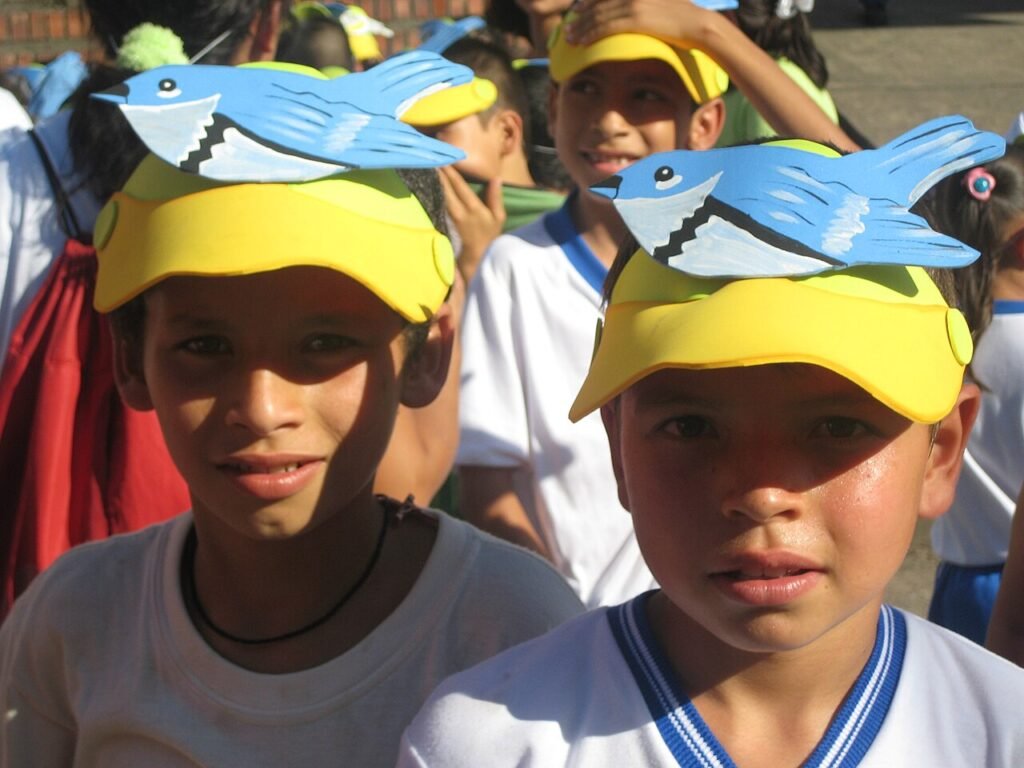
Credit: Brian Smith/American Bird Conservancy
http://www, San Vicente de Chucurí, Colombia
Day 2: Waterfalls & The Whisper of the Forest
Day two strips away the town entirely and drops you into the emerald silence of the surrounding mountains. This is the part of the weekend where you understand why San Vicente de Chucurí is called the “green heart of Santander”—a landscape of deep ravines, hanging mist, and trails that feel like they were carved by machete yesterday. You will be tired by sundown, but in the best possible way.
- Morning (7–10am): Breakfast at Panadería El Buen Pan on Calle 10 #7-15, a hole-in-the-wall with an oven visible from the street. Grab two pan de yuca (cheese bread, 1,500 COP each) still warm from the hearth, and a café con leche (2,000 COP). The owner, Doña Elena, has been kneading dough here since 1985, and travelers will tell you her arequipe-filled pastries sell out by 8am. Then, at 8am sharp, meet your guide at the main square for a trip to Cañón del Río Chucurí—a gorge system with four main waterfalls you can visit in a single outing. Your best bet is to arrange a guide through Rutas Santander (WhatsApp: +57 310 245 7890) for 80,000 COP per person, including transport and lunch. The drive is 40 minutes in a 4×4 up a dirt road carved into the mountainside—you will grip the seat, but the views of the valley falling away are worth every white-knuckle moment.
- Midday (10am–2pm): You arrive at the trailhead for Cascada El Salto del Duende. Your guide, a local named Henry who has been leading these walks for 14 years, will point out medicinal plants as you descend: hoja santa for stomach pain, achiote for coloring, and the tree locals call “dormilón” because its leaves close when you touch them—a living secret language. The hike takes 90 minutes each way, with two stream crossings. Bring sandals with straps for the water sections—the rocks are mossy and you will slip in bare feet. At the base, the waterfall drops 60 meters into a turquoise pool that reflects the canopy above. The sound is like a constant, deep thunder that you feel in your chest. You will swim—everyone does—and the water is 20°C, cold enough to take your breath for the first 30 seconds. Henry will prepare a simple lunch of arepas, cheese, and fresh guava juice that he carries in his pack and serves on a flat rock by the pool. It is the most unpretentious meal you will ever remember as one of the best you’ve eaten.
- Afternoon (2–5pm): After the hike back (you will climb the 600-meter ascent in about 50 minutes if you’re fit), Henry drives you to the nearby Mirador Alto de la Cruz, a viewpoint at 1,400 meters elevation. From here, on a clear day—and December through February are your best bet—you can see the Río Magdalena valley stretching to the horizon, and, on the very farthest ridge, the silhouette of the Sierra Nevada del Cocuy on days of perfect visibility. Spend 20 minutes just standing there. Locals say that if you stand at the cross and make a wish, the wind carries it east to the mountains and it comes true. Save your breath for the photos—the panorama is staggering, with vultures circling the thermal currents above the canyon. Back in town by 4pm you will want a shower and a hammock nap.
- Final Evening (6:30pm onward): Your farewell dinner deserves a special setting, and Finca La Cabaña—a 10-minute mototaxi ride from town on the road to Barrancabermeja—is that place. This restaurant is built into a hillside cacao farm, with open-air tables under a thatched roof and fairy lights strung between guava trees. Call ahead (+57 321 456 7890) to reserve, especially on weekends. Order the cazuela de cacao (28,000 COP): a clay bowl of slow-braised beef in a sauce made from cacao nibs, panela, and dried chili, served with patacones and a fresh tomato salsa. The bitterness of the cacao plays off the sweetness of the panela, and the beef—cooked for six hours—falls apart at the touch of a fork. For dessert, the torta de cacao (8,000 COP) is a flourless chocolate cake made with the farm’s own 80% dark chocolate, served with a dollop of Colombian sour cream—an unlikely pair that works absurdly well. As you sit there, in the warm night air, with the sound of frogs from the cacao groves and the lights of San Vicente twinkling below, you will already be planning your return.

Illuminated facade of Iglesia San Andres at dusk in Pasto, Nariño, Colombia., San Vicente de Chucurí, Colombia
The Food You Can’t Miss
Cacao is the backbone of everything here, but you will find a whole ecosystem of flavors built around it. Street vendors on Calle 12 sell chicha de cacao (2,000 COP per cup)—a fermented drink made from cacao pulp and panela, sweet and mildly fizzy with a 1% alcohol content that locals call “the breakfast of champions.” Seasoned travelers seek out Señora Berta’s stall on the southeast corner of the Parque Principal, where she fries cocadas de cacao (1,000 COP each)—shredded coconut and cacao mass pressed into patties and fried until caramelized on the outside. She’s been there since 1998, and she makes about 200 a day, selling out by 2pm.
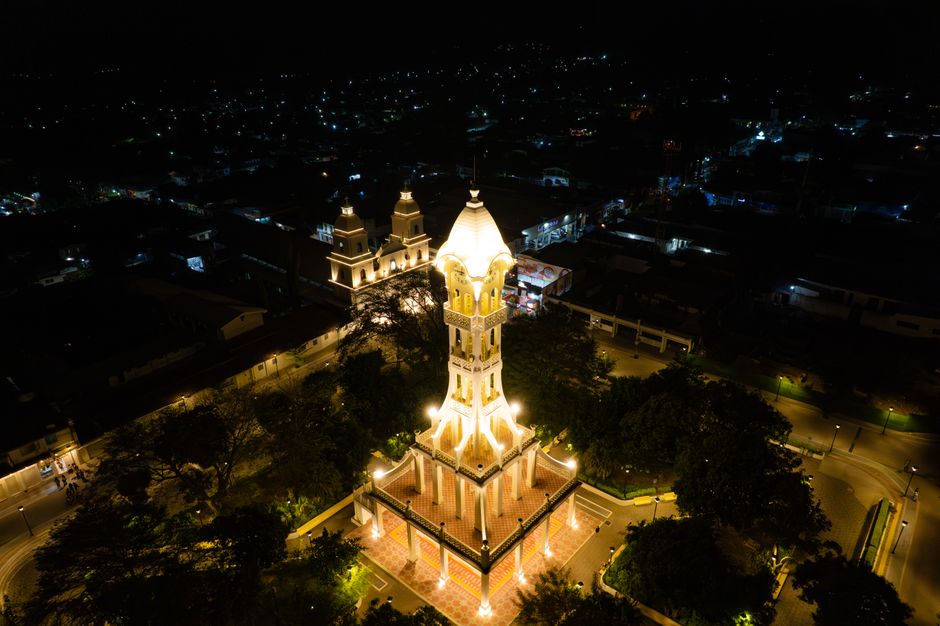
Aerial view of the illuminated bell tower in San Vicente, San Vicente de Chucurí, Colombia
For a proper restaurant meal, Restaurante El Rincón del Cacao (Calle 12 #8-23) serves an all-cacao menu for lunch—think cacao-infused arepas (5,000 COP), cacao-and-chicken stew (16,000 COP), and their famous cacao mousse (6,000 COP) that uses no dairy, just avocado and coconut milk. It’s run by three sisters—Marta, Lucía, and Elena—whose grandmother taught them the recipes. The wait can be 20 minutes at peak lunch hour (noon to 1:30pm), but order a glass of cacao lemonade (3,000 COP) while you wait and you won’t mind.
You’ll also find hormigas culonas (roasted ants) sold by the bag on Carrera 7—5,000 COP for 100 grams. They taste like salty, toasted peanuts with a hint of smoky caramel. Travelers often buy a bag as a curiosity and finish it before they’ve walked two blocks. Pair them with a cold cerveza costeña (4,000 COP at any corner shop) and you’ve got a snack that’s both authentic and weirdly addictive. The ants are harvested from surrounding farms between April and May, when the winged queens emerge after the rains—a local tradition that dates back to the Guane indigenous people.
Where to Stay for the Weekend
El Centro (Calle 10–12, Carreras 7–8): This is your home base if you want to step out your door and be in the middle of the action. Hotel Colonial San Vicente (Calle 11 #7-26) is a restored 1920s mansion with a courtyard fountain, rooms with high wooden ceilings, and a breakfast that includes scrambled eggs, fresh juice, arepas, and a slice of chocolate cake—all part of the room rate (80,000 COP per night for a double with private bathroom). Book via Booking.com for a 10% discount if you book 14 days in advance. Another option is Hostal La Posada (Carrera 8 #10-45), a budget-friendly guesthouse with shared balcony hammocks and a rooftop view of the church. Dorm beds from 40,000 COP, private rooms from 65,000 COP.
Fincas on the Outskirts (5–15 minutes by mototaxi): For the full immersion, book an Airbnb or WhatsApp arrangement at Airbnb for Finca El Encanto—a working cacao farm with three guest cabins (100,000 COP per night). Each cabin has a porch overlooking the groves, a hammock, and a wood-fired stove for cooking. The owners, a couple named Carlos and Inés, will offer to make you breakfast of fresh cacao tea, farm eggs, and hand-pressed guava paste for 12,000 COP extra. You will fall asleep to the sound of the river and wake to toucans in the trees. The main drawback is that a mototaxi into town costs 10,000 COP each way, so budget for that.
Mid-range

