
San Marcos, Guatemala Weekend: Yoga by the Lake (2026)
You step off the lancha onto the weathered wooden dock at 7 a.m., and the first thing that hits you is the stillness—the lake glassy, the air heavy with the scent of copal incense drifting from a small altar near the shore. A yogi in loose cotton pants glides past, and the only sound is the rhythmic slap of the lake against the dock and the distant cry of a motmot. This is San Marcos, a pocket of the world where time unspools differently, and where a weekend becomes a quiet pilgrimage.
Quick Facts Before You Go
- Best Months: November to April (dry season) – skies are clear, Lake Atitlán glows turquoise, and the afternoon rain doesn’t interrupt your sunset meditation. Travelers who come in May or September brave the brief downpours but are rewarded with fewer crowds.
- Currency: Guatemalan Quetzal (Q) – roughly 7.8 Q to 1 USD, though many tourist spots accept dollars at a slightly worse rate. Bring small bills; change is scarce.
- Language: Spanish is the official tongue, but in San Marcos English is widely spoken in yoga studios, cafés, and hostels. Still, savvy visitors learn a few words like “gracias” and “¿cuánto cuesta?” to connect with local Maya women who sell handmade bracelets.
- Budget: $40–$70 per day per person – a mid-range dorm runs about $15, a private room $35, meals $3–$10, and yoga classes $5–$12. You can spend less by eating at local comedores, or more with nicer lake-view bungalows.
- Getting There: Fly into La Aurora International Airport (GUA) in Guatemala City – about 3.5 hours from Miami or 4.5 from Los Angeles. From there, take a shared shuttle (around $20, 3–4 hours) directly to San Marcos via Panajachel. Book your flight at Skyscanner for the best deals.
Day 1: Sunrise Salutations & Sunset on the Lake
You start the morning not with an alarm but with the first light washing through your window, a pale gold that invites you to roll out your mat. San Marcos is a place that rises early, and you quickly learn why: the hours between dawn and 9 a.m. hold an almost sacred stillness. Locals recommend heading straight to El Árbol de Yoga (Tree of Yoga) on the path just uphill from the dock. The session here, a mix of Hatha and gentle flow, runs from 7:30 to 9 a.m. and costs Q35 (about $4.50). The wooden platform overlooks the lake, and you’ll catch the faint hum of a didgeridoo from a nearby eco-hut. By the time your final savasana ends, the mist has burned off and the mountains of the Sierra Madre stand sharp against the indigo sky.
- Morning (8–11am): After yoga, walk five minutes to Café Sabor de la Vida for breakfast. Order the “Desayuno Maya” (Q30) – scrambled eggs with black beans, plantains, and fresh corn tortillas – plus a mug of locally grown organic coffee (Q10). Take your coffee to the dock and simply sit. You’ll see small boats bobbing and local women in woven huipiles washing clothes on the shore.
- Lunch: At 12:30, head to Shanti, a famous vegetarian restaurant with a lake-view garden. Don’t miss the vegan “tamal de elote” (Q22) – a sweet corn tamale steamed in a corn husk and served with a drizzle of local honey. The lentil soup (Q20) is also legendary. It’s a favorite of long-term travelers who return weekly.
- Afternoon (1:30–5pm): Spend the early afternoon exploring the village’s network of dirt paths. Your best bet is to hike the 15-minute trail up Mirador de los Volcanes, a viewpoint that peers over the lake toward the volcanoes San Pedro, Atitlán, and Tolimán. The path is steep but manageable; wear sandals with good grip. Afterward, hire a small lancha (Q25 per person, about 20 minutes) to the neighboring village of San Juan La Laguna. Here you’ll find weaving cooperatives and a small textile museum (entry Q10). Travelers often discover that the real treasure is the quiet main square, where you can sip fresh pitaya juice (Q12) and watch kids play soccer.
- Evening: For dinner, return to San Marcos and settle into El Barco – a rustic spot right on the water with fairy lights strung above. Order the catch of the day (usually tilapia or bass, grilled with garlic and lime, about Q70). Sit outside and watch the sunset turn the volcano’s flanks pink. Afterward, head to the open-air temple at Yoga Forest (free, donations accepted) for a drum circle or a kirtan that sometimes starts around 7:30 p.m. You don’t need to be a guest – just follow the sound of chanting and the thrum of a frame drum.

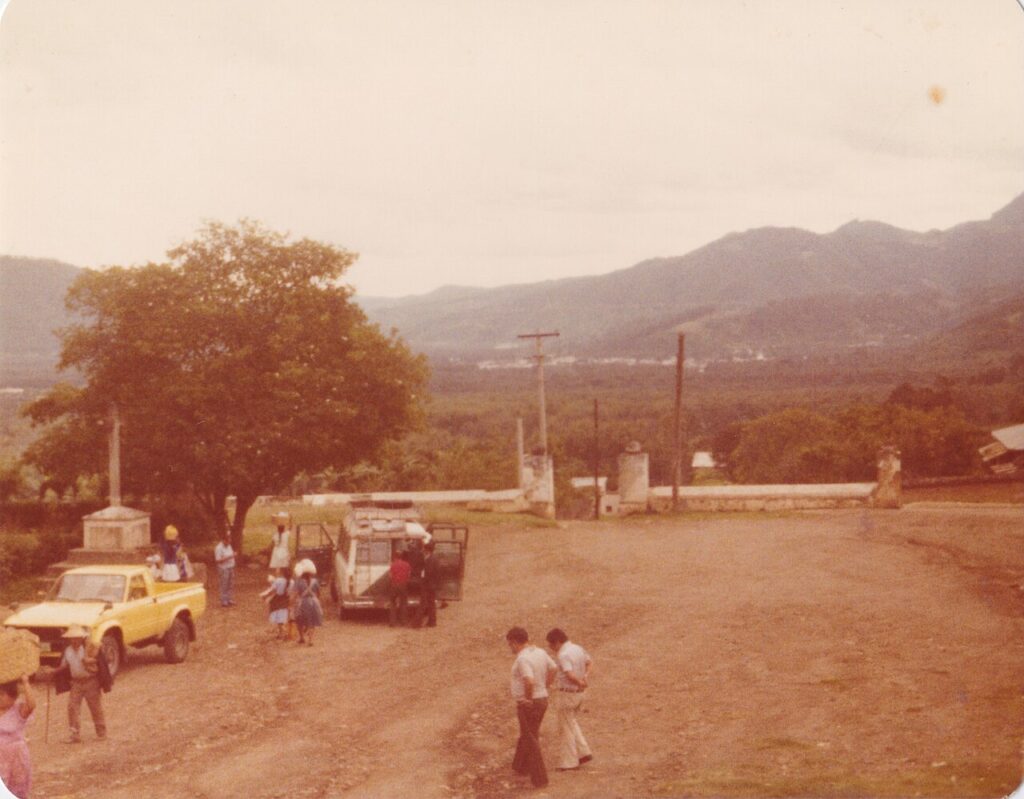
Guatemala Western Highlands 1980. San Marcos, I think., San Marcos, Guatemala
Day 2: Mayan Ceremonies & a Temazcal Sweat
The second day takes a deeper turn. San Marcos is not just about yoga; it’s a place where ancient Maya traditions coexist with global wellness culture. You’ll want to book a temazcal (traditional sweat lodge ceremony) in advance – these fill up quickly, especially on weekends. Many local shamans offer them near the lake at sunrise, and they can last up to three hours. The experience is intense: you sit with a dozen others around a small dome of clay-covered branches, while hot volcanic stones are brought in one by one. The shaman pours water infused with rosemary and eucalyptus onto the stones, and the steam fills the dark space with a scent that clings to your skin for hours. You emerge feeling both wrung out and renewed.
- Morning (7–10am): Begin the day not with yoga but with a Mayan fire ceremony held at the Templo de la Luna (Temple of the Moon), a small altar just a ten-minute walk up from the dock. Look for the sign that says “Ceremonias Mayas – 7:30 a.m.” Most days a local “ajq’ij” (day keeper) named Don Mateo leads the ceremony (donation suggested, Q20–30). You’ll sit around a small fire while he burns copal, calls in the directions, and offers candles and flowers to the ancestors. It’s a profoundly grounding experience, and you can participate by setting an intention. Afterward, have breakfast at Comedor Lupita – a no-sign place next to the pulpería (corner store). The locals love her “chilaquiles verdes” (Q25) – crispy tortilla strips topped with green salsa, crema, and cheese.
- Midday (11am–1:30pm): This is when you schedule your temazcal. Several reputable guides offer them, but the wisest choice is Don Elías, whose family has run sweat lodges for generations. He charges Q100 per person (about $13) for a session that starts at 11 a.m. and lasts about two hours. Meeting point is near the soccer field – look for a bamboo arch with flowers. Insider tip: don’t drink coffee beforehand, and keep a small towel over your head to help you breathe the thick steam.
- Afternoon (2–5pm): After a cold shower (your body will thank you), wander through the artisan market that sets up near the main path every Saturday and Sunday. You’ll find handwoven scarves (Q60–100), jade figurines, and crystal necklaces. Most visitors overlook the small block of shops behind the market where local women sell medicinal herbs – try the “ruda” (rue) bundle for Q5, used in Maya cleansing rituals. Then take the short walk to the “Bamboo Garden” – a communal space with hammocks and a tiny library. Grab a coconut water (Q15) and just swing for an hour.
- Final Evening: Your farewell dinner demands a special place. Reserve a table at El Jardín de la Luna, a restaurant run by an Italian-Guatemalan couple who grow most of their vegetables on the premises. The star dish is the “pepian” (Q55) – a rich chicken or pumpkin-seed stew that traces its origins to pre-Hispanic Maya kitchens. It comes with rice, tortillas, and a side of pickled jalapeños. The terrace faces the lake, and if you’re lucky, a guitarist will be playing as the last light fades. End the night with a short walk to the dock – lie on your back and watch the stars multiply. In San Marcos, the Milky Way is a river of light you can almost hear.

A person picking coffee beans from a tree, San Marcos, Guatemala
The Food You Can’t Miss
San Marcos is a vegetarian haven, but don’t let that fool you into thinking the food is bland. The local cuisine bursts with color and depth, built around staples like black beans, corn, and fresh vegetables from the highlands. Travelers often discover that the most memorable meals are the simplest ones. At the tiny street stall next to the dock, a woman named Doña Olga sells “chuchitos” – little corn-tamales stuffed with potato and green chili, doused in a tomatillo salsa (three for Q10). Eat them standing up while the lake breeze lifts your hair.
For a sit-down meal, the restaurant “Café La Puerta del Sol” is a must. Run by a German-married-to-a-Maya couple, the menu changes daily but always includes a vegan option – their “curry de lentejas con arroz” (lentil curry with rice, Q35) is creamy and spiced with local achiote. The real gem, however, is the “atol de maíz” (a warm corn drink scented with cinnamon, Q8) – you’ll see locals sipping it in the mornings. Try it at the market, where Doña Rosa makes it fresh every day from 7 a.m. until it sells out, usually by 10.
Don’t leave without sampling the “tamal negro” (Q20) from the tiny bakery “Pan de Vida” on the main path. It’s a sweet tamale made with cacao and raisins, wrapped in a banana leaf. The baker, a Maya woman named María, learned the recipe from her grandmother. She’s been making them for twenty years and sells out by noon. Get there early, and while you’re at it, buy a loaf of her “pan de yuca” (cassava bread) – it’s the perfect snack for the boat ride back to Panajachel.

Woman in black and white dress standing beside wall with graffiti, San Marcos, Guatemala
Where to Stay for the Weekend
San Marcos is a small village, and accommodation choices revolve around two main neighborhoods: the “Circle” (the area around the main dock and the path to the yoga temples) and the “Upper Path” (a 15-minute uphill walk to the outskirts, quieter and more forested). Your best bet for convenience is the Circle. Stay at Hotel La Casa del Mundo (a mid-range option with lake-view rooms from $45 a night, including a vegetarian breakfast) – the rooftop terrace has hammocks and a panoramic view of the volcanoes. For budget travelers, Aaculaax Hotel (a short walk up from the dock) offers basic but clean private rooms from $22 per night and has a small meditation garden. If you want eco-luxury, the Eagles Nest retreat (doubles from $90) sits on a hillside with a private dock and includes daily yoga and organic meals. Book through Booking.com or Airbnb for private bungalows; many listings offer discounts for week-long stays, but a weekend yields enough time to fall in love.
Before You Go: Practical Tips
- Getting Around: The village is walkable – no cars allowed beyond a few motorcycles. To visit nearby villages (San Pedro, San Juan, Santiago), take a public lancha from the dock. Boats run from 6 a.m. to 6 p.m. and cost Q20–30 per person, per leg. You can also hire a private boat for about Q150 per hour. For longer distances (e.g., to Panajachel), the direct lancha costs Q25 and takes 30 minutes.
- What to Pack: A quick-dry yoga towel (the humidity lingers), a light rain jacket for sudden showers (even in dry season), natural insect repellent (the lakeside mosquitoes are persistent at dusk), and a headlamp for the dark paths after 7 p.m. – the village has limited street lighting.
- Common Tourist Mistakes: One frequent error is assuming you can use credit cards everywhere. Most places accept only cash, so you need to bring enough Quetzales from the ATM in Panajachel (there are no working ATMs in San Marcos itself). Another mistake is overplanning – savvy visitors resist the urge to see all the villages on a short trip. Instead, they linger in San Marcos and take one half-day boat trip to San Juan, leaving room for spontaneity.
- Money-Saving Tip: Eat at comedores (small family-run eateries) for Q30–40 per meal – try “Comedor El Espíritu” near the soccer field for a Q35 lunch of pep

