
Salt, Silk, and the Sea: Why Larak Island Whispers Secrets the Mainland Forgot (2026)
In 1621, a Portuguese captain named Ruy Freire de Andrade anchored off Larak’s southwestern shore, his caravel laden with cannons and ambition. He ordered a fortress built from coral blocks and lime, its walls rising to command the Strait of Hormuz. That fort still stands today, eroded by salt wind but unbowed—a silent witness to the island’s transformation from a colonial prize into a quiet, pearl-white refuge where time moves to the rhythm of the tide.
The Story Behind Larak Island, Iran
Larak’s story begins long before the Portuguese arrived. By the 10th century, Arab and Persian mariners used the island as a way station for spice and silk ships crossing the Persian Gulf. Local tradition holds that the name “Larak” comes from the Persian word for “light”—lara—a nod to the luminous salt flats that shimmer under the midday sun. When the Safavid Shah Abbas I expelled the Portuguese from Hormuz in 1622 with English help, Larak fell back under Persian control. Yet the island remained a pawn in a larger game: British East India Company maps from 1763 mark it as a watering stop, and in the 19th century, Qajar governors leased its salt mines to Armenian merchants.
The real turning point came in the 1970s, when the Shah’s modernization plans bypassed Larak altogether. No paved roads, no airport, no tourist infrastructure. After the 1979 Revolution, the island faded into obscurity, known only to fishermen and a few intrepid travelers who braved the voyages from Bandar Abbas. Today, fewer than 1,000 people call Larak home, and visitors often discover that the island’s true treasure is not its abandoned Portuguese fort or its salt domes, but the unhurried, unscripted way of life that has persisted for centuries.
Neighborhood by Neighborhood
Larak Village (the Fishermen’s Quarter)
Your first step onto Larak will almost certainly be at the concrete pier near the main village. A dozen blue-and-white wooden dhows bob in the shallows, nets drying on poles. The village itself is a maze of narrow alleys lined with one-story houses painted in pastel pinks, turquoises, and yellows—colors that pop against the blinding white of the salt flats. Here you’ll find the island’s only shop, a small general store run by a woman named Zahra who sells bottled water, dates, and plastic sandals. Locals recommend visiting the village mosque, a simple white-washed building with a single minaret, at dawn, when the call to prayer echoes across the water and the fishermen return with their catch. Don’t miss the community oven, a dome-shaped kiln behind the mosque where women bake tandoor bread every morning at 6 a.m. The smell of charcoal and warm flour is the island’s unofficial welcome.
The Salt Flats (Namakdan)
Two kilometers east of the village, the landscape cracks open into a vast, lunar plain of salt crust. Travelers often mistake this for a dry lake bed, but it’s actually a salt dome—a geological formation created when ancient salt deposits pushed through the Earth’s crust. The surface crunches underfoot like fresh snow, and in certain light, the hexagonal salt crystals form a kaleidoscope of pink, white, and lavender. Savvy visitors come at sunset, when the low sun turns the salt into a mirror reflecting the sky. There are no structures here, no paths—just you and the immense silence. The secret is to walk about 300 meters inland from the road; the deeper you go, the more intricate the crystal formations become. Bring sturdy shoes: the salt can cut exposed skin.
The Portuguese Fortress (Bast-e Parakeh)
Perched on a rocky promontory overlooking the Strait of Hormuz, the fort is the island’s only historical monument. It’s a small, rectangular structure with crumbling battlements and a central courtyard where you can still see the outlines of cisterns and cannon emplacements. Locals call it Bast-e Parakeh, which loosely translates to “broken fort.” Most tourists overlook it because guides rarely mention it, but for those who make the 20-minute walk from the village, the reward is a 360-degree panorama of turquoise water and distant tankers crawling along the horizon. The fort is open all day, free of charge, but you’ll need a local to unlock the rusty iron gate. Ask at the general store for Abbas, a retired fisherman who keeps the key. He’ll tell you stories of his grandfather, who helped dismantle parts of the fort for building stones in the 1950s—a piece of history you won’t find in any book.
The Local Table: What Natives Actually Eat
Larak’s cuisine is defined by one ingredient: fish. Specifically, the housi (yellowfin tuna) and shekar (rainbow runner) that teem in the surrounding waters. You won’t find elaborate spice blends or heavy sauces here—the island’s cooking is brutally simple, allowing the freshness of the sea to speak. Every evening around 5 p.m., the day’s catch is laid out on newspaper sheets at the village fish stand. Natives buy whole fish, gut them on the spot, and take them home to be grilled over mangrove charcoal. The secret is a splash of lime and a dusting of sea salt—no more.

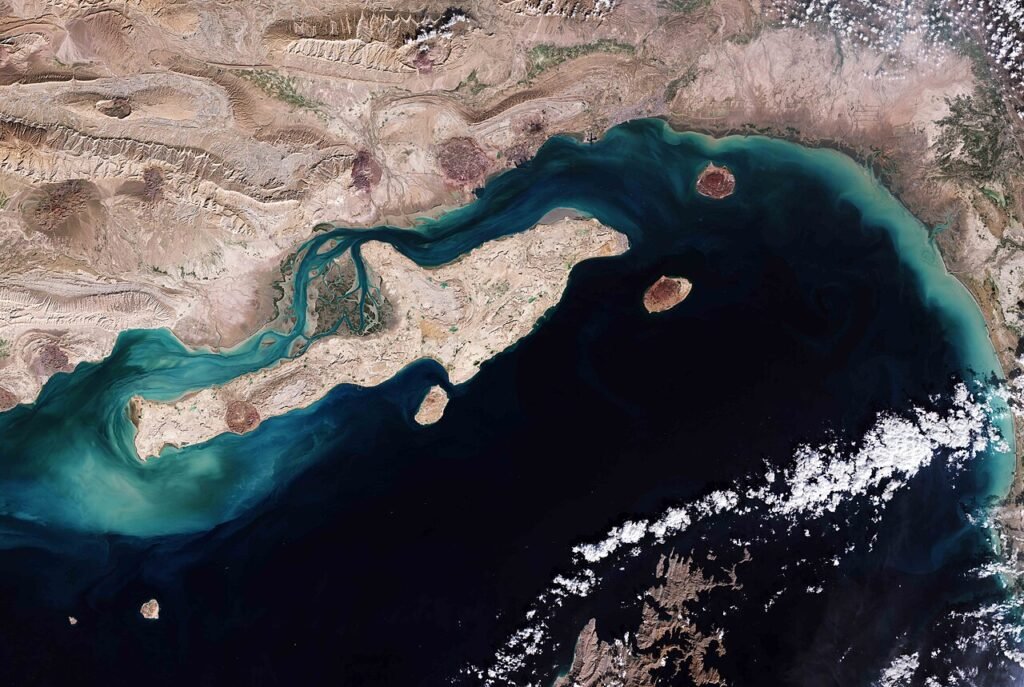
The Copernicus Sentinel-2 mission takes us over Qeshm Island – the largest …, Larak Island, Iran
One dish you must seek out is mahi machbous, a slow-cooked rice dish layered with spiced fish, dried limes, and caramelized onions. The best version is made by Fatima, a grandmother who runs a tiny home kitchen on the eastern edge of the village. Her family has no sign, but ask any local for “Fatima’s Fish” and they’ll point you to the house with the blue door. A plate costs 150,000 Iranian rials (about $0.50 at the unofficial exchange rate), and you must call a day ahead. She serves only at 1 p.m., and when she runs out, she runs out. The accompaniment is a simple salad of cucumber and tomato dressed with verjuice—unripe grape juice that grows wild on the island’s hillsides. You’ll find that sour, fruity tang in nearly every meal; it’s the local accent that makes Larak’s food distinct from anywhere else in the Gulf.
Art, Music & Nightlife
There is no nightlife on Larak as you might imagine it—no bars, no clubs, no DJs. But the island’s creative pulse is strong and old. The most cherished tradition is bandari music, a blend of African drumbeats and Persian melodies that arrived with enslaved people brought from Zanzibar in the 19th century. On Friday evenings, a group of elderly men gather under a tamarisk tree near the pier, playing the ney-anban (a bagpipe-like instrument) and the dohol (a double-sided drum). Travelers are welcome to sit on the sand and listen; visitors often describe it as the most authentic music experience in all of Iran. No tickets, no stage, just the rhythm of the sea and the voices of men who learned the songs from their fathers.
For visual art, look to the salt—literally. A local woman named Parisa has gained a small following for painting intricate geometric patterns on dried salt tiles, using natural pigments crushed from the island’s soil (turquoise from copper oxide, red from iron ore). She sells these at the small weekly market that sets up every Saturday morning outside the mosque. A palm-sized tile costs about 500,000 rials (roughly $1.60). Most visitors miss it because the market is just a few rugs on the ground, but if you arrive by 8 a.m., you can watch Parisa work and even try painting your own tile.
Practical Guide
- Getting There: Fly to Bandar Abbas International Airport (BND) from Tehran (1.5 hours, approximately $50–$80 one-way) via Iran Air or Qeshm Air. From Bandar Abbas, take a shared speedboat from the Shahid Haqqani Pier to Larak—departures at 8 a.m. and 2 p.m. only (45 minutes, 600,000 rials/$2 per person). Book flights at Skyscanner.
- Getting Around: Larak has no cars for rent. Your best bet is walking: the entire island is only 9 km long. For longer distances, locals charge 200,000 rials for a ride on the back of a motorcycle. To reach the salt flats, it’s a 40-minute walk from the village; follow the dirt track past the cemetery.
- Where to Stay: There are no hotels. The only lodging is basic homestays arranged through the village cooperative. Ask at the general store for “Khalil’s House”—two simple rooms with shared bathroom, a mattress on the floor, and breakfast (bread, cheese, sweet tea) for 1.2 million rials ($4) per night. Check alternative options on Booking.com (rare but sometimes listed under “Larak Island homestays”).
- Best Time: November through March. Daytime highs of 22–28°C (72–82°F) make walking bearable. Avoid June–September, when temperatures exceed 45°C and humidity is suffocating. April and October are marginal; you’ll sweat but survive.
- Budget: A very realistic daily cost for a solo traveler is 3–4 million rials ($10–$13). That covers homestay, three shared meals (cooked by your host or at Fatima’s), water, and one motorcycle ride. Bring cash in Iranian rial or US dollars—there are no ATMs.

Iconic Azadi Tower in Tehran, Larak Island, Iran
What Surprises First-Time Visitors
The first thing that catches travelers off guard is the absence of noise. Larak has no cars, no generators after 10 p.m., no streetlights. The quiet is so deep that you can hear your own heartbeat. Many visitors report a kind of sensory recalibration: after a few hours, the hum of the mainland becomes a distant memory, and the sounds of wind and water feel like a bodily hum. It’s disorienting at first, then deeply restorative.
The second surprise is the warmth of the locals. Iranians are famously hospitable, but on Larak, the generosity can feel overwhelming. You might be invited into a home for tea by a stranger who noticed you walking past. You might be offered a piece of grilled fish by a fisherman who saw you admiring his boat. There’s no expectation of payment, no ulterior motive—just an old island ethic that says a guest is a gift. Savvy visitors carry small offerings: a bag of dates, a box of tea, or a simple gift for the children. But even if you arrive empty-handed, you’ll be treated like family.
Your Larak Island, Iran Questions
Is it safe for Western tourists? Safety in Iran is often misunderstood, and Larak is one of the most secure places you can travel. Violent crime is virtually nonexistent. The main risk is dehydration and sunstroke—the island has no medical clinic, so bring your own first-aid kit and at least three liters of water per day. Women should dress conservatively (headscarf, long tunic, loose pants) as per Iranian law, but you’ll find that locals are relaxed, and you won’t face harassment. The biggest practical challenge is the language barrier: very few people speak English. Learn a few phrases in Farsi (salaam for hello, mamnoon for thank you), and you’ll go far.
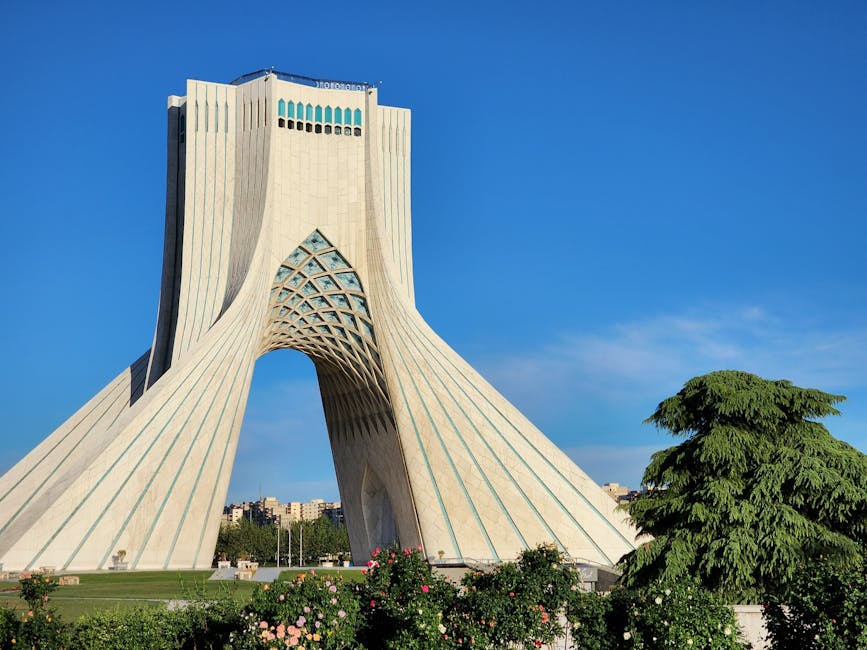
Azadi Tower, Larak Island, Iran
How many days should I spend on Larak Island? Plan for two nights and three full days. One day to walk the village and the fort, one day to explore the salt flats at sunrise and sunset, and one day to simply sit by the pier and watch the boats. Any longer and you’ll run out of things to do; any shorter and you’ll miss the slow rhythm that makes Larak special. Most travelers combine Larak with a visit to Hormuz Island (a 45-minute speedboat away) or Qeshm (one hour), making a one-week loop of the Strait of Hormuz.
Can I visit Larak Island on my own without a guide? Yes, absolutely, and it’s actually the better way. Since there is no official tourism infrastructure, you don’t need a guide—just a sense of adventure. The island is small enough that you can’t get lost. The only critical thing is arranging your boat in advance: contact the Bandar Abbas port office (call +98 76 3222 1234) at least two days before your intended departure, as boats run on demand and may be canceled in bad weather. Once you arrive, locals will quickly adopt you. Just be patient and flexible—Larak runs on island time, and that’s the whole point.

