
Beyond the Ferries: Why Piraeus, Greece, Rewards Travelers Who Look Deeper (2026)
In 493 BC, while Athens was still a modest city-state, the visionary general Themistocles stood on a rocky peninsula three miles southwest of the Acropolis and declared this would become the naval heart of Greece. He ordered the construction of fortified walls connecting Piraeus to Athens, creating a corridor that would shield the fleet and transform a sleepy fishing village into the ancient world’s busiest port. Today, as you step off the metro and hear the ferry horns echo across the Saronic Gulf, you’re standing on the same land that launched triremes against the Persians—and you’ll discover that Piraeus still pulses with the gritty, salt-crusted energy of a city built around the sea.
The Story Behind Piraeus, Greece
Piraeus’s history is a tale of rise, fall, and reinvention. After Themistocles’ vision, the city was laid out on a grid plan by the architect Hippodamus of Miletus in the 5th century BC—one of the earliest examples of urban planning in Europe. The Long Walls, completed in 456 BC, made Piraeus virtually impregnable, and by the Golden Age of Athens the port handled everything from grain to philosophy scrolls. The city thrived as a cosmopolitan hub, with merchants from Egypt, Phoenicia, and Sicily filling its agora. But in 86 BC, the Roman general Sulla sacked Piraeus, burning the Long Walls and razing the ship sheds. For nearly 2,000 years the port languished, reduced to a humble village known as Porto Leone, named for a colossal lion statue that guarded the harbor (now in Venice).
The modern rebirth began in 1834, when the newly independent Greek state chose Piraeus as the nation’s primary port. King Otto commissioned the architect Eduard Schaubert to redesign the city, echoing Hippodamus’s grid. Within decades, Piraeus exploded from 200 residents to over 50,000, driven by shipping, industry, and refugees from Asia Minor after the 1922 population exchange. Today it’s a city of nearly 170,000—Greece’s third-largest municipality—where you’ll find ancient ship sheds submerged beside modern cruise terminals, and where the scent of grilled octopus mingles with diesel fumes. The 2024 completion of the Piraeus Tower (formerly a derelict high-rise) as a mixed-use hub signals yet another layer of transformation, but the soul remains that of a working port that never sleeps.
Neighborhood by Neighborhood

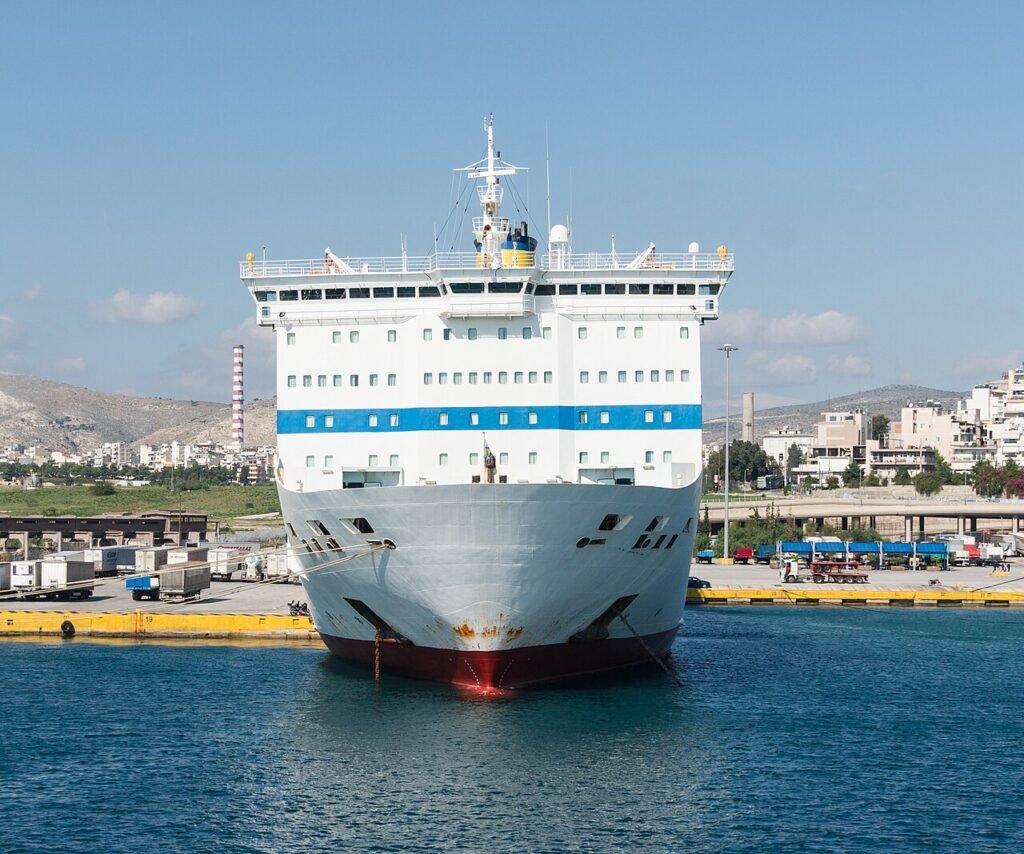
Ferry at the port of Piraeus (Attica, Greece), Piraeus, Greece
Kastella: The Hill of Neoclassical Dreams
Rising steeply behind the main port, Kastella is the neighborhood most tourists overlook—and your best bet for a dose of old-world charm. As you climb the narrow streets, you’ll be rewarded with neoclassical mansions painted in pastel yellows, pinks, and powdery blues, their iron balconies overflowing with bougainvillea. The crown jewel is the view from Profitis Ilias Hill (the highest point, 70 meters above sea level), where a small white church stands. From here, you can see the entire Athens basin, the Saronic islands, and on a clear day the Acropolis itself. Locals recommend visiting at sunset, when the sky turns the port’s cranes into silhouettes. The Municipal Theatre of Piraeus, a 19th-century masterpiece on the square at the foot of Kastella, hosts symphony concerts and opera—check their schedule (tickets often €15–30). For a bite, stop at Stou Maki on Odos Themistokleous (open daily 12pm–midnight, mains €12–18) for grilled sardines and horta (wild greens) that taste like the hillside itself.
Passalimani (Zeas Marina): Yachts, Cafés, and a Roman Ghost
Just east of the main port, Passalimani—officially Zeas Marina—is where the city’s elite come to see and be seen. The horseshoe-shaped bay is lined with sleek yachts, wooden fishing boats, and a string of cafés where you’ll find them drinking freddo cappuccinos from 7am until well past midnight. The name Passalimani (“pin-sea”) comes from the Ottoman-era dock that once jutted into the water, but the real history lies underwater: in the shallow bay you can spot the remains of ancient ship sheds (neosoikoi) used by the Athenian fleet. Seasoned travelers bring a waterproof camera for snorkeling over the submerged ruins. Wander along the coastal path—it takes about 20 minutes at a leisurely pace—and you’ll pass the stylish Varoulko Seaside restaurant (awarded a Michelin star, tasting menus from €85, book weeks ahead). For a more local experience, grab a table at Taverna Kavouras (€25 for a seafood feast for two, no reservations) and watch the sunset over the marina. By night, the bars along Akti Koumoundourou hum with jazz and house music.
Mikrolimano: The Picture-Perfect Fishing Harbor
A 15-minute walk from Kastella, Mikrolimano (literally “small port”) is the postcard image of Piraeus that will make you forget you’re a metro ride from the Acropolis. The tiny, sheltered cove is ringed by a crescent of pastel-colored fish tavernas, each with tables spilling onto the quay. In summer, the boats bob lazily, and the air is heavy with the scent of garlic, lemon, and grilled calamari. Locals say the best psarosoupa (fish soup) is at Taverna tou Psara (a stone’s throw from the water, open since 1960, €10–15 per bowl). It’s a favorite among Greek celebrities, so don’t be surprised if you see a famous actor dipping bread in the broth. For a sweet finish, the Mikrolimano Gelato stand (open April–October, €3 for two scoops) serves mastiha-flavored ice cream from Chios. The neighborhood is tiny—you can walk the entire waterfront in under 10 minutes—but plan to linger for at least two hours over lunch. In August, the port hosts the Mikrolimano Festival with live rembetiko music (free, second week).
The Local Table: What Piraeus Denizens Actually Eat

A city next to a body of water, Piraeus, Greece
In Piraeus, the sea is not a backdrop—it’s the pantry. Locals eat with the seasons and the catch, and you’ll find that a meal here is less about fancy plating than about honoring what’s just been pulled from the water. The traditional harbor tavernas (like the ones in Mikrolimano) operate on a simple rhythm: you sit, you say “what’s fresh today?” and the waiter points to a counter displaying whole fish on ice, gleaming octopus, and pink shrimp. Grilling is the default—sea bass (lavraki), red mullet (barbounia), and grouper (rofos) are drizzled with olive oil, lemon, and oregano, then cooked over coals. The quintessential Piraeus dish, however, is kakavia, a fisherman’s stew that dates back to ancient times. It’s made with the day’s catch, onions, tomatoes, carrots, and plenty of olive oil, served with crusty bread. Travelers must seek it out at To Kyma on Akti Themistokleous (open lunch and dinner, €18 per person), a family-run spot where the recipe has been passed down for four generations.
For a more street-level experience, head to the Central Market of Piraeus on Odos Gounari (open daily 7am–3pm, busiest Saturdays). This cavernous hall under a steel roof is where the city’s restaurant owners shop before dawn. You’ll see counters piled with ruby-red shrimp, barrels of olives, and pyramids of fava (yellow split-pea purée). Most tourists rush through, but savvy visitors stop at Taverna tis Agoras (a no-name stall inside the market, no sign, just look for the red stools) for a €5 plate of marides (fried smelts) and a €2 glass of retsina. The market also has a fish auction every morning around 6am—arrive early and you’ll see chefs bidding on massive tuna and swordfish. Seasoned travelers recommend arriving at 7am, grabbing a coffee from the kiosk outside, and immersing yourself in the cacophony. The closest metro is Dimotiko Theatro (line 3).
Art, Music & Nightlife

A city next to a body of water, Piraeus, Greece
Piraeus may be best known as a transit hub, but its creative scene has deep roots. The Municipal Theatre of Piraeus (built 1895, restored 2020) is the city’s cultural flagship, hosting the National Orchestra and touring productions from the Greek National Opera. Tickets run €10–40, and the winter season (October–May) is when you’ll see the most programming. On the second weekend of September, the Piraeus Photographic Festival takes over Kastella’s squares and waterfront galleries, with exhibitions that explore maritime life through the lens. Gallery lovers should check out Gallery 3 on Odos 15 Sachtouri (free entry, Tue–Sat 11am–7pm), which showcases contemporary Greek painters and sculptors, often with a nautical bent.
When the sun sets, nightlife shifts to the waterfront. Along Akti Miaouli (the main seaside promenade), you’ll find a string of bars that are buzzing by 11pm—try Bar 57 for its retro cocktails (€9) and DJ sets mixing Greek funk with world beats. For live music, head to Kastraki in Kastella (Odos Evripidou 12, doors open 9pm), a tiny club devoted to rembetiko—the Greek blues born in Piraeus’s refugee neighborhoods in the 1920s. Every Friday and Saturday night, local musicians gather to play bouzouki and sing of lost love and hashish dens. Admission is free, but you’ll want to order a bottle of ouzo (around €20) and let the evening unfold. In summer, the Veakeio Theatre (an open-air amphitheater on Kastella hill) hosts concerts with a view—Aegean Sea, islands, and a silver moon. Check the calendar starting in June (tickets €10–30).
Practical Guide
- Getting There: Athens International Airport (ATH, 25 miles east). Direct flights from major European hubs. Book at Skyscanner. From the airport, take the metro line 3 (Blue Line) to Dimotiko Theatro station (45 minutes, €10 single ticket). Alternatively, the X96 bus runs 24/7 to the port (€5.50, 60–90 minutes).
- Getting Around: The Athens Metro (line 1 – Green Line) connects Piraeus to central Athens (Monastiraki, Omonia) every 5–10 minutes (€1.20 single). For neighborhoods like Kastella, walking is easiest—but wear comfortable shoes for the hills. Local buses (€1.20) run along Akti Themistokleous. Taxis from the port to Kastella cost around €6–8. Ferry tickets to the islands (Saronic, Cyclades) can be booked at the port’s central terminal or via Ferryhopper.
- Where to Stay: Kastella for charm and views—try the boutique Piraeus Dream Studios (doubles from €80). Passalimani for convenience and nightlife—The Piraeus City Hotel (from €70). Mikrolimano for romance and seafood—Hotel Akti (from €100, with sea views). Check Booking.com for seasonal deals.
- Best Time: May–June and September–October. Temperatures are 22–28°C (72–82°F), crowds are thin, and the sea is warm enough for swimming at the small beaches near Votsalakia. July–August is busy and hot (35°C), but the nightlife is at its peak. Winters (November–March) are quiet and rainy, but tavernas stay open and ferries run.
- Budget: €60–80 per person per day for a mid-range trip (includes accommodation €70, meals €30, metro €5, one museum €5, a drink €10). Budget travelers can manage on €40–50 with dorm beds (€25), street food (€10), and free attractions. Splurge: €150+ for fine dining and a private tour of the ancient ship sheds.
What Surprises First-Time Visitors
Most travelers arrive expecting Piraeus to be a chaotic, unlovable transit corridor—and to be fair, the main port with its honking taxis, ferry queues, and concrete expanses can feel overwhelming. But once you turn your back on the terminal and walk ten minutes uphill, you’ll find a charming, walkable city that feels like a Greek island without the ferry fare. The terraced hills of Kastella, with their private gardens and cats lounging on marble steps, are a world away from the crush of the port. Another surprise: the silence. At night, away from the main arteries, the streets are eerily quiet—only the cicadas and the distant clink of glasses from a taverna break the stillness. It’s a side of Piraeus that guidebooks rarely mention.
You’ll also be startled by how affordable the seafood is compared to central Athens. A plate of grilled octopus at a Mikrolimano taverna costs €12–15, while the same dish in Plaka runs €20. And the quality is far superior—you’re eating fish that was swimming that morning. Locals often say the best table in Piraeus is at one of the simple, red-checkered-cloth places where the menu is handwritten and the waiter

