
Pailin, Cambodia (2026)
You step off the bus into a hazy afternoon, and the first thing that hits you is the sound—a thousand tiny whirring wheels spinning against raw stones, the gentle, almost hypnotic hum of gem-cutters at their trade. That scent of diesel and sizzling lamb fat drifts over from a roadside skewer stall, mingling with incense curling out of a nearby mosque. This is Pailin, the land of rubies, blood history, and Burmese-style curry that will ruin you for every other meal in Southeast Asia. Welcome to your unexpected 48-hour love affair.
Quick Facts Before You Go
- Best Months: November to February—cool, dry air with temps in the 70s–80°F (24–30°C). Perfect for waterfall hikes and walking the market without melting.
- Currency: US Dollar (USD) is king. Cambodian riel (KHR) is used for small change. At the time of writing, $1 ≈ 4,100 riel. Bring crisp, small-denomination dollars.
- Language: Khmer is the official language. Rarely English is spoken outside hotels and gem shops. A little Thai and Burmese goes surprisingly far, too, thanks to migrant workers. Download Google Translate offline.
- Budget: You’ll spend $25–$45 per day per person for a comfortable backpacker-to-midrange stay—$10–$15 for a private room, $7–$10 for meals, $5–$10 for transport and entrance fees.
- Getting There: No airport in Pailin. The easiest route is a 3-hour bus from Battambang ($5) or a 6-hour VIP coach from Phnom Penh ($12–$15). Book connecting flights into Phnom Penh (PNH) from Bangkok, Kuala Lumpur, or Singapore via Skyscanner.
Day 1: Gems, Ghosts & the Dusk Call to Prayer
You start the morning at the Pailin Market Hall, long before the merchants fully open their shutters. Mist clings to the red-clay streets, roosters crow from rooftops, and the air is already heavy with the aroma of noodle soup and banana-leaf-wrapped sticky rice. Travelers often make the mistake of blinking twice at Pailin’s Burmese-style longyis, the betel-stained smiles, and the call to prayer echoing from the White Mosque—this isn’t the Cambodia you’ve seen on postcards. It’s better. It’s a frontier town built on gemstones and scarred by war, ready to tell you its story if you listen.

Pailin, Krong Pailin, Cambodia
- Morning (8–11am): The Pailin Gem Market (Psar Pailin). Head straight to the covered market at the corner of Street 2 and Street 3. Locals bring raw sapphires, rubies, and zircons in small plastic bags, squatting on red wooden stools with tiny electronic scales. You don’t have to buy—just watching the haggling is free entertainment. If you do want a ruby, ask for a “glass-filled” versus “heat-treated” distinction, and set a hard budget. A small unpolished sapphire goes for $5–$20; a quality cut ruby can run $100+. Stick to small purchases; you’ll find the same stones for triple the price in Bangkok. (Entrance fee: free. Bargain your heart out.)
- Lunch: Su Su Restaurant (Street 4, near the central market). Locals recommend the mohingar—a Burmese fish noodle soup with a crunch of fried banana and a squeeze of lime—for just $2. If you want to taste Pailin’s multiculti identity, order the biryani, fragrant with cardamom and served with a hard-boiled egg and cucumber raita. The owner, a third-generation Burmese migrant, will gladly tell you how his grandfather followed the gem rush in the 1920s. Wash it down with a 40-cent iced coffee. The secret is in the sweetened condensed milk.
- Afternoon (1–5pm): Khmer Rouge Killing Cave & Wat Phnom Yat. Rent a motorbike for the afternoon ($5/day, bring your own helmet) or hire a tuk-tuk driver for $10 for the round trip. Drive 5km northeast to the Killing Cave, a somber site where Khmer Rouge cadres executed locals—you’ll see bone fragments and skulls displayed behind glass. It’s one of the rare places where Travelers discover the true scale of the regime’s horrors outside Phnom Penh’s Tuol Sleng. Your tuk-tuk driver may get quiet. Let him. Then climb the 171 steps up Phnom Yat mountain, where a golden pagoda and a giant Buddha statue offer sweeping views over the green valley and the Thai border. A monk might offer you a jasmine flower—take it, smile, and donate $1.
- Evening: Sunset at the Old Crocodile Farm & Dinner at Star Sapphire Garden. Before the sun dips, roll down to the old crocodile farm on the edge of town (now a rehabilitating wildlife sanctuary). You’ll see a dozen lazy reptiles sunbathing on mudbanks—locals say the ponds are the only reason the cashew trees didn’t get cut down during the war. Entrance is free; a couple of dollars gets you a bag of chicken heads to toss in (the crocs go berserk—a great photo op). For dinner, head to Star Sapphire Garden (corner of Street 1 and Road 57), a leafy oddity with fairy lights strung through frangipani trees. Order the nga si gyaw—a Burmese-style fried fish with chili, garlic, and fresh tamarind—for $6. As you eat, you’ll hear the evening call to prayer from the White Mosque, a melancholy, beautiful sound that pairs perfectly with your gin and tonic ($2.50).
Day 2: Waterfalls, Rainforest Trails & a Farewell Feast
The second day is about green. Pailin’s gem wealth brought an unlikely consequence—surrounding jungle remained untouched because the Khmer Rouge hid in the forests for two decades after 1998. Now, that forest is your weekend playground. Plan to get muddy, splash in cool pools, and taste the sour, tangy fruit of the cashew tree that grows wild along the trails. By tonight, you’ll feel the rush only a frontier town can give: half treasure hunt, half nature reclaiming its land.

A plate of food and a can of soda, Pailin, Cambodia
- Morning (8am–noon): Bumpy Road to O’Tavao Waterfall. Rent a dirt bike ($10 through Phnom Pailin Guesthouse) and follow Road 57 toward the Thai border until you hit the signed turnoff for O’Tavao, about 12km south of town. The ride is a bouncy red-dirt treat—you’ll pass through rubber plantations, bamboo groves, and the occasional gem-mining encampment where men pan for stones in knee-deep mud. Park at the village and trek the last 300 meters. O’Tavao is actually a 4-tier cascade, dropping 20 meters into emerald pools. Bring swim trunks—locals insist it’s the best natural shower in Cambodia. The entrance fee is $2, and a local family will sell you cold Angkor Beer ($1) and deep-fried crickets ($0.50) at the base.
- Midday (noon–1pm): Lunch at Ravi’s Kitchen. Back in town, make a beeline for Ravi’s Kitchen (Street 6, opposite the market). This two-table wonder is run by a Cambodian-Indian family, and the chef’s mutton masala with rice and fresh roti is $4. The mushy, spice-crusted eggplant and tangy lime pickle are worth writing home about. You won’t find it in any guidebook—most tourists overlook it because it looks like someone’s front room. Enjoy it while it lasts.
- Afternoon (1–5pm): The Phnom Yat Eco-Trail & Wat Khao Taeng. After lunch, stroll to the base of Phnom Yat and follow the newly-marked loop trail (2 hours, easy) that circles the mountain via the back side. Travelers often discover hidden shrines, moss-covered Buddha statues, and a natural spring where you can fill your bottle with the coldest water imaginable. The trail ends at Wat Khao Taeng, a small temple with a stunning mural of the Buddha’s life and a bell that every visitor is encouraged to ring three times for good luck. Donation $1.
- Final Evening: Sunset Beer at the White Mosque Viewpoint. At 5:30pm, head to the open platform behind the White Mosque on Street 3—a little spot locals share with savvy visitors. From here, you’ll watch the sun drop behind the Cardamom Mountains while the call to prayer and the clatter of gem-cutting machines make a strange, beautiful symphony. Then, for the farewell dinner, the only choice is **Al-Hikmah Restaurant** (corner of Street 3 and Street 9), a beloved late-night institution that’s been serving northern Indian and Burmese classics since the early 2000s. Share the lamb kebab platter ($7, sizzling, charred at the edges), a plate of garlic naan ($2), and a sweet, milky rose lassi ($1.50). Ask for “extra lime” and the owner, a Pailin-born Cham man, will tell you stories about the gem rush and the time his father hid rubies in his shoes during the chaos of the 1990s.
The Food You Can’t Miss
Pailin’s culinary identity is the lovechild of a Burmese gem trader, an Indian Muslim pilgrim, and a Khmer grandmother. For a town of barely 20,000 people, the density of flavor is absurd. Travelers come expecting bland noodle soup and leave planning their next visit just to satisfy a craving for kaeng kari and freshly pressed sugarcane juice.
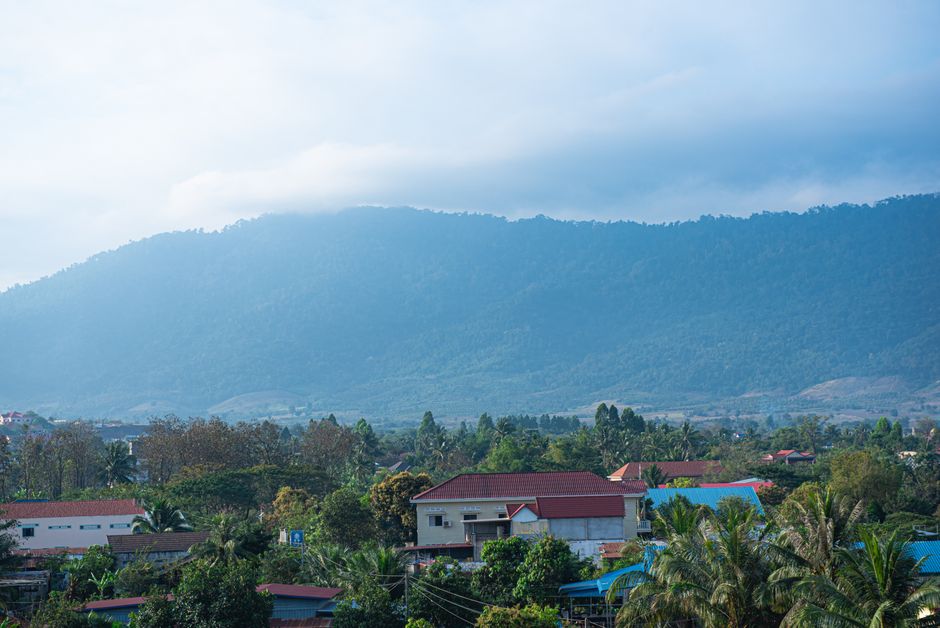
Peaceful landscape with mountains and houses in Krong Pailin, Cambodia.
Start your morning at Ko Min Street Stall (opposite the bus station) and order the mohingar, Pailin-style, with fritters suspended in thin fish broth and a generous squeeze of calamansi. It cost just $1.50 and is the breakfast locals recommend to anyone who wants to “really feel the town.” Then walk 50 meters to Mrs. Lwin’s Sticky Rice Corner (a blue awning, no signage), where she steams purple sticky rice in a bamboo tube and tops it with coconut cream and mango for $1. That moment—soft rice, warm coconut, cool mango—is worth the entire bus ride from Phnom Penh.
For street food, don’t miss the khao mok gai (Burmese-style chicken biryani) sold off a metal cart every evening at 6pm near the Central Market. The vendor, Uncle Rahman, cuts the chicken with a cleaver that’s older than you, and piles your plate with yellow rice, a whole drumstick, and a spicy cucumber salad—for $1.75. For a sit-down meal, Ravi’s Kitchen remains your best bet for off-menu specials: ask what’s in the pot before you order. One evening, we scored a beef rendang that had been simmering for six hours, with a dark, caramelized sauce that turned the rice into something sacred.
The great secret is the fruit. Pailin sits in a rain shadow created by the Cardamom Mountains, giving its tropical fruits an intense sweetness. Search out the wild cashew apples at local markets—locals eat the swollen fruit, not the nut—and the exotic, tangy santol (cottonfruit), which you’ll find in baskets on the streetside. Both cost less than a dollar for a bag. If you’re brave, try the deep-fried crickets from the waterfall vendors; they taste like sour-smoky cheetos with a satisfying crunch.
Where to Stay for the Weekend
For a weekend stay, choose your neighborhood based on what you want from your evenings. The center is a chaotic, exciting mix of gem shops and guesthouses—best for first-timers who want to be walking distance from everything. The rim of town, near Road 57, is quiet, leafy, and attracts travelers hunting proximity to the waterfalls.
In the center: Phnom Pailin Guesthouse (Street 4, $15–$20/night). This bare-bones backpacker favorite has clean rooms with the occasional bullet-hole-free wall, cold beer, and a management team that doubles as tour agents. They’ll rent you motorbikes ($5/day) and craft maps to the hidden gem mines on request. It’s not fancy, but the location keeps you in the pulse of Pailin life. You’ll wake to the sound of gem-cutters beginning their day—a unique alarm clock.
Just outside: Mongkol Pailin Hotel (Road 57, $30–$45/night). This is the only proper mid-range option in town, with air conditioning, a swimming pool begging you to forget the jungle, and rooms that feel genuinely luxurious after two days of dust and motorbike mud. The attached restaurant serves an excellent genuine western breakfast (yes, real bread) and the staff can arrange guided tours to the more remote waterfalls. Book via Booking.com for free cancellation.
For something local: the Family Homestay (Street 9, $10–$15/night, book via Airbnb). Run by a smiling Cham couple, this three-room homestay gives you a taste of Pailin without screens. You’ll eat breakfast with the family, watch the daughter practice her Angkor Wat drawings, and maybe join the mom for a trip to the market the next morning. Plan to practice your Khmer—the grandpa will take you on a cassava field walk if you’re interested. It’s not plush, but you’ll leave with more than anecdotes.
Before You Go: Practical Tips
- Getting Around: Your best bet is renting a motorbike ($5–$7/day) and praying your balance holds—Pailin’s streets are potholed and sometimes impassable after rain. Tuk-tuks and roving remorks (motorized rickshaws) within town cost $1–$2 per trip; to the waterfall or the Killing Cave, negotiate $10–$12 round trip, including wait time. For the eco-trail, consider hiring a local guide ($15) from Phnom Pailin Guesthouse—they know the jungle’s secrets.
- What to Pack: A lightweight rain jacket (afternoon showers are frequent from May–October); insect repellent with DEET for the forest and waterfall; a headlamp for the unlit stretches of town (streets off the main roads are pitch-black

