
Lashio, Myanmar for Adventurers: The Gokteik Viaduct (2026)
The railcar pitches hard to the left, and the floor drops away beneath you. Through the open window, 320 feet of thin air yawns—a river the color of wet jade coiling through limestone jungle. You grip the steel grab-bar as the Gokteik Viaduct groans its metallic protest. Your knuckles are white. Your heart is not. This is Lashio.
The Main Event: Crossing the Gokteik Viaduct by Train
When Pennsylvania Steel finished the Gokteik Viaduct in 1900, it was the largest railway trestle bridge on earth—and it hasn’t gotten any less terrifying since. The train from Mandalay to Lashio creeps across this latticework colossus at a pace that lets you savor every single rivet, every 689 feet of suspended metal, every tremor in the track. You’ll start your ride in Mandalay at 4:00 AM on the Upper Class section (12 hours, about $20), and you’re best off claiming a window seat on the left side of the carriage. Travelers often discover that the conductor doesn’t mind you leaning out the door at the bridge itself—the wind hits your face like a hair-dryer cranked to high, the gorge swallows sound, and for about five agonizing minutes you’re floating between two cliff faces with nothing but Victorian engineering between you and the abyss.
The full Mandalay–Lashio run is 179 miles of switchbacks, hand-waved tunnels, and jungle that closes in like a green fist. Locals recommend breaking the journey at the Pyin U Lwin stop to stock up on eucalyptus oil and sticky-rice snacks before the hard climb into the Shan Hills. Bring a dust mask—the open windows funnel coal-smoke and red dirt into the carriage, and by the time you roll into Lashio station you’ll look like you’ve crossed a desert on a mule. The bridge crossing happens roughly 3 hours into the ride, around 7:15 AM, when morning mist still pools in the valley below. The insider secret: the upper deck observation hatch on the baggage car is unmarked and usually unlocked. Ask the guard politely and slip him 2,000 kyat ($0.70); you’ll get a view that no photograph can capture.
Activity #1: Trekking to Palaung Hill Villages
Lashio is ringed by the kind of ridgeline trails that make you forget you’re in Myanmar at all. Your best bet is to hire Ko Aung, the unofficial trekking fixer who holds court at the tea stall beside the Lashio station clock tower every morning from 6:30 AM until his third cup of sweet milk tea. He’ll lead you (or set you up with his cousin, who speaks Shan, Palaung, and English) on an 8-hour loop that climbs 1,400 meters above town through cardamom groves and cloud forest. You’ll start before 7 AM, when the mist is still tangled in the bamboo, and you’ll end at a Palaung village where brass gongs hang outside stilt-houses and the women wear turbans the color of turmeric. The route costs $25 per person including lunch—a steaming bowl of hin thote, bamboo-tube curry—and all proceeds go directly to the villagers who maintain the trail. Plan to arrive in the village around noon; that’s when you’ll catch the afternoon rice-pounding ritual.
The difficulty is real but fair: expect three sustained climbs of 40–50 minutes each, decent traction on packed-dirt switchbacks, and one river crossing that will wet your knees during monsoon months. Seasoned travelers prefer this trek over Kalaw’s crowded alternatives because you’ll meet maybe two other foreigners the entire day. Your smartphone will lose signal two hours in—which is exactly the point. The secret is to ask Ko Aung for the “tea plantation detour” that adds 45 minutes but takes you along a knife-edge ridge where the northern Shan hills unfurl in every direction; on a clear day, you can see the blue smudge of the Chinese border. Carry at least 2 liters of water, a headlamp (the forest understory is dense), and small bills to buy fresh sugarcane from the children who appear at the trail’s edge with alarming speed.

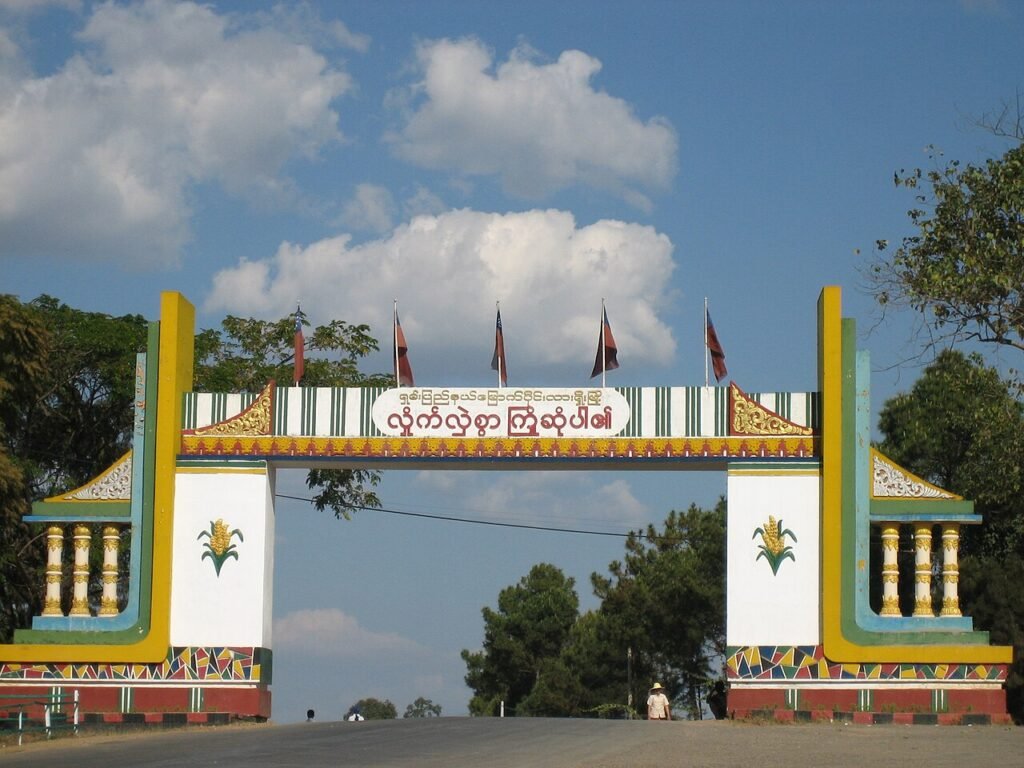
Skyline view of Lashio, Shan State, Myanmar., Lashio, Myanmar
Activity #2: Burma Road Motorcycle Loop
Lashio was the launching point of the legendary Burma Road, the WWII supply artery that snaked 717 miles into China. Today, the old alignment still exists west of town, and you can ride it on a rented Honda 125 trail bike. The loop takes you through the original hairpin section near the 26-mile post, where abandoned stone culverts and the rusted hulks of wartime trucks still bake in the sun. Your rental comes from Shwe Mann Motorbike Shop on Market Street—$15 for the day, helmets included, and they’ll happily chain your luggage to the rear rack. The riding is dusty, corrugated, and utterly addictive. Expect 6 hours of throttle-twisting joy: 3 hours climbing out of Lashio’s red-brick sprawl, a lunch stop at the Nam Yao checkpoint where you’ll eat the best grilled river fish of your life, and a screaming descent back through tobacco fields that smell like warm honey.
Locals recommend starting at 8 AM, when the road graders haven’t yet churned up the loose gravel. You’ll need your own international driving permit, and savvy visitors always take a photo of their bike’s existing scratches to avoid arguments later. The grade is manageable—the 125cc engine will carry you at a comfortable 45 mph on the straights—but the real challenge is staying upright on the loose laterite where the trucks have carved deep ruts. Bring a bandana; the dust here is fine as flour and will coat your sunglasses within ten minutes. Most tourists overlook this ride entirely, assuming the Burma Road was destroyed after WWII, but you’ll discover that the original earth-and-cobble alignment survives in long stretches, stitched through with elephant-grass archways and villages where children chase your wheels for the thrill of it.
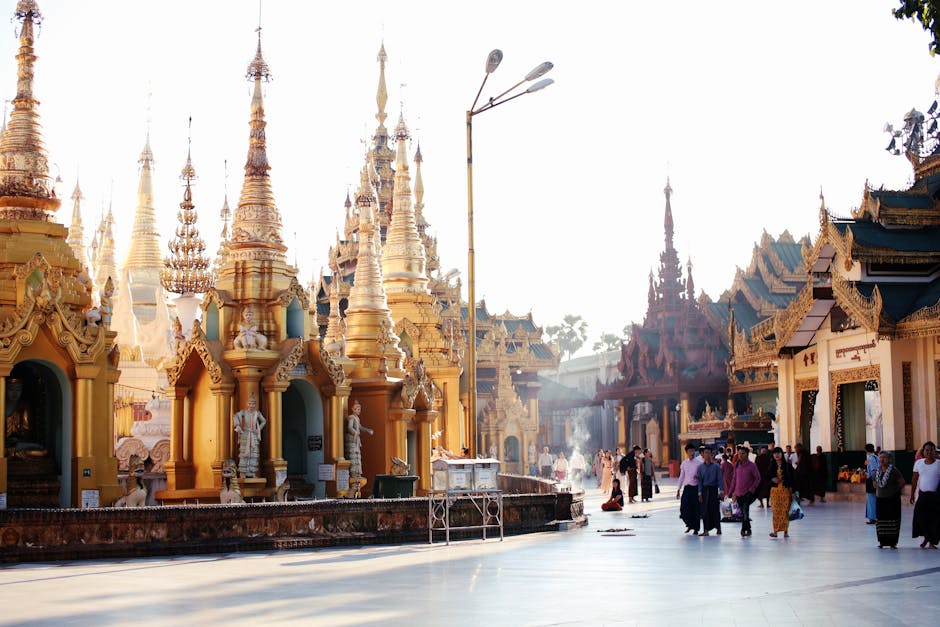
Capture of the iconic Shwedagon Pagoda with visitors, Lashio, Myanmar
Refuel: Where Adventurers Eat
After a day of lung-busting climbs and corridor-flying motorcycle dust, you’ll need serious fuel. Start at Lay Nyo Noodle House on the main bazaar street, a no-frills Shan institution where the khauk swe—fat egg noodles in a chicken-and-tomato gravy—arrives with a heap of pickled mustard greens and crispy chilli oil. A bowl costs 2,500 kyat ($0.80), and the owner will refill your tea glass until you physically wave him off. Locals recommend adding the fried pork belly side plate (1,500 kyat) to fortify you for the evening.
For dinner, you can’t miss Golden River Teashop, a three-story caravanserai built in the 1950s where the Shan-style grilled chicken (marinated in lemongrass and turmeric for 24 hours) is carved at your table and served with sticky rice and a fiery tamarind dip. A full spread for two runs about 12,000 kyat ($4). Adventurers with bigger appetites make a beeline for China Gate BBQ on the Mandalay road, where you’ll grill your own skewers of quail eggs, lamb heart, and river prawns over charcoal braziers while Sino-Shan truckers watch Chinese action movies on a cracked projector screen. The shan wine—a cloudy rice brew served in steel teapots—is mandatory.

