
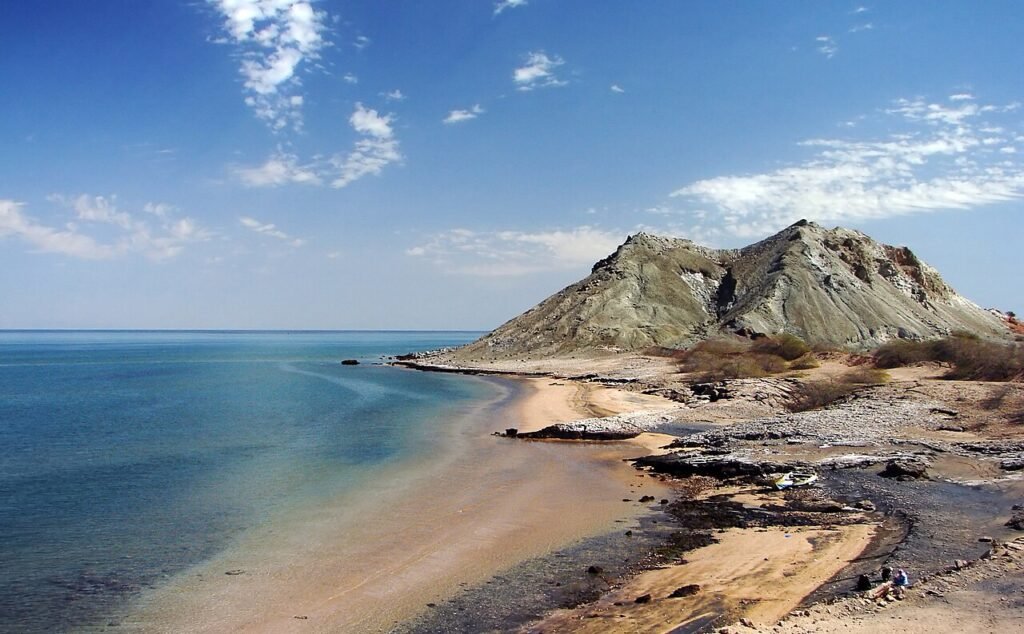
Hormuz Island, Iran (2026)
The ferry engine coughs as you leave the port of Bandar Abbas, and within twenty minutes the dry, mineral-scented air of Hormuz Island hits you — a sharp mix of salt, dust, and an almost metallic tang from the island’s iron-rich soil. You step onto the pier at dawn, and the first thing you notice is the silence. No car horns, no rush. Just the gentle lapping of turquoise water against volcanic rock, and a rooster somewhere behind the pastel-colored houses. This is your 48-hour escape into one of the world’s most surreal landscapes, where the earth itself looks like a painter’s palette abandoned on the sea.
Quick Facts Before You Go
- Best Months: November to March (temperatures hover around 15-25°C, perfect for hiking; summer months from June to August can hit a brutal 40°C+ with crushing humidity)
- Currency: Iranian Rial (IRR). As of late 2024, $1 USD ≈ 600,000 IRR (use the market rate, not the official rate; locals recommend you check current exchange at your hotel)
- Language: Persian (Farsi). English is barely spoken here — even at the tourist office, expect a few phrases. Download Google Translate offline, and learn “mamnoon” (thank you). You’ll get by fine with hand gestures and warm smiles.
- Budget: A realistic daily cost is $15-25 USD per person for food, accommodation (basic guesthouse), and bike rental. If you want a nicer eco-lodge and eat out for every meal, budget $40-50 USD/day.
- Getting There: Fly to Bandar Abbas International Airport (BND) from Tehran (flight time ~1.5 hours). From the airport, take a taxi (10-15 minutes, ~$3 USD) to Shahid Haqqani Port, then catch the hourly passenger ferry to Hormuz island ($2-3 USD, 20-30 minutes). Book your flight at Skyscanner
Day 1: The Rainbow Assault & A Fortress at Sunset
You start your morning with a jolt of sweet, cardamom-laced coffee at your guesthouse, overlooking the strait where tankers glide like distant toys. Today is all about the island’s psychedelic geology. Hormuz is often called the “Isle of Colors” — you’ll see why the moment you hop on a rickety bicycle and pedal past mounds of red ochre, purple volcanic ash, and yellow sulfur. The air smells of cinnamon and iron, and you somehow forget you’re on a 42-square-kilometer speck of land that was once a trading hub for Portuguese conquerors and Persian merchants.
- Morning (8-11am): Rent a bicycle at Hormuz Guesthouse (the only official rental shop, 500,000 IRR/day). Head straight to Rainbow Valley (Darreh-ye Rangin Kaman), a 10-minute ride from the pier. You’ll spend two hours wandering through canyons of blue, red, green, and ochre strata. Don’t just look — touch the soil. It’s so soft that locals collect it as spice. You’ll find small piles of edible “gelak” (red earth) sold as a local treat. Entry is free, but a local guide you meet on the trail (you’ll be approached, give them $2 USD) will show you hidden alcoves with fossilized shells millions of years old. Plan to take more photos than you think you’ll need; the light shifts every hour.
- Lunch: Ride back to the pier and find Santouri Cafe — a tiny, tree-shaded hangout that looks like a bohemian beach shanty. Order the mahi sabzi (herb-crusted local fish, grilled whole) with saffron rice, and a fresh lime soda. The fish is 250,000 IRR ($0.40 USD), and honestly, it’s the best seafood you’ll have this side of the Gulf. Locals recommend you save room for their homemade tamarind sorbet.
- Afternoon (1-5pm): After lunch, cycle east to Portuguese Castle (Fort of Our Lady of the Conception, built in 1515). You’ll pay 200,000 IRR entry. This crumbling red-brick fortress is dramatically skeletal — half its walls have collapsed into the sea, but that’s exactly the point. Climb to the top and you’ll see the entire Strait of Hormuz spreading out in a blue haze. Travelers often discover that the most atmospheric spot isn’t the main tower, but the eastern wall, where wind howls through empty gun ports. Spend a relaxed hour here, then walk down to Geno Beach, a 15-minute stroll north. Locals recommend you take off your shoes and wade into the warm, shallow water — the shore is made of crushed pink shells that glitter like confetti. If the tide is low, you’ll find jade-green “salt plugs” that feel like candle wax.
- Evening: As the sun dips (around 5:30pm in autumn, later in summer), make your way to Soozani Cafe, a family-run terrace on a hill overlooking the harbour. Order the grilled squid with sumac onions (300,000 IRR) and a pot of Persian black tea (state tea drinking is a ceremony, and you’ll be invited to pour it into a saucer and sip with sugar cubes). After dinner, walk along the pier and watch the fishing boats bob. You’ll hear the evening call to prayer drifting from the island’s single mosque, a sound that mixes with the rhythmic clanking of boat rigging. A perfect, low-key end to day one.

Nature of Hormuz Island, Hormuz Island, Iran
Day 2: Salt Caves, A Dead-End Road & Sunset on the Loose
Day two takes on a looser, more exploratory vibe. If day one was about tick-box landmarks, today is about surrendering to Hormuz’s weird, drowsy rhythm. You wake up later, eat a slow breakfast of flatbread and soft cheese, and decide to rent a scooter — because the island’s eastern half is an empty desert of crushed rock and dried riverbeds that feels utterly prehistoric. Your mission: find the salt cave that most tourists never see. But first, you need to fuel up with a proper local breakfast.
- Morning: Head to Darya Restaurant (next to the pier, open from 8am) for a local breakfast of noon khamei — fresh cream cheese, walnuts, and local honey wrapped in warm, thin bread. A full spread with tea costs 150,000 IRR ($0.25 USD). After breakfast, rent a scooter from Hormuz Rent (a simple kiosk near the ferry terminal, 800,000 IRR/day, helmet included). Ride 20 minutes along the island’s only paved road toward Ghadir Valley — a surreal landscape of obsidian-black hills and white crystal outcrops. The road ends abruptly at a dead-end dirt track. Park your scooter and walk 15 minutes east. You’ll find the hidden Saeed Salt Cave, a natural grotto whose walls shimmer with sodium crystals like frozen frost. Entry is free, but bring a headlamp — the cave is only 50 meters deep, and the darkness beyond the entrance is absolute. Most travelers discover that the best moment is turning off your light and sitting in total silence for a minute, feeling the cool, mineral air. It’s a strangely profound breakup with the sensory overload of day one.
- Midday: Ride back towards the harbour, but take the dirt road along the southern coast. You’ll pass the Ice Mosque (Masjed-e Yakhchal), a tiny whitewashed shrine dating from the Qajar era with a conical clay dome. It’s unassuming, but locals recommend stepping inside — the interior walls are covered in shimmering salt crystals, and the 19th-century tilework has a mellow, dusty glow. From there, ride to Nakhoda Beach, a crescent of dark sand that gets surprisingly little foot traffic. For lunch, do what savvy visitors do: buy fresh golden trevally from the small fish market at the pier (they’ll gut it for you), and ask your guesthouse to grill it for you. Alternatively, the family at Soozani Cafe will happily cook it for a nominal 50,000 IRR, served with grilled tomatoes and fresh mint.
- Afternoon: Explore the island’s main village, Hormuz Town. It’s not a tourist attraction — it’s a living, breathing fishing community with cracked concrete streets and pastel-painted houses. Stroll along the market lane, where you’ll find quirky shops selling everything from hand-painted ceramic “Hormuz dolls” (traditional fertility figures, 100,000-200,000 IRR) to jars of local spices and the famous red soil powder. Stop at the women’s cooperative store (Bazarche-ye Zananeh, open 10am-6pm) where you can buy beautiful local embroidery. Your best bet is a small silk scarf embroidered with tiny mirror work for about $5 USD. Casual walking is the whole point here — you’ll likely be invited for tea by a friendly shopkeeper, and you should accept. That’s how you learn that the island used to be a pirate stronghold before the Portuguese arrived in 1507, and that locals still call themselves “Hurmuzi” with pride.
- Final Evening: As dusk falls, ride scooter to the island’s western tip, near the abandoned military bunkers by the old firing range. This is your farewell dinner spot — No, not a restaurant. Buy a bag of fresh dates from the market (locals recommend the “Sayer” variety, soft and caramel-like, 100,000 IRR), along with a wedge of local creamy cheese and warm flatbread. Find a spot on the quiet rocks overlooking the strait, and watch the tankers’ lights twinkle on as the sky turns from peach to deep violet. It’s a picnic that costs less than 400,000 IRR ($0.70 USD), and it will be one of the most memorable meals of your life. Before you leave, take one last walk through the silent streets; the island’s only light pollution comes from a handful of dim street lamps, so look up. The Milky Way is shockingly visible, a silver river across the darkest sky you’ll see in the region.

A large group of colorfully colored buildings next to the ocean, Hormuz Island, Iran
The Food You Can’t Miss
Hormuz is a tiny island, but its food is a wild, delicious hybrid of Persian coastal cooking and maritime trade influences. You’ll taste the spices of Hormuz’s history: cardamom, turmeric, and tamarind, all of which were traded here for centuries between India, Persia, and the Ottoman Empire. The star of the table is fresh seafood — utterly unlike anything you’ll get in Tehran. Fishmongers pull in gleaming silver catches at 6am, and by noon, the same fish is grilled over charcoal and served with a wedge of lime. Your street food non-negotiable is gelak — yes, the edible red soil. Locals have eaten the iron-rich clay for generations, and you’ll see it sold in small packets at market stalls. Mix a pinch with water and drink it. It tastes supremely earthy, like a mineral-laced tea, and it’s famously good for your stomach. Your restaurant non-negotiable is Santouri Cafe, which serves an astonishing ghalieh mahi — a sour, herb-thick fish stew with garlic, coriander, and tamarind. It’s about 250,000 IRR, and it’s the dish you’ll tell everyone back home about. Also, do not skip breakfast at Darya Restaurant — their eggplant-and-whey dip (kashk-e bademjan) alongside fresh flatbread is pure comfort. For a sweet ending, seek out the little Ajil cart near the ferry terminal that sells spiced roasted chickpeas and candied tamarind; 50,000 IRR gets you a generous cone.

A group of colorfully painted beach huts on a beach, Hormuz Island, Iran
Where to Stay for the Weekend
Hormuz has no five-star hotels, and that’s the charm. You’re here for eco-lodges and simple, soulful guesthouses. For the best character, stay in the town area east of the pier, where you’ll be a short walk from cafes and the fish market, while also close to the quiet, non-touristy residential lanes.
First, Hormuz Eco Camp — a set of bright, dome-shaped capsule rooms built from local materials, set in a garden of date palms. Basic but spotless, with shared bathrooms, and a common terrace where you’ll meet fellow travelers over morning tea. A double room costs around $15-20 USD/night. Book via Booking.com.
Second, Soozani Guesthouse — the same family that runs the cafe offers a couple of rooftop rooms above the restaurant. You’ll fall asleep to the sound of waves on the nearby beach and wake to a homemade breakfast of local bread, honey, and soft cheese. Rooms are $10-15 USD/night, and it’s almost always fully booked, so you’ll want to book weeks ahead via Airbnb.
Third, for a more social, hostel-style vibe, try Hormuz Nights Hostel — a small, friendly spot in the village with dorm beds at $8/night. It’s not listed on major booking sites, so your best bet is to send a WhatsApp message via the number on their Instagram page (search “hormuznights”). The owner, a retired fisherman, loves giving impromptu history tours.
Before You Go: Practical Tips
- Getting Around: Bicycle is the classic choice (500,000 IRR/day), but if you’re here for only 48 hours and want to cover more ground, rent a scooter (800,000 IRR/day). Walking is fine for the village and southern beaches, but the eastern salt caves are nearly impossible on foot. Note: taxis do not exist on Hormuz — you’ll see occasional pickup trucks offering rides; agree a price in advance (100,000-300,000 IRR depending on distance).
- What to Pack: 1) A headlamp or sturdy flashlight for the salt cave and power cuts (which happen occasionally); 2) Closed-toe shoes for hiking — the volcanic glass and salt crystals will shred flip-flops; 3) A refillable water bottle plus electrolyte powder; the island’s water is desalinated and flat, and you’ll sweat more than you think; 4) A scarf or bandana — not only for modesty at religious sites, but also to cover your nose and mouth when a dust storm rolls in without warning.
- Common Tourist Mistakes: Don’t plan a one-day trip — you absolutely need the full weekend to properly enjoy the island’s diversity. Also, do not assume the ferry runs on a strict timetable; it departs when full (roughly hourly from 7am to 7pm). If you miss the last one, you’re stranded overnight, which is lovely if planned, stressful if not. Another mistake: visiting in June-September without a hat and sunscreen — travelers often discover that the midday sun on bare, reflective rock is relentless.
- Money-Saving Tip: The ferry to/from Bandar Abbas costs under $3 USD, but if you have a mid-afternoon flight, use the local passenger boat instead of the tourist ferry — it’s half the price (about $1.50 USD) and the departure time is whenever it fills up. Also, buy your seafood directly from fishermen at the pier before 7am; you’ll pay 50% less than restaurant prices, and your guesthouse will happily cook it for pocket change.

