
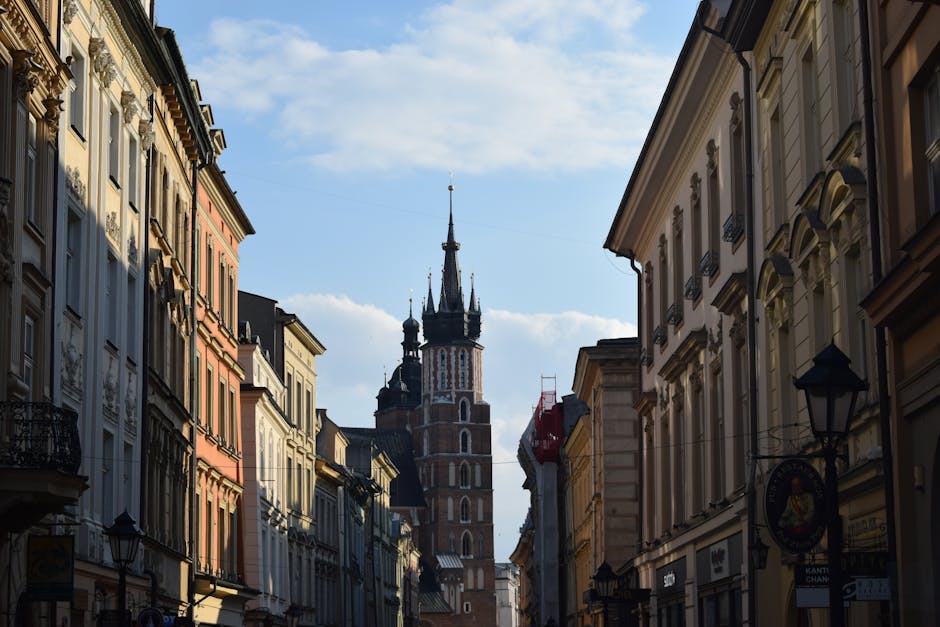
Kraków’s Salt Cathedral, Poland (2026)
In the spring of 1978, a son of Kraków, Karol Wojtyła, was elected Pope. A year later, he returned to his beloved city. As he stood before a million people in the Błonia meadow, speaking of human dignity and spiritual freedom, a crack appeared in the Iron Curtain. That visit ignited a quiet revolution of the spirit, a prelude to the political upheaval that would soon sweep across Poland. It was a moment that proved Kraków was not just a museum of the past, but a living heart, still beating with profound consequence.
The Story Behind Kraków, Poland
To walk Kraków’s streets is to trace a thousand-year timeline with your feet. The story begins on Wawel Hill, where legend says a dragon was slain by the cunning shoemaker, Dratewka, clearing the way for the city’s founding in the 7th century. By 1038, it was the capital of Poland, and for half a millennium, Polish kings were crowned and buried in the magnificent Wawel Cathedral. You can almost hear the rustle of silk and the clank of armor in the Royal Castle’s arcaded courtyard, a masterpiece of Renaissance architecture that speaks to a golden age when Kraków was a wealthy member of the Hanseatic League, a crossroads of trade and culture.
Yet history here is not a linear march of triumphs. The 17th century brought Swedish invasions that began a long decline, culminating in the capital moving to Warsaw in 1596. The 19th century saw Kraków absorbed into the Austro-Hungarian Empire, which left its mark in the form of grand coffee houses and the serene Planty Park that replaced the old city walls. The 20th century inflicted its deepest wounds: the Nazi occupation turned the city into the capital of the brutal General Government, and the nearby districts of Podgórze and Płaszów became stages for unimaginable tragedy. The post-war communist era layered the city in grey concrete and surveillance, a stark contrast to its Gothic and Baroque soul. It is this resilience—this survival of beauty through epochs of darkness—that defines Kraków’s character. Travelers discover a city that has been shaped by empire, ravaged by war, and yet has meticulously preserved its identity, stone by stone.
Neighborhood by Neighborhood
Stare Miasto (Old Town)
Encircled by the leafy Planty Park, the Old Town is Kraków’s storybook heart, and your journey will inevitably begin in the vast, cobblestone expanse of Rynek Główny, Europe’s largest medieval market square. Here, time feels both suspended and vibrant. The Cloth Hall (Sukiennice) stands as a monument to mercantile history, its interior now a bazaar of amber and folk crafts. You’ll hear the plaintive *hejnał* trumpet call break from the taller tower of St. Mary’s Basilica every hour, cut short in memory of a 13th-century watchman shot by an arrow. The real magic, however, lies in the side streets like ulica Kanonicza, lined with elegant townhouses where Nicolaus Copernicus once studied. As evening falls, the square transforms; the lanterns glow, and the cellars of former merchant homes, now restaurants, hum with life. Locals recommend a late-night stroll when the day-trippers have left, and the moonlit square belongs to the ghosts of kings and the soft echo of your own footsteps.
Kazimierz
Just south of the Old Town, Kazimierz possesses a soul of a different texture. Founded as a separate city in the 14th century, it became the heart of Jewish life in Poland for over 500 years. Its story is one of profound loss, but today, it is a breathtaking narrative of revival. You’ll wander past beautifully restored synagogues like the ornate Tempel and the Old Synagogue, now home to poignant museums. The streets—ulica Szeroka, ulica Józefa—are a tapestry of peeling plaster, artistic graffiti, and buzzing courtyards. This is where travelers discover a bohemian, creative energy: vintage boutiques nestle beside artisan workshops, and the air in Plac Nowy carries the scent of zapiekanka from the round market hall. At night, the district thrums with intimate jazz clubs and stylish cocktail bars set in pre-war apartments. The past is palpably present here, not as a monument, but as a living, breathing part of the neighborhood’s resilient spirit.
Podgórze
Crossing the Vistula River via the Father Bernatek Footbridge, with its love locks clinking in the wind, you enter Podgórze. This district offers a quieter, more contemplative pace. Its center is the expansive Plac Bohaterów Getta, once the heart of the Jewish Ghetto and now a powerful memorial of empty bronze chairs. A short walk away is Oskar Schindler’s Enamel Factory, a museum that masterfully contextualizes the city’s wartime agony. But Podgórze is not defined solely by sorrow. You can climb the mound of Kopiec Krakusa for a panoramic view of the city, explore the abandoned quarry and lagoon at Zakrzówek (a local secret for summer swimming), or simply get lost in its grid of 19th-century residential streets. Savvy visitors know to come here for exceptional, lesser-known restaurants and a sense of how Krakowians actually live, away from the tourist trail.
The Local Table: What Krakowians Actually Eat
Polish cuisine is a hearty symphony of comfort, born from a need for sustenance through long winters and hard work. In Kraków, you’ll find it’s less about delicate presentation and more about profound, satisfying flavor. The day often starts with a visit to a *piekarnia* (bakery) for a fresh, warm *obwarzanek*—the city’s iconic braided ring bread, sprinkled with poppy seeds or salt. For lunch, locals might duck into a *bar mleczny* (milk bar), a communist-era canteen that serves affordable, home-style classics. Your mission is to seek out **pierogi**. These filled dumplings are a national treasure, and while the *ruskie* (potato and cheese) are a classic, you must try the seasonal ones, like those stuffed with wild blueberries and served with a dollop of sweet cream.
For a truly immersive experience, head to the Hala Targowa market or the stalls around Plac Nowy. Here, you can sample *oscypek*, a smoked sheep’s cheese from the Tatra Mountains, often grilled and served with cranberry sauce. For a sit-down meal that feels like a grandmother’s kitchen, locals recommend **Chłopskie Jadło** (“Peasant’s Food”) for its generous portions of *bigos* (hunter’s stew) and *golonka* (pork knuckle). Plan to spend about 40-60 PLN (€9-13) for a substantial meal with a drink. Remember, the meal is a ritual here; it’s meant to be lingered over, ideally with a glass of *żubrówka* (bison grass vodka) in hand.

Hotel Polonia building, Kraków, Poland
Art, Music & Nightlife
Kraków’s creative pulse is strong and diverse. It’s a city of festivals, with the monumental **Kraków Live Festival** (rock/alternative) in summer and the soul-stirring **Jewish Culture Festival** in late June/early July, which floods Kazimierz with music, theater, and workshops, culminating in a grand open-air concert on ulica Szeroka. For contemporary art, the **MOCAK Museum** in post-industrial Podgórze is essential, while the **Czartoryski Museum** houses the nation’s artistic crown jewel: Leonardo da Vinci’s *Lady with an Ermine*.
When the sun sets, the city’s musical heritage comes alive. In the Old Town, you can find classical concerts in historic churches almost every evening for around 80 PLN. But the real soul of Kraków’s nightlife is in the cellars and courtyards of Kazimierz. At **Alchemia** on Plac Nowy, the vibe is dark, candlelit, and intellectual, with eclectic music. For jazz, **Harris Piano Jazz Bar** offers an intimate, world-class experience. Travelers often discover that a night out here isn’t about glossy clubs; it’s about conversation in a vaulted brick cellar, the strum of a guitar in a hidden garden, and the feeling that you’ve stumbled upon a secret that the city shares only after dark.
Practical Guide
- Getting There: John Paul II International Airport (KRK) is well-connected across Europe by budget and legacy carriers. For the best deals on flights, compare options at Skyscanner. The train to the main station (Kraków Główny) is a quick and cheap 20-minute ride.
- Getting Around: The historic center is best explored on foot. For longer trips, trams and buses are efficient; a 20-minute ticket costs 4.60 PLN (€1). Use the *Jakdojade* app for seamless route planning and mobile tickets.
- Where to Stay: For first-timers, the **Old Town** offers classic charm and convenience. For more character and nightlife, choose **Kazimierz**. For a local, residential feel, look at **Podgórze** or **Wesoła**. Find your perfect base by browsing Booking.com.
- Best Time: **Late May to June** and **September** offer ideal weather, fewer crowds, and vibrant greenery. **December** is magical for the Christmas markets, though very cold.
- Budget: Kraków remains excellent value. A realistic daily budget for a comfortable visit (mid-range hotel, meals out, attractions, transport) is 350-450 PLN (€75-100) per person.

A brick walkway with flowers and plants, Kraków, Poland
What Surprises First-Time Visitors
Many arrive expecting a somber city defined by its 20th-century history, but they leave enchanted by its palpable joy and youthful energy. The sheer density of university students (over 200,000) gives Kraków an infectious, vibrant buzz. You’ll be surprised by the green spaces; the Planty Park is a given, but the walking paths along the Vistula riverbanks and the nearby Las Wolski forest offer perfect escapes. The scale also delights visitors—the major sights are concentrated and walkable, making it possible to have a profoundly rich experience even on a short trip.
Another common surprise is the depth of the cafe culture. This is not just a coffee-to-go city. It’s a place where you are expected to sit for hours in a beautiful, often book-lined salon, nursing a single espresso. Establishments like **Cafe Camelot** or **Nowa Prowincja** feel like public living rooms. Finally, travelers often remark on the warmth and directness of the people. Service can be brisk by Western standards, but it’s honest and efficient. Once you engage, you’ll find a proud, witty, and deeply hospitable populace eager to share their city’s true spirit.
Your Kraków, Poland Questions
Is a day trip to Auschwitz-Birkenau necessary, and how should I approach it? It is not a light “attraction,” but it is a profoundly important historical and human experience. Most visitors find it essential for understanding modern Poland and the 20th century. You should book a guided tour in advance for context, either directly through the museum’s website or a reputable operator like KrakowDirect. Plan for a full, emotionally draining day. Go with respect, in quiet, comfortable clothing. Many travelers choose to spend the evening afterwards in quiet reflection.
How many days do I really need in Kraków? A solid three full days is the sweet spot. This gives you one day for the Old Town and Wawel Hill, one day for Kazimierz and Podgórze, and one day for a major trip like Auschwitz-Birkenau or the Wieliczka Salt Mine. With four or five days, you can add slower exploration, a trip to the Tatra Mountains, or simply more time soaking in the cafe culture.
Is it safe to walk around at night? Kraków is an exceptionally safe city for travelers. The main tourist areas are well-lit and populated until late. As in any city, exercise normal caution with your belongings, but you can feel comfortable walking between neighborhoods like the Old Town and Kazimierz after dark. The atmosphere is generally one of relaxed conviviality, not tension.

A lake with boats in it and a city in the background, Kraków, Poland
Frequently Asked Questions About Kraków’s Salt Cathedral
Is Kraków’s Salt Cathedral worth visiting?
Yes, Kraków’s Salt Cathedral offers unique attractions and experiences for travelers.
How many days do I need in Kraków’s Salt Cathedral?
2-4 days is ideal for first-time visitors to Kraków’s Salt Cathedral.
What is the best time to visit Kraków’s Salt Cathedral?
Spring and fall offer the best weather for visiting Kraków’s Salt Cathedral.
{“@context”: “https://schema.org”, “@type”: “FAQPage”, “mainEntity”: [{“@type”: “Question”, “name”: “Is Kraku00f3wu2019s Salt Cathedral worth visiting?”, “acceptedAnswer”: {“@type”: “Answer”, “text”: “Yes, Kraku00f3wu2019s Salt Cathedral offers unique attractions and experiences for travelers.”}}, {“@type”: “Question”, “name”: “How many days in Kraku00f3wu2019s Salt Cathedral?”, “acceptedAnswer”: {“@type”: “Answer”, “text”: “2-4 days is ideal for first-time visitors to Kraku00f3wu2019s Salt Cathedral.”}}, {“@type”: “Question”, “name”: “Best time to visit Kraku00f3wu2019s Salt Cathedral?”, “acceptedAnswer”: {“@type”: “Answer”, “text”: “Spring and fall offer the best weather for visiting Kraku00f3wu2019s Salt Cathedral.”}}]}
Ready to Visit Kraków’s Salt Cathedral?
Start planning your trip today. Compare hotels, find the best tours, and get insider tips.
Your adventure in Kraków’s Salt Cathedral starts here →
Related Guides
Explore more destinations similar to Kraków’s Salt Cathedral:

