
Koya-san, Japan Weekend: Temple Stays, Shojin Ryori & The Mystical Okunoin at Dawn (2026)
You smell it before you see anything else—the thick, earthy scent of cedar smoke mingling with morning incense as you step off the cable car at 800 meters. The air is cool, even in summer, and the only sound is the rustle of pilgrims’ robes and the distant chant of sutras echoing through the forest. You’ve just arrived at Koya-san, the spiritual heart of Shingon Buddhism, and your weekend of serenity begins now.
Quick Facts Before You Go
- Best Months: April-June (cherry blossoms in late April, fresh green maples in May) and October-November (autumn foliage peaks in early November). Avoid August—stifling humidity and crowds.
- Currency: Japanese Yen (JPY). As of 2025, ¥100 = approximately $0.67 USD or €0.62 EUR.
- Language: Japanese. English is spoken at major temples and tourist offices, but don’t expect fluency. A smile and a simple “arigato gozaimasu” go a long way.
- Budget: ¥12,000-¥20,000 ($80-$135 USD) per day per person, including temple lodging with two meals, local transport, and small purchases.
- Getting There: Nearest major airport is Kansai International Airport (KIX), about 2.5 hours by train and cable car. From Tokyo, catch the Shinkansen to Shin-Osaka (2.5 hours, ¥14,500), then switch to the Nankai line. Book your flights at Skyscanner.
Day 1: Arrival & The Ancestors’ Path
Your adventure begins at Nankai’s Namba Station in Osaka, where you board the limited express train to Gokurakubashi—the name means “Bridge to Paradise,” and you’ll soon understand why. The 90-minute ride winds through wooded valleys, past small towns clinging to hillsides, before you transfer to the cable car that ascends the steep mountainside. You emerge into a pine-scented world where time moves differently.
- Morning (8-11am): Check into your shukubo (temple lodging) by 10am. Your best bet is Ekoin Temple, where you’ll be greeted by a monk who explains the evening schedule. Drop your bags in your tatami room and take a moment to breathe. Cost: ¥11,000-¥14,000 per person per night, including vegetarian dinner and breakfast.
- Lunch: Head to Yamasaki, a family-run soba shop near the main gate. Order the kitsune soba (¥750)—the sweet fried tofu sits atop buckwheat noodles in a delicate broth. Locals recommend the tempura set (¥1,200) if you’re hungrier.
- Afternoon (1-5pm): Start at Kongobu-ji, the head temple of Shingon Buddhism, founded by Kobo Daishi in 816 AD. You’ll witness the stunning fusuma (sliding door) paintings and the famous “banana tree” garden—legend says it was planted from a seed brought back from China. Entrance ¥800. Then walk to the Garan complex, where the Konpon Daito pagoda towers 48.5 meters. Inside, you’ll see the Five Wisdom Buddhas arranged in a mandala pattern—a representation of the universe itself. Most tourists skip the Reihokan Museum next door, but savvy visitors spend ¥500 to see centuries-old mandalas and ritual objects.
- Evening: At 5pm, return to Ekoin for shojin ryori, the Buddhist vegetarian cuisine that avoids all animal products and strong-smelling ingredients like garlic. You’ll be served a tray of maybe a dozen small dishes—sesame tofu (goma dofu), mountain vegetables (sansai), seasonal pickles, and a simmered dish of konnyaku and tofu. The flavors are subtle, reverent, and unlike anything you’ve eaten. After dinner, join the 6:30am morning service the next day—but tonight, take the Okunoin cemetery night tour offered by Ekoin (¥1,500). With a guide and lantern, you walk through Jizo statues and moss-covered tombstones, ending at the mausoleum of Kobo Daishi himself. Travelers often report an uncanny stillness, as if the ancestors are listening.

Mount Kōya (Kōya-san) is the center of Shingon Buddhism, Koya-san, Japan
Day 2: Sacred Peaks and Shojin Ryori
You wake to the sound of a wooden drum at 5:45am. The morning air is cold and sharp. You shuffle to the temple’s main hall for the 6am Gomadashi (fire ritual), where monks chant sutras and offer burning cedar branches—the smoke rises like prayers. It’s an experience that stays with you, a direct link to centuries of practice.
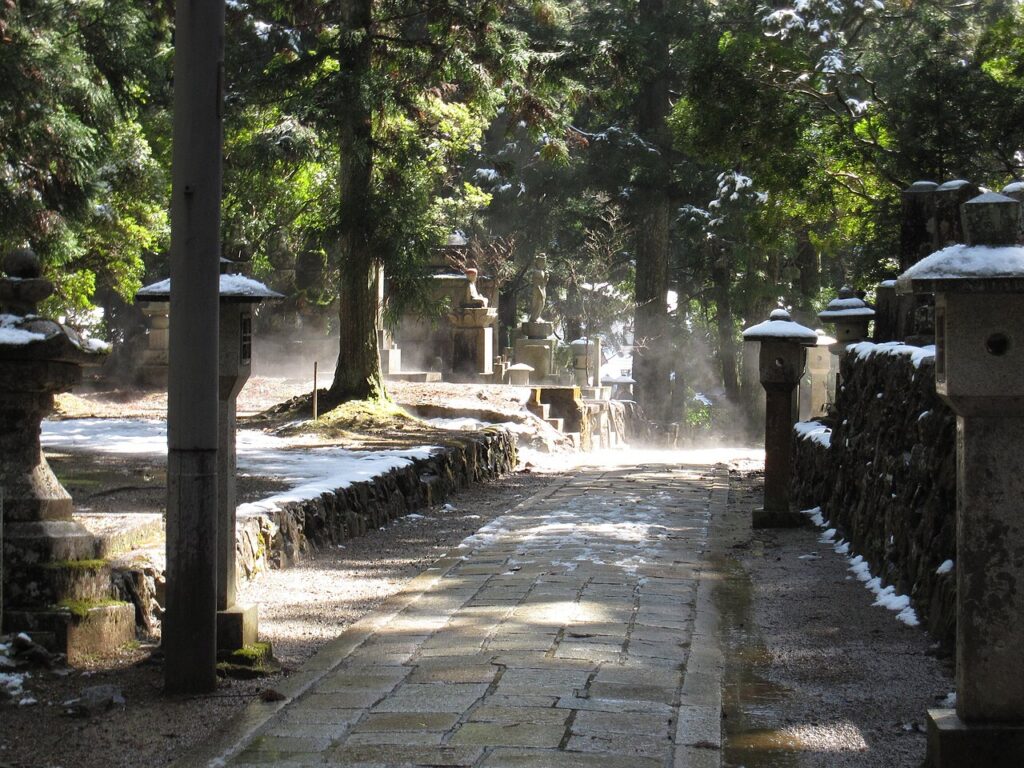
- Morning (6-10am): After the service, enjoy the temple breakfast—a simple spread of miso soup, rice, pickled plum, and nori. Then head to Okunoin early, before 8am. This is the secret: pilgrims walk the 2-kilometer path through the largest cemetery in Japan when the light filters through towering cedars, and you’ll have the place nearly to yourself. The 50,000 grave markers range from ancient stone pagodas to modern corporate tombs—you’ll spot memorials for UCC Coffee, Panasonic, and even a sake brewer. At the end lies the Torodo Hall of Lanterns, where two lanterns have burned continuously for 1,000 years. Bring ¥100 for incense and a coin to toss at the Jizo statues.
- Midday (11am-1pm): Visit the Shingon International Institute’s museum (free, but donations welcome) for a crash course on Shingon mikkyo (esoteric Buddhism). You’ll see a sand mandala being created by monks—it takes weeks and is destroyed upon completion. For lunch, try Beni Shigure (¥1,000), a cozy spot near the bus stop. Locals recommend the koya mabushi—a warm bowl of rice topped with eel and egg. (It’s fish, not meat, so it’s allowed even in this religious setting.)
- Afternoon (2-5pm): Hike the Daimon Gate trail that leads to the main gate of Koya-san. The walk takes about 40 minutes one way, through a forest of hinoki cypress. At the top, you’ll find the Daimon Gate itself, a massive vermillion structure flanked by two fearsome Niō guardians. From here, the view stretches over the Kii Mountains. If you prefer less exertion, take the bus to the gate (¥270) and walk back. Afterwards, visit the Women’s Temple (Nyonindo), a small building where women were once forced to pray from a distance before 1872—a reminder of Koya-san’s exclusionary past.
- Final Evening: For your farewell dinner, book at Shojin Ryori Okakichi (¥3,800 for the full course), a family-run restaurant in the center of town. Their shojin ryori is traditional but with a modern touch—think yuba (tofu skin) spring rolls and a persimmon-based mille-feuille. The atmosphere is Zen-lite: wood-paneled walls, a view of a tiny garden, and the occasional sound of a shakuhachi flute from the speaker system. Order the local plum wine (umeshu) to finish—it’s sweet, tart, and perfect for the cool evening.

Photo of man walking beside tree trunk, Koya-san, Japan
The Food You Can’t Miss
Shojin ryori is the soul of Koya-san’s cuisine—a Buddhist vegetarian tradition dating back to the 8th century. The philosophy is simple: no killing, no strong flavors, and no waste. Chefs use seasonal vegetables, tofu, konnyaku, mushrooms, and sesame to create dishes that are both humble and artful. The star is goma dofu (sesame tofu), which isn’t actually tofu at all—it’s made from sesame paste and kuzu starch, giving it a custard-like texture and nutty depth. You’ll find it in every temple meal, but locals recommend the fresh-made version at Kannon-ya, a tiny shop near the Garan complex (¥350 for a cup). Don’t miss koya tofu, which is freeze-dried and then simmered in soy broth—its spongy texture soaks up flavors like a dream. For a quick lunch, the food stalls at Koyasan Shukubo-mae bus stop sell koya tofu buns (¥300) stuffed with pickled vegetables. And if you must have something sweet, the Koyasan Pudding at the station gift shop is a rich, donut-shaped pudding that’s surprisingly elite.

Person walking towards pagoda, Koya-san, Japan
Where to Stay for the Weekend
You have one real option on Koya-san: temple lodging. Shukubo are the only accommodations within the monastery area, and they’re the whole point of visiting. Travelers often stay at Ekoin (¥11,000-¥14,000 per person), which offers the best value—a beautiful garden, a hot-spring bath, and a fiery morning prayer service. Fukuchiin (¥13,000-¥16,000 per person) is a step up in luxury, with larger rooms and a stunning moss garden where guests can practice shodo (calligraphy) in the afternoon. For an authentic but no-frills experience, Yochi-in (¥8,000-¥10,000 per person) has basic rooms but exceptional cuisine—the head monk is a former high-end chef. Book early; these places sell out months in advance. Use Booking.com or Airbnb for backup options in the nearby town of Koyasan (though nothing compares to staying inside the sacred precinct).
Before You Go: Practical Tips
- Getting Around: Within Koya-san, the local bus costs ¥270 per ride or ¥780 for a one-day pass. The town is compact—you can walk most of it in 20 minutes—but the bus saves time between the cemetery and the temple area.
- What to Pack: Layered clothing (even in summer, mornings are 15°C), comfortable walking shoes (the cemetery path is cobbled), a small flashlight for the Okunoin night tour, and a pair of indoor slippers (most temples require you to remove shoes—your rental pair might be thin). Don’t forget a light jacket; the mountain weather changes fast.
- Common Tourist Mistakes: Don’t skip booking a temple stay—day-trippers miss the morning ceremony and the night atmosphere. Also, don’t assume you can use credit cards everywhere—many temple shops and smaller restaurants are cash-only. Always carry ¥10,000-¥15,000 in yen.
- Money-Saving Tip: Buy the Koyasan World Heritage Ticket (¥2,870) at Nankai Namba Station. It includes round-trip train and cable car from Osaka, plus unlimited bus rides within Koya-san. You’ll save roughly ¥1,200 compared to buying separate tickets.

