
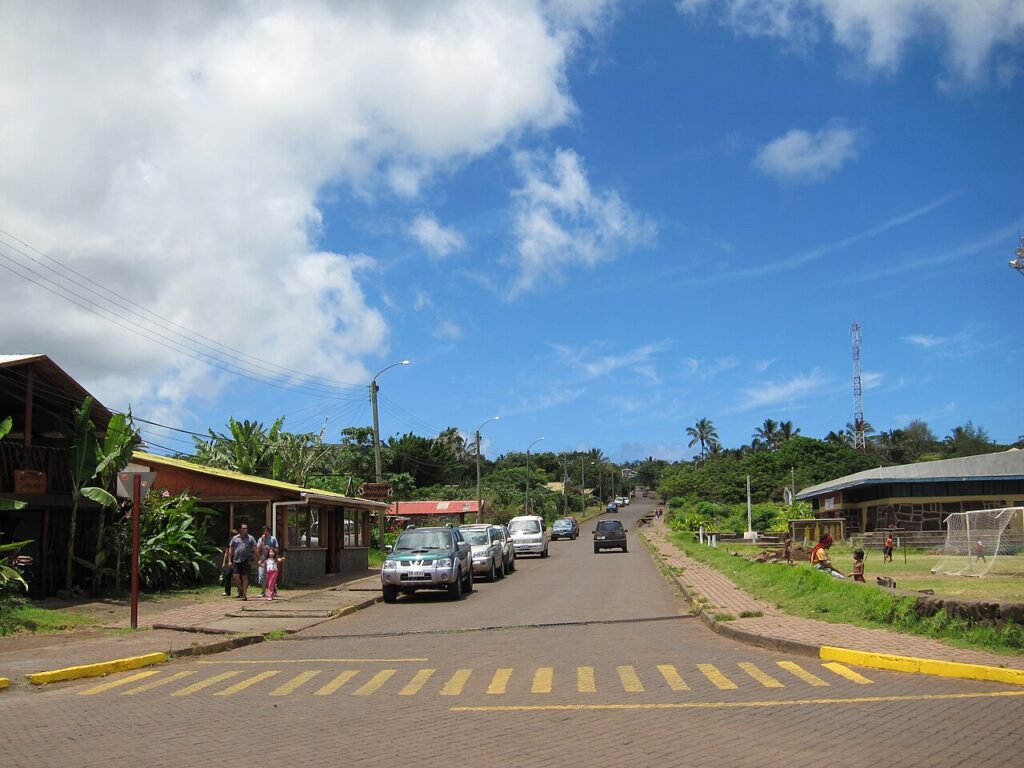
Hanga Roa, Chile: Moai, Mysteries & Pacific Solitude (2026)
Only 160,000 travelers discover Hanga Roa, Chile annually, yet this tiny Pacific outpost guards nearly 1,000 moai statues—each one carved from volcanic tuff between 1100 and 1680 AD. Most visitors spend just three days here, but savvy travelers know that’s barely enough to scratch the surface. You’ll find yourself standing before 15-foot-tall ancestors at sunrise, hearing nothing but wind and crashing waves, wondering how these megaliths ever moved at all. That single moment rewrites everything you thought you knew about human ambition.
Why Hanga Roa, Chile Stands Out
- Historic Architecture: Ahu Tahai, a ceremonial platform dating to 700 AD, features the island’s only moai with original coral eyes still intact—a rare window into ancient Rapa Nui craftsmanship.
- Cultural Scene: The Tapati Rapa Nui festival (held each February) transforms the town into a two-week competition of body painting, canoe racing, and the Haka Pei—where men slide down a 300-foot cliff on banana trunks.
- Local Specialties: Tuna empanadas stuffed with local cheese and chili at La Kaleta, best eaten with a cold Papaya sour in hand as the sun sets over the Pacific.
Pro Tip: Visit in October or April for perfect 22°C days and flights from Santiago for around $350 round trip—half the price of peak December-January season. Book your park entrance ticket ($80 USD) online at least 48 hours before arrival to skip the line at Mataveri Airport.
Map of Hanga Roa, Chile
Use these interactive maps to explore Hanga Roa, Chile and plan your route:
📍 View Hanga Roa, Chile on OpenStreetMap
🗺️ Open Hanga Roa, Chile in Google Maps
Planning Your Trip: Practical Essentials

Fishing boats in Hanga Roa O Tai harbor, Hanga Roa, Chile
Getting There and Around
- By Air: LATAM Airlines operates the only flights to Mataveri International Airport (IPC)—a 5-hour, 20-minute journey from Santiago, Chile. One flight arrives daily at 1:30 PM, and schedules fill up weeks ahead. Book flights at Skyscanner for best deals; round trips range $350–$800 depending on season.
- By Train: There are no trains on Easter Island. You’ll fly or you won’t arrive at all—this is the most remote inhabited island on Earth, 3,512 kilometers from the Chilean coast.
- By Car: Renting a 4×4 from Oceanic Rent a Car (Avenida Policarpo Toro) costs $60–$100 per day. Book three weeks ahead in peak season. You’ll need a valid driver’s license from your home country—no international permit required for Chilean renters. Compare car rentals at RentalCars.com.
- Local Transport: Taxis from the airport to town cost $10 USD flat rate. In town, you’ll walk everywhere—Hanga Roa spans just 2 kilometers end to end. Bicycles rent for $25/day at Paupaute Bikes on Te Pito o Te Henua Street.
Best Time to Visit
Budgeting for Hanga Roa, Chile

Body of water under cloudy sky during daytime, Hanga Roa, Chile
| Category | Budget | Mid-range | Luxury |
|---|---|---|---|
| Accommodation | $80–120/night (hostels, guesthouses) | $150–250/night (boutique hotels) | $300–500/night (ocean-view resorts) |
| Meals | $15–25/day (empanadas, markets) | $30–50/day (local restaurants) | $60–100/day (fine dining, seafood) |
| Transport | $25/day (bicycle rental) | $60–100/day (car rental) | $150/day (private guide + vehicle) |
| Activities | $10/day (beaches, hiking) | $80 (park entrance, one tour) | $200+ (helicopter, private archaeology tour) |
| Daily Total | $130–180/day | $260–400/day | $510–750/day |
Top Attractions and Must-See Sights
| Attraction | Description | Hours | Entry Fee |
|---|---|---|---|
| Ahu Tongariki | The largest moai platform with 15 restored statues, perfectly aligned for sunrise—you’ll never forget the first rays hitting those stone faces. | Sunrise–sunset daily | Included in $80 park pass |
| Rano Raraku | The volcanic quarry where 397 moai remain unfinished, embedded in the rock walls like sleeping giants—a true archaeological marvel. | 9 AM–5:30 PM daily | Included in $80 park pass |
| Orongo Ceremonial Village | A 13th-century village perched on volcanic crater rim, center of the Birdman cult competition—53 stone houses with petroglyph carvings. | 9 AM–5:30 PM daily | Included in $80 park pass |
| Ahu Tahai | Three platforms including the famous Ahu Ko Te Riku with restored coral eyes—best at sunset when the moai silhouette against orange sky. | Always accessible | Free |
3-Day Itinerary: Highlights & Hidden Gems of Hanga Roa, Chile

Ocean waves crashing on rocks during sunset, Hanga Roa, Chile
Day 1: Sunrise Moai & Coastal Wonders
- Morning: Arrive at Ahu Tongariki at 6:45 AM for sunrise—you’ll join about 30 other travelers, but the silence before dawn is worth the early wake-up. The 15 moai face inland as if watching over their descendants. Most tourists overlook the nearby petroglyph rocks—walk 100 meters south to find ancient carvings of tuna, turtles, and birdmen.
- Afternoon: Explore Rano Raraku quarry from 12–3 PM. You’ll walk among 397 unfinished moai, including one 21 meters long that never left the rock. Eat lunch at Tauranga Restaurant (Avenida Te Pito o Te Henua) for their famous tuna ceviche with coconut milk ($18).
- Evening: Watch sunset at Ahu Tahai from 6:30 PM—the moai with restored coral eyes faces directly into the sun. Follow with dinner at La Kaleta (Atamu Tekena Street), where you’ll order the grilled lobster with garlic butter ($35) and a Papaya sour ($12).
Day 2: Volcanoes, Birdmen & Hidden Coves
- Morning: Hike to Rano Kau volcano crater at 8 AM ($0, free trailhead). The 1.5-hour walk rewards you with a 1.5-kilometer-wide crater filled with freshwater lakes and floating totora reeds. You’ll see Orongo village perched on the rim—53 stone houses with petroglyph carvings of birdmen. The guide will explain how warriors competed to retrieve the first sooty tern egg each year.
- Afternoon: Visit the Rapa Nui National Museum (Avenida Atamu Tekena, 9:30 AM–5:30 PM, $10 USD) to see the actual Birdman tablets and the only female moai statue on display. Lunch at Kiosko Rapa Nui ($12, tuna sandwich with local cheese).
- Evening: Anakena Beach from 5–7 PM—the only white-sand beach on Easter Island, with 7 moai guarding the shoreline. Swim in calm, turquoise water. Dinner at Te Moana Restaurant (Avenida Pont, $28 for grilled fish with passion fruit sauce).
Day 3: Archaeology & Cave Exploration
- Morning: Drive 20 minutes north to Ana Te Pora cave ($0, bring a flashlight). You’ll belly-crawl through a 50-meter tunnel that opens into a hidden chamber used by ancient Rapa Nui as a refuge during clan wars. The cave ceiling has red ochre handprints—probably 300 years old. Most tourists miss this because their guides don’t mention it.
- Afternoon: Walk the Hanga Roa coastal trail from noon to 2 PM—a 3-kilometer path that passes the Tahai complex, the fisherman’s pier, and hidden coves where locals swim. Lunch at Mahina Restaurant (Avenida Te Pito o Te Henua, $20, seafood pasta with local scallops).
- Evening: Final sunset at Ahu Akivi from 6 PM—the only moai platform with statues facing exactly west, aligned to the spring equinox. There are 7 moai here, each representing a legendary explorer sent by king Hotu Matu’a. Dinner at the Hanga Roa Eco Village Restaurant ($45, five-course tasting menu with local tuna, sweet potato, and papaya dessert).
Cultural Insights & Etiquette
- Language: Spanish and Rapa Nui are the official languages. Most tour guides speak English, but locals appreciate when you say “Iorana” (hello) and “Maururu” (thank you). Learn three Rapa Nui phrases: “Pehe koe?” (how are you?), “Riva riva” (good), and “Ka ha’a” (goodbye). Locals will smile when you try.
- Customs: Never sit or stand on a moai platform—these are sacred ceremonial spaces where ancestors are believed to dwell. Always ask permission before photographing local people, especially during Tapati festival ceremonies. Remove your shoes before entering traditional houses or visiting sacred caves.
- Tipping: Not widely expected, but 10% is appreciated at restaurants. Tour guides typically receive $5–10 per person per day for excellent service. Taxi drivers don’t expect tips.
- Dress Code: Casual clothing is fine everywhere—you’ll wear shorts and t-shirts most days. Pack a light jacket for evening winds (especially June–August). Swimwear is acceptable at beaches only, not in town. Bring sturdy walking shoes for volcanic terrain.
- Business Hours: Most shops and restaurants open 9 AM–8 PM weekdays. Banks close at 2 PM. Sunday hours are limited—many restaurants close by 6 PM. ATMs at BancoEstado (Avenida Atamu Tekena) often run out of cash on weekends, so withdraw Monday morning.
Where to Eat: The Best Bites in Hanga Roa, Chile
You’ll find that Hanga Roa’s dining scene centers on fresh Pacific seafood, local sweet potatoes called kumara, and the unique Rapa Nui ingredient—tuna marinated in lemon juice with coconut milk. Locals recommend eating at venues that source directly from the island’s small fishing fleet, not imported goods from Chile. Most restaurants close between 3 PM and 6 PM, so plan your meals accordingly.

