
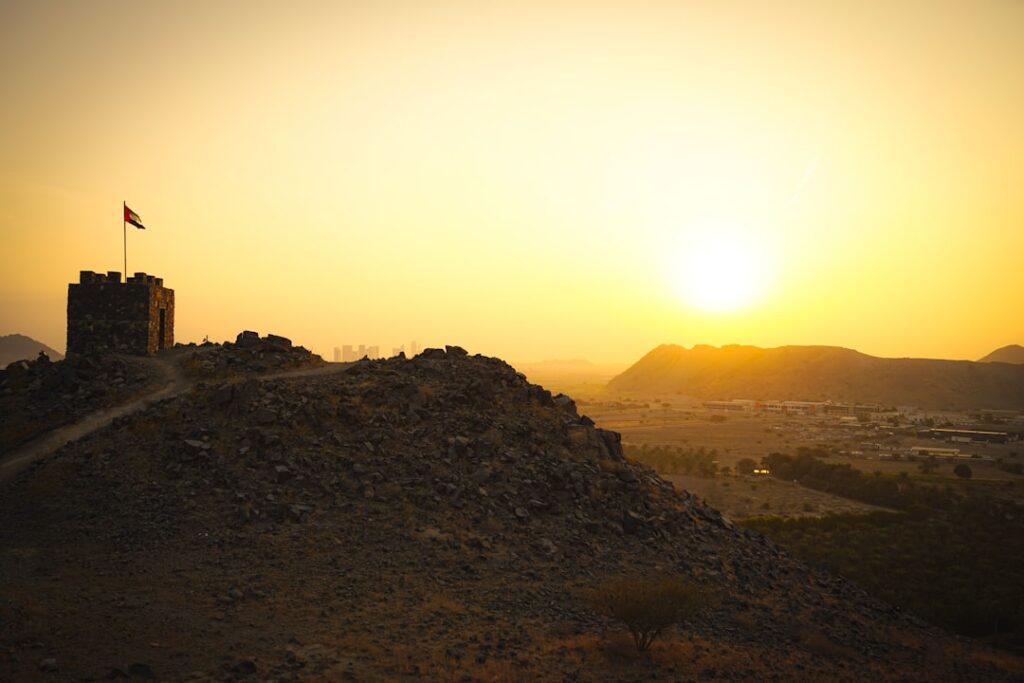
Fujairah, United Arab Emirates: Ultimate Mountains, Forts & Untouched Coastlines (2025)
While crowds flock to Dubai’s skyscrapers, Fujairah delivers a raw, authentic slice of Arabia without the traffic jams and premium price tags. Here, the Hajar Mountains plunge directly into the Gulf of Oman, creating a dramatic coastline where you can snorkel over vibrant coral one hour and explore 500-year-old forts the next. This is the UAE’s only emirate with a coastline entirely on the eastern, Indian Ocean side, offering a completely different climate, culture, and pace of life for savvy travelers who choose differently.
Why Fujairah, United Arab Emirates Stands Out

Green trees on brown field during daytime, Fujairah, United Arab Emirates
- Historic Architecture: The 17th-century Fujairah Fort, built from mud, gravel, and gypsum, served as the ancestral home of the ruling family and a defensive stronghold for centuries.
- Cultural Scene: The annual Fujairah International Monodrama Festival is a unique celebration of solo theatrical performances, drawing artists from across the Arab world and beyond.
- Local Specialties: You must try Majboos, a fragrant spiced rice dish with tender chicken or lamb, considered the national comfort food of the UAE.
Pro Tip: For the absolute best experience, visit between October and April. The weather is perfect for outdoor adventures, with daytime temperatures averaging 25-30°C (77-86°F). To avoid the weekend crowds from Dubai and Sharjah, plan your major sightseeing for weekdays, especially Sunday through Tuesday.
Map of Fujairah, United Arab Emirates
Use these interactive maps to explore Fujairah, United Arab Emirates and plan your route:
📍 View Fujairah, United Arab Emirates on OpenStreetMap
🗺️ Open Fujairah, United Arab Emirates in Google Maps
Planning Your Trip: Practical Essentials
Getting There and Around
- By Air: Fujairah International Airport (FJR) has limited international connections. Your best bet is to fly into Dubai International (DXB) or Sharjah (SHJ) and drive east for 90-120 minutes. Book flights at Skyscanner for best deals.
- By Train: There is no passenger rail service to Fujairah. The UAE’s Etihad Rail network is under development but not yet operational for travelers.
- By Car: Driving is the most efficient way to explore. The E99 and E89 highways connect Fujairah to Dubai and Sharjah. Parking is generally easy and free outside the city center. Compare car rentals at RentalCars.com.
- Local Transport: Public buses are limited. Taxis are readily available and use meters; a trip within the city rarely costs more than 30 AED. There are no tourist transport passes.
Best Time to Visit
Fujairah’s climate is defined by hot, humid summers and warm, pleasant winters. The mountain areas are always a few degrees cooler. The ideal window for exploration is the winter and spring months.
| Season | Weather | Highlights |
|---|---|---|
| Summer (Jun–Aug) | Very hot (35-40°C/95-104°F) and extremely humid, especially on the coast. Mountain areas are slightly cooler. | Lowest hotel rates; indoor attractions like museums and malls are most comfortable. Crowds are minimal. |
| Winter (Dec–Feb) | Perfectly warm (22-28°C/72-82°F) with low humidity and cool evenings. Ideal beach and hiking weather. | Peak season for tourism; all outdoor activities are in full swing. Great for snorkeling and diving with excellent visibility. |
| Shoulder (Apr–May/Sep–Oct) | Pleasant warmth (28-33°C/82-91°F) with manageable humidity. Occasional chance of rain in spring. | Best value period; you’ll enjoy good weather with fewer visitors and competitive accommodation prices. |
Budgeting for Fujairah, United Arab Emirates

A street with a mountain in the background, Fujairah, United Arab Emirates
| Category | Budget | Mid-range | Luxury |
|---|---|---|---|
| Accommodation | 250-400 AED/night for a basic hotel or apartment | 400-800 AED/night for a 4-star beachfront hotel | 800-2000+ AED/night for a 5-star resort with all amenities |
| Meals | 60-100 AED/day for shawarma, falafel, and local cafeterias | 150-250 AED/day for nice restaurant meals | 400+ AED/day for fine dining and resort restaurants |
| Transport | 50-80 AED/day for local taxis | 150-250 AED/day for a rental car (fuel included) | 500+ AED/day for private driver or luxury transfers |
| Activities | Free beaches, fort visits (10-15 AED), self-guided hikes | Guided wadi tours (~200 AED), snorkeling trips (~150 AED) | Private yacht charters, PADI diving courses, helicopter tours |
| Daily Total | 360-580 AED | 700-1300 AED | 1800+ AED |
Top Attractions and Must-See Sights
| Attraction | Description | Hours | Entry Fee |
|---|---|---|---|
| Fujairah Fort | The oldest fort in the UAE, offering panoramic views and a glimpse into pre-oil era life. | Sat-Thu: 8:00 AM – 6:00 PM, Fri: 2:00 PM – 6:00 PM | 5 AED |
| Snoopy Island (Al Aqah Beach) | A legendary snorkeling and diving spot named for its dog-shaped rock formation, teeming with marine life. | 24/7 (boat trips typically 9 AM – 5 PM) | Free beach access; tours from 150 AED |
| Al Bidyah Mosque | The UAE’s oldest functioning mosque, dating back to 1446 AD, with unique architecture and four central pillars. | Daily: 9:00 AM – 5:00 PM (closed during prayer times) | Free (donations appreciated) |
| Wadi Wurayah National Park | A breathtaking mountain preserve with freshwater pools, waterfalls, and rare wildlife like the Arabian Tahr. | Daily: 8:00 AM – 6:00 PM (Visitor Center hours) | Free, but 4×4 vehicle required for access |
3-Day Itinerary: Fujairah, United Arab Emirates’s Highlights & Hidden Gems
Day 1: Historic Heart & Coastal Charm
- Morning (7-9 AM): Start early at the Fujairah Museum (opens at 8 AM, 5 AED) to understand the region’s archaeological history before the heat sets in. Your best bet is to see the rare 3rd-century coin collection.
- Afternoon (12-3 PM): Explore the adjacent Fujairah Fort and the restored Heritage Village. For lunch, head to Marmara Restaurant on Al Murashid Road for superb grilled meats and mezze (expect 80 AED per person).
- Evening (6-8 PM): Watch the sunset at Fujairah Corniche, then enjoy a seafood dinner at Al Meshwar Tent Restaurant on the beach, where you can dine with your feet in the sand on fresh hammour (around 120 AED).
Day 2: Mountain Adventures & Pristine Waters
- Morning (7 AM): Rent a 4×4 (approx. 300 AED/day) and drive 45 minutes to Wadi Wurayah. Hike to the stunning waterfalls—the earlier you go, the more likely you’ll have the pools to yourself.
- Afternoon (1 PM): Drive to the coast at Al Aqah. Have a casual lunch at Sandy Beach Hotel & Resort’s beach bar (fish & chips for 55 AED) before a snorkeling trip to Snoopy Island (boat trips cost 150 AED including gear).
- Evening (7 PM): Freshen up and enjoy a sophisticated dinner at Suhail at the Radisson Blu, known for its steak and seafood with stunning terrace views (around 200 AED per person).
Day 3: Cultural Depths & Local Life
- Morning (9 AM): Take a taxi (about 50 AED) north to the timeless Al Bidyah Mosque. Then, visit the nearby Friday Market (open every day despite its name) for pottery, carpets, and local produce.
- Afternoon (12 PM): Continue north to the picturesque fishing village of Dibba. Enjoy a waterfront lunch of freshly caught fish at Al Bait Al Qadeem Restaurant (meal for 70 AED).
- Evening (5 PM): Return to Fujairah city for a final stroll through the date palm gardens. For your last meal, savor authentic Emirati cuisine at Al Fanar Restaurant at Festival City, trying their camel meat machboos (about 90 AED).
Cultural Insights & Etiquette
- Language: Arabic is official, but English is widely spoken in tourist areas. Learn “Marhaba” (Hello), “Shukran” (Thank you), and “Insha’Allah” (God willing).
- Customs: The left hand is considered unclean. Always offer and receive items, especially food and money, with your right hand. Public displays of affection are frowned upon.
- Tipping: Not mandatory but appreciated. In restaurants, 10-15% is customary if a service charge isn’t included. Tip taxi drivers by rounding up the fare.
- Dress Code: Modesty is key. Cover shoulders and knees in public areas. Swimwear is acceptable only at hotel pools and private beaches.
- Business Hours: Government: 7:30 AM – 2:30 PM (Sun-Thu). Malls: 10 AM – 10 PM (often until midnight on weekends). Many shops close between 1 PM and 4 PM for a break.
Where to Eat: Fujairah, United Arab Emirates’s Best Bites
Fujairah’s cuisine is a delicious testament to its coastal and Bedouin heritage. You’ll find an emphasis on freshly caught seafood, fragrant rice dishes, and slow-cooked meats. Don’t just eat at your hotel—venture out to local cafeterias and family-run eateries for the real deal.
Must-Try Local Specialties
- Harees: A savory porridge of boiled wheat and meat, often served during Ramadan and weddings. For an authentic taste, try it at local gatherings or specialized restaurants like Al Fanar.
- Lgeimat: Sweet, golden dumplings drizzled with date syrup—the perfect Emirati dessert. Find them fresh at the Friday Market or in traditional coffee houses.
- Madrooba: A salted fish dish cooked with a thick sauce, a staple of coastal communities. The best versions are often found in homes, but some local restaurants in Dibba serve it.
Restaurant Recommendations by Budget
| Type | Restaurant | Specialty | Price Range |
|---|---|---|---|
| Budget | Al Reef Lebanese Bakery (City Center) | Freshly baked mana’eesh (flatbreads) and shawarma | 15-30 AED per person |
| Mid-range | Marmara Restaurant (Al Murashid Rd) | Extensive Turkish mezze and grilled kebabs | 70-120 AED per person |
| Fine dining | Suhail (Radisson Blu Resort) | Prime steaks and seafood with panoramic gulf views | 180-300 AED per person |
Where to Stay
Accommodation in Fujairah ranges from no-frills city hotels to lavish beachfront resorts. For beach access and resort amenities, stay along the coast in Al Aqah. For cultural exploration and local life, choose Fujairah City. Compare prices and book at Booking.com or Airbnb for apartments.
Best Neighborhoods for Accommodation
- Al Aqah: This is the resort strip, home to 5-star properties like the Radisson Blu and Miramar Al Aqah. Perfect for beach lovers, divers, and those seeking a relaxing getaway. It’s a 30-minute drive from the city.
- Fujairah City Centre: The commercial and historic hub. You’ll be close to the fort, museum, corniche, and local restaurants. It suits travelers wanting immersion in local life and easy access to historical sites.
- Dibba Area: North of the city, this area offers a mix of luxury resorts and a glimpse into traditional fishing village life. It’s ideal for a quieter stay with stunning mountain-meets-sea scenery.

A potted plant with green leaves on a white wall, Fujairah, United Arab Emirates
FAQs: Your Fujairah, United Arab Emirates Questions Answered
1. Is Fujairah, United Arab Emirates safe at night?
Yes, Fujairah is exceptionally safe at night. The UAE has a very low crime rate. As always, exercise standard precautions: be aware of your surroundings in less crowded areas and keep valuables secure. Women traveling alone generally feel safe, even when walking at night in well-lit public areas.
2. What currency is used and are credit cards accepted?
The currency is the UAE Dirham (AED). Credit and debit cards (Visa, Mastercard) are widely accepted in hotels, resorts, malls, and most restaurants. However, it’s wise to carry some cash (200-300 AED) for smaller markets, taxis, and local cafeterias. ATMs are readily available.
3. How do I get from the airport to the city center?
From Fujairah International Airport (FJR), a taxi to the city center costs about 40-50 AED and takes 15 minutes. From Dubai International Airport (DXB), pre-booking a private transfer is your most convenient option (approx. 400-500 AED, 90-minute drive). You can also rent a car at the airport. Book airport transfers at GetYourGuide for convenience.
4. Do I need to speak the local language?
No. English is the common language of business and tourism. You’ll find that hotel staff, restaurant servers, and tour operators all speak fluent English. Road signs are in both Arabic and English. Learning a few basic Arabic phrases, however, is a wonderful way to show respect and will be warmly received by locals.
5. What’s the appropriate dress code?
Dress modestly in public areas. For men and women, clothing should cover the shoulders and knees. Lightweight, loose-fitting fabrics are ideal for the climate. At hotel pools, beaches, and resorts, standard Western
Related Guides
Explore more destinations similar to Fujairah:
- Experience Bosnia’s Soul in Blagaj Without the Crowds, 2025.
- Gulu, Uganda’s Ultimate Resilience, Rhythms & Remarkable Wildlife (2025)
- Capurganá, Colombia: Ultimate Caribbean Beaches, Jungle Waterfalls & Car-Free Paradise (2025)
- Yangshuo, China’s Best Karst Peaks, River Serenity & Rural Adventure (2025)

