
Caiçara do Norte, Brazil Weekend: Salt Flats, Silent Dunes & The Best Lobmoqueca of Your Life (2026)
You step off the dusty transfer van and the wind hits you first—a constant, warm breath off the Atlantic carrying the sharp iodine tang of salt flats and the faint, sweet smell of frying banana. Behind you, dunes the color of clotted cream roll toward a sea that shifts from jade to cobalt in the span of a single wave. Caiçara do Norte doesn’t announce itself with a roar. It waits, like a secret the locals have been keeping for generations.
Quick Facts Before You Go
- Best Months: July through December—the winds are steady, skies are clear, and you’ll avoid the heavy rains of March to June that turn the sand roads into a muddy challenge.
- Currency: Brazilian Real (R$). At time of writing, US$1 ≈ R$5.10. Bring cash—ATMs are unreliable and most places outside the pousadas don’t accept cards.
- Language: Portuguese. English is virtually non-existent beyond the occasional hotel receptionist. Savvy visitors pre-load Google Translate with the Portuguese phrasebook and practice “obrigado” (thank you) and “um prato de camarão, por favor” (a plate of shrimp, please).
- Budget: R$250–400 per day (US$50–80) for comfortable mid-range travel—covering a pousada breakfast, lunch at a barraca on the beach, dinner with a caipirinha, and a 4×4 transfer to the dunes.
- Getting There: Fly into Natal’s Governador Aluísio Alves International Airport (NAT)—a 2.5-hour direct flight from São Paulo or 3 from Rio. From Natal, you’ll need a rental car or pre-booked transfer for the 120km drive north. Book flights at Skyscanner.
Day 1: The Salty Side of Paradise
You start the morning with the sun already high and aggressive—the kind of light that ricochets off the white sand and forces you to squint even behind sunglasses. By 7am the temperature has already passed 28°C, and you’ll hear the distant hum of buggies crossing the dunes before you’ve even had your first sip of coffee. Today is about understanding why this sliver of Rio Grande do Norte feels so different from the package-tour coast further south.
- Morning (8–11am): Head to the Salinas do Norte salt flats, a 20-minute buggy ride northwest of town. You’ll walk between the geometric pools that shimmer pink and white under the sun—locals have harvested salt here since the 1800s, and the crystalline mountains at the edge of the flats are surreal enough to make you check your phone for a filter. Entry is free; a guided tour runs R$40 per person. Most tourists overlook the morning light here, but you’ll know better—the reflections are at their most vivid before 10am.
- Lunch: At Restaurante do Seu Chico on Rua Beira Mar, order the “camarão na moranga”—shrimp simmered in coconut milk and dendê oil, served inside a hollowed pumpkin (R$65 for two people). The dining room is open-air, the floor is sand, and the soundtrack is waves breaking a hundred meters away. Locals recommend the moqueca de peixe (R$55) if you want something lighter, but don’t skip the farofa de banana—the sweet caramelized banana farofa is the sleeper hit of the entire plate.
- Afternoon (1–5pm): Spend the hours between 1pm and 3pm floating in the natural pools at Praia do Farol—a shallow stretch of reef-protected water where schools of silver fish dart around your ankles. From 3pm, take a buggy tour of the Dunas de São Bento do Norte (R$150 per buggy, up to 4 people). Your driver will slide down slopes of sand that feel like skiing on talcum powder, stopping at viewpoints where you can see both the salt flats and the ocean in a single frame. Seasoned travelers prefer the late-afternoon slot—the shadow-play across the dunes is dramatic and the heat relents just enough to make the ride comfortable.
- Evening: Dinner at Pousada e Restaurante Maré Alta, where the specialty is grilled lagosta (lobster) served with rice, salad, and a garlic butter sauce so good you’ll consider licking the plate (R$90 for a whole lobster). Afterward, walk the 200 meters to the main square (Praça da Matriz) and find a plastic chair at Bar do Zé, where Zé himself will pour you a caipirinha made with cachaça artisanal from the nearby town of Angicos. The atmosphere is pure northeast Brazil—families, old men playing dominó, and the occasional burst of forró music from a battered speaker.
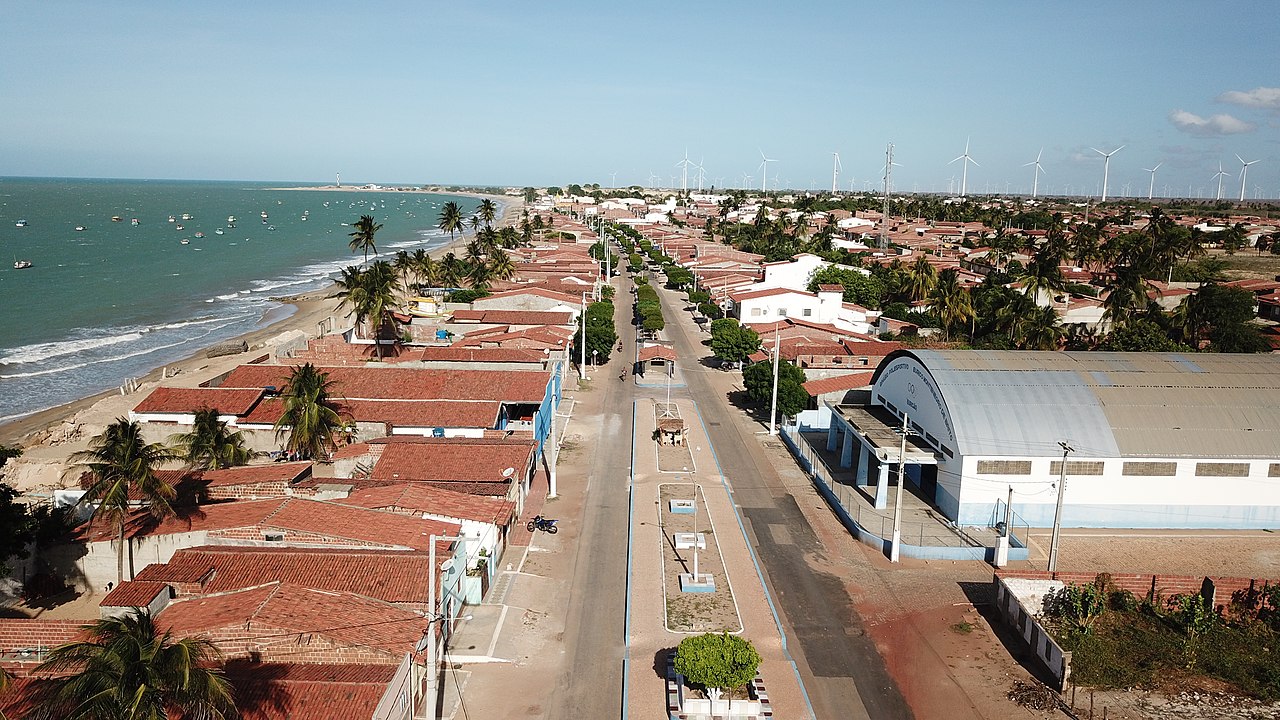
Foto Aérea de Caiçara do Norte, Caiçara do Norte, Brazil
Day 2: Dunes, Dolphins & A Farewell Feijoada
The second morning arrives with a different texture—the wind has dropped and the sea is glassy. You’ll wake to the sound of fishing boats puttering out of the harbor, their hulls painted in candy colors. Today is slower, more contemplative, but no less rich in the kind of small discoveries that make a weekend feel like a proper escape.
- Morning (6–10am): Rise early for a sunrise kayak tour through the mangroves of Rio dos Cavalos (R$90 per person, including guide and life jacket). The light filters through the twisted roots in shafts of gold, and if you’re quiet, you’ll spot herons and, with luck, a family of capybaras shuffling along the bank. The tour ends at the river mouth, where you’ll beach the kayak and walk to Barraca da Dona Maria for breakfast: tapioca stuffed with queijo coalho (grilled cheese) and coconut—a single disc costs R$12, and Dona Maria will press it fresh on her griddle while you watch. Pair it with a cup of café com leite (R$4) and you’ll understand why travelers often discover that the simplest breakfasts are the ones they remember most.
- Midday (10am–1pm): The main attraction today is a boat trip to the Ilha dos Cavalos—a sandbank that emerges only at low tide, about 40 minutes offshore. Boats depart from the Caiçara do Norte pier at 10am sharp (R$60 per person, round trip). You’ll spend two hours wading in waist-deep crystal water, watching dolphins—locals report a resident pod of about 20 gray dolphins that frequents the channel—and photographing the improbable sight of an entire island of white sand that will disappear by 3pm. Insider tip: bring reef shoes—the sandbank hides small rocks at its edges, and you’ll thank yourself later.
- Afternoon (1–4pm): Explore the fishing neighborhood of Alto do Céu, a cluster of brightly painted wooden houses on stilts. The real draw here is the Casa do Artesanato (open 2–5pm), a cooperative workshop where local women weave hammocks and bags from carnaúba palm fiber. You’ll find pieces starting at R$35 for a small bag, and the quality far exceeds the souvenir stalls in Natal. Most tourists miss this place entirely—it has no sign, no website, just a blue gate and the sound of looms clicking inside.
- Final Evening: Your farewell dinner deserves something ceremonial, and you’ll find it at Restaurante O Peixeiro on Avenida Principal. Order the feijoada de frutos do mar—a seafood version of Brazil’s national stew, packed with shrimp, fish, mussels, and octopus in a dark, smoky broth of black beans and spices (R$52, enough for two generous portions). The restaurant sits on a wooden deck overlooking the fishing boats, and by 6:30pm the sunset turns the sky the color of a ripe papaya. Order one last caipirinha—this time with cachaça aged in jequitibá wood, R$18—and let the evening wind carry the moment a little longer.
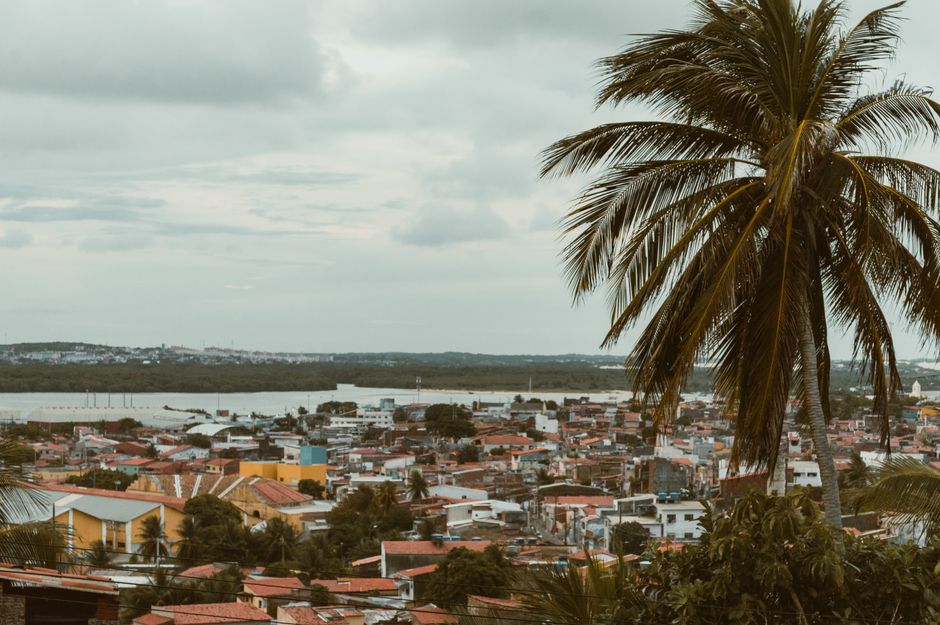
Scenic view of Natal, Caiçara do Norte, Brazil
The Food You Can’t Miss
To eat in Caiçara do Norte is to understand the ocean on a level deeper than any menu can convey. The local diet is built around what the Atlantic provides: peixe frito (fried fish) so fresh it was swimming three hours before you saw it on your plate; camarão (shrimp) grilled on skewers over charcoal; and the legendary lobmoqueca—a portmanteau of “lobster” and “moqueca” that you’ll find only in this corner of Rio Grande do Norte. The technique is deceptively simple—lobster tail simmered in coconut milk, dendê oil, tomatoes, onions, cilantro, and a whisper of malagueta pepper—but the result is transcendent. You’ll find the best version at Restaurante O Peixeiro for R$78 for a full portion, served with pirão (a thick fish gravy made with manioc flour) and white rice.
For street food, you can’t skip the acarajé from Dona Célia’s cart, which appears every evening around 5pm at the corner of Rua Beira Mar and Rua da Matriz. She serves the classic Bahian version—black-eyed pea fritters split open and stuffed with vatapá (shrimp paste), caruru (okra stew), and a drizzle of pimenta sauce—for R$8 each. Travelers often discover that Dona Célia also sells bolinhos de bacalhau (codfish cakes) on Fridays, and they sell out before 6pm. Get there early.

Scenic view of Newton Navarro Bridge over Natal cityscape with cloudy sky a…, Caiçara do Norte, Brazil
Where to Stay for the Weekend
Your base matters here because Caiçara do Norte isn’t a place with a dozen hotel options. The town’s accommodation scene is small, family-run, and full of character. For the best balance of comfort and local flavor, stay in the Praia de Caiçara neighborhood—the strip of pousadas just back from the main beach. Pousada Recanto do Mar (R$180–250 per night, including breakfast) offers rooms with hammocks on the veranda, ceiling fans (skip the rooms without them—the heat is no joke), and a garden where you’ll find papaya trees and a resident parrot named Chico who says “bom dia” with startling clarity. Book through Booking.com.
For something quieter, Pousada Dunas do Norte sits on the edge of the dune field, a 10-minute walk from the center but miles from any noise. The six rooms are simple but immaculate, with mosquito nets, tiled floors, and views of the dunes from the shared rooftop terrace. Rates run R$140–190 per night, and the owner, Seu Raimundo, will arrange buggy tours and fishing trips at a fraction of the price a hotel in Natal would charge. Look for it on Airbnb.
If you want to spend a bit more, Vila Caiçara Eco Pousada (R$280–350 per night) is the only place in town that could be called boutique. The seven bungalows sit on stilts among the mangroves at the northern edge of town, each with a private deck and an outdoor shower. Breakfast here is a spread of fresh fruit, homemade breads, cakes, and tapioca made to order. The owners speak some English and can arrange dolphin-watching and mangrove tours. Reserve directly via their website or through Booking.com.
Before You Go: Practical Tips
- Getting Around: The town center is compact enough to walk, but you’ll need a buggy or 4×4 to reach the dunes, salt flats, and Ilha dos Cavalos. Buggy rentals cost R$150–200 per half-day (up to 4 people). A transfer from Natal to Caiçara do Norte runs R$300–400 one way if you pre-book. Alternatively, rent a car in Natal—a basic compact costs R$130–160 per day, and the drive takes 2.5 hours on paved roads until São Bento do Norte, then 20 minutes on sand—but you’ll need a 4×4 if you want to explore beyond the town limits.
- What to Pack: Reef shoes (mandatory for the sandbank and kayaking), a high-SPF sunscreen that won’t wash off in salt water (the sun here is brutal even at 4pm), a windbreaker or light jacket (the constant afternoon wind can feel cool against wet skin), and a Portuguese phrasebook app on your phone. Leave the heels at home—everything in Caiçara is sand, dirt, or wooden decking.
- Common Tourist Mistakes: Showing up without cash is the most common slip—the town’s only ATM (inside the Banco do Brasil on Rua Principal) runs out of money on weekends, and almost no restaurant or buggy driver accepts cards. Also, don’t assume you can book tours the night before—many require a minimum of 4 people and need 24-hour notice, especially the Ilha dos Cavalos boat trip. Call or WhatsApp your pousada a day in advance to secure a spot.
- Money-Saving Tip: Buy your own cachaça and mix caipirinhas on the beach instead of paying R$18–22 at a restaurant. A 750ml bottle of artisanal cachaça from the Minas Gerais brand Vale Verde runs R$30 at the Mercado Municipal on Rua Beira Mar, plus R$3 for a bag of limes and R$4 for a bag of ice. You’ll make at least 10 caipirinhas for the price of two in a bar. Most travelers overlook this loophole, but savvy visitors know the beach sunset tastes even better when you’re saving R$150 a round.

