
Beyond the White Walls: Why Mikonos Still Captivates Every Traveler Who Visits (2026)
In the summer of 1547, a Venetian captain named Marco Grimani anchored his fleet in the deep, sheltered harbor of Mikonos, seeking refuge from a sudden meltemi wind. He wrote in his log that the island appeared as “a white bloom on a blue sea,” its villages so starkly bright against the Cycladic sky that he mistook them for salt flats. That same blinding whiteness—the lime-washed walls, the sugar-cube houses, the labyrinthine streets designed to confuse pirates—still defines this place, but what surprises every traveler is how little of the island is about the party you’ve heard about. It’s about the light, the stone, and a history that whispers from every windmill.
The Story Behind Mikonos, Greece
Mikonos has never been a place of grand empires or ancient temples. Unlike Delos, its sacred neighbor just a twenty-minute boat ride away, Mikonos was always the practical sibling—a windswept outpost of farmers, fishermen, and pirates. Its true turning point came in the 18th century, when the island’s deep natural harbor became a crucial stop for merchant ships sailing between Constantinople and Western Europe. By 1770, Mikonos had grown wealthy not from conquest but from trade, and the island’s distinctive architecture—those cubic houses with their flat roofs and narrow windows—was born from a blend of necessity and Venetian influence. You’ll notice that every doorway is painted a deep blue or green; locals will tell you this was to ward off evil spirits, but savvy travelers know it also helped sailors identify their homes from the sea.
The 19th century brought a different kind of revolution. In 1821, when the Greek War of Independence erupted, Mikonos became a staging ground for the fight against Ottoman rule. The island’s most famous daughter, Manto Mavrogenous, a wealthy aristocrat who had studied in Paris, sold her entire fortune to fund the Greek fleet. She personally led a campaign against the Ottomans from her home in the neighborhood of Kastro. Today, you can visit her statue in the main square, Manto Mavrogenous Square, and you’ll see locals placing flowers there every March 25th. What travelers often discover is that Mikonos’s spirit of independence didn’t end with the war—it evolved into the fiercely protective, proudly insular culture you’ll encounter today. The island’s golden age of tourism began in the 1950s, when artists and intellectuals like Jackie Onassis and the poet Nikos Kazantzakis discovered its quiet beauty, but the real transformation came in the 1970s, when the first jet-setters arrived. Even now, as luxury yachts fill the harbor, you’ll find that the old town’s maze of narrow streets has never been widened. The island refuses to accommodate cars in its heart, and that’s exactly how locals want it.
Neighborhood by Neighborhood
Chora (Mikonos Town)
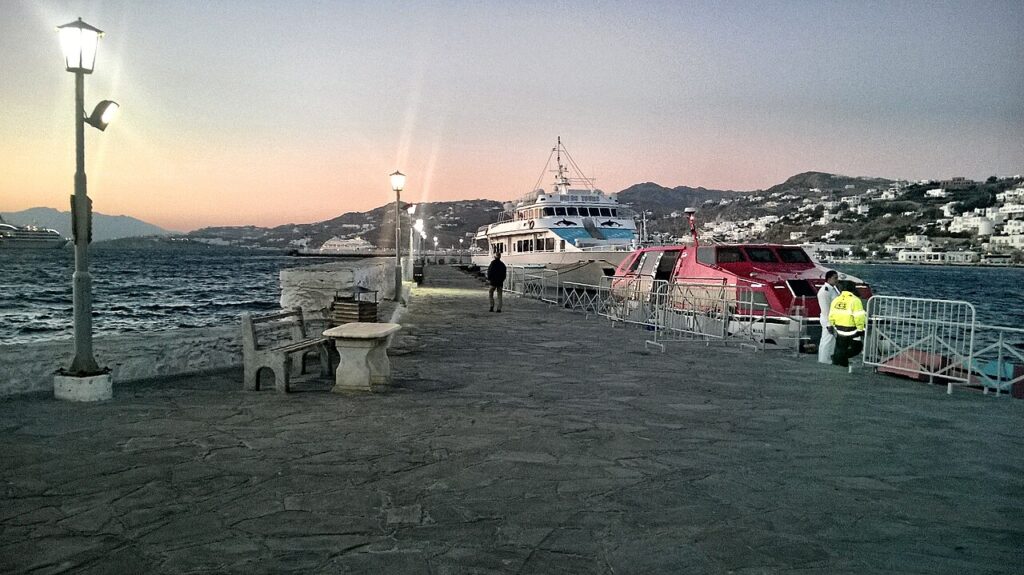
Chora is the beating heart of Mikonos, a labyrinth of whitewashed alleys that seem designed to disorient you in the most delightful way. You’ll enter through the main port, where fishing boats and superyachts share the same ancient stone quay, and immediately feel the pull of the narrow streets. The architecture here is pure Cycladic: cube-shaped houses stacked like sugar cubes, their flat roofs catching the afternoon sun. Wander down Matoyianni Street, the main shopping artery, and you’ll find everything from high-end boutiques selling Greek sandals to tiny bakeries where the smell of fresh baklava pulls you in. But the real magic happens when you veer off the main drag. Take a left at the Church of Panagia Paraportiani, a stunning complex of five churches built between the 15th and 17th centuries, and you’ll discover Little Venice, where houses are built right up to the sea’s edge. The balconies here hang over the water, and you can watch the sunset from a café while waves splash against the walls below. Plan to spend at least three hours just wandering—you’ll get lost, but that’s the point. Every corner reveals a hidden square, a bougainvillea-draped doorway, or a tiny chapel with a blue dome.
Kastro (The Castle District)
Perched on the northern edge of Chora, Kastro is the oldest neighborhood on Mikonos, and you’ll feel its history in every stone. This was the fortified heart of the island, built to protect against pirate raids in the 13th century. The streets here are even narrower than in the rest of Chora—barely wide enough for two people to pass—and they wind in tight circles, a deliberate design to confuse invaders. You’ll find the remnants of the old Venetian castle walls incorporated into homes and shops; look closely at the foundations of the Church of Agios Nikolaos, and you’ll see ancient stone blocks that once formed the bastion. The atmosphere here is quieter, more residential. Locals sit on their doorsteps in the late afternoon, chatting with neighbors, and the only sounds are the clatter of plates from a family taverna and the distant cry of seagulls. Your best bet for a genuine experience is to visit in the early morning, around 7 AM, when the bakeries are just opening. Stop at To Kastro, a tiny bakery on the main square, for a piece of melopita (honey pie) and watch the fishermen mend their nets at the small harbor below. Savvy visitors know that Kastro offers the best views of the sunset over Delos—arrive by 6:30 PM to claim a spot on the seawall.
Ano Mera (The Inland Village)
Just eight kilometers inland from Chora, Ano Mera is the island’s second settlement, and it feels a world away from the coastal glitz. This is where you’ll see the real Mikonos—the agricultural heart that has sustained the island for centuries. The village centers around the imposing Monastery of Panagia Tourliani, built in 1542, whose marble bell tower and intricate wood-carved iconostasis are among the finest in the Cyclades. You’ll want to spend at least an hour exploring the monastery’s courtyard, where the scent of jasmine and basil fills the air. The village itself is a collection of white houses, a few family-run tavernas, and the main square, Plateia, where old men play backgammon under the plane trees. Travelers often discover that Ano Mera is the best place to escape the crowds. On a summer afternoon, you can have a taverna table to yourself while the Chora beaches are packed. The local specialty here is kopanisti, a spicy, tangy cheese spread that pairs perfectly with a glass of ouzo. Plan your visit for a Wednesday morning, when the weekly produce market fills the square with local honey, olives, and fresh herbs.
The Local Table: What Denizens Actually Eat
You’ve heard about the nightlife, but the real culinary story of Mikonos is about simplicity and the sea. Locals eat late—dinner rarely starts before 9 PM—and they eat slowly, often lingering over a meal for three hours. The cuisine is rooted in what the island provides: fish from the Aegean, lamb from the hills, and vegetables that thrive in the rocky soil. The defining ingredient is the local olive oil, which is grassy and peppery, used in everything from the simplest horiatiki salad to the slow-cooked lamb dishes. You’ll find that meals are built around mezedes—small plates meant for sharing. A typical local dinner might start with tzatziki, fava (yellow split pea puree), and grilled octopus, followed by a main of roasted lamb with potatoes and a side of horta (wild greens).

Mikonos 846 00, Greece, Mikonos, Greece
One dish you absolutely must seek out is kopanisti, a cheese that’s unique to the Cyclades. It’s a soft, spreadable cheese made from goat or sheep’s milk, aged until it develops a spicy, almost peppery kick. Locals spread it on crusty bread or serve it alongside grilled vegetables. The best place to try it is at Kiki’s Taverna on Agios Sostis Beach, a no-reservations spot where you’ll queue for up to an hour. But the wait is part of the experience—you’ll stand in line under a vine-covered trellis, chatting with travelers from around the world, while the smell of charcoal-grilled meat fills the air. Kiki’s opens at noon and closes when they run out of food, usually by 3 PM, so plan to arrive by 11:30 AM. For a more authentic village experience, head to O Giorgis in Ano Mera, a family-run taverna that’s been serving kopanisti and grilled sardines since 1973. You’ll sit on a shaded terrace, and the owner, Yiorgos, will bring you a complimentary glass of raki at the end of your meal—a tradition that’s been passed down for generations.
Art, Music & Nightlife
Mikonos has always been a magnet for artists, and you’ll find the creative spirit woven into the island’s fabric. The most famous venue is the Mikonos International Film Festival, held every August since 2005, which screens independent films in the open-air Cine Manto cinema in Chora. But the art scene extends beyond the festival. Visit the Aegean Maritime Museum, housed in a 19th-century mansion near the waterfront, where you’ll see a collection of ship models and nautical instruments that tell the island’s seafaring story. For contemporary art, head to the Rarity Gallery on Matoyianni Street, which showcases works by Greek and international artists. The gallery’s owner, a local named Nikos, often hosts evening openings with wine and live music—check their Facebook page for dates. Music is the heartbeat of Mikonos, and you’ll hear it everywhere: traditional rembetiko songs in the old town’s tavernas, jazz from the bars in Little Venice, and the thrum of house music from the beach clubs. The most authentic musical experience is at the Mikonos Summer Festival, which runs from June to September and features concerts in the open-air theater at the Archaeological Museum of Mikonos. Past performers have included Greek folk musicians and international classical ensembles.
Nightlife on Mikonos is legendary, but it’s not what you might expect. Yes, there are world-famous clubs like Paradise Beach Club and Scorpios, where DJs spin until dawn and the champagne flows freely. But seasoned travelers know that the most memorable nights happen in Chora’s backstreets. Start your evening at Verandah in Little Venice, where you can sip a glass of Assyrtiko wine while watching the sun sink into the sea. Then wander to the bar Skandinavian, a tiny spot hidden in a maze of alleys, where locals and visitors mingle over cocktails until the early hours. The secret is to avoid the main strip after midnight—instead, follow the sound of bouzouki music to a small taverna like Kastro’s, where you’ll find spontaneous dancing on the tables. If you’re here in July, don’t miss the Mikonos Dance Festival, a week-long celebration of traditional Greek dance that takes place in the village of Ano Mera. You’ll see locals in full traditional costume, and you’re welcome to join the dancing—just follow the steps of the person next to you.
Practical Guide
- Getting There: Mikonos National Airport (JMK) receives direct flights from Athens (45 minutes), London, Paris, and other European capitals. Airlines like Aegean, Ryanair, and Volotea operate seasonal routes. Book at Skyscanner
- Getting Around: The island’s public bus system is reliable and cheap—€2.50 for a one-way ticket from Chora to Ano Mera. Taxis are available but expensive (€15-25 for short trips). For flexibility, rent a scooter (€30/day) or a 4×4 (€80/day) from companies like Mikonos Rent, but note that parking in Chora is nearly impossible. Water taxis connect the main beaches for €5-10 per trip.
- Where to Stay: For luxury and nightlife, stay in Chora’s Little Venice district (hotels like the Belvedere, from €400/night). For quiet and authenticity, book a room in Ano Mera (guesthouses like Villa Anna, from €120/night). Budget travelers should consider Agios Stefanos, a beach area just north of Chora, where studios start at €80/night. Check Booking.com
- Best Time: May and early June offer perfect weather (75-85°F), fewer crowds, and lower prices. September is ideal for swimming (sea temperatures at their warmest) and cultural events. Avoid August unless you love crowds and peak prices.
- Budget: Plan for €100-150 per day for a mid-range traveler (including accommodation, meals, and transport). A budget traveler can manage on €60-80 per day with hostel dorms and street food. Luxury travelers should budget €300+ per day.

Man leaning on white wall at daytime, Mikonos, Greece
What Surprises First-Time Visitors
Most travelers arrive expecting a nonstop party, but what they discover is an island that’s deeply traditional and surprisingly quiet in the right places. The first surprise is the wind. The meltemi, a strong northerly wind that blows from June to September, can be relentless. You’ll find yourself constantly holding onto your hat, and the beaches on the north coast are often too rough for swimming. But locals will tell you that the meltemi is what keeps the island cool and the air fresh—and it’s why the windmills of Chora have stood for centuries. The second surprise is the pace of life. Despite the glamorous reputation, Mikonos operates on Greek time. Shops close from 2 PM to 5 PM for siesta, and dinner rarely starts before 9 PM. You’ll need to adjust your schedule to match the island’s rhythm. The third surprise is the friendliness of the locals. You might expect a guardedness from an island so accustomed to tourists, but instead you’ll find warmth and hospitality. Strike up a conversation with a fisherman at the port, and he might invite you to his family’s taverna for a free glass of ouzo.
Another surprise is the island’s size. Mikonos is only 33 square miles, but it feels much larger because of the varied landscapes. You can go from the bustling streets of Chora to the empty, windswept hills of the interior in fifteen minutes. The beaches are another revelation. While Paradise and Super Paradise are famous for their beach clubs, the best swimming is found on the quieter coves. Agios Sotiris Beach, near Kiki’s Taverna, is a pebbly cove with crystal-clear water and no facilities—just you, the sea, and the sun. And then there’s the light. Photographers and painters have been coming to Mikonos for decades, and you’ll understand why as soon as you see the way the white walls reflect the sun. The light is so bright that you’ll need sunglasses even on a cloudy day, but it also creates a dreamlike quality that makes every corner photo-worthy. Travelers often find themselves stopping every few steps to capture a doorway, a flowerpot, or a cat lounging on a blue-painted step.
Your Mikonos, Greece Questions
Is Mikonos really as expensive as everyone says? The reputation is earned, but you can visit without breaking the bank if you’re strategic. The key is to avoid the high-end beach clubs and the restaurants in Little Venice, where a simple salad can cost €20. Instead, eat in Ano Mera or at the family-run tavernas in the backstreets of Chora, where a full meal with wine will run you €25-30 per person. Accommodation is the biggest expense; book a guesthouse in Agios Stefanos or Ano Mera instead of a Chora hotel, and you’ll save 40-50%. Also, buy your water and snacks at the local supermarkets (like AB Vassilopoulos in Chora) rather than from beachside kiosks, where prices are triple. The biggest tip: travel in May or September, when prices drop by as much as 30%.

A row of houses sitting on top of a beach next to the ocean, Mikonos, Greece
How do I avoid the crowds? The secret is timing and location. Most day-trippers arrive from cruise ships between 10 AM and 4 PM, so plan your beach time for late afternoon or early morning. The beaches on the south coast (like Paradise and Psarou) are packed by noon, but the north coast beaches (like Agios Sotiris and Fokos) remain quiet because they’re harder to reach. In Chora, the crowds are thickest on Matoyianni Street and in Little Venice during sunset. Escape by climbing to the top of Kastro, where you’ll find a quiet square with a view of the sea. For a truly crowd-free experience, hike to the top of Mount Kouvara, the island’s highest point (1,240 feet), where you’ll have a panoramic view of the entire Cyclades. The trail starts near Ano Mera and takes about 90 minutes round-trip.

