
Beyond the Bekal Fort: Why Kasaragod Captivates Every Traveler Who Ventures to Kerala’s Northern Edge (2026)
In 1650, a Dutch sailor named Hendrik van Rheede first set eyes on the Bekal Fort, a massive laterite bastion rising from the Arabian Sea. He wrote in his journal of “a fortress of red stone, standing like a silent guardian against the waves.” What he couldn’t have known was that this 300-acre fort, built by the Shivappa Nayaka of the Keladi Nayaka dynasty, would become the soul of Kasaragod—a place where history whispers through cannons, and the sea breeze carries tales of trade, conflict, and quiet resilience.
The Story Behind Kasaragod, India
Kasaragod’s history is a tapestry woven by seafaring merchants and ambitious rulers. By the 14th century, the region was a vital link in the spice route, with Arab and Chinese traders docking at its natural harbors. The Portuguese arrived in 1498, but it was the Keladi Nayakas who built Bekal Fort in the 1650s, using it as a military outpost. Later, Tipu Sultan captured it in the 1780s, and when you walk the ramparts today, you can almost see his troops marching along the parapets, scanning the horizon for British ships.
The British took control in 1799, but Kasaragod remained a sleepy backwater—a land of coconut groves and backwater canals. What travelers often discover is that the district’s true wealth lies in its cultural crossroads. It’s the only place in Kerala where you’ll hear Tulu, Kannada, and Malayalam spoken in equal measure, a legacy of its position on the border of Karnataka. The region’s history isn’t just in forts; it’s in the rituals of the Theyyam dancers who have performed here for over 1,500 years, their painted faces and trance-like movements connecting the living with the divine. You’ll find that history here is not a museum piece—it’s a living, breathing presence.
The turning point came in 1956, when Kasaragod was merged into Kerala during the state reorganization. Locals still debate whether this was the right move, given their distinct linguistic and cultural identity. But for you, the visitor, this ambiguity is a gift. It means you’ll experience a place that is neither fully Kerala nor Karnataka—a frontier town with its own rhythm, where the backwaters meet the Western Ghats, and where every corner holds a story waiting to be uncovered.
Neighborhood by Neighborhood
Kasaragod Town: The Heart of the District
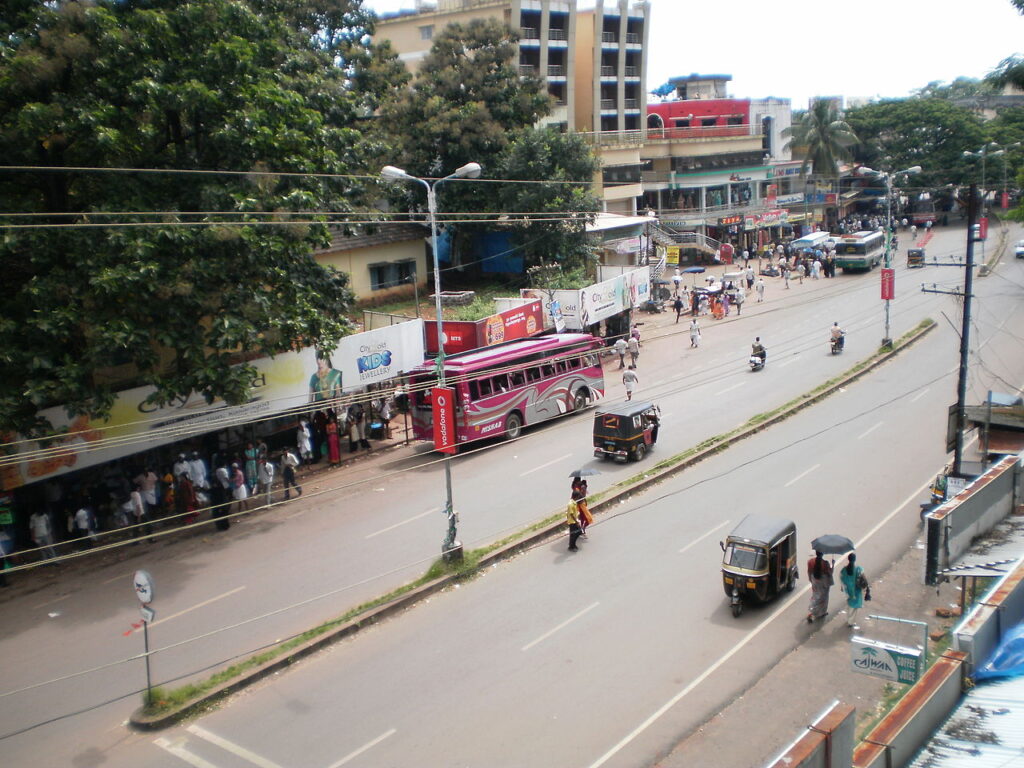
Start your journey in Kasaragod Town, a bustling collection of narrow lanes and colonial-era buildings that feels like a time capsule. The main artery, MG Road, is where you’ll find the Kasaragod Municipality Building, a faded red structure from the 1920s that locals call “the Secretariat.” On weekday mornings, the street comes alive with vendors selling fresh jackfruit, areca nuts, and the region’s famous raw mangoes. Your best bet is to wander into the Kottappuram Market, a covered bazaar that has operated since the 18th century. The smell of dried fish and jaggery hangs in the air, and if you stop at the corner tea stall run by 70-year-old Rajan, he’ll pour you a cup of chai that’s been brewed the same way for four decades. The real charm, however, is in the side streets—like the one leading to the Kasaragod Railway Station, where you’ll spot old bungalows with tiled roofs and verandas shaded by banyan trees. This is not a polished tourist zone; it’s a working town, and that’s exactly why you’ll love it.
Bekal: The Fort and the Beach
About 12 kilometers south of town lies Bekal, the crown jewel of Kasaragod. The Bekal Fort is not just a monument; it’s a neighborhood unto itself. Spread over 40 acres, the fort’s red laterite walls rise 27 meters above the sea, and as you climb the observation tower, you’ll see why Tipu Sultan considered it strategically vital. The fort has no palace or grand halls—just ramparts, a tunnel, and a mosque built by Tipu’s forces. What makes it unforgettable is the view: the Arabian Sea stretches to the horizon, and on clear days, you can spot the distant hills of Karnataka. Below the fort, Bekal Beach is a 2-kilometer stretch of golden sand that locals recommend visiting at sunset. The beach is surprisingly uncrowded—you’ll often have it almost to yourself. For a unique perspective, walk to the nearby Kappil Beach, where a backwater lagoon meets the sea, creating a natural swimming pool. Savvy visitors know to bring a picnic and spend the afternoon here, watching fishermen haul in their nets.
Madhur: The Temple Village
A 20-minute drive northeast takes you to Madhur, a village that feels suspended in time. The centerpiece is the Madhur Sri Madanantheshwara Siddhi Vinayaka Temple, a 10th-century structure dedicated to Lord Ganesha. Unlike the typical Kerala temple with its sloping roofs, this one is built in the Vijayanagara style, with a towering gopuram covered in intricate carvings of gods and demons. The temple’s most striking feature is the “Siddhi Vinayaka” idol, which is said to have been discovered by a farmer while plowing his field in 1475. You’ll enter through a narrow archway, and the first thing you’ll notice is the sound—the rhythmic chanting of priests, the clang of bells, and the murmur of devotees. Locals recommend visiting during the annual Rathotsava festival in January, when a giant wooden chariot is pulled through the streets by hundreds of devotees. But even on an ordinary day, Madhur offers a glimpse into rural life: women in bright sarees buying flowers for offerings, children playing near the temple tank, and the smell of incense wafting through the air. It’s a place where you can sit on the temple steps and feel the weight of centuries.
The Local Table: What Natives Actually Eat
Kasaragod’s cuisine is a delicious anomaly. Unlike the rest of Kerala, which leans heavily on coconut and seafood, this district has a strong influence from the neighboring Udupi region of Karnataka. The result is a cuisine that celebrates rice, lentils, and vegetables in ways that will surprise you. Locals start their day with a breakfast of *kori rotti*—crispy rice wafers served with a fiery chicken curry. You’ll find this at the small eateries near the Kasaragod bus stand, where the cooks have been making it the same way for generations. The secret, they’ll tell you, is in the red chilies grown in the nearby hills, which give the curry a deep, smoky heat.

Kite festival at Bekal Pallikkara Beach of Kasaragod Dist in connection wit…, Kasaragod, India
The dish you absolutely must seek out is *neer dosa*—a thin, lacy crepe made from rice batter and coconut milk. Unlike the crisp dosas of South India, neer dosa is soft and almost translucent, and locals recommend eating it with *kayi chutney*, a fresh coconut chutney tempered with mustard seeds and curry leaves. For the best version, head to Hotel Madhur, a family-run spot on the outskirts of Madhur village. The owner, Krishna, has been making neer dosa for 35 years, and he’ll tell you the secret is to use water from the coconut, not the milk. The meal costs about 50 rupees ($0.60), and you’ll eat it on a banana leaf, sitting on a wooden bench with other patrons.
For a deeper dive into local food culture, visit the Kasaragod Fish Market, which operates every morning from 6 to 9 AM. This is where you’ll see the day’s catch—kingfish, sardines, and prawns—laid out on concrete slabs. Women in brightly colored umbrellas haggle over prices, and the air is thick with the smell of the sea. You can buy fresh fish and take it to a nearby *kadai* (small restaurant) that will fry it for you for a small fee. Locals recommend the mackerel, which is marinated in turmeric and chili and fried in coconut oil until crispy. It’s simple, honest food, and it’s the taste of Kasaragod.
Art, Music & Nightlife
Kasaragod’s creative soul is rooted in Theyyam, a ritualistic dance form that dates back over 1,500 years. Unlike the more polished Kathakali, Theyyam is raw and visceral—performers wear elaborate headdresses and face paint, and they dance in a trance, channeling deities and ancestors. The best time to see it is during the annual Theyyam season, which runs from December to April. You’ll find performances in village temples like the Kottiyoor Temple near Madhur. Arrive by 8 PM, and you’ll see the dancer being prepared: the application of red and yellow paints, the tying of the 30-pound headdress, and the chanting that begins the ritual. The performance itself lasts until dawn, and it’s a sensory overload of drumming, fire, and dance. Most tourists overlook this, but it’s the most authentic cultural experience you can have here.
Nightlife in Kasaragod is minimal—this is not a party town. But what it lacks in clubs, it makes up for in evening walks along the Bekal Beach promenade. The beach is lit by the moon and the occasional bonfire, and you’ll see families sharing snacks and couples strolling along the shore. For a more structured evening, check out the Kasaragod Cultural Centre on MG Road, which hosts folk music performances on Saturday evenings. The center is a small, airy hall with wooden floors, and the music is pure *Sopanam*—a classical style that originated in Kerala’s temples. The performances start at 7 PM and cost 100 rupees ($1.20). It’s a quiet, meditative end to a day of exploration.
Practical Guide
- Getting There: The nearest airport is Mangalore International Airport (IXE), 50 km away, with direct flights from Dubai, Abu Dhabi, and major Indian cities. Book at Skyscanner
- Getting Around: Local buses are frequent and cheap (10-20 rupees per ride). Autorickshaws are your best bet for short trips; negotiate a flat rate of 50-100 rupees. For Bekal, hire a taxi for the day (around 1,500 rupees).
- Where to Stay: Stay in Bekal for the best views—try the KTDC Bekal Fort Resort (from 3,000 rupees/night). For budget options, Hotel Kasaragod in town is clean and central (from 1,000 rupees/night). Check Booking.com
- Best Time: November to February offers pleasant weather (22-30°C). Avoid June to September for heavy monsoon rains.
- Budget: Expect to spend 1,500-2,500 rupees ($18-30) per day for a comfortable trip, including accommodation, meals, and transport.

A small bird sitting on top of a grass covered field, Kasaragod, India
What Surprises First-Time Visitors
The first surprise is the silence. Unlike Kerala’s tourist hubs like Kochi or Munnar, Kasaragod is remarkably quiet. You won’t hear constant honking or hawkers—just the sound of waves and birds. This can feel disorienting at first, but it’s also deeply calming. Travelers often discover that they can walk through Bekal Fort without encountering another soul, especially on weekday mornings. The absence of crowds allows you to connect with the place in a way that’s rare in India.
Another surprise is the linguistic diversity. You’ll hear Malayalam, Kannada, Tulu, and even Konkani spoken on the same street. Locals are multilingual and will switch languages depending on who they’re talking to. This creates a sense of cultural fluidity that you don’t find elsewhere in Kerala. One moment, you’ll be ordering chai in broken Malayalam; the next, a shopkeeper will respond in perfect English. It’s a reminder that Kasaragod is a borderland, and borders create interesting hybrids.
Finally, visitors are often struck by the warmth of the people. In tourist-heavy areas, interactions can feel transactional. Here, a smile is genuine, and a request for directions often leads to a 10-minute conversation. Locals are proud of their district and eager to share its secrets—the best spot for sunset, the hidden temple, the family that makes the best banana chips. You’ll leave with more than just memories; you’ll leave with a feeling of having been welcomed into a community.
Your Kasaragod, India Questions
Is Kasaragod safe for solo female travelers? Yes, it’s one of the safest places in Kerala. The crime rate is low, and locals are protective of visitors. You can walk alone on Bekal Beach even at dusk, though it’s wise to avoid isolated areas after dark. The only caution is to dress modestly, especially near temples—cover your shoulders and knees. Women travelers often report feeling more comfortable here than in larger Indian cities, thanks to the respectful and hospitable nature of the community.

A small bird perched on a branch with leaves, Kasaragod, India
How much time should I spend in Kasaragod? Plan for at least three days to do it justice. Day one: explore Kasaragod Town and the market. Day two: devote to Bekal Fort and the surrounding beaches. Day three: visit Madhur Temple and a nearby Theyyam performance. If you have a fourth day, take a backwater boat ride from the Chandragiri River, which offers a different perspective on the region’s lush landscape.
Can I visit Kasaragod as a day trip from Mangalore? Technically yes, but you’ll regret it. The drive from Mangalore takes 1.5 hours each way, and you’ll only have time for the fort and a quick lunch. The magic of Kasaragod lies in its slow pace—the way the afternoon light falls on the fort walls, the evening breeze on the beach, the chance conversations with locals. Rushing through would be like reading a book’s first chapter and claiming you know the story. Stay overnight, and you’ll understand why savvy travelers call it Kerala’s best-kept secret.

