
Beyond the Sulfur and Steam: The Untamed Soul of Pagosa Springs, Colorado (2026)
In the summer of 1863, a Ute elder named Chief Ouray led a small band of his people to the base of the San Juans, where a column of steam rose from the valley floor like a ghost. The hot springs, known to the Ute as Pah‑gosa (meaning “healing water”), had drawn tribes for centuries. When Ouray tasted the sulfur‑laced water, he declared it a sacred place—and that moment, half a century before Colorado became a state, sealed Pagosa Springs’ destiny as a charmed intersection of nature and human renewal.
The Story Behind Pagosa Springs, Colorado
Long before European settlers arrived, the Ute people regarded the hot springs as a gift from the Creator. Seasonal camps dotted the banks of the San Juan River, and the Ute called the area Pogwosah—a name Spanish explorers later corrupted to “Pagosa.” By the time the first Anglo trappers wandered into the valley in the 1830s, the springs had already hosted generations of healing rituals. The Ute held exclusive rights to the land until 1878, when the Brunot Treaty forced them onto reservations, opening the door for a different kind of pioneer: railroad men, miners chasing silver in the San Juans, and entrepreneurs drawn by the promise of a spa town.
Pagosa’s transformation from Ute sanctuary to tourist magnet began in earnest in 1881, when the Denver & Rio Grande Railway laid tracks through the valley. The railroad brought wealthy health‑seekers who “took the waters” to cure everything from rheumatism to melancholy. In 1889, a visionary named Dr. E. W. Bowen built the first bathhouse—a simple wooden structure over the hottest spring—and within a decade Pagosa Springs was advertising itself as the “Carlsbad of America.” The Great Depression stalled growth, but the post‑war years saw a slow revival as veterans and families discovered the cheap land and quiet beauty. Today, Pagosa Springs stands as a rare place where a 19th‑century healing tradition still thrives, with the San Juan River running through downtown like a liquid timeline—from Ute sweat lodges to modern rock‑walled soaking pools.
Neighborhood by Neighborhood
Downtown Pagosa (Hot Springs Boulevard & Central Avenue)
Your first impression of downtown will be the steam. Even on a freezing January morning, a gauzy mist rises from the riverbank near the Pagosa Springs Hot Springs Resort, softening the red‑brick facades and the old‑fashioned street lamps. Hot Springs Boulevard is the spine—a mixture of historic buildings from the 1880s and cozy, locally‑owned shops. You’ll find Pagosa Baking Company at 120 Talisman Drive, where the smell of sourdough wafts onto the sidewalk, and the Alpine Center for the Arts, a former church turned performance space at 280 Lewis Street. The heart of the neighborhood is the spring‑fed soaking pools themselves: you can choose the public “free” spring (a concrete basin near the river, always crowded) or the luxurious resort pools that cascade down terraced hillsides. Locals recommend the resort’s private waters because of the consistent temperature—103°F (39°C)—and the impossible views of the river below. On summer evenings, the downtown park at the corner of 8th & San Juan hosts free concerts, and you’ll see families spread blankets on the grass while the sun sets behind the Continental Divide.
Pagosa Lakes (East of U.S. 160)
If downtown is the historic core, Pagosa Lakes is the sprawling, suburban‐yet‐wild belt that stretches east toward the foothills. This neighborhood, developed in the 1970s and 1980s around a series of man‑made reservoirs, feels like a different planet—wider streets, pine‑ringed golf courses, and vacation homes with names like “Elk View Lodge.” Your best bet here is to drive slowly and keep your eyes peeled for mule deer and wild turkeys crossing the road at dusk. The big anchor is the Pagosa Springs Golf Club, a 27‑hole championship course that wraps around Lake Pagosa; locals joke that the course’s true hazard isn’t the sand traps but the moose that occasionally wander onto the fairway. Families tend to stay in this neighborhood for the quiet, the big‑box grocery store (City Market on North Pagosa Boulevard), and the easy access to hiking trails in the adjacent San Juan National Forest. Seasoned travelers prefer a cabin rental on one of the lakes—the sunrise reflections on the water are worth the 15‑minute drive to downtown.
North Pagosa (U.S. 84 Corridor)
North Pagosa is the town’s working‑class spine, stretching along U.S. 84 toward the Navajo State Recreation Area. This is where you’ll find the most authentic local life: the NAPA auto parts store, the community college, and the Pagosa Springs City Market (the “other” grocery store, less polished but with better produce). Travelers rarely linger here unless they’re looking for a bargain motel or the famed Lost Cajun Kitchen at 3116 U.S. 84, where owner John Ferguson serves gumbo and étouffée that taste like a New Orleans back porch. The real secret of North Pagosa, though, is the Piedra River—a half‑hour drive west on a dirt road leads to one of the most remote swimming holes in Colorado. Locals recommend packing a lunch and spending an afternoon at the Piedra River Trailhead, where the water runs clear and cold, and you’ll likely have the place to yourself on a weekday. This neighborhood feels less polished but more real—a place where the town’s cowboy and lumberjack heritage still breathes.
The Local Table: What Pagosans Actually Eat
The food culture in Pagosa Springs is a fusion of Colorado ranch cooking, Southwestern spice, and the unexpected Cajun influence brought by transplants from Louisiana. Rice and beans are a staple, but so is trout—fresh from the San Juan River or one of the high‑mountain lakes. The most iconic dish you must seek out is the Pagosa Green Chile Stew, made with locally‑roasted Hatch green chiles, pork, and potatoes. It appears on menus from late summer through fall, but the best version is at The Alley House Grille (334½ San Juan Street), a tiny upstairs restaurant tucked above a gallery. The owners, Mike and Brenda, slow‑simmer the chiles for 12 hours, and the bowl comes with a slice of skillet cornbread that’s so moist it could double as dessert.

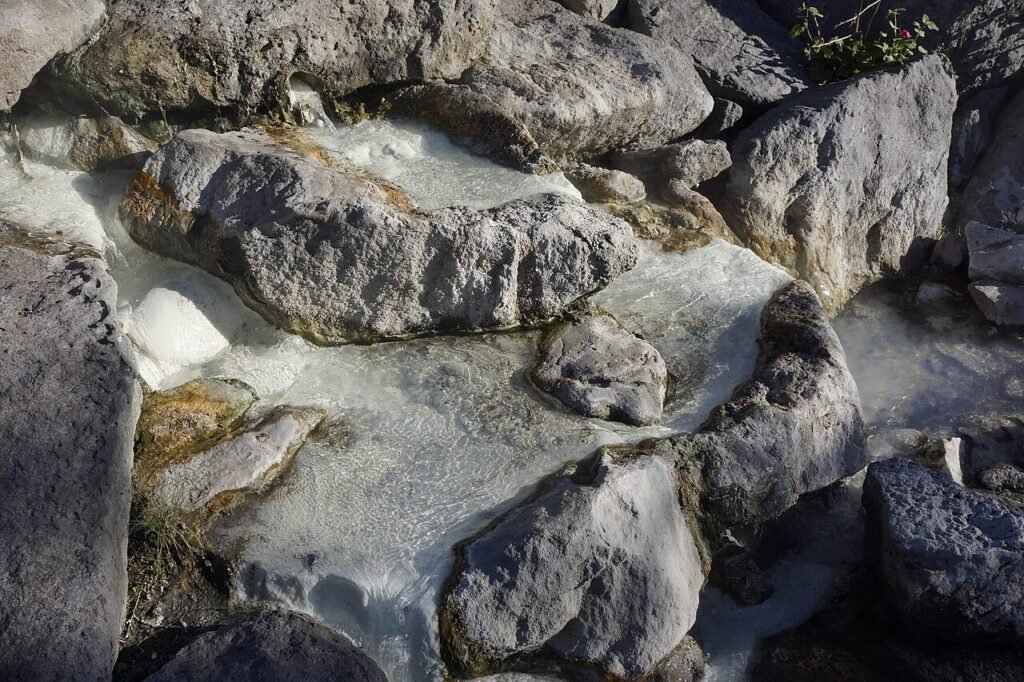
The Mother Spring at Pagosa Hot Springs, Colorado, Pagosa Springs, USA (Colorado)
Breakfast is a serious affair here. Locals line up at the Pagosa Baking Company before 8 a.m. for their breakfast burritos—stuffed with eggs, hash browns, green chile, and your choice of bacon or chorizo. If you’re feeling adventurous, order the “Sopapilla Stack”: a fried bread layered with honey and cinnamon, a nod to the town’s Hispanic roots. For lunch, savvy visitors skip the tourist spots and drive to Pura Vida Café & Health Bar (3456 B South Pagosa Boulevard) for a quinoa bowl topped with local vegetables and a tangy cilantro dressing. Dinner tends to be early—most kitchens close by 9 p.m.—and the universally praised sit‑down meal is the bison ribeye at Elkhead Bar & Grill (2493 U.S. 160), a rustic place where the walls are lined with vintage skis and the fireplace roars all winter. The cost per person for dinner with a drink runs between $25 and $40, and you’ll want to reserve on weekends.
Art, Music & Nightlife
Pagosa Springs may be small, but its creative pulse surprises first‑timers. The town’s art scene centers around the Pagosa Springs Center for the Arts (2313 Eagle Drive), a 16,000‑square‑foot facility that hosts everything from plein‑air painting workshops to bluegrass concerts. In July, the annual Pagosa Folk’N Roots Festival (July 4–6) brings national acts to a grassy amphitheater near the downtown riverwalk; you’ll hear a mix of Americana, folk, and Cajun music, and the late‑night jam sessions spill into local bars like The Old Tymer’s Café on Pagosa Street. On any given Friday night during summer, you can catch live acoustic sets at the Pagosa Brewing Company (18543 U.S. 160) while sipping their award‑winning Nut Brown Ale—beer that locals swear is “the best in the Southwest.”
Nightlife here is low‑key, defined by conversation and camaraderie rather than bass thumps. The Rafter’s Bar & Grill (440 Pagosa Street) is the closest you’ll get to a rowdy scene: pool tables, a jukebox with country classics, and a deck overlooking the river where you can bring your own hot‑spring‑soaked self for a nightcap. Locals tend to gather at the Pinewood Social Club (a members‑only social club that occasionally opens to the public during events), but travelers will find the warmest welcome at the Yellow Brick Road Gallery & Studio (450 San Juan Street), a cooperative gallery that hosts “First Friday” art walks from 5 to 8 p.m. during the summer months. The energy is convivial, the art is surprisingly good—think landscape paintings and hand‑thrown pottery—and you’ll leave feeling like a temporary Pagosan.
Practical Guide
- Getting There: The nearest commercial airport is Durango-La Plata County Airport (DRO), about an hour’s drive (61 miles) west on U.S. 160. Flights connect through Denver or Phoenix on United, American, and Southwest. Book at Skyscanner for the best deals. Another option: fly into Albuquerque (320 miles) and drive four hours through stunning San Juan scenery.
- Getting Around: A car is essential—Pagosa Springs is spread out, and public transit is limited to a dial‑a‑ride service called Pagosa Area Transit (runs Mon‑Fri, $2 per ride). Rental cars are available at the Durango airport; expect to pay $60–$90 per day in peak season. For downtown, walking is pleasant, but if you stay in Pagosa Lakes, count on a 15‑minute drive to most attractions.
- Where to Stay: For the hot‑spring experience, book a room at the Pagosa Springs Resort & Spa (165 Hot Springs Boulevard) – rooms from $250/night in summer, with full access to their terraced pools. For budget travelers, the Quality Inn (105 South Pagosa Boulevard) is clean and starts around $120/night. For a secluded cabin, browse listings on Booking.com in the Pagosa Lakes area. a favorite among travelers is Cozy Elk Cabin on Lake Forrest Drive—two bedrooms, a wood‑burning stove, and a hot tub on the deck for $180/night.
- Best Time: The sweet spot is mid‑June to mid‑September, when daytime highs hover in the low 80s°F (28°C) and the wildflowers carpet the mountains. Fall (September 15–October 15) offers spectacular gold‑leaved aspen groves and fewer crowds. Winter (December–March) is for skiers—Wolf Creek Ski Area, 37 miles north, gets some of Colorado’s highest snowfall—but temperatures can drop below 0°F (-18°C) at night.
- Budget: You can get by on $120–$150 per day (a modest motel, one meal out, and a soak), but a comfortable mid‑range budget (hotel with pool, nice dinner, and a rental car) runs $250–$350 per day. The secret is that many of the best experiences—hiking, soaking in the free public springs, and watching the sunset from the riverwalk—cost nothing.

Flames heat a colorful hot air balloon., Pagosa Springs, USA (Colorado)
What Surprises First‑Time Visitors
The biggest surprise for most travelers is the sheer temperature of the main hot spring. You’ve probably soaked in hot tubs before, but Pagosa Springs’ natural water emerges from the earth at 146°F (63°C)—that’s hot enough to cook an egg. The resort has to cool it down through a series of mixing pools and cascading waterfalls to reach the 100–106°F range that’s safe for humans. The steam clinging to the riverbank feels otherworldly on a snowy evening, and you’ll often see ice forming on the river rocks just feet from the warm water.
Another surprise is the altitude. Pagosa Springs sits at 7,126 feet (2,172 meters), and many visitors from sea level find themselves winded after a short walk uphill. Locals recommend drinking twice as much water as you think you need and taking it easy your first day—especially if you plan to combine hot springs with hiking. The dry mountain air can also zap your energy, so bring lip balm and sunscreen even in winter.
Finally, travelers often expect a rowdy “Spring Break” atmosphere, but Pagosa Springs is emphatically not that kind of town. The vibe is gentle, family‑oriented, and respectful of the hot springs’ sacred history. You won’t find loud bars blasting music; instead, you’ll discover a community that values quiet evenings by the river and conversations over a craft beer. The biggest misconception is that the hot springs are the only draw—in truth, the hiking in the San Juan National Forest (especially the 25‑mile Piedra River Trail) and the nearby Chimney Rock National Monument (a Chacoan ruin from 900 AD) are just as compelling as the warm water.
Your Pagosa Springs Questions
Is it worth paying for the resort hot springs when there is a free public spring? Yes, but only if you value comfort and relaxation. The free public spring—a small, concrete‑lined pool next to the river at the end of Hot Springs Boulevard—is always crowded, sometimes dirty, and sits at a cooler temperature (around 95–100°F). It’s a fun spot to dip your toes for 10 minutes, but you won’t want to spend an hour there. The resort’s soaking pools (at Pagosa Springs Resort & Spa) cost $20–$30 for a day pass, but they offer pristine water, multiple pools at different temperatures, and a mountain view that makes the fee worth every cent. Locals recommend buying a “twilight soak” pass after 6 p.m. for $18, when the crowds thin and the lights glow on the river.

A view of a mountain range from a wooded area, Pagosa Springs, USA (Colorado)
What hikes are suitable for a moderate day trip from downtown? Your best bet is the Piedra River Trail (about 30 minutes west on CR 600). This 12‑mile out‑and‑back follows the turquoise Piedra River through a gorge with minimal elevation gain—perfect for a family. For a more leg‑burning option, drive 40 minutes to the Treasure Mountain Trailhead (elevation 8,200 feet) for a 5‑mile round‑trip hike to a waterfall that locals call “the Pagosa secret.” Bring bear spray (black bears are common) and start before 8 a.m.

