
Banlung, Cambodia Weekend: Waterfalls, Volcano Lakes & The Last Great Frontier (2026)
The morning air carries the damp scent of wet earth and wild ginger as you step off the minibus. Monkeys chatter from the canopy above, and the distant roar of Cha Ong Falls swallows the hum of motorbikes. In Banlung, time slows to the rhythm of the jungle. This weekend, you’ll trade neon bars for volcanic lakes and tuk-tuks for trekking trails—and discover a Cambodia most tourists never see.
Quick Facts Before You Go
- Best Months: November to February (dry, cool mornings, lower humidity). Avoid May–October unless you enjoy daily downpours that turn red-dirt roads into slick slides.
- Currency: Cambodian Riel (4,100 riel = $1 USD), but US dollars are widely accepted. Always carry small bills; change comes in riel.
- Language: Khmer. English is spoken in hotels and tourist restaurants, but only basic phrases in local markets. Learn arbon suors-dei (hello) and au kun (thank you).
- Budget: $30–$50 per day for a comfortable solo traveler (mid-range hotel, all meals, local transport, one guided trek). Budget backpackers can do $20–$25.
- Getting There: Fly into Phnom Penh International Airport (flights from Bangkok from $80 round-trip), then book an 8-hour VIP minibus to Banlung ($12–$15 per person via Giant Ibis or local services). Book flights at Skyscanner
Day 1: The Volcano & The Waterfall
You wake to the sound of roosters and the low grumble of a motorbike starting up. Today is about conquering two of Ratanakiri’s iconic natural wonders—one born of fire, the other carved by water. You start the morning at Yeak Laom Volcanic Lake, a perfect emerald circle in the jungle that locals believe is home to a protective spirit. The crater was formed some 700,000 years ago, but the ancient trees growing along the rim make you feel like you’ve stepped into a prehistory that still breathes.
- Morning (8-11am): Hike the 3km loop trail around Yeak Laom Lake ($1 entrance fee). Start early: by 9am the heat intensifies and tour groups from Phnom Penh begin arriving. The trail is well-marked, but you’ll want sturdy shoes for the roots and rocks. Stop at the small visitor center to learn about the indigenous Kreung and Jarai people who consider this lake sacred. Locals often swim in the cool, mineral-rich water—join them at the designated beach area. Bring your own towel and snorkel (the visibility is surprisingly good).
- Lunch: Head to Tree Top Cafe (just off the main road near the lake) for their signature amok trei (fish steamed in coconut curry) served in a banana leaf cone—$4.50. The owner, a French expat named Sophie, sources vegetables from nearby Jarai farms. Pair it with a fresh sugar-cane juice ($0.75) and listen to the geckos chirp.
- Afternoon (1-5pm): Hire a tuk-tuk driver for $15 to take you to Cha Ong Waterfall, a dramatic 25-meter cascade that plunges into a deep pool perfect for swimming. The path down is steep—please hold the bamboo railing—but the reward is a cool, shaded oasis. Next, visit Ka Tieng Waterfall (only 2km away), less touristy and almost completely silent except for the water. Spend time watching the iridescent blue butterflies that gather near the spray. Seasoned travelers recommend bringing a bag of snacks and making an afternoon of both falls.
- Evening: Dinner at The Red Sun, a cross-cultural fusion restaurant that serves Khmer dishes alongside Burmese curries (the owner lived in Yangon for a decade). Order the mohingar (catfish noodle soup) for $3.50 or the locally famous lok lak (stir-fried beef with Kampot pepper) for $5. Afterwards, grab a chair at the rooftop bar of the Terres Rouges Lodge. The sounds of the jungle at night—cicadas, frogs, distant drumming from a village ceremony—will be your evening’s entertainment. A draft Anchor beer costs $1.50.

Indigenous youth at Banlung, Ratanakiri, Cambodia, Banlung, Cambodia
Day 2: Tribal Villages & The Jungle Market
Today you trade waterfalls for human stories. The morning sun filters through the rubber trees as you follow a dirt path into a Kreung village. Locals still practice animist rituals—you might see a spirit house decorated with chicken feathers—and the women weave scarves from cotton they’ve grown themselves. By midday, you’ll be back in Banlung’s vibrant market, where the aromas of dried fish and ripe jackfruit mingle with the smoke from grilled skewers.
- Morning: Start with a breakfast of nom banh chok (Khmer rice noodles with fish-based gravy) at Phnom Yeak Laom Restaurant (just outside the lake entrance)—a heaping bowl costs $2. Then hire a guide ($20-$25 for a half-day trek) to visit the nearby Kreung village of Kaun Mom. Visitors typically donate rice or school supplies (bring from Banlung’s market). The guide will explain the weaving rituals, the communal longhouses, and the tobacco ceremonies. Respect the villagers’ daily lives: ask before taking photos, offer a small gift to the village elder, and buy a handwoven scarf directly from the women ($5-$8).
- Midday: Head back to town for the Banlung Central Market (also called the “Red Market” after its faded maroon roof). This is where locals do their real shopping—piles of purple rice, baskets of live frogs, and buckets of pickled tea leaves. Insider tip: skip the tourist stalls near the entrance and walk to the back covered section for the best dried fruit deals (mango, pineapple, and green papaya for $1-$2 per bag). Savvy visitors know to bargain gently—prices are already low for Western pockets.
- Afternoon: Spend the late afternoon exploring the Ratanakiri Volcano Museum (also called the Ratanakiri Museum), housed in a former French colonial villa. The displays cover the province’s geology, indigenous cultures, and the dark history of the Khmer Rouge in the region. Admission is $1. Most tourists overlook this—you’ll likely have the place to yourself. Afterward, walk the short path to the nearby Phnom Ratanakiri viewpoint for vistas of the rolling jungle hills meeting Vietnam’s border.
- Final Evening: For your farewell dinner, reserve a table at Balancing Elephants Cafe & Restaurant, a social enterprise that supports local HIV/AIDS education. Their menu changes daily based on the market, but you can expect dishes like char trey (sweet-and-sour fish) with local vegetables, or a wild-mushroom curry unique to the province. Prices range from $4-$6 per main dish. End with a dessert of sticky rice with young coconut ($2) and listen to the live Khmer traditional music performed by a local trio.
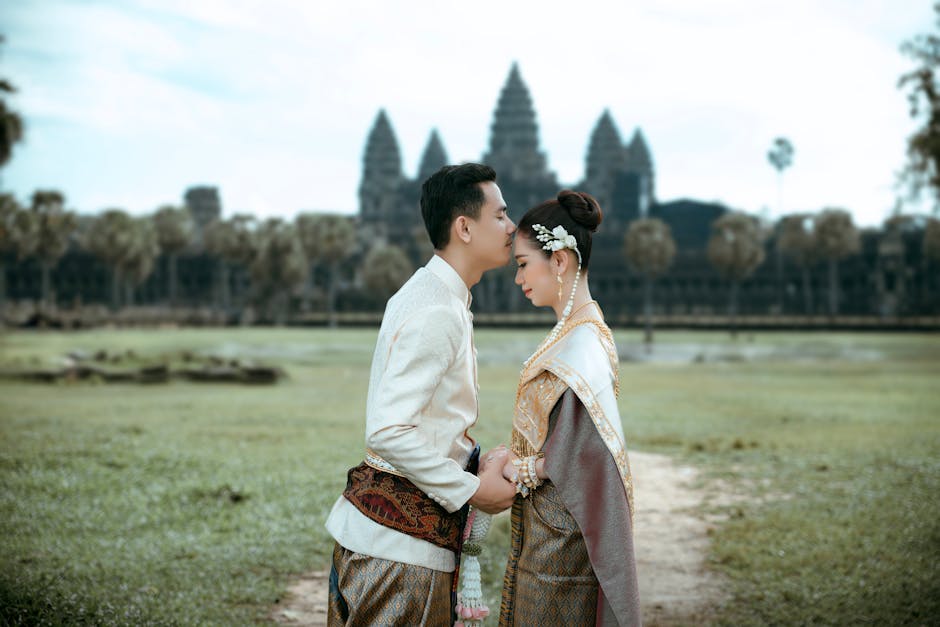
A couple in traditional Cambodian attire embracing at Angkor Wat, Banlung, Cambodia
The Food You Can’t Miss
Banlung’s cuisine is a fusion of Khmer staples and the traditions of its fourteen indigenous ethnic groups. Travelers often discover a smoky, earthy flavor that’s absent in lowland Cambodian food—thanks to the use of wild herbs, jungle mushrooms, and fermented fish paste (prahok) that locals argue is the soul of their cooking. The town’s street food scene comes alive after 5pm, when the main road in front of the market turns into a open-air food court. You’ll find grills piled high with skewers of marinated beef (moo yang) and whole tilapia stuffed with lemongrass. A full meal of three skewers, sticky rice, and a plate of fresh herbs costs about $2.50.
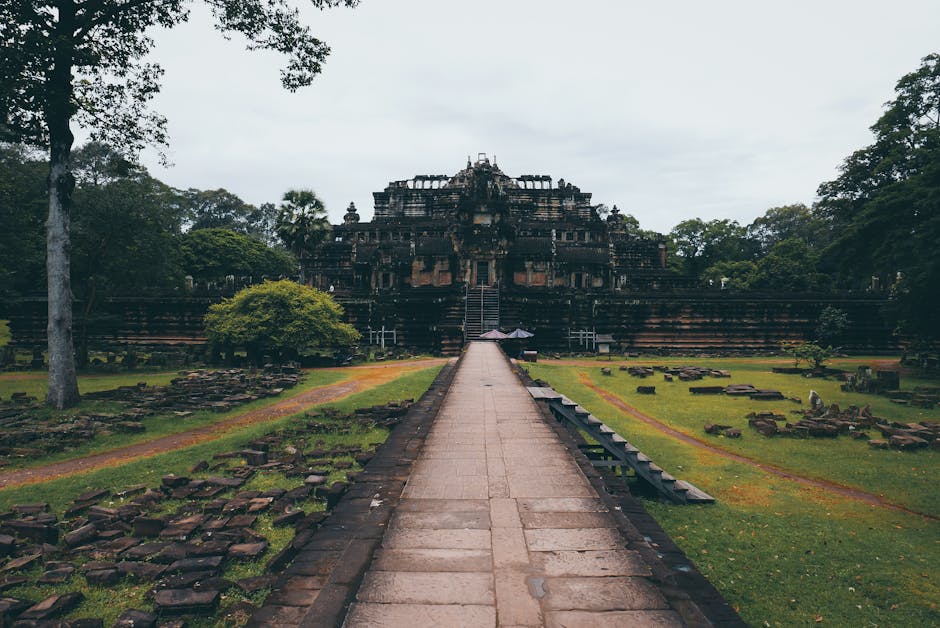
Historic Baphuon Temple at Angkor, Banlung, Cambodia
For a proper restaurant experience, do not miss Khmer Taste Restaurant near the roundabout. The owner, Mrs. Srey, learned her recipes from her grandmother and serves a definitive samlor korko (a thick, slightly bitter soup made with vegetables, fish, and roasted rice). The dish is a revelation—earthy, sour, savory—and costs just $3. You’ll want to order it alongside a freshly fried spring roll ($1.50). Another essential flavor is the kdam chaa (pepper crab) at Bamboo House, where the cooks use green peppercorns grown on nearby vines. The peppery heat is surprisingly floral, and a whole crab costs $7—a steal compared to Siem Reap.
One final tip: locals swear by the tea leaf salad (laphet) served at Tea Garden Restaurant, a tiny spot run by a Shan family originally from Myanmar. The fermented tea leaves are tossed with peanuts, tomatoes, and a splash of lime, creating a tangy, crunchy dish that transcends borders. It’s $2 for a generous portion, and you’ll find yourself craving it long after you leave Banlung.
Where to Stay for the Weekend
- The Jungle Escape: Terres Rouges Lodge sits on the edge of town, surrounded by manicured gardens and an organic vegetable patch. The bungalows are built from local hardwood and topped with thatch. A double room with en-suite bathroom runs about $35-$45 per night. The lodge also organizes guided treks and has a good restaurant. Book at Booking.com.
- The Budget Base: Banlung Town Guesthouse (also known as Yak’s Guesthouse) is a backpacker hub with dorm beds from $6 and private rooms from $15. The rooftop hammocks overlook the central market, and the shared kitchen makes it easy to cook your own meals. It’s not fancy, but the staff are legendary for their trekking advice. Book at Booking.com.
- The Treehouse Adventure: For a true offbeat experience, try Bamboo Village Homestay ($8 per person includes dinner and breakfast). You’ll sleep in a raised bamboo hut in a Jarai village 15 minutes from town. Bring a headlamp and mosquito net—the stars are astounding. No Wi-Fi, but that’s the point. Check availability on Airbnb.
Before You Go: Practical Tips
- Getting Around: Tuk-tuks cost $1-$2 for short trips within town. For a half-day trip to waterfalls or villages, negotiate $10-$15. Renting a motorbike (120cc–250cc) is $8-$12 per day; the roads are rough and often muddy—seasoned travelers prefer a guide for long-distance rides. If you’re not confident on a bike, hire a driver.
- What to Pack: Sturdy closed-toe hiking shoes (for muddy trails), a quick-dry towel (for swimming at waterfalls), an umbrella (rain can start without warning even in dry season), and a headlamp (power cuts are common, and night treks are magical). Also bring a reusable water bottle—Banlung’s tap water is not safe, but most guesthouses offer filtered refills for $0.10 per liter.
- Common Tourist Mistakes: Many visitors underestimate the drive times to remote waterfalls—the 10km to Cha Ong can take 45 minutes on a washed-out road. Leave earlier than you think. Also, stepping on or over spirit offerings (tiny trays of fruit left on the ground) is considered disrespectful; walk around them.
- Money-Saving Tip: Banlung has no ATMs that reliably accept foreign cards—plan ahead. Bring enough US dollars in small denominations ($1, $5, $10) to cover your entire stay. Most guesthouses and restaurants charge a 3-5% fee for paying with a card. For a weekend, budget $100-$150 for all meals, transport, and activities, and you’ll have plenty left for market souvenirs.

