
Arctic Circle, Norway’s Hidden Northern Lights, Midnight Sun & Sami Culture (2026)
At 2:37 AM on a June night, the sun still hangs above the jagged peaks of the Lofoten Islands, casting a golden glow on red fishing cabins known as *rorbuer*. This is the Midnight Sun, a phenomenon you can experience for 76 consecutive days in Bodø. While many chase the aurora in winter, savvy travelers know summer here offers 24-hour daylight for hiking, fishing, and coastal exploration under a sky that never darkens. This land of extremes delivers two completely different worlds in one destination.
Why Arctic Circle, Norway Stands Out

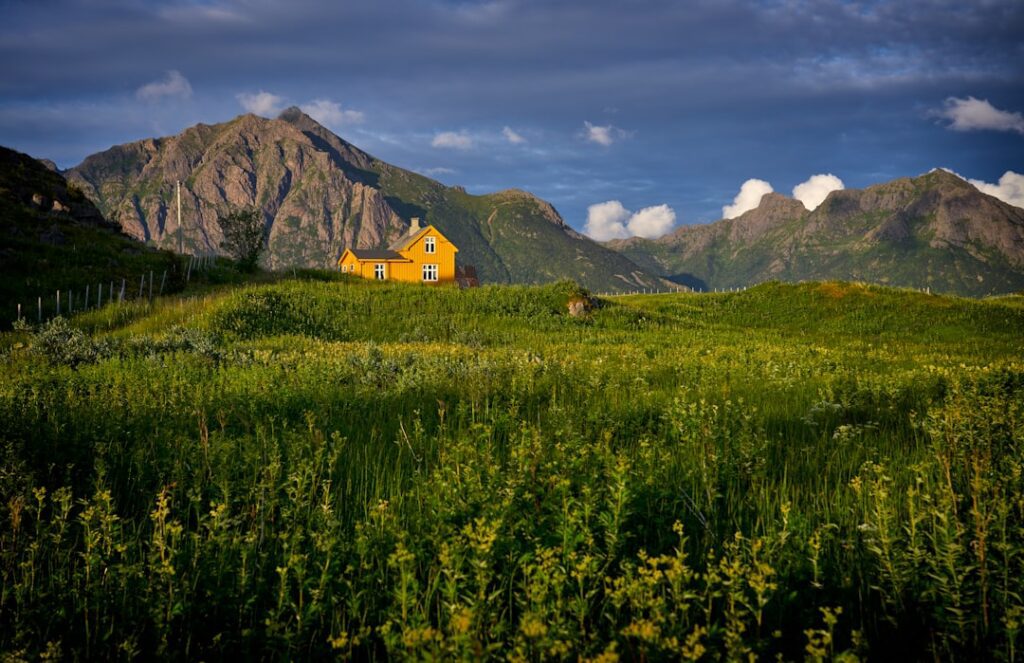
Yellow wooden house near mountain during cloudy day, Arctic Circle, Norway
- Historic Architecture: The Arctic Cathedral in Tromsø (built 1965) mimics glacial crevasses and northern lights with its iconic triangular design and stunning stained glass.
- Cultural Scene: The Sami National Day on February 6th features traditional *joik* singing, reindeer racing, and vibrant handicrafts in Kautokeino.
- Local Specialties: You must try *Mølje* – a simple yet rich dish of boiled cod with liver and roe, served with potatoes, a staple of coastal communities.
Pro Tip: For the best chance at Northern Lights without the deepest cold or highest prices, target late September or March. You get dark nights, relatively mild temperatures around -5°C, and far fewer tourists than the December-January peak. Book accommodations at least 4 months in advance for these windows.
Map of Arctic Circle, Norway
Use these interactive maps to explore Arctic Circle, Norway and plan your route:
📍 View Arctic Circle, Norway on OpenStreetMap
🗺️ Open Arctic Circle, Norway in Google Maps
Planning Your Trip: Practical Essentials
Getting There and Around
- By Air: Major gateways are Tromsø (TOS), Bodø (BOO), and Evenes (EVE) airports. SAS and Norwegian offer direct flights from Oslo. From the airport, your best bet is the Flybussen airport express coach into the city center. Book flights at Skyscanner for best deals.
- By Train: The stunning Nordland Railway runs from Trondheim to Bodø (10 hours), crossing the Arctic Circle at the Polar Circle Center. For the Ofoten Line to Narvik, connect from Sweden. Reserve tickets at Trainline or the national railway website.
- By Car: The E6 highway is the main north-south artery. Winter driving requires extreme caution, studded tires, and experience with ice. Rental agencies are available at all airports. Compare car rentals at RentalCars.com.
- Local Transport: In cities like Tromsø, excellent public buses operate. For island hopping, the Hurtigruten coastal ferry is a scenic transport option, and express passenger ferries connect the Lofoten Islands. Check the Entur website for all public transport schedules and tickets.
Best Time to Visit
Choosing when to visit defines your experience. Winter is for aurora chasers and snow sports enthusiasts, while summer attracts hikers and midnight sun seekers. The shoulder seasons offer a compelling mix of both worlds with fewer visitors.
| Season | Weather | Highlights |
|---|---|---|
| Summer (Jun–Aug) | 7°C to 15°C, mild, midnight sun, occasional rain. | 24-hour hiking, whale watching (May-Sep), fishing, vibrant coastal life, fewer northern lights. Moderate crowds. |
| Winter (Dec–Feb) | -15°C to -5°C, snow-covered, polar night in the far north. | Prime Northern Lights viewing, dog sledding, snowmobiling, Sami cultural experiences. Peak tourist season for aurora. |
| Shoulder (Apr–May/Sep–Oct) | -2°C to 8°C, unpredictable mix of sun, rain, and early snow. | Best value, potential for both midnight sun and aurora, fantastic photography light, very few crowds. |
Budgeting for Arctic Circle, Norway

Body of water near mountain, Arctic Circle, Norway
| Category | Budget | Mid-range | Luxury |
|---|---|---|---|
| Accommodation | Hostel dorm: 400-600 NOK/night | Hotel/rorbu cabin: 1200-2000 NOK/night | Design hotel/Northern Lights lodge: 3000+ NOK/night |
| Meals | Supermarket/self-catering: 300 NOK/day | Cafe & restaurant meals: 600-800 NOK/day | Fine dining with wine: 1500+ NOK/day |
| Transport | Public bus/city transport: 100 NOK/day | Regional bus/ferry trips: 300-500 NOK/day | Private tours/taxi/rental car: 1000+ NOK/day |
| Activities | Free hiking, city museums (~100 NOK) | Guided aurora tour (~1200 NOK), cable car | Private dog sledding, helicopter tour, luxury Hurtigruten cabin |
| Daily Total | 800-1000 NOK (~$75-95) | 2200-3500 NOK (~$210-330) | 5500+ NOK (~$520+) |
Top Attractions and Must-See Sights
| Attraction | Description | Hours | Entry Fee |
|---|---|---|---|
| Polaria (Tromsø) | An Arctic experience center with an immersive film and fascinating exhibits on polar research and marine life. | 10:00–18:00 daily (summer), shorter in winter | 160 NOK adult |
| Lofoten Islands | Dramatic peaks rising from the sea, dotted with iconic fishing villages like Reine and Henningsvær. | Always accessible | Free (attractions within vary) |
| Svartisen Glacier (near Bodø) | Norway’s second-largest glacier; take a boat then a short hike to see its brilliant blue ice up close. | Boat departures 10:00–15:00 (Jun–Aug) | Boat trip ~450 NOK |
| Narvik War Museum | A gripping account of the WWII battles in the Arctic, crucial for understanding the region’s modern history. | 10:00–17:00 (Jun–Aug), 11:00–16:00 (Sep–May) | 140 NOK adult |
3-Day Itinerary: Arctic Circle, Norway’s Highlights & Hidden Gems
Day 1: Tromsø – The Arctic Capital
- Morning (7-9 AM): Take the Fjellheisen cable car (250 NOK round trip) for panoramic views over Tromsø and its surrounding islands. The light is magical at this hour.
- Afternoon (12-3 PM): Explore the Polar Museum to learn about Arctic hunting and exploration, then grab lunch at *Rå Sushi* for incredibly fresh Arctic king crab.
- Evening (6-8 PM+): In winter, join a small-group Northern Lights chase (~1200 NOK). In summer, take a midnight sun cruise. For dinner, locals recommend *Emilies* at the Scandic Hotel for a modern take on Norwegian classics.
Day 2: Sami Culture & Coastal Wonders
- Morning (8 AM): Drive or take a tour 2 hours inland to a Sami camp near Lyngen. Experience reindeer feeding, *joik* singing, and a traditional lunch in a *lavvu* tent (~900 NOK).
- Afternoon (2 PM): Return to the coast and visit the striking Arctic Cathedral. Inside, the east wall mosaic is one of Europe’s largest stained glass artworks.
- Evening (7 PM): Enjoy a relaxed dinner at *Hildr Gastro Bar* in Tromsø, known for its creative small plates and local beers, a favorite among savvy visitors.
Day 3: Island Adventure to Sommarøy
- Morning (9 AM): Rent a car or join a tour for the scenic 1-hour drive (toll-free) to the fishing village of Sommarøy, known for its white-sand beaches and turquoise water.
- Afternoon (12 PM): Hike up nearby Hillesøy for breathtaking 360-degree views, then have a late lunch of fish soup at *Sommarøy Arctic Hotel*.
- Evening (5 PM): Return to Tromsø. For a final memorable meal, book at *Mathallen Tromsø*, a food hall with multiple stalls – your best bet is the *Fiskekompaniet* stall for the day’s catch.
Cultural Insights & Etiquette
- Language: Norwegian is official, but Northern Sami is also recognized. English is widely spoken. Learn *Takk* (Thank you) and *Ha det* (Goodbye).
- Customs: Norwegians value personal space, punctuality, and quiet confidence. It’s customary to remove your shoes when entering someone’s home.
- Tipping: Not expected, as service is included. For exceptional service, rounding up the bill or leaving 5-10% is appreciated but not required.
- Dress Code: Practical, weather-appropriate layers are key—think thermal base layers, a warm mid-layer, and a waterproof outer shell. Smart-casual is fine for most restaurants.
- Business Hours: Shops typically open 10:00–18:00 weekdays, shorter on Saturdays, and closed Sundays. Many museums have limited hours on Mondays.
Where to Eat: Arctic Circle, Norway’s Best Bites
Dining here is defined by the pristine Arctic sea and mountain pastures. You’ll find exceptional quality in simple preparations, where the ingredient is the star. From dockside shacks serving fish straight from the boat to innovative New Nordic cuisine, the focus is on local, seasonal, and sustainable.
Must-Try Local Specialties
- Reindeer Meat: Often served as a steak or in a stew (*reinsdyrstek*), it’s lean, tender, and deeply flavorful. Try it at a traditional Sami camp or restaurants like *Storgata 26* in Bodø.
- Stockfish (*Tørrfisk*): Wind-dried cod, a centuries-old preservation method that creates a unique, intense flavor. Sample it in Lofoten, often rehydrated in stews.
- Cloudberries (*Multer*): A golden, tart Arctic berry often made into jam or served with ice cream or pancakes. Look for them at local markets in late summer.
Restaurant Recommendations by Budget
| Type | Restaurant | Specialty | Price Range |
|---|---|---|---|
| Budget | Dragøy Kystens Mathus, Tromsø | Fresh fish cakes, shrimp sandwiches, and seafood soups in a casual dockside setting. | 100-200 NOK per dish |
| Mid-range | Brygga 11, Svolvær (Lofoten) | An atmospheric restaurant in a old fish landing building, famous for its *Mølje* and other classic fish dishes. | 250-450 NOK main course |
| Fine dining | Hurtigruten Sjømat Restaurant, Bodø | A multi-course tasting menu showcasing Arctic seafood, often with a view of the harbor. | 800+ NOK tasting menu |
Where to Stay
Accommodation ranges from modern city hotels to historic fishing cabins (*rorbuer*) and remote wilderness lodges. Booking well in advance is non-negotiable, especially for the popular *rorbuer* in Lofoten. Compare prices and book at Booking.com or Airbnb for apartments.
Best Neighborhoods for Accommodation
- Tromsø City Center: Walkable to most attractions, restaurants, and the cathedral. Ideal for first-time visitors without a car. Can be lively and slightly more expensive.
- Lofoten Islands (Reine/Henningsvær): For iconic scenery and authentic *rorbu* stays. Perfect for photographers and nature lovers. Requires a car and advanced booking.
- Bodø City: A practical transport hub for trains, flights, and ferries to Lofoten. Less touristy, with good hotel options and access to Saltstraumen, the world’s strongest maelstrom.

A group of boats sitting in a harbor next to a snow covered mountain, Arctic Circle, Norway
FAQs: Your Arctic Circle, Norway Questions Answered
1. Is Arctic Circle, Norway safe at night?
Extremely safe. Violent crime is very rare. The primary concerns are environmental: winter road conditions, sudden weather changes while hiking, and respecting wildlife. Always check weather forecasts, dress appropriately, and inform someone of your hiking plans.
2. What currency is used and are credit cards accepted?
The Norwegian Krone (NOK) is the currency. Credit and debit cards (Visa, MasterCard) are accepted virtually everywhere, even for small purchases and in remote areas. It’s wise to carry a small amount of cash (200-500 NOK) as a backup, but you can operate almost entirely card-based.
3. How do I get from the airport to the city center?
From Tromsø Airport (TOS), the Flybussen airport coach takes 15 minutes and costs 120 NOK to the city center. A taxi costs approx. 300-350 NOK. From Bodø Airport (BOO), local bus #2 takes 10 minutes to downtown (40 NOK). Book airport transfers at GetYourGuide for convenience.
4. Do I need to speak the local language?
No. English proficiency is exceptionally high. Most Norwegians speak fluent English. Learning a few basic Norwegian phrases like *Takk for maten* (Thanks for the food) is appreciated as a polite gesture but not necessary.
5. What’s the appropriate dress code?
Function over fashion. The key is layering: a moisture-wicking base layer, an insulating mid-layer (wool/fleece), and a waterproof/windproof outer shell. Sturdy, waterproof boots are essential year-round. For a nice restaurant, clean, smart casual attire is perfectly acceptable—no need for formal wear.
Final Thoughts: Arctic Circle, Norway Awaits
The Arctic Circle is more than a line on a map; it’s a frontier of raw, powerful nature and resilient culture. You’ll discover a place where the rhythms of light and dark dictate life, where history is etched in fishing villages and Sami traditions, and where the sky itself becomes
Related Guides
Explore more destinations similar to Arctic Circle:
- Seville’s Ultimate Flamenco, Orange Blossoms & Moorish Majesty (2025)
- Sagarejo, Georgia’s Best Wine, Fortresses & Rustic Charm (2026)
- Piura, Peru’s Amazing Sun, Surf & Colonial Soul (2026)
- Teapa, Mexico’s Ultimate Caves, Chocolate & Colonial Charm (2025)
{“@context”: “https://schema.org”, “@type”: “FAQPage”, “mainEntity”: [{“@type”: “Question”, “name”: “What is the best time to visit Arctic Circle?”, “acceptedAnswer”: {“@type”: “Answer”, “text”: “The best time to visit Arctic Circle depends on your preferences. Generally, the dry season offers the most pleasant weather for sightseeing and outdoor activities.”}}, {“@type”: “Question”, “name”: “How many days do I need in Arctic Circle?”, “acceptedAnswer”: {“@type”: “Answer”, “text”: “Most travelers spend 3-5 days in Arctic Circle to see the main attractions. A week allows for a more relaxed pace and day trips.”}}, {“@type”: “Question”, “name”: “Is Arctic Circle expensive to visit?”, “acceptedAnswer”: {“@type”: “Answer”, “text”: “Arctic Circle can be visited on various budgets. Accommodation ranges from hostels to luxury hotels, and local restaurants offer affordable dining.”}}]}

