

# The Ultimate Srebrenica Guide: History, Resilience & Mountain Serenity
Why Srebrenica Stands Out
- Historic Architecture: The Srebrenica Memorial Center and Cemetery, established in 2003 at the former Potočari base, stands as the final resting place for over 6,600 identified genocide victims, with its white marble columns rising against the green hills.
- Cultural Scene: The annual Srebrenica March (Marš mira), held each July, draws thousands of participants who walk 110 kilometers in reverse along the escape route taken by Bosniak men in 1995, commemorating the victims through solidarity and remembrance.
- Local Specialties: The eastern Bosnian specialty of “sogan-dolma” (onions stuffed with spiced minced meat) served at local konoba restaurants offers a taste of the region’s Ottoman-influenced culinary heritage.
Pro Tip: Visit in late June or early September when the weather is mild (18-25°C), the Memorial Center is less crowded, and you’ll have easier access to guided tours with survivors—these personal narratives transform your understanding of the town completely. Arrive before 9 AM to experience the memorial in contemplative silence before tour groups arrive.
Map of Srebrenica, Bosnia and Herzegovina
Use these interactive maps to explore Srebrenica and plan your route through this historically significant region:
📍 View Srebrenica, Bosnia and Herzegovina on OpenStreetMap
🗺️ Open Srebrenica, Bosnia and Herzegovina in Google Maps
Planning Your Trip: Practical Essentials

U, Srebrenica, Bosnia and Herzegovina
Getting There and Around
- By Air: The nearest major international airports are Sarajevo International Airport (SJJ) approximately 120 kilometers west and Belgrade Nikola Tesla Airport (BEG) roughly 160 kilometers northeast. Tuzla International Airport (TZL), about 80 kilometers northwest, serves budget carriers like Wizz Air from European cities. From any airport, your best bet is arranging a private transfer or rental car—expect to pay €60-80 for the scenic mountain drive. Book flights at Skyscanner for the best deals, and reserve airport transfers through GetYourGuide for pre-booked convenience.
- By Train: Rail connections in eastern Bosnia are limited; the nearest active station is in Zvornik, reached by bus from Srebrenica. Most travelers incorporate train travel into a broader Balkans itinerary, with connections from Sarajevo to Zvornik taking about 4 hours. Reserve tickets at Trainline or check the national railway website, ŽFBH (Željeznice Federacije Bosne i Hercegovine).
- By Car: Driving to Srebrenica is the most flexible option. From Sarajevo, follow the M19 highway northeast toward Sokolac and Vlasenica, then bear right onto regional road R454 through Bratunac—expect 2.5 to 3 hours with the final leg winding through beautiful but challenging mountain terrain. From Belgrade, take the A1/E70 highway to Sremska Mitrovica, then cross into Bosnia at the Popovi border crossing. Rental cars from Sarajevo start around €35/day, and parking in Srebrenica is generally free and easy. Compare car rentals at RentalCars.com.
- Local Transport: The community is compact, and you can comfortably walk between the town center, hotels, and memorial sites. For exploring surrounding villages or the Drina River Valley, local micro-buses (minibusi) run infrequently, so renting a car is recommended. Taxi services from Srebrenica to Potočani cost approximately 10 KM (€5), and drivers from Taxi Srebrenica (+387 62 123 456) are reliable for day trips.
Best Time to Visit
| Season | Weather | Highlights |
|---|---|---|
| Summer (Jun-Aug) | 18-28°C, warm and sunny with occasional afternoon thunderstorms | The July 11 commemoration and Peace March; active crowds, so you’ll want to book accommodations months ahead. Days are longest and trails are clear for hiking. |
| Winter (Dec-Feb) | -5°C to 5°C, heavy snow possible in the mountains | A hauntingly quiet, contemplative atmosphere; the memorial is stark and powerful. You’ll find low prices and empty roads, but some restaurants and guesthouses close. |
| Shoulder (Apr-May/Sep-Oct) | 10-18°C, crisp air with colorful foliage or spring blossoms | Ideal for reflective visits with fewer crowds; pleasant hiking weather for exploring the Drina Valley and surrounding mountains. September brings the harvest and local produce markets. |
Budgeting for Srebrenica, Bosnia and Herzegovina
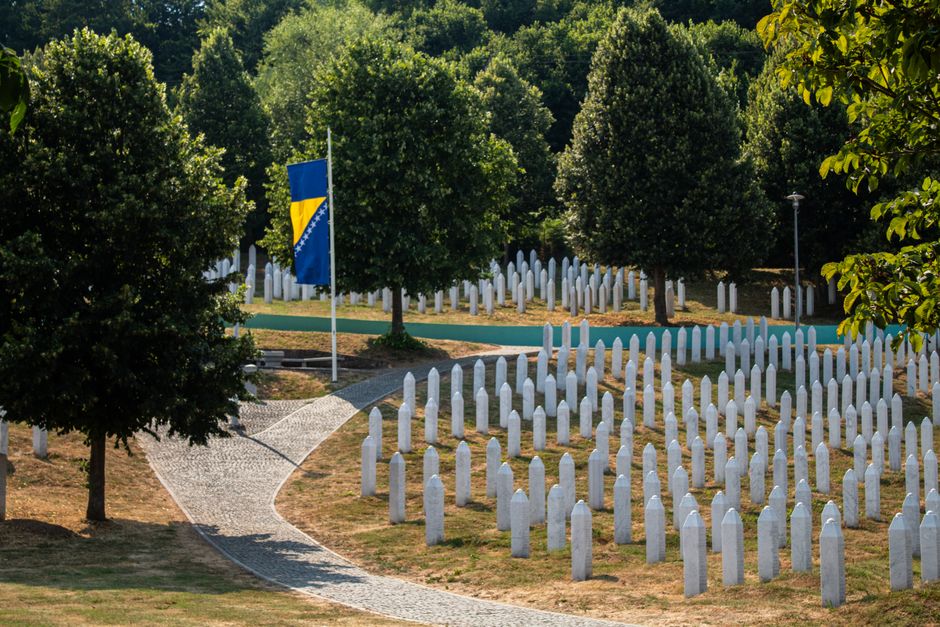
A solemn view of the Srebrenica Memorial, Srebrenica, Bosnia and Herzegovina
Top Attractions and Must-See Sights
| Attraction | Description | Hours | Entry Fee |
|---|---|---|---|
| Srebrenica Memorial Center & Cemetery (Potočari) | The most significant site in the region—a memorial and cemetery for genocide victims with interactive exhibits, films, and an emotional exhibition documenting the 1995 tragedy. | Daily 8:00-18:00 (shorter hours in winter) | Donation (suggested 10 KM/€5) |
| Museum of the Srebrenica Genocide | Opened in 2016, this modern museum in town covers the history of the war in eastern Bosnia with artifacts, photographs, and survivor testimonies in multiple languages. | Mon-Fri 9:00-17:00, Sat 10:00-14:00 | 5 KM (€2.50) |
| Drina River Viewpoint at the Bridge of Srebrenica | A scenic overlook where the turquoise Drina flows through the mountain valley, offering panoramic photo opportunities and a place for quiet reflection. | Always open | Free |
| Guzda Spring and 7 Srebrenica Victims’ Memorial | Natural springs and a memorial site where seven men were killed in 1995; locals visit here for both the healing waters and to honor the memory of those lost. | Always open | Free |
3-Day Itinerary: Remembrance, Nature & Local Life

White tombstones at the Srebrenica Cemetery, Srebrenica, Bosnia and Herzegovina
Day 1: Understanding Srebrenica’s Heart
- Morning: Start your journey at 9 AM with a visit to the Srebrenica Memorial Center in Potočari, located just 3 kilometers from town. View the documentary “A Cry from the Grave” (shown at 10:30 AM) to contextualize the events of July 1995. Plan to spend at least two hours here—the exhibition halls require time for emotional processing. Your guide, often a survivor, will share personal stories that no history book can convey.
- Afternoon: Walk to the town’s memorial room above the old post office where victims’ families became refugees. By 1 PM, lunch at Restoran Srebrenica Center (Trg Bratunac 4), where locals recommend the homemade “janjetina ispod sača” (lamb under the bell) for 15 KM. Then visit the Museum of Srebrenica Genocide and take a moment at the town fountain, which served as a meeting point during the war years.
- Evening: As evening falls, drive up to the lookout point at the Old Town Fortress ruins above Srebrenica, where you’ll find stunning views of the entire valley—a place that has witnessed centuries of history. Dinner at Konoba Stari Grad (Stari Grad bb) features traditional Bosnian dishes like “punjene paprike” (stuffed peppers) for around 15 KM, followed by strong Bosnian coffee as you reflect on the day.
Day 2: The Peace March Route & Nature’s Beauty
- Morning: Begin before 8 AM with a drive 15 kilometers south to the village of Nezuk (follow signs toward Sapna). This community was the final destination point for the survivors of the 1995 escape. Stand at the Nezuk Memorial and imagine the eleven days of walking through hostile territory. The drive takes about 30 minutes, and the road follows the very paths many took to safety—an emotional experience you won’t soon forget.
- Afternoon: Return to Srebrenica for a light lunch at Baklava Shop (Bulevar revolucije 12), famous for its fresh pita and burek at just 3-5 KM. Then drive 10 minutes west to the Čudesna priroda (Wonderful Nature) waterfall area near the village of Orahovica. Here you can hike a 2-hour loop trail through dense forest to a cascade of waterfalls that plunge into crystal-clear pools—a side of Srebrenica that surprises many visitors.
- Evening: Enjoy sunset at the Guzda Spring area, where you’ll find locals gathering for evening walks and conversation. For dinner, try Ribarsko Ćoše (Riverside Corner) in nearby Bratunac (10-minute drive), where fresh trout from the Drina River—called “pastrmka”—is grilled to perfection for 12 KM per portion. End your evening with a slow stroll across the restored Austro-Hungarian-era bridge.
Day 3: The Drina Valley & Pathways of Hope
- Morning: Pack your essentials and depart early (around 7:30 AM) for the 20-kilometer drive east to the Bajina Bašta viewpoint overlooking the Drina River Canyon. If you wish, take the short detour to the famous “House on the Rock” at the entrance of the gorge—a tiny wooden cabin perched on a stone in the middle of the river, perhaps the most-photographed landmark in the region. The parking and walk viewpoint are free.
- Afternoon: Head back towards Srebrenica and stop at the village of Zeleni Jadar where the “Green Jadar” memorial commemorates one of the last mass executions of the war. This is a solemn but necessary visit. Continue to the town of Kravica and visit the Kravica Memorial, where you’ll understand the devastation that preceded Srebrenica’s fall. Lunch at the nearby Bistro Jagodić (12-18 KM) serves hearty stews and grilled meats to local workers and travelers alike.
- Evening: Return to Srebrenica for a final dinner at Hotel Vidikovac’s restaurant (Tel: +387 56 474 000), where the elevated terrace offers panoramic valley views as you dine on “sogan-dolma” and try local Herzegovina wines. The staff will happily arrange a taxi back to your accommodation for 5 KM. Take a moment to speak with your host about how your visit has deepened your understanding—you’ll find locals genuinely moved that travelers from around the world take the time to come and learn.
Cultural Insights & Etiquette
- <strong

