
Garamba National Park, Democratic Republic of the Congo for Adventurers: Tracking the Last Giants – 7 Wild Experiences That Redefine the Word “Safari” (2026)
The helicopter’s rotors fade as you step onto the red earth of Garamba, the air thick with heat and the low rumble of distant thunder. A ranger checks his rifle, nods toward the tall grass, and says, “They’re about two klicks east—elephants, maybe a hundred of them.” You tighten your boots, check your water, and start walking. There are no roads here, no other tourists. Just you, the guide, and the last wild herds of the Sahel.
The Main Event: Tracking the Kordofan Giraffe on Foot
Your best bet for the most intense, heart-pounding experience in Garanga is a guided walking expedition to track the Kordofan giraffe, one of the rarest giraffe subspecies on Earth. With fewer than 2,000 individuals left in the wild, and Garamba holding the single largest population, you will be walking into a conservation story that few travelers ever witness. You start at dawn—05:30 sharp—from the park headquarters near Nagero. The walk lasts roughly 4 to 6 hours, covering between 8 and 12 kilometers of open savannah, gallery forest, and dried riverbeds. The difficulty is moderate to hard: the terrain is uneven, the heat climbs past 35°C by 10 a.m., and you’ll be stepping over elephant dung and termite mounds the size of cars. The cost for a guided walk with an armed ranger is approximately $120 per person per day, booked through African Parks, which manages the park. You must bring a minimum of 3 liters of water, sun protection, and sturdy ankle-high boots. Insider tip: ask your guide to pause at the “cathedral trees”—ancient mahoganies where you can hear elephants rumbling from half a kilometer away. The best time of year for this walk is the dry season, from November to April, when the grass is shorter and visibility is better.
What makes this activity unlike any safari you’ve done elsewhere is the silence. No engines, no radios, no convoy of Land Cruisers. Travelers often discover that the real adrenaline comes not from charging animals but from the raw vulnerability of being on foot in a landscape that hasn’t changed since the 19th century. You will see the giraffes, often in bachelor herds of 8 to 15, their legs moving like slow pendulums against the horizon. But you will also see tracks of lion, leopard, and hyena, and your ranger will whisper warnings when you get too close to a thicket. Locals recommend carrying a lightweight pair of binoculars and a bandana to cover your nose—the harmattan dust is fine and gets everywhere. Plan to finish the walk by 11 a.m., then cool off at the park lodge with a cold Primus beer and fresh grilled tilapia.
Activity #1: Elephant Herd Vehicle Safari – The Thunder of Giants
If you want to see Garamba’s elephants up close without the intensity of walking, the vehicle safari is your best bet. These are not the habituated herds of Amboseli—Garamba’s elephants are wild and wary, and your guide will track them using radio collars and fresh dung piles. You depart at sunrise from the Nagero base in an open-topped Land Cruiser. The drive takes you across the vast grass plains that reminded early explorers of the Serengeti. You will see herds of 50 to 150 elephants moving in a single line, their dust plumes visible from miles away. The cost is about $90 per person, including a ranger and park fees. The drive lasts three to four hours and covers rough, sandy tracks—hold on tight. Locals recommend bringing a buff to cover your face; the dust can be intense when the wind picks up. The best months are February and March, when the animals concentrate near permanent water sources like the Dungu and Akula rivers. You’ll stop at a viewpoint called “the elephant pan” where, if you’re lucky, you can watch entire families drink and dust-bathe for 20 minutes at a time.
Activity #2: Boat Patrol on the Dungu River – Paddling Through Prehistory
For a completely different perspective, join a ranger-led boat patrol along the Dungu River, which forms the park’s eastern boundary. You will board a metal-hulled boat with an outboard motor at 07:00 from the small landing at Nagero. The patrol lasts about 2 to 3 hours and covers roughly 15 kilometers of riverine forest, hippo pools, and sandbanks where crocodiles bask in the morning sun. The cost is $70 per person, with a maximum of six guests per boat. The difficulty is easy—you sit, you watch, you listen—but the experience is profound. Travelers often discover that the river offers the best chance to see the park’s elusive aquatic birds, including the rare shoebill stork, which locals call “the old man of the river.” You’ll also pass Azande fishing villages, where children wave from dugout canoes. Insider tip: bring a polarized filter for your camera and a long-sleeved shirt—the river glare is brutal even at 8 a.m. The best season is the dry months of December to March, when the water is low and animals concentrate along the banks.

A Kordofan giraffe in Garamba National Park, Democratic Republic of Congo, Garamba National Park, Democratic Republic of the Congo
Activity #3: Night Drive for Predators – The Dark Heart of Garamba
When the sun drops behind the acacias, Garamba transforms. You will climb into a specialized safari vehicle with a red-filtered spotlight and a ranger carrying a heavy-caliber rifle. The night drive departs at 18:00 from the lodge and lasts about three hours. The cost is $110 per person, and the difficulty is moderate simply because of the uneven terrain in the dark. You will search for lion, leopard, serval, and the rare side-striped jackal. Locals recommend sitting in the front row for the best light coverage and wearing a warm jacket—even in the dry season, temperatures drop to 15°C after dark. Travelers often discover that the real magic isn’t the predators but the sounds: the saw-edged cough of a leopard, the whoop of a hyena, and the deep, vibrating groan of an elephant that knows you’re there. The best time for predator sightings is the full-moon week, when the light helps you spot movement at greater distances. Book through African Parks or your lodge reception at least two days in advance.
Activity #4: Birding Along the Akula Wetlands – 350 Species and Silence
Garamba is one of Africa’s least-visited birding destinations, and that’s exactly why you should go. The Akula Wetlands, located in the southern sector of the park, are a maze of papyrus swamps, lily-choked channels, and open pools. You’ll reach them via a 20-minute drive from the park headquarters, then walk on raised earthen dikes built by rangers. The cost is $50 per person, and the walk is easy—flat, shaded, and relatively cool in the early morning. You will see the dazzling malachite kingfisher, the African fish eagle, the hamerkop, and if you’re extraordinarily lucky, the shoebill. Locals recommend hiring a dedicated bird guide for an extra $20—they know the calls of every species and will cup their hands to imitate a rare owl. Bring a field guide or download the Merlin Bird ID app before you arrive; connectivity is poor. The best months are November to April, when Palearctic migrants join the resident species.
Activity #5: Ranger Patrol Ride-Along – The Hardest, Most Rewarding Day in Garamba
This is not for the faint of body or spirit. The Ranger Patrol Ride-Along is a full-day immersion into the reality of conservation in one of Africa’s most dangerous parks. You will leave at 04:30, accompanied by a team of armed rangers, on a vehicle patrol that covers 50 to 80 kilometers of park interior. The cost is $200 per person, which directly funds ranger equipment and salaries. The difficulty is hard: you’ll be bouncing over corrugated tracks for hours, walking through thick bush at checkpoints, and sitting in total silence while the rangers listen for gunshots or poacher activity. Travelers often discover that this experience is as much about human courage as wildlife. You will see elephant carcasses from old ivory poaching incidents, ranger memorials, and the remains of poacher camps. But you will also see the hope—healthy herds, fresh rhino tracks (the park is a reintroduction site for the northern white rhino), and rangers who smile and share their cassava lunch with you. Locals recommend bringing your own protein bars and three times the water you think you need.
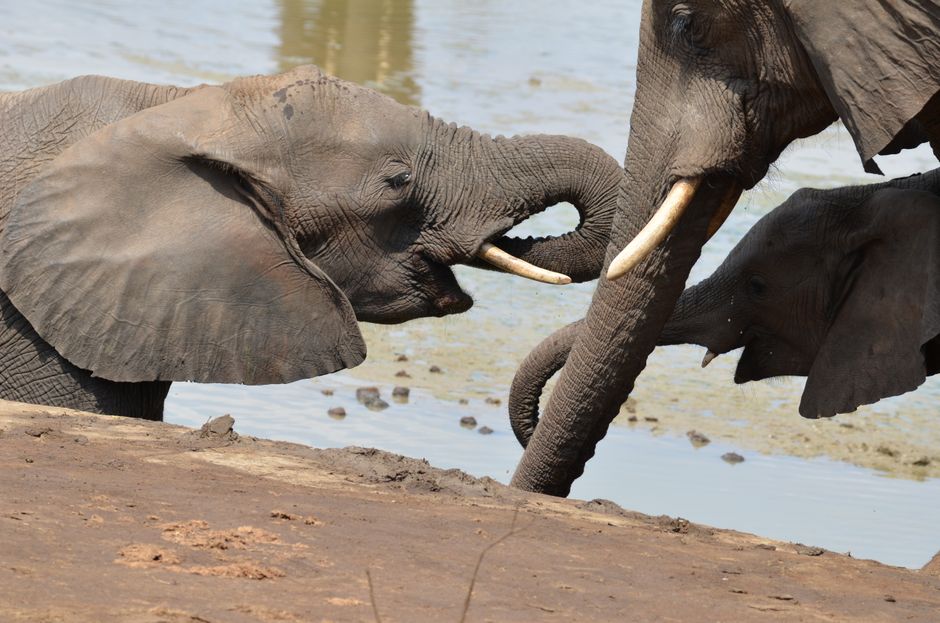
African elephants interacting by the water, Garamba National Park, Democratic Republic of the Congo
Activity #6: Cultural Visit to the Azande Village – The People of the Forest
To understand Garamba, you must meet the Azande people, who have lived alongside this landscape for centuries. The visits are arranged through the park’s community liaison office in Nagero and cost $40 per person, plus a donation of school supplies or medicine if you wish. You’ll spend 1 to 2 hours in a small village of thatched huts, watching women weave palm-fiber baskets, men carve wooden stools, and children play with handmade toys. The experience is easy—no hiking, no gear—but it is culturally profound. The Azande are known for their storytelling and their intricate oral history, which includes tales of the “great elephant wars” and the “river spirits” that still protect the Dungu. Locals recommend learning a few words of Lingala or Zande before you visit; a simple “mbote” (hello) will open doors. The best time is mid-morning, after the village chores are done and the elders are sitting under the shade trees.
Activity #7: Photography Expedition – The Light of the Sahel
Garamba offers some of the most unique photographic conditions in Africa: low-angle morning light, dust-filled air that softens tones, and animals that have never seen a camera before. You can arrange a dedicated photography-focused safari through African Parks for $150 per person, which includes a guide who knows the best angles and timing. The difficulty is easy to moderate—you’ll drive slowly, stop often, and wait. The key is patience: you might spend 45 minutes watching a single giraffe walk across a red dune, waiting for the sun to hit its neck just right. Travelers often discover that the best images come at the “golden hour” between 05:30 and 07:30, and again from 16:00 to 18:00. Locals recommend using a telephoto lens of at least 300mm—you cannot approach animals on foot in most areas. The park’s dusty conditions are hard on camera sensors, so bring a blower brush and lens-cleaning cloths.
Refuel: Where Adventurers Eat
After a day of walking and tracking, you will crave real food. The park’s single restaurant, **The Nagero Mess**, serves hearty portions of grilled tilapia caught fresh from the Dungu River, alongside cassava and fried plantains. A full meal costs about $12, and the fish is marinated in lemon and chili by the chef, Mama Yolande. Locals recommend washing it down with a cold Primus beer ($2) or a glass of freshly pressed sugarcane juice ($1). For lunch on the move, the **Garamba Ranger Canteen** sells excellent samosas and chapati-wrapped egg rolls for under $3—perfect for tucking into your daypack. If you’re staying at the lodge, they will pack you a picnic lunch of grilled chicken, hard-boiled eggs, mango slices, and bottled water for about $8. Avoid raw vegetables from outside the park; stick to cooked meals and peeled fruit. For coffee lovers, the lodge serves a surprisingly good Rwandan roast every morning at 05:00, just before the first walk departs.
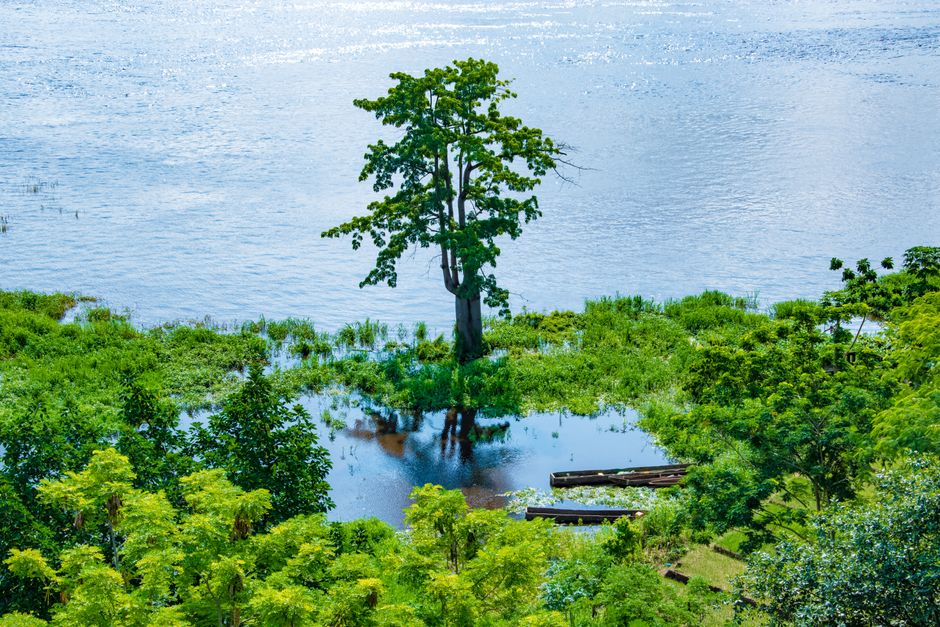
A lone tree standing by the riverbanks in Brazzaville, Congo., Garamba National Park, Democratic Republic of the Congo
Base Camp: Where to Stay
For adventurers, comfort is secondary to location and early-morning access. The **Garamba Safari Lodge** is the park’s only permanent accommodation inside the gates, with 10 canvas-tent rooms on raised platforms, each with a veranda facing the savannah. Rooms cost about $180 per night for a double, including all meals and basic amenities. The staff will wake you at 04:30 with a thermos of tea and a packed breakfast. The lodge has a small gear-washing station and a locked storage room for expensive camera equipment. If you prefer something simpler, the **Nagero Guesthouse** offers four basic rooms with shared bathroom for $50 per night—favored by rangers and researchers. Booking is essential for both; use Booking.com to find the best deals on flights and then contact the park directly for accommodation. A third option is to camp at the ranger post at Akula, where you can pitch your own tent for $15 per night, but you must bring all your own supplies and a satellite phone.
Gear & Prep Checklist
- Sun protection: SPF 50+ sunscreen, wide-brimmed hat, polarized sunglasses—the equatorial UV is brutal even under cloud cover
- N95 dust masks or bandanas: The harmattan dust and smoke from seasonal burns will coat your lungs without one
- Ankle-high leather boots with grip soles: You will walk on uneven, rocky terrain, through tall grass, and across dried riverbeds—trail runners won’t cut it
- Fitness preparation: You should be comfortable walking 8–12 km in 35°C heat with a 5-kg daypack. Practice at home before you go.
- Yellow fever vaccination AND malaria prophylaxis: Garamba is a high-risk malaria zone. Start prophylaxis a week before arrival and carry a mosquito net for daytime naps.
Getting There & Around
- Flights: International travelers fly into Kinshasa (FIH) via Addis Ababa, Nairobi, or Brussels. From Kinshasa, you take a domestic flight to Aru (RUB) or Dungu on Congo Airways

