
Libreville, Gabon for Adventurers: 7 Jungle-to-Ocean Thrills That Put Costa Rica to Shame (2026)
Your kayak slices through the still, dark water of the Komo Estuary at dawn. Mangrove roots claw at the air like submerged skeletons, and then—thirty feet ahead—a massive snout breaks the surface. The crocodile slides silently past your hull, its yellow eyes locking onto yours for a heartbeat before it vanishes. Your paddle trembles in your hands. This is not a nature documentary. This is your Thursday morning in Libreville.
The Main Event: Crocodile Kayaking on the Komo Estuary
You will find no tame wildlife parks here. The Komo Estuary, just a 20-minute drive southeast from downtown Libreville, offers the most intimate predator encounter you can have from a plastic boat. Locals recommend launching from the fishing village of Alénakiri, where you can rent a sit-on-top kayak from Gabon Aventures for 15,000 CFA (about $25 USD) per half-day. Set out at 6:00 AM sharp—the heat builds fast, and the crocodiles retreat to deeper channels by 9:30 AM. You will cover roughly 8 kilometers of tidal channels, paddling through a labyrinth of mangroves where saltwater crocodiles, manatees, and countless bird species live within arm’s reach.
The difficulty is moderate: you need basic paddling skills and reasonable upper-body strength to fight the outgoing current. Bring a dry bag for your camera, reef-safe sunscreen, and at least two liters of water. Your best bet is to hire a guide from Pirogues du Komo (pre-book at +241 74 45 67 89, around 35,000 CFA for a guided trip). The insider secret: wear dark clothing, stay completely silent, and you will see three times the wildlife that noisy groups do. Travelers often discover that the real adrenaline hit comes not from the crocodiles themselves, but from the eerie silence that follows—a silence that lets you hear your own heartbeat.
Activity #1: Hike Mont Nkol’Ntang – The Urban Summit That Punishes the Unprepared
Behind the gleaming glass towers of Libreville rises Mont Nkol’Ntang, a 315-meter beast of granite and laterite that locals call “the stairmaster to the sky.” You will start from the trailhead at the Université Omar Bongo campus (look for the faded red sign at the north gate). The climb is relentless: 2.5 kilometers of switchbacks with an average gradient of 18%. No ropes, no railing, just you and the red dust. Plan to start at 6:30 AM before the equatorial sun turns the trail into a convection oven. The summit rewards you with a 360-degree view of the entire Estuaire province—the green crown of the Monts de Cristal to the east, the Atlantic glittering to the west, and Libreville sprawling like a concrete serpent below. The cost? Absolutely free. The difficulty? Hard. Most tourists underestimate this hike and turn back. Savvy visitors bring trekking poles, at least three liters of water, and a hat. You will need about 90 minutes to ascend and 60 minutes to descend. Book a local guide through Gabon Trekking for 10,000 CFA if you want to hear the stories of the Bantu tribes who once used this mountain as a lookout. Your knees will ache for two days. Your Instagram feed will glow forever.
Activity #2: Kiteboarding at Pointe-Denis – Fly Over the Atlantic Without a Plane
Pointe-Denis sits on the southern tip of the Komo Estuary’s barrier island, a 40-minute ferry ride from Libreville’s Port Môle (the ferry costs 2,500 CFA and departs at 9 AM daily). Here, the trade winds blow consistently from June through September at 15–25 knots, creating ideal conditions for kiteboarding. Seasoned travelers flock to Kite Gabon, a small school run by French expat Marc Delacroix, who has been teaching on this beach since 2012. A two-hour beginner lesson costs 50,000 CFA (about $85 USD) and includes all gear. You will learn to fly the kite on the beach first—the sand is fine and forgiving—before hitting the water. The inner lagoon is shallow and flat, perfect for learning, while the outer reef offers wave riding for advanced kiters. Your best bet is to book a three-day package (120,000 CFA, including gear and lunch) to progress from zero to riding. The secret: arrive by 8 AM to claim the best spot on the beach before the wind picks up at 10 AM. After your session, grab fresh grilled capitaine fish at Chez Jocelyne, a shack run by a local widow who serves the best coconut rice on the island (3,000 CFA per plate). You will sleep like the dead that night.
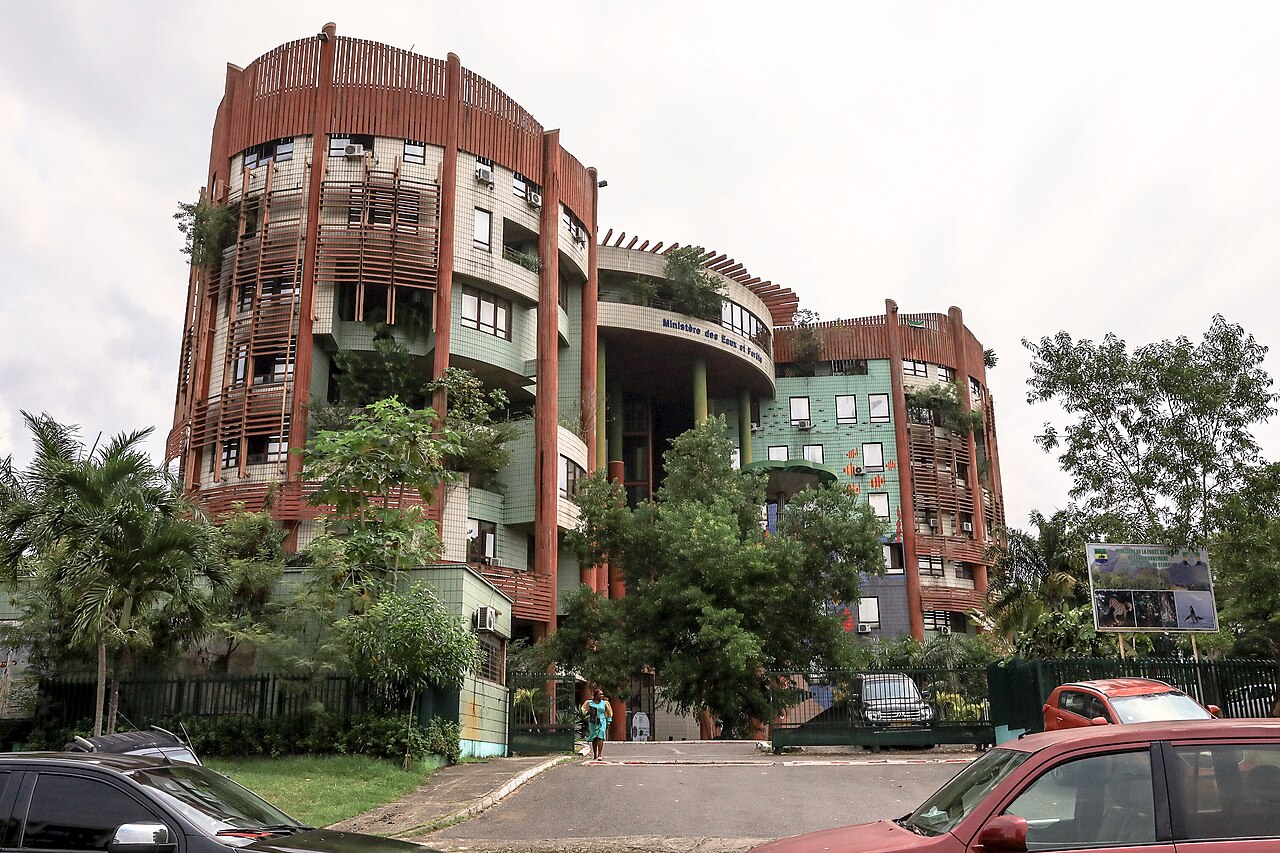
Exterior view of the Gabonese Ministry of Water and Forests in Libreville., Libreville, Gabon
Refuel: Where Adventurers Eat
After a day of paddling, climbing, or kiting, your body will scream for protein and salt. Here is where the locals send you:
Chez Les Gabonais (Avenue du Général de Gaulle, 241-1234-5678). This no-frills spot serves the best nyembwe in the city—chicken simmered in palm nut cream until it falls off the bone, served with manioc fufu and a side of bitter-leaf stew. One portion (4,500 CFA) will fuel a whole day of adventuring. Travelers rave about the biche de mer (sea cucumber) stir-fry on Fridays. Open 11 AM to 10 PM every day except Sunday.
Le Pêcheur (Plage de la Sablière, +241 77 88 99 00). This beachfront grill is where guides eat after they finish work. The specialty is whole barracuda grilled over mangrove wood coals, rubbed with piri-piri and smoked salt. A massive fish serves two people for 7,000 CFA. You will eat with your hands, and you will be happy about it. Order a side of beignets de manioc (cassava fritters, 1,000 CFA for six) and a cold Régab beer (1,500 CFA). The ocean breeze and the sound of waves will undo all the gristle in your muscles.
L’Alizé Café (Boulevard de l’Indépendance). When you crave something lighter, this French-run bistro offers a salade composée with smoked fish, avocado, and mango (5,500 CFA) that will restore your electrolytes. The coffee is excellent and strong—order a café pressé with a side of fresh papaya. Open for breakfast and lunch only (7 AM to 3 PM). Perfect for a pre-hike power meal.
Base Camp: Where to Stay
Adventurers need a base that understands early departures, muddy boots, and the need for gear storage. Here are the best options:

Silhouette of palm tree near body of water during sunset, Libreville, Gabon
Hôtel La Baie des Tortues (Cap Estérias, about a 45-minute drive from Libreville). This eco-lodge sits right on a turtle-nesting beach and is the preferred choice of marine biologists and kayaking guides. Rooms are simple but spotless, with mosquito nets and ceiling fans. They offer gear-storage lockers for your kayaking and kiteboarding gear, and the kitchen will pack you a pre-dawn breakfast to go. Doubles from 78,000 CFA/night. Book at Booking.com.
Hôtel Méridien Re-Ndama (Boulevard de la Paix, Libreville). If you want good internet and a pool after a sweaty day, this is your spot. It is right on the waterfront, has a gym, and the concierge can arrange any adventure tour you want. Doubles from 120,000 CFA/night. Request a room on the fourth floor or higher for the best ocean views. Gear storage is available at the bell desk.
Chez Astride Guesthouse (Alénakiri village). For budget-conscious travelers who want to be right at the kayaking launch point, this family-run guesthouse offers four clean rooms with shared bathrooms for 18,000 CFA/night. No frills, but Astride herself will cook you a fonio porridge breakfast with fresh bananas and honey for an extra 2,000 CFA. She also knows the best crocodile-spotting spots on the estuary.
Gear & Prep Checklist
- Dry bag (at least 20 liters) — for kayaking and boat trips; your phone will die otherwise
- Trekking poles (collapsible) — essential for Mont Nkol’Ntang; the descent on loose laterite is treacherous
- Lightweight long-sleeve shirt (UPF 50+) — the equatorial sun will burn you in 15 minutes without protection
- Fitness prep: You should be able to run 5 km comfortably before attempting any hard-rated activities
- Yellow fever vaccination card — mandatory for entry; you will be turned away at the airport without it
- Malaria prophylaxis — ask your doctor for atovaquone-proguanil (Malarone); insect repellent with 30% DEET is non-negotiable
- Headlamp or flashlight — power outages are common in remote areas
Getting There & Around
- Flights: You will arrive at Libreville International Airport (LBV). Major airlines include Air France (from Paris), Ethiopian Airlines (from Addis Ababa), and Royal Air Maroc (from Casablanca). A round-trip from the US or Europe typically costs $800–$1,400. Book at Skyscanner.
- Local Transport: Taxis are abundant and cheap (2,000–3,000 CFA for any trip within Libreville). For expedition-style activities, rent a 4×4 from Avis Gabon (at the airport, from 65,000 CFA/day) or hire a guide with a vehicle through Gabon Aventures. The main roads are paved, but the last 10 km to trailheads and launch points are often red dirt tracks.
- Best Season: The long dry season (June to September) is your best window. Temperatures hover around 26°C (79°F), rainfall is minimal, and the ocean winds are reliable for kiteboarding. The short dry season (December to January) is also good but hotter. Avoid February to May and October to November—the rains turn every trail into a mud pit and the crocodiles are less active.

A taxi bus drives on a busy road., Libreville, Gabon
Is Libreville, Gabon Worth It?
Here is the honest truth: Libreville is not a polished adventure destination. You will not find zip-line courses bolted to lush hillsides or bungee cords over crystalline gorges. What you will find is raw, uncharted, and genuinely dangerous adventure—the kind that disappeared from Costa Rica and Thailand decades ago. The crocodile kayaking is world-class; the jungle hiking is punishing and beautiful; the kiteboarding rivals Cabarete for wind consistency. But the infrastructure is challenging. Guides speak French almost exclusively; ATMs run out of cash; the humidity will test your patience. Who will love it? Experienced travelers who want to feel truly remote, who want to paddle beside apex predators without a glass bottom. Who might not? First-time adventure travelers, families with young children, anyone who expects signs in English and trail-side snack stands. Compared to the jungle treks of Malaysia or the wildlife kayaking of Australia’s Katherine Gorge, Libreville offers fewer amenities but far more authenticity. Your best bet? Come for one week, book everything through a local operator, and accept that discomfort is part of the reward. This is the adventure you will tell stories about for the rest of your life. Just remember: the crocodile saw you first.

