
El Bolsón, Argentina for Adventurers: 7 Trails That Put the Alps to Shame (2026)
Your fingers grip the cold granite as you lean back over a 100-meter drop, the wind from the Río Azul whistling up the canyon. Below, turquoise water churns over boulders the size of cars. You’re halfway up the granite dome of Cerro Piltriquitrón, and the only sound is your own breathing. This isn’t a training ground—it’s El Bolsón, Argentina, where every adventure feels like a secret.
The Main Event: Multi-Pitch Rock Climbing on Cerro Piltriquitrón
If you’ve come to Patagonia for adrenaline, skip the crowds of Bariloche and head straight for the 2,260-meter granite sentinel that guards El Bolsón. Cerro Piltriquitrón (locals call it “Piltri”) offers some of the most accessible multi-pitch trad and sport climbing in South America. The classic route, Vía de los Artesanos (5.10a, 7 pitches), starts at 1:00 PM sharp—you want the afternoon sun to warm the rock. You’ll need a 70-meter rope, a full rack of cams from 0.3 to 3, and at least 12 quickdraws. The approach hike from the refugio (Refugio Cerro Piltriquitrón, open December through March) takes 45 minutes up a well-marked trail; the climbing itself runs 3 to 4 hours depending on your group’s pace. Cost? Free if you have your own gear, or 3,500 ARS (about $9 USD) per person for a guided half-day with Patagonia Vertical (whatsapp +54 9 2944 83-5112). Insider tip: start at 11:00 AM to avoid the afternoon wind that funnels up the valley around 3 PM. The view from the summit—seeing the Cerro Piltriquitrón cross silhouetted against the Andes—is worth every pump in your forearms. Travelers often discover that the easiest way down is either a clean rappel (bring two 60-meter ropes) or the scramble route to the south that deposits you back at the refugio by 6 PM.
Seasoned climbers will tell you that the quality of the granite here rivals Yosemite’s. The holds are positive, the protection is solid, and the routes are bolted with stainless steel anchors. For sport climbers, the nearby sector called El Mirador has nine fully bolted lines from 5.7 to 5.12a, all within a 20-minute hike from town. Your best bet is to hire a local guide from Expediciones Patagónicas for the first day to learn the particular ethics (no chipping, no toprope on fixed gear) and then go independent for the rest of your trip. Most visitors underestimate the altitude—you’re starting at 800 meters and climbing to over 1,700 meters on Piltri—so plan for 2 liters of water per person and a packed lunch. The secret that locals keep is the Refugio Neumeyer trailhead; from there you can reach the base of the classic routes in just 20 minutes, skipping the longer approach from the Lago Puelo entrance.
Activity #1: White-Water Rafting on the Río Azul
The Río Azul collects snowmelt from the Andes and charges through a steep canyon just west of town. Between October and April, the river runs at Class III–IV, with the best flows in November and December (spring rapture). You’ll meet guides from Rafting El Bolsón at 9:00 AM at their office on Avenida Sarmiento 155. After a 20-minute safety talk and gear-up (helmet, wetsuit, splash jacket all provided), you’re shuttled 12 km upstream to the put-in at the Puente Azul. The run itself lasts about 2 hours, with continuous rapids named “La Culebra” and “El Salto” that require good communication with your paddling crew. The cost is 2,000 ARS (about $5 USD) per person for the full trip, including photos. Your best bet is to book a day in advance through their WhatsApp (+54 9 2944 61-4433). The guides are fluent in English and Spanish, and they’ll point out the condors circling overhead. After the final rapid, you’ll float into the calmer section where you can jump out and swim beside the raft—the water temperature is a bracing 8–12°C (46–54°F), so the wetsuit is essential. Savvy visitors pack a dry bag with a towel and a change of clothes because you’ll be soaked. The takeout is at the same Puente Azul; a van returns you to town by 12:30 PM, just in time for lunch.
Activity #2: Mountain Biking the Circuito Chico to Lago Puelo
If you prefer dirt under your tires to water, the Circuito Chico is a 32-kilometer loop that connects El Bolsón to the shores of Lago Puelo. The route is a mix of gravel road (70%) and single-track (30%), with one sustained climb of 350 meters over 6 km. You can rent a full-suspension mountain bike from Bicicletería Patagonia on Calle San Martín for 1,500 ARS per day (includes helmet and lock). Start at 8:00 AM from the town square—the early hour avoids afternoon heat and any wind. Follow the Ruta Provincial 19 southeast for 8 km to the junction with the gravel road to Lago Puelo. The climb starts immediately; you’ll grind up through a forest of arrayán and coihue trees for 30–40 minutes until you reach the top of the ridge. From there, the descent is a thrilling 5-minute drop into the Lago Puelo valley. At the lake shore, you can swim at the Playa del Lago public beach (free entry) or grab a coffee from the kiosk. The return is mostly flat following the Ruta Nacional 258 back to town, with a final 3-km uphill to the square. Total time: 4–5 hours. Travelers often discover that the best part is the section along the Río Azul where the water is so clear you can see the trout. Note: the road is unpaved and dusty in summer; consider goggles or sunglasses. You’ll also pass the infamous Feria Regional on weekends, where locals sell homemade cheeses and craft beer—perfect for a mid-ride snack.

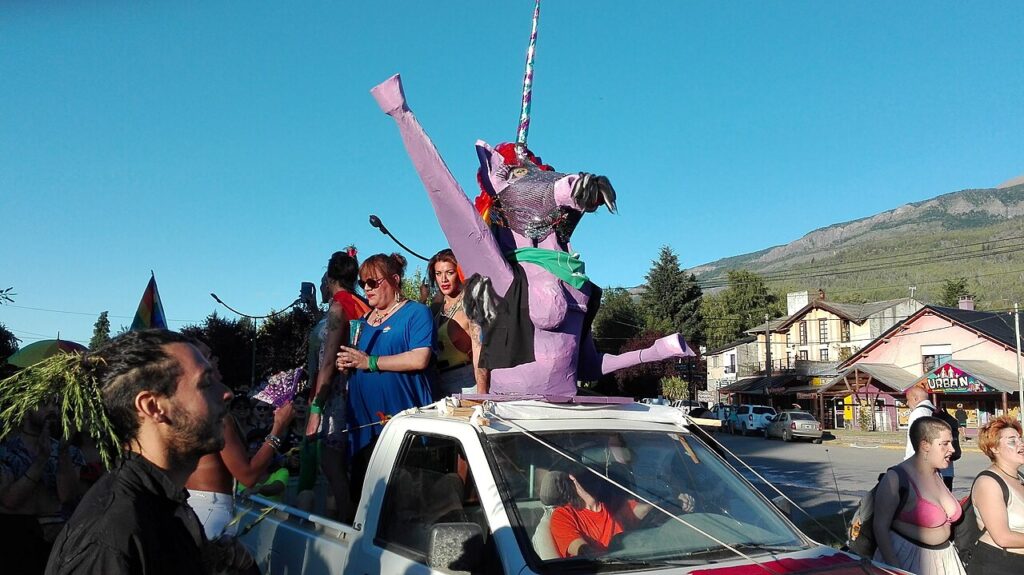
Festival de la Diversidad del Bolsón, 2019, El Bolsón, Argentina
Refuel: Where Adventurers Eat
After a full day on the rock or river, you need calories and atmosphere. Locals recommend La Cueva del Oso on Avenida Sarmiento 220, a wood-fired pizzeria that serves massive 14-inch pies for 800 ARS each. Order the Calabresa (spicy sausage and mozzarella) and pair it with a glass of local elaboración artesanal beer from the nearby brewery. The place fills up by 8 PM, so arrive at 7:30 PM to snag a table. For a lighter option, La Rueda de la Fortuna on Calle Elordi offers huge vegetarian wraps and smoothie bowls—the Quinoa Bowl with Avocado (600 ARS) is a post-climb favorite. Seasoned travelers swear by El Mercado de las Artes, a tiny eatery inside the artisan market (open Wednesdays and Saturdays). There you can grab a choripán (grilled sausage in crusty bread with chimichurri) for 300 ARS, eaten standing at a wooden counter while chatting with craftsmen. For a proper sit-down dinner, La Casa de Té on Calle Belgrano offers a fixed-price menú del día for 1,000 ARS, featuring local trout or lamb stew. The owners are climbers and will happily store your gear bag while you eat. If you need a post-adventure indulgence, the ice cream at Heladería Patagonia (Av. Sarmiento 310) uses real calafate berries and dulce de leche—try the “Calafate con Chocolate” scoop for 150 ARS.
Base Camp: Where to Stay
For adventure travelers, proximity to the trailheads matters as much as a good night’s sleep. Hostel Viñas del Sol (Calle Pioneros 45, book on Booking.com) is a climber-friendly hostel with gear storage, a drying room, and a 6:30 AM early breakfast—perfect for dawn starts. Dorm beds cost 1,200 ARS (about $3 USD) per night; private doubles are 3,500 ARS. The staff can arrange shuttles to trailheads for 500 ARS per person. Cabañas del Bosque (Ruta 19 km 12, same booking link) is a set of self-contained cabins just 300 meters from the Circuito Chico mountain bike trail. Each cabin has a wood stove, a small kitchen, and space for two people. Rates: 4,000 ARS per night (mid-season). They offer bike storage and a hose for washing muddy gear. For a splurge, Refugio Cerro Piltriquitrón is a high-mountain hut at 1,700 meters, open December to March. It’s the best base for multi-day climbing; you can sleep in a bunk (500 ARS) with a shared kitchen. You’ll need to pack in your own sleeping bag and food, but the 360-degree view at sunrise is unbeatable. Book directly through the refugio’s Facebook page or ask at the tourism office in town.
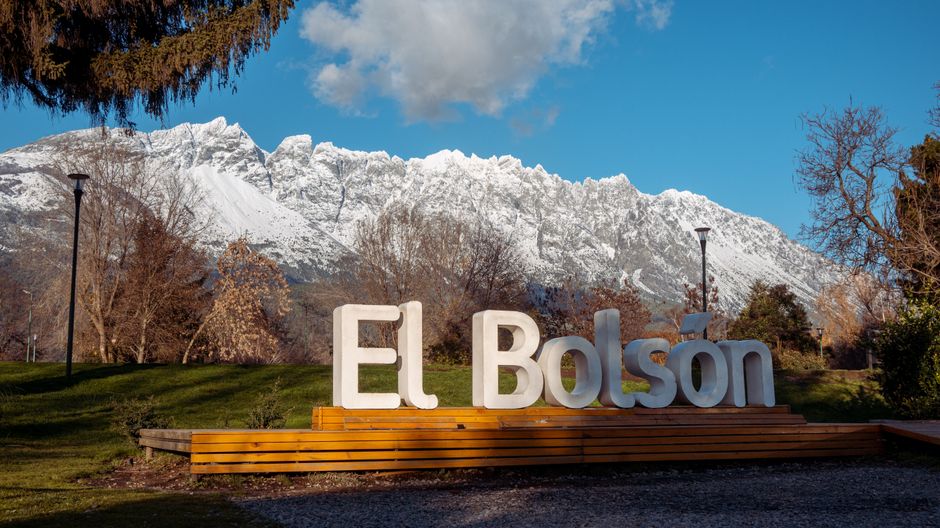
El Bolsón sign with snowcapped mountains in Patagonia, Argentina., El Bolsón, Argentina
Gear & Prep Checklist
- Lightweight climbing shoes or approach shoes – The granite can be sharp; you’ll need good rubber if you’re not using climbing shoes on less technical routes.
- Quick-dry synthetic layers and a waterproof shell – Afternoon rain showers are common from November to March; a rain jacket is non-negotiable for hiking and biking.
- Polarized sunglasses and SPF 50 sunscreen – At altitude, the UV index is extreme, especially on the glacier-fed lakes.
- At least 2 liters of water capacity per person – No potable water sources on most trails; treat stream water with tablets or a filter if you refill.
- A basic first-aid kit with blister treatment and antihistamines – The region has abundant sting-nettle plants and mosquitoes near water.
- Fitness requirement: You should be able to hike 500 vertical meters in under an hour with a pack. For climbing, comfortable lead climbing at 5.9 or above is recommended for independent routes.
Getting There & Around
- Flights: The nearest international airport is San Carlos de Bariloche (BRC), 120 km south. From Bariloche, you can take a bus (2.5 hours, 1,200 ARS) via the company Via Bariloche or rent a car. Book flights at Skyscanner.
- Local Transport: In town, colectivos (local buses) run from the central terminal to major trailheads like Cerro Piltriquitrón and Lago Puelo every hour between 7 AM and 8 PM (single ride 60 ARS). Taxis cost 300–500 ARS to nearby trails. For early starts, the hostel can arrange a remís (private car) for 400 ARS to the Piltri trailhead.
- Best Season: October 15 to April 15 (spring through mid-autumn). The weather is most stable in December and January (average 22°C/72°F), but the trails are busiest. For lower crowds and prime river flows (snowmelt), visit mid-October to November or March.
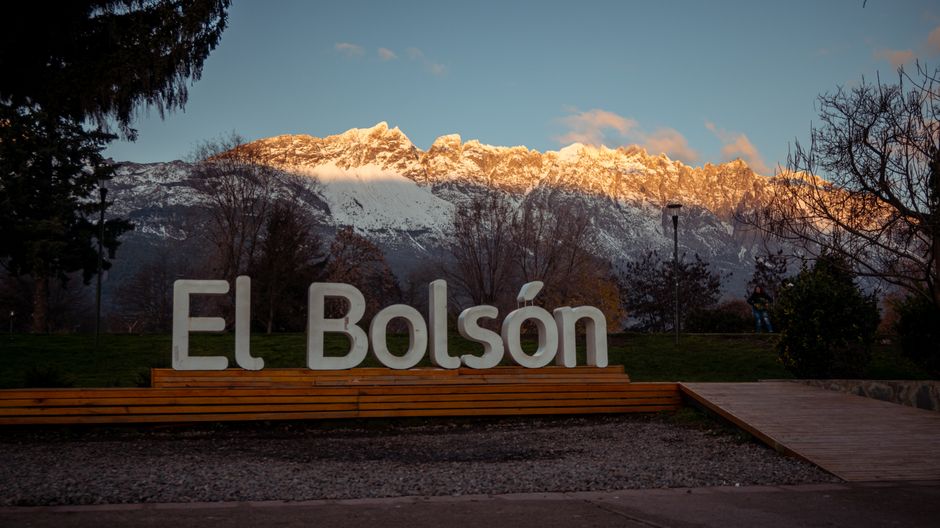
Breathtaking view of El Bolsón sign with backdrop of snow-capped mountains …, El Bolsón, Argentina
Is El Bolsón, Argentina Worth It?
Absolutely—if your idea of a vacation is earning your views through sweat and adventure. El Bolsón offers a more intimate, less commercial experience than Bariloche, with world-class granite climbing, wild rivers, and a laid-back mountain town vibe. You won’t find luxury lodges or après-ski glamour; instead you get friendly hostels, family-run guide services, and empty trails that feel like a discovery. The costs are a fraction of what you’d pay in the Alps or even in other Patagonian hubs. Where else can you climb a 7-pitch route for less than $10? The only downside: the weather can turn quickly, and you need to be prepared for wind and sudden cold. But that’s part of the charm. If you’re a seasoned outdoor enthusiast who values authenticity over comfort, El Bolsón is not just worth it—it’s the kind of place you’ll come back to year after year. Start planning your trip now—book your flights, grab your gear, and get ready to discover the adventure capital of Argentine Patagonia.

