
Where History Breathes: Tarsus, Turkey’s Silent Epicenter of Faith, Power, and Identity (2026)
In the summer of 41 BC, Cleopatra VII sailed up the Cydnus River on a golden barge, her sails perfumed with incense, her rowers striking silver oars, to meet Mark Antony in the city that would seal their alliance. That city was Tarsus. You’ll still feel the weight of that moment when you walk the streets today—a place where empires collided and a tentmaker named Saul of Tarsus was transformed into the Apostle Paul, forever changing the course of Western faith.
The Story Behind Tarsus, Turkey
Tarsus wasn’t always a quiet southern Turkish town. In fact, travelers often discover that this city was already ancient when Rome was still a village. Founded by the Hittites around 1600 BC, Tarsus flourished as a hub of the Neo-Hittite kingdom, then fell under Assyrian, Persian, and eventually Hellenistic control. By the 1st century BC, it had become a center of Stoic philosophy, home to the renowned Athenodorus, who tutored Augustus himself. Locals will tell you with pride that Tarsus rivaled Athens and Alexandria as a seat of learning—Cicero once governed the province from here.
The city’s most transformative moment came around AD 5, when Saul was born in a modest house near the Cydnus. You can still visit St. Paul’s Well, a deep stone shaft in the courtyard of an Ottoman-era mosque, where tradition holds he was baptized. The Byzantines later fortified Tarsus, but it was the Arab conquests of the 7th century that turned the city into a contested frontier post. For centuries, Tarsus passed between Caliphs and Emperors like a battle-hardened chess piece. Then, in 1084, the Seljuk Turks captured it, and Tarsus began its slow transformation into the Turkish city you see today. Under the Ottomans from 1516 onward, it settled into a sleepy agricultural center, until the 20th century brought modern roads, irrigation, and a new chapter as part of the Mersin Province.
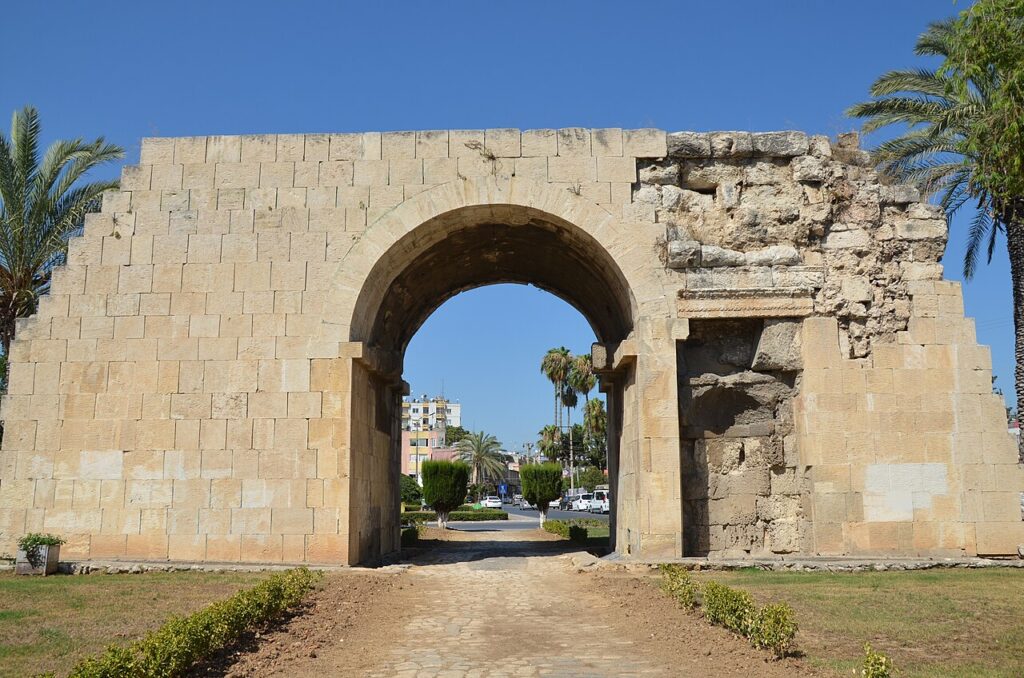
What surprises many visitors is that Tarsus was also a key battleground during the Turkish War of Independence. Mustafa Kemal Atatürk visited the city in 1923, and locals still recount his speech here, urging the nation forward. Today, the city’s past layers—Hittite, Roman, Byzantine, Arab, Seljuk, Ottoman—are written in its stone walls, its crumbling churches, and its restored caravanserais. You’ll find it all coexisting, not as museum pieces, but as lived-in spaces where families still picnic by a Roman-era bridge and boys kick footballs in the shadow of Cleopatra’s Gate.
Neighborhood by Neighborhood
Küçük Minare District
Start your exploration in the Küçük Minare neighborhood, the historic heart of Tarsus. The streets here are narrow, twisting, and often cobbled, lined with whitewashed stone houses that boast carved wooden doors and iron grilles. Your best bet is to wander without a map, letting the minarets guide you. On 72nd Street (the main artery of the old town), you’ll find the 12th-century Kırkkaşık Bedesten, a covered bazaar whose name means “forty spoons”—a reference to the caravanserai’s former role as a stop for traders eating from communal bowls. Inside, merchants sell traditional textiles, copperware, and the famous Tarsus metalwork. Don’t miss the tiny Eski Cami (Old Mosque) on the corner, originally a Byzantine church, with a cool, dark interior and a sense of profound age. Locals recommend going early morning, around 8 AM, when the light slants through the wooden balconies and the smell of fresh *simit* (sesame bread) wafts from a bakery on Kuyumcular Street. Plan to spend at least two hours getting lost here.
Şehitlik Neighborhood
A fifteen-minute walk east of the old bazaar, you’ll enter Şehitlik, a mostly residential area that feels like the city’s quiet backbone. The neighborhood is named after the Şehitlik Mosque and its surrounding cemetery, where Ottoman soldiers and local martyrs rest. This is where Tarsus’s middle-class families live, and the streets are lined with modest apartment blocks from the 1960s and 70s, interspersed with corner grocery stores and *çay* (tea) gardens. Your best experience here is to visit the Tarsus Waterfall (Tarsus Şelalesi) on the outskirts of Şehitlik—a surprising cascade dropping 15 meters into a canyon, surrounded by lush greenery. Travelers often discover that locals flock here on Fridays and weekends for picnics; you can buy fresh corn on the cob and ayran from vendors at the entrance. The waterfall is illuminated at night, and during summer nights, it’s a cool retreat from the heat. Entry is free, and the bridge crossing the canyon offers a panoramic view of the entire neighborhood climbing the hillside.
Yeni Mahalle (New Quarter)
For a taste of Tarsus’s modern soul, head to Yeni Mahalle, the sprawling newer district east of the railway line. This is where you’ll find Tarsus’s university (Çağ University), shopping malls like Tarsus Forum, and the main boulevard—Mersin Caddesi—lined with chain cafes, banks, and modern apartment towers. It may lack the old-world charm of Küçük Minare, but Yeni Mahalle offers a window into how Tarsians live today: grabbing a *döner* dürüm at İzmirli Döner (Ada Sokak) for 80 TL, or shopping at the weekly Tuesday market (pazar) near the stadium, where farmers from the surrounding Çukurova plain sell sun-ripened tomatoes, pistachios, and fresh honey. Locals recommend the area for its bakeries—especially Baklavacı Ali Usta on Cumhuriyet Meydanı, where you can buy baklava still warm from the oven (50 TL per box). The Tarsus Museum is located here as well, a modern building housing artifacts from the Neolithic to the Ottoman era, including a rare sarcophagus of a Roman noblewoman. Entry is 15 TL, and you should allow an hour to see the mosaics and Hittite reliefs.
The Local Table: What Tarsians Actually Eat
Food in Tarsus is anchored by the bounty of the Çukurova plain—the most fertile agricultural region in Turkey. Tarsians take pride in their *humus* (not chickpea hummus, but a local dish of bulgur, tomato paste, and herbs), their *kuru köfte* (dry meatballs cooked in a clay pot), and above all, their *Tarsus tantuni*. This is the city’s iconic street food: thinly shaved beef or lamb stir-fried with onions, tomatoes, and green peppers on a flat iron griddle, then wrapped in a paper-thin lavash bread with a squeeze of lemon and a sprinkle of sumac. For the definitive experience, walk to Tantuni Kemal, a tiny shop at 1411 Sokak No: 7 in the Küçük Minare district, open daily from 11 AM until the meat runs out (usually 9 PM). A single wrap costs 60 TL, and you’ll want two. The secret, locals say, is the beef’s fat: it sizzles and caramelizes on the griddle, creating a flavor that’s addictive.

Tarsus, Cilicia, Turkey, Tarsus, Turkey
But the food culture goes beyond tantuni. You must also visit the Tarsus Pazarı (the covered market) on Hastane Caddesi, open every morning except Sunday. Here, farmers sell *cezerye* (a carrot-and-walnut confection), *sucuk* (garlicky dried sausage), and piles of *peynir* (local cheese). Wander the aisles, sample a chunk of *çökelek* (sour curd cheese), and buy a bag of fresh *şalgam* (turnip pickles) for 15 TL. The market is also where you’ll find *Mercimek Çorbası* (red lentil soup) served for breakfast in small bowls at a stand called Çorbacı Ahmet—you’ll see the line of workers and taxi drivers by 7:30 AM. For a sit-down dinner, reserve a table at Şelale Restaurant (next to the waterfall), where the menu emphasizes grilled *Adana kebab* and *beyran çorbası* (a spicy lamb and rice soup). Meals here run about 200-250 TL per person. Come hungry, and leave room for *künefe*—a shredded wheat pastry soaked in syrup with cheese, a specialty of the region.
Art, Music & Nightlife
Tarsus doesn’t have a booming nightclub scene, but its cultural life is rich in a quieter, more intimate way. The Tarsus Municipality organizes a week-long International Tarsus Festival every October, typically from the 15th to the 22nd, featuring folk dance performances, concerts by Turkish pop stars, and a massive street food bazaar along Mersin Caddesi. During the festival, the city’s Roman road—an excavated section of ancient stone slabs under glass on 45th Street—becomes a stage for live *türkü* (Turkish folk music). Travelers often discover that the most atmospheric evening is spent at the Tarsus Caravanserai (Mersin Yolu Üzeri), a restored 17th-century inn that now houses a café and art gallery. They host occasional classical *saz* (lute) performances and poetry readings, especially during Ramadan. Entry is free, but arrive by 7 PM to claim a seat in the courtyard.
For contemporary art, the Tarsus Museum has a rotating exhibition of works by local painters and sculptors in its modern wing (open 9 AM-5 PM, closed Mondays). Just outside the museum, you’ll find the work of *şeyh Edebali* inspired murals painted on old buildings, part of a municipal beautification project. If you’re seeking something more lively, head to the *çay bahçesi* tea gardens along the Cydnus River, where young Tarsians gather after dark to smoke nargile, sip tea, and talk politics. The most popular is Çınaraltı Çay Bahçesi on Atatürk Caddesi, open until 1 AM. You’ll find a mix of families and couples, and the setting—under a giant plane tree, with fairy lights strung overhead—is pure peace. For a true local secret, ask about the underground *kum plajı* (Sand Beach) at the Tarsus Waterfall; during summer nights, the city sets up lounge chairs and a stage for acoustic concerts by the cascading water. Check the municipality’s Facebook page for dates.
Practical Guide
- Getting There: Fly into Adana Şakirpaşa Airport (ADA), 40 km north of Tarsus. Turkish Airlines, Pegasus, and SunExpress operate daily flights from Istanbul (1 hour 20 min). From the airport, take the Havaş shuttle (60 TL, 45 minutes) directly to Tarsus’s central bus station (otogar). Book at Skyscanner
- Getting Around: Tarsus is walkable in its old districts. For longer distances, use the dolmuş (shared minibuses) that run along Mersin Caddesi and Gözlükule Caddesi; fares are 10 TL per ride. Taxis start at 20 TL with a meter. Bicycle rental is available at Tarsus Bisiklet Kiralama (next to the waterfall) for 50 TL per hour.
- Where to Stay: For history, stay in Küçük Minare at the boutique Şelale Otel (double rooms from 600 TL/night, with terrace overlooking the waterfall). For modern comforts, Mersin Tarsus Park Hotel in Yeni Mahalle offers rooms from 900 TL with breakfast. Check Booking.com
- Best Time: March to May and September to November are perfect—temperatures hover 20–28°C, and the city is less crowded. July and August can hit 40°C, but the waterfalls provide relief. Avoid the rainy December-February months.
- Budget: A traveler can get by on 1,200-1,500 TL per day including a mid-range hotel, two meals, one museum, and transport. Budget backpackers can do 700 TL with a hostel dorm and street food.

Aerial photo of car passing by trees, Tarsus, Turkey
What Surprises First-Time Visitors
One of the first things that catches newcomers off guard is the sheer density of history per square meter. You might round a corner and find yourself standing on a section of Roman road—complete with original stone paving and drainage channels—that’s been left exposed as a pedestrian walkway. Locals simply walk their dogs on it. The Roman road, discovered during construction in the 1990s, runs for about 100 meters beneath glass panels at 45th Street. It’s a vivid reminder that every shovelful of earth in Tarsus could yield a tomb, a column, or a mosaic. Travelers often discover that the city doesn’t “present” its history in a tidy way; you have to look for it, and that’s part of the charm.
Another surprise is the hospitality. If you look lost, a local will stop their scooter to ask if you need directions, and you might end up invited for tea in someone’s living room. Tarsians are proud of their city and eager to share stories—especially about Paul or Cleopatra. Don’t be alarmed if a shopkeeper insists you try a piece of baklava before you buy; it’s not a sales pitch, but an act of generosity. Lastly, many visitors are stunned by the greenery. Tarsus is not a dusty plains town—the Cydnus River and irrigation canals have created a lush, almost tropical microclimate. Palm trees line the riverbanks, orange groves surround the city, and the waterfall’s spray keeps the air cool and humid. It’s a refreshing surprise in a region often associated with barren landscapes.
Your Tarsus, Turkey Questions
Is Tarsus safe for solo travelers, including women?
Absolutely. Tarsus is a family-oriented, conservative but welcoming city. Street crime is extremely low, and women solo travelers report feeling safe walking during the day and evening in the old neighborhoods. The main boulevards are well-lit and patrolled. As always, dress modestly—shoulders and knees covered—when entering mosques or wandering the bazaar. You’ll attract friendly curiosity, but nothing aggressive.

Brown dragonfly perched on pink flower in close up photography during daytime, Tarsus, Turkey
How much time should I spend in Tarsus?
You can see the major historical sites—St. Paul’s Church, St. Paul’s Well, Cleopatra’s Gate, the Roman road, the Tarsus Museum, and the waterfall—in one full day. But locals recommend two days to absorb the atmosphere: use the first day for sights, the second for wandering the bazaars, tasting tantuni at three different shops, and having a lazy afternoon at a çay bahçesi. If you’re pressed, you can do Tarsus as a day trip from Adana (40 minutes by dolmuş), but you’ll miss its quiet soul.
What should I know about the religious significance of Tarsus?
Tarsus is sacred to Christians as the birthplace of St. Paul, but it’s not a pilgrimage destination on the scale of Ephesus or Cappadocia. The St. Paul Church (also called the “Christian Church of Tarsus”) is a small Byzantine-era building that functions as a museum; it holds services only on rare occasions. Nearby, the St. Paul’s Well is the place of baptism, now enclosed by a stone pavilion. Respectful dress is expected. For Muslims, the city contains the Eski Cami (Converted Church) and the Şehitlik Mosque. Tarsians of all faiths coexist peacefully, and you’ll feel no tension—only a shared pride in their city’s role in shaping world history.


Если вы намерены построить пешую прогулку по Калининграду на карте, непременно внесите в свой маршрут амалиенау — это квартал с прекрасными улицами и удивительной атмосферой, который удобно исследовать самостоятельно. Для любителей природы заслуживают внимания пустынные пляжи Калининградской области, где удастся насладиться уединённым отдыхом, но стоит помнить про время для купания и спрашивать, допустимо ли купание в море в Калининграде в интересующий вас период. Развёрнутый маршрут по Калининграду с примечательными локациями и советами смотрите здесь маршрут по калининграду .
Также рекомендую посетить кафедральный собор Калининграда — там приятно узнать немало занимательных фактов и послушать концерт органной музыки, который длится около часа. Для любителей вечерние прогулки, где бывать по вечерам в Калининграде — дело несложное, здесь полно уютных мест с кафе и живописными улицами. Если вам любопытно, как доехать на форта 11 Калининград автобусом или автомобилем, а также что осмотреть в Правдинске или Черняховске — данные локации великолепно подойдут для поездок в выходные.