
Tari, Papua New Guinea Weekend: Spirit Dances, Highland Markets & The Heart of the Huli (2026)
The first light cuts through the mist clinging to the Tari Basin, revealing a tapestry of impossibly green valleys. The air is cool and carries the distant, rhythmic chant of men preparing for a sing-sing, a sound that is both ancient and thrillingly alive. By mid-morning, the scent of sweet potato roasting over open fires mingles with the earthy perfume of damp soil and vibrant bird-of-paradise flowers. This is not a place you simply visit; it’s a world you step into, where time is measured in generations and identity is worn proudly on the body.
Quick Facts Before You Go
- Best Months: May to October during the drier “koki” season. Trails are passable, skies are clearer, and major cultural festivals are often held.
- Currency: Papua New Guinea Kina (PGK). 1 PGK ≈ 0.27 USD. Cash is king; bring clean, un-torn bills.
- Language: Huli is the local language. Tok Pisin (Pidgin) is the lingua franca. Basic English is understood in guesthouses and by guides, but not widely spoken in villages.
- Budget: $150-$300 USD per day. Costs are high due to remoteness. This covers a basic guesthouse, guide fees, meals, and cultural contributions.
- Getting There: Fly to Port Moresby (POM) from major hubs like Brisbane or Singapore. Then, take a domestic flight on Air Niugini or PNG Air to Tari (TIZ). The flight from Port Moresby is about 1 hour. Book at Skyscanner
Day 1: Immersion in the Wigmen’s World
You start the morning with a strong, local coffee on the veranda of your lodge, watching the mist burn off the mountains. Today is about understanding the iconic Huli Wigmen, the most famous of PNG’s highlands cultures. Your local guide, likely a Huli man himself, arrives not just to lead, but to translate—both language and custom. The day feels less like a tour and more like a carefully granted audience.
- Morning (8-11am): Visit a Huli wig school at a nearby clan ground. This is a sacred space for unmarried men. For a cultural contribution (around 50-100 PGK per person), you’ll witness the meticulous, months-long process of growing and shaping the iconic ceremonial wigs using human hair, clay, and ancestral patterns. You’ll learn the meaning behind the ochre, yellow, and red face paint.
- Lunch: Enjoy a packed lunch provided by your lodge—often fresh local greens, roasted sweet potato (kaukau), and perhaps grilled river fish. Eat amidst the stunning scenery, a simple meal that tastes profound in this setting.
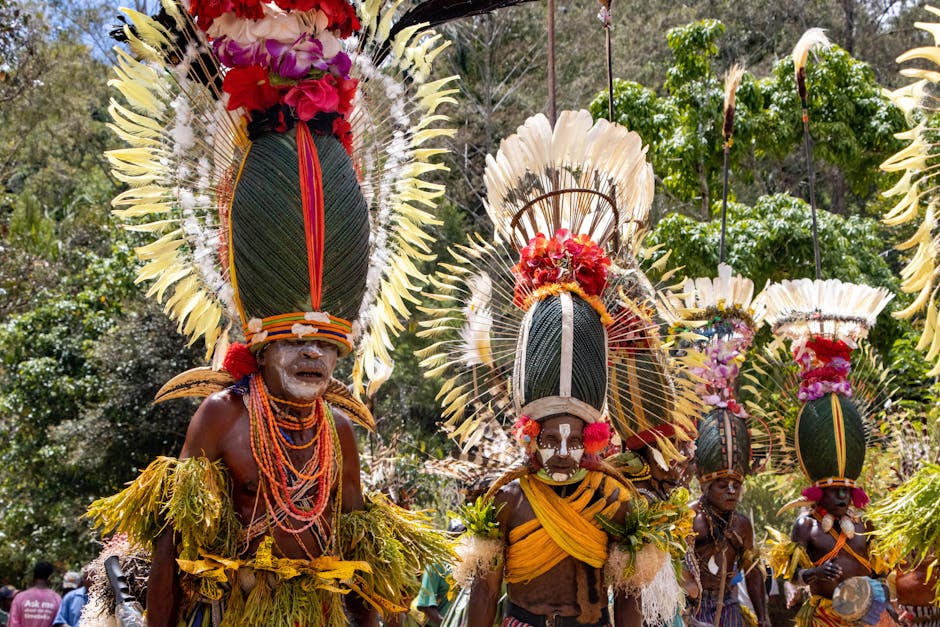
- Afternoon (1-5pm): Journey to a traditional homestead. See the distinct men’s and women’s houses, understand the kinship system, and observe daily life. Later, with prior arrangement, you may witness a mini sing-sing. The thunder of kundu drums, the dazzling array of feathers (from birds-of-paradise and cassowaries), and the powerful, synchronized dancing is an unforgettable spectacle. A respectful contribution to the community (200-400 PGK as a group) is expected and vital.
- Evening: Dinner back at your lodge is a communal affair—a hearty stew or a “mumu” (food cooked in an underground oven) if you’re lucky. The evening is for reflection, sharing stories with other travelers, and listening to the chorus of the highland night.

Colorful festival parade featuring participants in traditional attire and h…, Tari’s Culture, Papua New Guinea
Day 2: Market Life & Artistic Legacy
The pace shifts today from deep ceremony to vibrant commerce and craft. Saturday is market day in Tari, the social and economic heartbeat of the region. The energy is palpable, a colorful, bustling contrast to yesterday’s solemn traditions. It’s a chance to see the culture in motion, to engage and support local artisans directly.
- Morning: Dive straight into the Tari Market. Go early (by 7:30am) to see it come to life. Before browsing, fuel up with a local breakfast: try a “scone” (a dense, fried dough bread) and a banana, sold by women at the market entrance for about 5 PGK.
- Midday: This is the main attraction. The market is a sensory overload in the best way. You’ll find not just produce, but an incredible array of bilums (hand-woven string bags), traditional axes, shell jewelry, and bundles of rare feathers. Your insider tip? The best handicrafts are often found not in the central stalls, but carried by people from remote villages. Be prepared to bargain gently but fairly.
- Afternoon: Visit a local bilum weaver in her home. Watching the intricate, generations-old finger-loop weaving technique is mesmerizing. Each pattern tells a story of clan, place, or womanhood. Purchasing a bilum here (80-250 PGK depending on size/complexity) directly supports the artist. Later, take a short, guided walk to a viewpoint overlooking the basin for a final, panoramic farewell.
- Final Evening: For your last meal, your lodge will prepare a special dinner. Request to try the Highlands staple, kaukau na pik (sweet potato and pork), if available. Sit under a blanket of stars, the distant glow of village fires punctuating the darkness, and appreciate the profound connection to land and lineage you’ve just witnessed.

A senior woman stands smiling amidst vibrant traditional Papua New Guinean …, Tari’s Culture, Papua New Guinea
The Food You Can’t Miss
Gastronomic tourism here is about authenticity, not fine dining. The highland diet is hearty, earthy, and centered on what the land provides. The staple you will eat at every meal is the kaukau (sweet potato), roasted in its skin until caramelized and smoky. It’s the carbohydrate backbone of life here.
For protein, look for river fish (like carp) grilled simply over fire, or the celebratory mumu. A mumu is a feast: layers of meat (pork or chicken), greens, and kaukau are placed on hot stones in a pit, covered with banana leaves and soil, and left to steam for hours. The result is incredibly tender, infused with a smoky, herbal fragrance. If your lodge offers a mumu night, don’t miss it; it’s a culinary and cultural event costing around 60-80 PGK per person.
Your street food is the market fare. Beyond the morning scones, look for roasted corn or bunches of tropical fruit like marita (highland pandanus) or pitpit (a local asparagus-like shoot). For a true local experience, your one restaurant-style recommendation is the dining room of your own lodge (like the Tari Airport Lodge or Ambua Lodge). They prepare safe, tasty, and authentic meals—like a simple chicken and rice stew or tinned fish with greens—for 40-70 PGK, using the freshest local ingredients they can source.

Dancers in traditional Papuan attire performing under night lights in Jayapura, Tari’s Culture, Papua New Guinea
Where to Stay for the Weekend
Accommodation in Tari is functional and focused on the cultural experience. There are no luxury resorts, but there are places with immense heart and stunning settings.
Near the Airstrip/Tari Town: This is your most practical and budget-friendly base. The Tari Airport Lodge offers basic, clean rooms with shared facilities. You’re close to the market and it’s a hub for arranging guides. Expect to pay 150-250 PGK per night. It’s no-frills but full of character and fellow adventurers.
In the Surrounding Valleys: For a more immersive, eco-conscious stay, Ambua Lodge, about a 45-minute drive from Tari, is legendary. Perched on the edge of the Tari Basin, its traditional-style bungalows offer breathtaking views. It includes guided cultural tours in its rates. This is a significant investment at 600-900 PGK per person per night, but for many, the location and curated access are worth it. For local guesthouses, booking is almost always direct via phone or email; check Booking.com for Ambua Lodge and Airbnb for very rare local listings, but manage expectations.
Before You Go: Practical Tips
- Getting Around: You cannot explore independently. Hire a local guide and vehicle (4WD) through your lodge for the entire weekend. This is non-negotiable for safety, respect, and access. Cost is 300-600 PGK per day for the vehicle and guide combined, split among your group.
- What to Pack: 1) Sturdy, waterproof hiking boots for muddy trails. 2) A quality rain jacket—weather changes instantly. 3) Small denomination kina notes (5, 10, 20) for market purchases and cultural contributions. 4) Modest, respectful clothing that covers shoulders and knees, especially for women.
- Common Tourist Mistakes: 1) Photographing people without explicit permission. Always ask, and be prepared to pay a small fee (5-20 PGK) for portraits. It’s a transaction, not a right. 2) Touching a Huli man’s wig or accessories. They are sacred items. Observe with your eyes, not your hands.
- Money-Saving Tip: Travel in a small group of 3-4. This allows you to split the substantial fixed costs of guide and vehicle hire dramatically, easily saving each person 30-40% on daily logistics compared to traveling solo or as a couple.

