
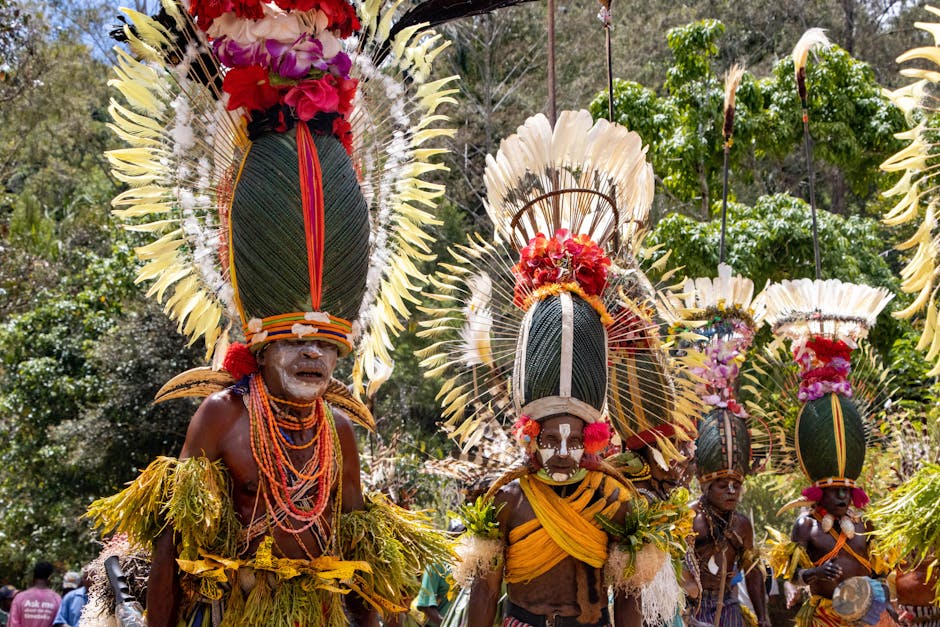
Tari, Papua New Guinea: Culture, Birds & Untouched Highlands (2026)
Ask locals about Tari’s Environment, Papua New Guinea, and they’ll tell you about the morning mist that cloaks the 2,500-meter-high valleys, revealing a landscape where over 50% of the country’s bird species thrive. Most guidebooks miss this completely, focusing instead on coastal PNG. Here, the air is crisp, the mud is sacred, and the rhythm of life is set by the legendary Huli Wigmen, one of the world’s most visually striking cultures. This isn’t a curated tourist stop; it’s a living, breathing immersion into a highland world that operates on its own ancient terms.
Why Tari’s Environment, Papua New Guinea Stands Out
- Historic Architecture: The traditional Huli “haus man” (men’s house), built from forest materials using techniques unchanged for centuries, serves as the community’s political and spiritual center.
- Cultural Scene: The annual Huli Wigmen Festival, a gathering where clans showcase elaborate wigs made from human hair, vibrant body paint, and mesmerizing sing-sings (ceremonial dances).
- Local Specialties: “Mumu,” a feast where pork, sweet potatoes, and greens are slow-cooked with hot stones in a pit oven, creating uniquely smoky, tender flavors.
Pro Tip: Your absolute best window for visiting is during the drier months from May to October. Not only are the hiking trails passable, but this period also coincides with major cultural shows. For the most authentic experience, plan your trip outside of the large, scheduled festivals in August; visiting in June or September often means you can witness smaller, more spontaneous village sing-sings without the crowds.
Map of Tari’s Environment, Papua New Guinea
Use these interactive maps to explore Tari’s Environment, Papua New Guinea and plan your route:
📍 View Tari’s Environment, Papua New Guinea on OpenStreetMap
🗺️ Open Tari’s Environment, Papua New Guinea in Google Maps
Planning Your Trip: Practical Essentials
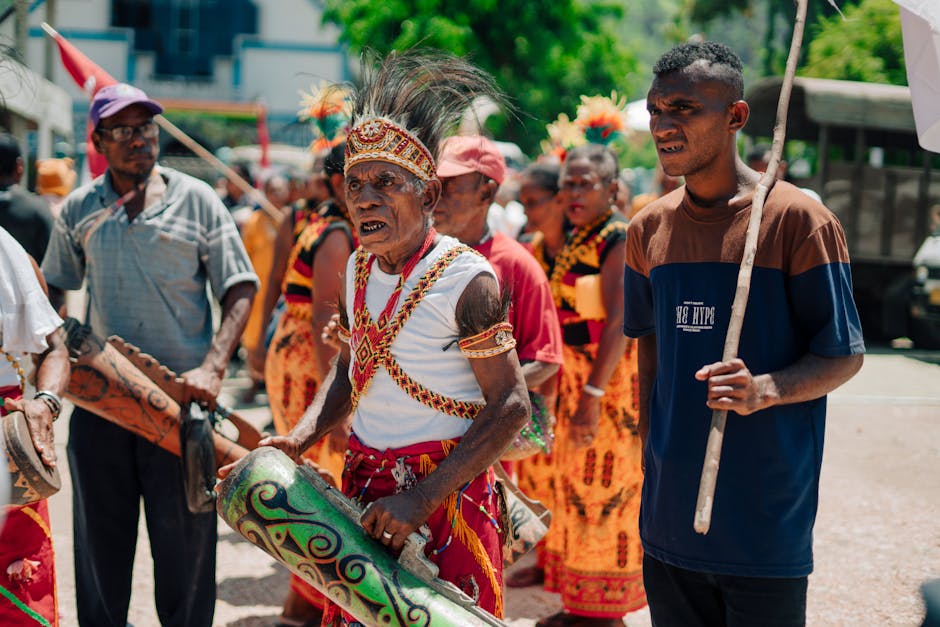
Vibrant cultural parade featuring traditional Papua costumes and instruments., Tari’s Environment, Papua New Guinea
Getting There and Around
- By Air: You will fly into Tari Airport (TIZ) via Air Niugini or PNG Air from Port Moresby (PMD) or Mount Hagen (HGU). Flights are weather-dependent and book up fast. Book flights at Skyscanner for best deals, but confirm directly with the airline.
- By Train: There are no train services in the Papua New Guinea highlands; air travel is the only viable option for reaching Tari.
- By Car: Driving is not recommended for visitors. The Highlands Highway is challenging and conditions can be dangerous. All transport within Tari is via 4WD vehicles arranged through your lodge or guide. Compare car rentals at RentalCars.com for other parts of PNG, but not for Tari.
- Local Transport: Your feet and pre-arranged 4WD transfers are your transport. There is no public bus system. Travelers must hire a local guide with a vehicle for all excursions; this is non-negotiable for safety and cultural protocol.
Best Time to Visit
The climate in Tari is cool and tropical highland. The defining factor is rainfall, not temperature, which dictates accessibility and cultural activity.
| Season | Weather | Highlights |
|---|---|---|
| Dry Season (May-Oct) | Sunny mornings, afternoon showers. 18°C – 25°C (64°F – 77°F). | Prime trekking, major festivals (like August show), reliable flights. Peak season for visitors. |
| Wet Season (Nov-Apr) | Heavy, daily rain. Muddy trails. 17°C – 24°C (63°F – 75°F). | Lush, dramatic scenery, very few tourists. Flights are frequently cancelled and travel is difficult. |
| Shoulder (Late Apr/Oct-Nov) | Transitional weather, less predictable. | Potential for good conditions with fewer visitors, but be prepared for rain. |
Budgeting for Tari’s Environment, Papua New Guinea
| Category | Budget | Mid-range | Luxury |
|---|---|---|---|
| Accommodation | Homestay: ~150 PGK/night | Local Lodge: 400-600 PGK/night | Ambilodge Tari: 800+ PGK/night |
| Meals | Market food & lodge meals: 50-80 PGK | Included in most lodge rates | Included in luxury lodge rates |
| Transport | Guide/4WD hire (shared): 200 PGK/day | Private guide/4WD: 400-600 PGK/day | Private charter flights & vehicle: 2000+ PGK/day |
| Activities | Village entry fees: 20-50 PGK | Guided day treks: 100-200 PGK | Multi-day wilderness expeditions |
| Daily Total | ~420-480 PGK | ~900-1400 PGK | 3000+ PGK |
Note: 1 USD ≈ 3.8 PGK (Papua New Guinea Kina). Almost everything must be pre-booked and paid as a package.
Top Attractions and Must-See Sights

Explore the lush tropical beauty of Salamaua’s coastline with sandy beaches…, Tari’s Environment, Papua New Guinea
| Attraction | Description | Hours | Entry Fee |
|---|---|---|---|
| Huli Wigmen Cultural Immersion | Spend a day with the iconic Huli Wigmen, learning about wig cultivation, traditional paint, and weaponry. | By arrangement, typically morning | ~150-200 PGK per person |
| Tari Basin Trekking | Guided walks through stunning valleys, bird-of-paradise lek sites, and remote villages. | Daylight hours, guide-dependent | Guide fee + 20-50 PGK village fee |
| Lake Tagali (Tagali Aunde) | A serene highland lake surrounded by forest, perfect for birdwatching and photography. | All day | Free, but guide required for access |
| Local Market (Tari Town) | A vibrant weekly market where Huli people trade produce, crafts, and socialize. | Weekends, morning till early afternoon | Free to browse |
3-Day Itinerary: Highlights & Hidden Gems of Tari’s Environment, Papua New Guinea
Day 1: Immersion in Huli Heartland
- Morning (7-9 AM): After an early breakfast, your guide will take you to a Huli clan ground. You’ll witness the meticulous application of ochre, yellow, and white clay body paint—a process that can take over an hour. Listen for the stories each pattern tells.
- Afternoon (12-3 PM): Participate in a traditional “mumu” preparation or watch a demonstration of arrow-making. Enjoy a lunch of the mumu feast, featuring pork and kaukau (sweet potato), at the village. The smoky, earthy flavor is unforgettable.
- Evening (6-8 PM): Return to your lodge. After dinner, sit with your guide and learn about the complex Huli clan system and “bride price” traditions over a cup of local tea.
Day 2: Birds & Highland Trails
- Morning (5:30 AM start): An early 4WD ride (~50 PGK fuel contribution) to a known bird-of-paradise lek. With patience, you may spot the magnificent Raggiana or the elusive King of Saxony bird-of-paradise performing its courtship dance as the mist clears.
- Afternoon: Trek from the birding site towards Lake Tagali (2-3 hour moderate walk). Your guide will point out medicinal plants and hidden orchids. Pack a picnic lunch provided by your lodge.
- Evening: Enjoy a relaxed dinner at your lodge. If there’s a spontaneous village sing-sing (ceremonial dance), your guide may arrange a visit—these impromptu events are often more authentic than large shows.
Day 3: Market Life & Farewell
- Morning: If it’s a market day, head into Tari town. It’s a sensory overload of colors, sounds, and smells. Observe the social hub in action. You can buy simple crafts (bargain politely), but remember, many items like wigs and ceremonial axes are not for sale.
- Afternoon: Visit a local school or a women’s handicraft group to see bilum (string bag) weaving. This supports the community directly. Enjoy a final lunch at your lodge.
- Evening: Depending on your flight, this is a time for reflection and farewells. Tip your guide and driver (see etiquette section) to express your gratitude for their invaluable knowledge and access.
Cultural Insights & Etiquette
- Language: Tok Pisin is the lingua franca. Key phrases: “Tenkyu” (Thank you), “Moning” (Good morning), “Mi laik baim dispela” (I would like to buy this). Most guides speak English.
- Customs: Always ask permission before taking photographs of people. A nod or smile is not consent; wait for a clear “yes.” Do not touch a Huli man’s wig—it is sacred. Walk behind, not in front of, someone engaged in a ritual.
- Tipping: Not a traditional custom, but highly appreciated for good service. For a guide, 50-100 PGK per day is a generous gesture. For lodge staff, a collective tip left at reception is best.
- Dress Code: Modesty is key. Women should wear skirts or dresses below the knee (no trousers in villages). Men should avoid shorts in villages. Everyone should have a rain jacket and sturdy, muddy shoes.
- Business Hours: Government hours are Mon-Fri, 8 AM-4 PM. Villages operate on daylight and subsistence rhythms. The market is busiest on weekend mornings.
Where to Eat: The Best Bites in Tari’s Environment, Papua New Guinea

A beautiful aerial view of Port Moresby at sunrise, Tari’s Environment, Papua New Guinea
Dining in Tari is almost exclusively tied to your accommodation. There are no independent restaurants. Meals are hearty, featuring local staples like kaukau (sweet potato), taro, rice, greens (kumu), and protein from chicken, pork, or freshwater fish. The culinary highlight is the “mumu,” a must-experience event.
Must-Try Local Specialties
- Mumu: The definitive highland feast. Pork, sweet potato, and greens are layered with hot stones in a pit, covered with banana leaves and earth, and steamed for hours. Your lodge can arrange one with 24 hours’ notice.
- Kaukau na Pis (Sweet Potato & Fish): A simple, common meal of roasted sweet potato served with grilled freshwater fish from local streams.
- Bilum Bilong Kai (Food in a Bilum): Not a dish, but a way of life. You’ll see locals carrying their market produce or personal items in beautifully woven bilum bags. Consider buying one as a sustainable souvenir.
Restaurant Recommendations by Budget
| Type | Restaurant | Specialty | Price Range |
|---|---|---|---|
| Lodge Dining | Your Accommodation’s Dining Room | All meals are provided here. Typically buffet or set-menu style with Western and local options. | Included in room rate |
| Community Meal | Village-Hosted Mumu | The authentic, smoky pit-cooked feast, shared communally. | ~100-150 PGK per person (arranged as activity) |
| Market Snack | Tari Town Market Stalls | Roasted kaukau, fresh tropical fruit (pineapple, passionfruit), and boiled peanuts. | 5-15 PGK per item |
Where to Stay
Accommodation is basic but comfortable, focusing on functionality and cultural access over luxury. All bookings should be made as part of a package that includes guides, meals, and transfers. Compare prices and book at Booking.com for some options, but direct booking via email with the lodges or through a specialized PNG tour operator is often more reliable.
Best Neighborhoods for Accommodation
- Near Tari Town: Offers easier access to the market and airstrip. Lodges here, like the Tari Lodge, are functional. You’ll rely entirely on 4WD to reach villages. Best for travelers wanting a central base.
- Outskirts & Valley Locations: Lodges like the Ambilodge Tari are situated in more scenic, quiet valleys. You wake up to bird calls and mountain views, but are further from the airstrip (a 30-minute drive). This is the choice for immersion in nature.
- Village Homestay: For the most profound cultural experience, a basic homestay can be arranged. Conditions are very simple (shared facilities, no electricity), but the connection is unparalleled. This suits adventurous, flexible travelers.
FAQs: Your Tari’s Environment, Papua New Guinea Questions Answered
1. Is Tari’s Environment, Papua New Guinea safe at night?
Safety in Tari is highly dependent on having a trusted local guide. You should not walk around alone, especially after dark. Tribal tensions exist, but they are between clans and do not target tourists who are with a respected guide. Your lodge compound is secure. Always follow your guide’s advice explicitly.
2. What currency is used and are credit cards accepted?
The currency is the Papua New Guinea Kina (PGK). You must bring enough cash in small denominations (5, 10, 20, 50 PGK notes) to cover village fees, market purchases, and tips. Credit cards are NOT accepted anywhere in Tari. There are no ATMs. Get all your cash in Port Moresby before flying in.
3. How do I get from the airport to my lodge?
This is a critical pre-arrangement. Your lodge will send a 4WD vehicle to meet you at Tari Airport (TIZ). The transfer is included in your package. There are no taxis. Confirm this pickup in writing before you travel. Book airport transfers at GetYourGuide for other destinations, but not for Tari—arrange this locally.
4. Do I need to speak the local language?
No. Your guide will be your translator and cultural interpreter. Learning a few Tok Pisin phrases (like “tenkyu” – thank you) is a sign of respect that will delight locals. English is understood by guides and some younger people in villages.

