
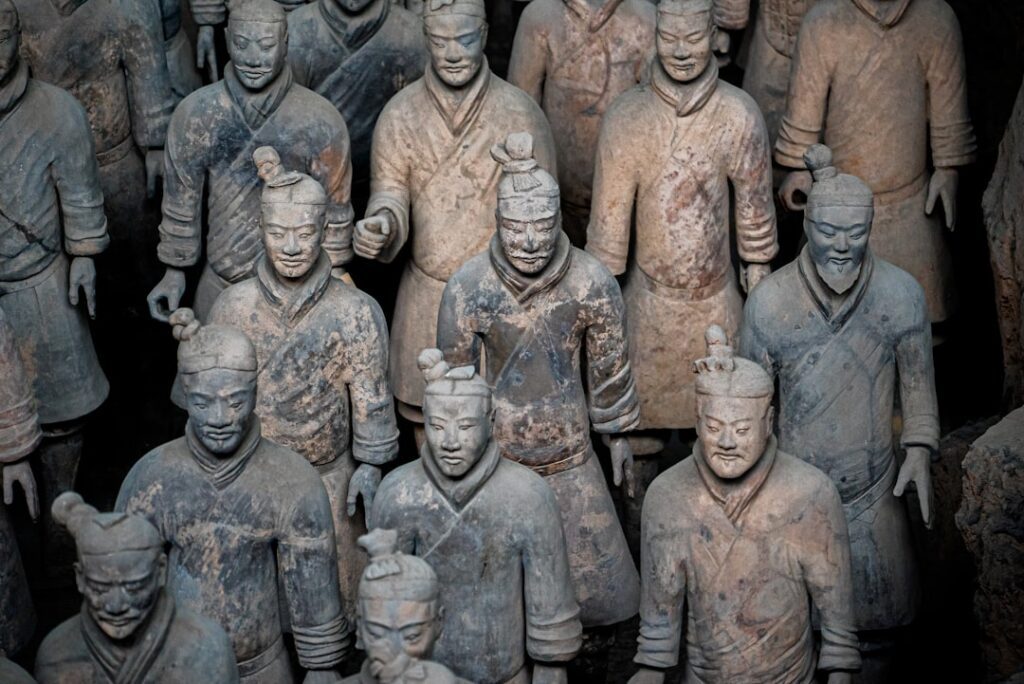
Xi’an, China’s Hidden Terracotta Warriors, Ancient Walls & Silk Road Flavors (2026)
At 8:00 AM, the morning sun hits the 14th-century Bell Tower, casting long shadows across a city that has served as the capital for 13 dynasties. The scent of cumin and sizzling lamb from nearby Muslim Quarter food stalls begins to fill the air, mixing with the sound of bicycle bells on the 600-year-old city wall. This is Xi’an, where the ancient Silk Road begins and where 8,000 life-sized clay soldiers have stood guard for over 2,200 years, waiting for your discovery.
Why Xi’an, China Stands Out

Brown wooden house, Xi’an, China
- Historic Architecture: The 13.7-kilometer Ming Dynasty City Wall, built in 1370, is the most complete ancient fortification left in China, offering a unique cycling path around the entire historic center.
- Cultural Scene: The annual Xi’an International Silk Road Festival in September transforms the city with music, dance, and food celebrating its legacy as the eastern terminus of the ancient trade network.
- Local Specialties: You must try Yangrou Paomo, a hearty lamb stew where you break flatbread into thumb-sized pieces before the broth is poured over it—a culinary ritual dating back to the Tang Dynasty.
Pro Tip: Visit the Terracotta Warriors Museum right at 8:30 AM opening or after 3:00 PM. Midday sees massive tour bus crowds, but these times offer relative peace. For the city wall, rent a bicycle in the late afternoon to catch the golden hour light without the midday heat.
Map of Xi’an, China
Use these interactive maps to explore Xi’an, China and plan your route:
📍 View Xi’an, China on OpenStreetMap
🗺️ Open Xi’an, China in Google Maps
Planning Your Trip: Practical Essentials
Getting There and Around
- By Air: Xi’an Xianyang International Airport (XIY) serves over 70 domestic and international airlines. The airport metro Line 14 takes 45 minutes to the North Railway Station for ¥16. Book flights at Skyscanner for best deals.
- By Train: The high-speed rail network connects Xi’an to Beijing (4.5 hours), Shanghai (6 hours), and Chengdu (3 hours). The Xi’an North Railway Station is a modern hub. Reserve tickets at Trainline or the national railway website.
- By Car: Driving in the city center is challenging due to traffic and restrictions. Your best bet is to rent a car for day trips to Mount Hua or the Hukou Waterfall. Compare car rentals at RentalCars.com.
- Local Transport: The metro system is efficient, clean, and covers most tourist sites (¥2-8 per ride). Taxis start at ¥8.5. The “Chang’an Tong” transportation card offers discounts but requires a ¥18 deposit. For the city wall and Bell Tower area, walking is often fastest.
Best Time to Visit
Spring and autumn deliver near-perfect conditions with mild temperatures and clear skies. Summer can be intensely hot and crowded, while winter is cold but offers stark, beautiful landscapes and minimal queues at major sites.
| Season | Weather | Highlights |
|---|---|---|
| Summer (Jun–Aug) | Hot & humid, 25°C to 38°C (77°F to 100°F) | Vibrant street life, long days; expect peak crowds and higher prices at the Warriors. |
| Winter (Dec–Feb) | Cold & dry, -5°C to 8°C (23°F to 46°F) | Atmospheric, misty visits to historical sites with very few tourists; pack warm layers. |
| Shoulder (Apr–May/Sep–Oct) | Mild & pleasant, 15°C to 25°C (59°F to 77°F) | Ideal for cycling the city wall and exploring outdoor sites; comfortable temperatures and manageable crowds. |
Budgeting for Xi’an, China

A city with a large building and a fountain in the middle, Xi’an, China
| Category | Budget | Mid-range | Luxury |
|---|---|---|---|
| Accommodation | Hostel dorm: ¥80-150/night | 3-4 star hotel: ¥400-800/night | 5-star (Sofitel, Hyatt): ¥1200+/night |
| Meals | Street food & noodles: ¥30-50/day | Local restaurants: ¥100-150/day | Fine dining: ¥300+/day |
| Transport | Metro/bus: ¥20/day | Taxis & occasional driver: ¥100-200/day | Private car & driver: ¥600+/day |
| Activities | City Wall (¥54), Muslim Quarter (free) | Terracotta Army (¥120), Big Goose Pagoda (¥50) | Private guided tours, Tang Dynasty Show VIP seats |
| Daily Total | ¥200-350/day | ¥700-1200/day | ¥2500+/day |
Top Attractions and Must-See Sights
| Attraction | Description | Hours | Entry Fee |
|---|---|---|---|
| Terracotta Warriors Museum | See the 2,200-year-old army of Emperor Qin Shi Huang, with thousands of unique statues in three massive pits. | 8:30 AM – 6:00 PM (Mar-Nov), 8:30 AM – 5:30 PM (Dec-Feb) | ¥120 (Mar-Nov), ¥100 (Dec-Feb) |
| Xi’an City Wall | Cycle or walk along the magnificent 14th-century fortification that encloses the old city, offering superb views. | 8:00 AM – 10:00 PM (South Gate), other gates close earlier | ¥54 |
| Giant Wild Goose Pagoda | This 7-story, 64m-tall Buddhist pagoda, built in 652 AD to house sutras from India, is a symbol of the city. | 8:00 AM – 6:30 PM (Pagoda area), North Square music fountain shows at 12:00, 9:00 PM (summer) | ¥50 (Pagoda area), ¥30 to climb pagoda |
| Shaanxi History Museum | Home to over 370,000 relics from Xi’an’s dynastic past, it’s one of China’s best museums (booking essential). | 9:00 AM – 5:30 PM (Closed Mon), free tickets stop at 4:00 PM | Free (Basic Halls), ¥300 (Treasure Hall) |
3-Day Itinerary: Xi’an, China’s Highlights & Hidden Gems
Day 1: Ancient Capitals & City Walls
- Morning (8:30 AM): Start at the Shaanxi History Museum. You must book your free ticket online 1-7 days in advance via their WeChat channel—walk-ups are rarely successful. Spend 2.5 hours here.
- Afternoon (12:30 PM): Walk to the Giant Wild Goose Pagoda (20 mins). For lunch, try the vegetarian noodles at De Fa Chang restaurant nearby. Then, climb the pagoda for panoramic views.
- Evening (6:00 PM): Enter the City Wall at the South Gate (Yongningmen). Rent a bicycle (¥45 for 3 hours) and cycle the full 14km circuit as the sun sets. For dinner, head to First Noodle Under the Sun for incredible biangbiang noodles.
Day 2: The Eighth Wonder & Muslim Quarters
- Morning (7:30 AM): Take tourist bus #5 (306) from the east square of the Xi’an Railway Station (¥7, 1.5 hours) to the Terracotta Warriors. Hire the official audio guide (¥40) and visit Pit 1, then 3, then 2 to avoid the main crowd flow. Budget 3 hours.
- Afternoon (1:30 PM): Return to the city. Dive into the Muslim Quarter for lunch. Don’t miss Jia San Guan Tang Bao for soup dumplings or the famous Lao Sun Jia for your Yangrou Paomo ritual.
- Evening (7:30 PM): See the Bell and Drum Towers illuminated at night (view from the square is free). Cap the night with a performance of the “Tang Dynasty Music and Dance Show” at the Shaanxi Grand Opera House (¥280-580).
Day 3: Calligraphy, Culture & Local Life
- Morning (9:00 AM): Explore the Forest of Stelae Museum (¥65), a stunning collection of 3,000 ancient stone tablets. Then, wander through the Shuyuanmen (Calligraphy Street) for traditional arts and souvenirs.
- Afternoon (1:00 PM): Have lunch at Chun Fa Sheng, a century-old restaurant known for its dumpling banquet. Then, visit the Xi’an Beilin Museum (included in Stelae ticket) for more quiet historical contemplation.
- Evening (5:30 PM): For a local experience, join the evening exercise crowds in Xingqing Palace Park. Your final dinner should be hot pot—Haidilao is famous for its service, but Xiangeqing offers a more local flavor.
Cultural Insights & Etiquette
- Language: Mandarin is key. Learn “Ni hao” (Hello), “Xie xie” (Thank you), and “Duo shao qian?” (How much?). In the Muslim Quarter, you’ll hear dialects and see Arabic script.
- Customs: When visiting temples or pagodas, moderate your voice and dress respectfully. A slight nod is a common greeting. Avoid direct criticism; polite indirectness is valued.
- Tipping: Not expected or practiced in most situations. High-end hotels and tour guides may accept tips, but it’s not mandatory.
- Dress Code: Comfortable walking shoes are non-negotiable. For religious sites, cover shoulders and knees. Winters require serious thermal layers.
- Business Hours: Major attractions open 8:00 AM-6:00 PM. Government museums close Mondays. Shops in the Muslim Quarter often stay open until 11:00 PM.
Where to Eat: Xi’an, China’s Best Bites
Xi’an’s cuisine is a hearty, wheat-based legacy of the Silk Road, famous for noodles, breads, and lamb. The Muslim Quarter (Huimin Jie) is the epicenter of street food, but savvy travelers also explore the smaller lanes off it for more authentic, less touristy stalls.
Must-Try Local Specialties
- Yangrou Paomo: The iconic lamb stew. You break the bread yourself at your table. For the best, locals swear by Tong Sheng Xiang on Xiyang Shi.
- Biangbiang Noodles: Extra-wide, belt-like noodles served with chili oil, meat sauce, and vegetables. First Noodle Under the Sun near the South Gate is a classic.
- Roujiamo: Often called a “Chinese hamburger,” it’s shredded meat stuffed in a flatbread. Zheng Da Long in the Muslim Quarter has been perfecting it for generations.
Restaurant Recommendations by Budget
| Type | Restaurant | Specialty | Price Range |
|---|---|---|---|
| Budget | Jia San Guan Tang Bao (Muslim Quarter) | Incredible beef soup dumplings (灌汤包) | ¥20-40 per person |
| Mid-range | De Fa Chang (Near Bell Tower) | Legendary dumpling banquets and local dishes | ¥80-150 per person |
| Fine dining | Qing Zhen Guan (Inside Westin Hotel) | Upscale, halal interpretations of Shaanxi cuisine | ¥300+ per person |
Where to Stay
Staying inside the city walls puts you within walking distance of major sites and the Muslim Quarter. The area south of the wall is more modern with business hotels. For a quieter, cultural vibe, look near the Big Wild Goose Pagoda. Compare prices and book at Booking.com or Airbnb for apartments.
Best Neighborhoods for Accommodation
- Inside the City Wall (Bell Tower Area): The most central and lively location, perfect for first-time visitors who want to be steps from history, food, and transport. Can be noisy at night.
- South of the City Wall (Shunan Area): More modern, with a great selection of 4-5 star hotels, shopping malls, and easy metro access. Better for travelers seeking comfort and convenience.
- Near Big Wild Goose Pagoda: A cultural zone with beautiful parks, museums, and a slightly more relaxed pace. Excellent for families and those interested in Tang Dynasty history.

A view of a wall with flags and buildings in the background, Xi’an, China
FAQs: Your Xi’an, China Questions Answered
1. Is Xi’an, China safe at night?
Xi’an is generally very safe. The areas around the Bell Tower and Muslim Quarter are well-lit and busy until late. As in any major city, practice basic caution with your belongings in crowded places. Solo travelers, including women, commonly report feeling secure.
2. What currency is used and are credit cards accepted?
The Chinese Yuan (CNY or RMB) is the currency. While major hotels, upscale restaurants, and chain stores accept international credit cards (Visa/Mastercard), cash is king for street food, small shops, taxis, and most local restaurants. Have WeChat Pay or Alipay set up if possible, as they are ubiquitous.
3. How do I get from the airport to the city center?
Xi’an Xianyang Airport is 40km northwest. The most efficient way is the Airport Intercity Line (¥16, 45 mins) to the North Railway Station, then transfer to Metro Line 2. Airport shuttle buses cost ¥25 and go to multiple city points. A taxi will cost ¥120-150 and take 50-90 minutes depending on traffic. Book airport transfers at GetYourGuide for convenience.
4. Do I need to speak the local language?
While English is not widely spoken outside major hotels and tourist attractions, you can get by with gestures,
Related Guides
Explore more destinations similar to Xi’an:
- Tchirozérine, Niger: Hidden Nomadic Heritage, Aïr Mountain Trails & Ancient Saharan Trade (2025)
- Prambanan, Indonesia’s Best Temples, Legends & Volcanic Vistas (2026)
- Wroclaw’s Ultimate Bridges, Gnomes & Bohemian Charm (2025)
- Puntarenas, Costa Rica’s Hidden Seafood, Sunsets & Gateway Adventures (2026)

