
Where Two Rivers Meet: Komárno’s Fortress of Stories (2026)
In 1663, the Ottoman Grand Vizier Ahmed Köprülü stared across the Danube at the formidable fortress of Komárno, frustrated by a garrison of just 800 defenders who held off his 60,000-strong army for two months. The walls didn’t just withstand cannon fire—they whispered centuries of defiance. Today, you’ll find those same ramparts shaded by lime trees, where locals sip coffee while river barges glide past, their wakes lapping against stones that once repelled empires.
The Story Behind Komárno, Slovakia
Komárno’s identity is written in its geography. Perched at the confluence of the Danube and Váh rivers, this town has been a gateway since Roman times when it was known as Brigetio, a key military camp. By the 13th century, Hungarian kings recognized its strategic value, and King Béla IV ordered the first stone fortress built after the Mongol invasion of 1241. What you see today, however, is largely the work of the Habsburgs—a massive 19th-century fortification system that remains one of Europe’s largest. Travelers often miss the fact that the fortress complex actually spans both sides of the Danube, with the southern “Fortress of Komárom” now lying in Hungary. This split happened after World War I, when the Treaty of Trianon (1920) carved the town in two: the larger, northern part became Komárno in Slovakia, while the southern bank became Komárom, Hungary. It’s a living lesson in border politics, where the river you cross on foot takes you between two countries, two languages, two centuries.
The town’s golden age came in the 18th and 19th centuries when it flourished as a center for river trade and grain export. Wealthy Hungarian merchants built grand neo-Baroque and Art Nouveau palaces along what is now Štefánikova Street. The city’s Jewish community thrived here, contributing to its cosmopolitan character until the Holocaust erased nearly 3,000 lives. Today, the old synagogue stands as a museum—a silent witness to both destruction and resilience. Locals still recount how the fortress served as a prison for anti-Nazi resistance fighters, and later, during the 1956 Hungarian Revolution, it became a sanctuary for refugees crossing the nearby border. Every year on October 23, you’ll see Hungarian flags and hear Hungarian spoken with a particular pride that reminds you: this town has always been a place of refuge and crossroads.
Neighborhood by Neighborhood
The Old Town: Štefánikova and the Danube Promenade
Start your exploration on Štefánikova Street, Komárno’s elegant spine. This broad, pedestrianized avenue is lined with two- and three-story buildings painted in shades of ochre, pistachio, and faded rose. You’ll notice the ornate iron balconies, the stucco flourishes of angels and garlands, and the occasional Hungarian inscription carved above doorways. The air smells of fresh kifle (crescent pastries) from the bakery at number 22, and the clatter of plates floats from sidewalk cafes where the middle table always has a chessboard. At the eastern end, you reach the Danube embankment, where you can sit on a bench and watch cargo ships from as far as the Black Sea slide past. The ferry to Hungary departs every 30 minutes (€2 per person), and many locals cross just to buy cheap Hungarian paprika or visit the thermal baths in Komárom. Don’t miss the Water Tower, a 1911 engineering marvel with a neo-Renaissance facade—it’s now a small gallery and event space, open weekends 10:00–18:00.
The Fortress District: Walking the Ramparts
Cross the bridge over the Váh River, and you’ll enter the fortress heart. The massive bastions, dry moats, and underground casemates stretch over 3.5 kilometers. Your best bet is to first visit the Fortress Museum inside the old military hospital (entrance €6, open Tuesday–Sunday 9:00–17:00). Here you’ll see a scale model that makes the scale tangible—this fort could hold 200,000 soldiers and their horses. Then walk the ramparts: the panoramic view from the Central Bastion shows the confluence of the two rivers, the historic town, and the distant Hungarian plains. Seasoned travelers prefer to visit at 5:00 p.m., when the afternoon sun gilds the brickwork and the light reflects off the Danube like hammered gold. The underground tunnels, 20 kilometers in total, are open for guided tours (€8, 45 minutes), but be prepared for narrow spaces and temperatures around 12°C even in summer. Locals warn that the tunnels host a bat colony; you’ll hear their squeaks echoing in the dark, an eerie soundtrack to history.
Nábrežie: The Riverside Village
North of the town center, Nábrežie (the Embankment) feels like a different world. Here, the Danube widens into channels and backwaters, and small, brightly painted weekend cottages dot the shore. Families gather for lazy Sunday afternoons grilling spicy sausage and chicken, while children skip stones on the shingle beaches. This is where you come to escape the fortress crowds. The waterfront trail, newly paved in 2022, runs for 4 kilometers past reed beds where herons stand like sentinels. There’s no grand architecture—just the gentle rhythm of river life. At the end of the trail, you’ll find the small fisherman’s tavern “U Cigány” (open from noon, closed Mondays), where the owner, Peter, serves his own catch—carp fried in breadcrumbs with potato salad for €9. The secret is to arrive hungry and ask for the day’s special; travelers often discover that the best meal in Komárno isn’t in a restaurant but under a willow tree, balancing a plate on your knees with the Danube at your feet.
The Local Table: What Komárno Locals Actually Eat

Komárno, Slovakia
The cuisine here is a crossroads of Hungarian, Slovak, and Central European flavors. Locals start the day with a bowl of guláš (goulash) so rich with paprika and beef that it stains the bowl orange—but they call it “pörkölt” and eat it with sour cream and gnocchi-like dumplings called nokedli. The defining ingredient is Hungarian sweet paprika, which you’ll see sold in garlands at the Saturday market in the main square, next to round loaves of kenyér (bread) fresh from wood-fired ovens. The signature dish you must seek out is halászlé, a fishermen’s soup made with carp, catfish, and paprika, simmered for hours until the fish falls apart. It’s best enjoyed at the riverside eatery “Rybičková” (Fishing) on the Nábrežie trail—order the “Komárno-style halászlé” (€11), which comes with a shot of homemade slivovica (plum brandy) to warm you.
For a true insider experience, visit the “Huscuc” (Goose Inn) on Župná Street, a family-run spot that has been serving the same recipes since 1902. The house specialty is libamáj (foie gras) pan-fried with apple and served on toast—rich, decadent, and a relic of Hungarian high cuisine that survived the socialist era. They also do a magnificent rakott káposzta, a layered sauerkraut, rice, and pork dish baked in a clay pot. Meals here take three hours minimum; the owner, Mrs. Kovács, will refill your glass of Egri Bikavér (Bull’s Blood) red wine without asking, and expect a generous tip if you linger. The Saturday market (7:00–12:00 at Námestie SNP) is where you should stock up on lángos, a deep-fried dough flatbread topped with sour cream, cheese, and garlic—perfect hangover food after a long fortress tour. Most tourists overlook the market, but savvy visitors know to arrive by 8:00 a.m. for the best, still-warm lángos and the chance to buy honey from beekeepers who set up stands near the fountain.
Art, Music & Nightlife
Komárno’s cultural life centers on its Hungarian minority, which maintains a vibrant tradition of folk music and dance. The “Csallóköz Táncegyüttes” performs every first Saturday of the month at the Hungarian Cultural Centre (Jókaiho 4, 7:00 p.m., tickets €5). You’ll see men in swirling navy trousers and women in embroidered aprons performing the csárdás—a fiery folk dance that quickens from slow seduction to dizzying spins. The music is played on cimbalom (hammered dulcimer) and violin, and you’re welcome to join the táncház after the performance—a social dance where even beginners are led by smiling grandmothers. If your visit coincides with August 15–20, you’ll catch the “Komárno Days” festival, where the fortress grounds become a stage for classical concerts, folk bands, and an open-air cinema showing Hungarian films with Slovak subtitles.
Nightlife is quieter but intimate. “Café Central” (Štefánikova 34) is the town’s living room, a former pharmacy from 1820 with mirrored walls and high stuccoed ceilings. They serve cocktails (€7) and local wine (€2.50 a glass) until midnight. The real scene, though, happens at the “Bastion” bar—a cave-like space in the fortress ramparts open Friday and Saturday from 10:00 p.m. to 3:00 a.m. It’s dark, lit only by candles, and the DJ plays a mix of retro Hungarian rock and Balkan beats. Expect to find off-duty soldiers and art students sharing a table; the barman, a local historian named Attila, will tell you about the fortress’s ghost—the “White Lady” who supposedly haunts the southern bastion. If you prefer quiet, head to the Danube promenade near sunset with a bottle of Tokaji from the wine shop at Župná 5 (closed Sundays). Sitting on the steps by the water, watching the lights of Hungary flicker on across the river, you’ll understand why this town has inspired poets for centuries.
Practical Guide

A scenic view of Komárno Town Hall with a prominent statue under blue skies, Komárno, Slovakia
- Getting There: The nearest major airport is Budapest (BUD) in Hungary, 110 km south. From Budapest, take a train from Keleti station to Komárom (1h40m, ~€12), then walk across the pedestrian border bridge into Komárno. Alternatively, fly to Bratislava (BTS) and take a bus to Komárno (2h30m, ~€9). Book flights at Skyscanner
- Getting Around: Komárno is walkable—the old town and fortress are within 20 minutes of each other. Buy a 24-hour bus pass (€2) for local routes, but the main transport you’ll need is the ferry to Hungary (€2 each way, runs daily 6:00–22:00). Taxis are available but you’ll rarely need them; if you do, expect €5 for a ride within town.
- Where to Stay: For history, book the “Penzion Fortress” (double €65) inside the fort—you sleep in a renovated officer’s quarters. For river views, “Hotel Podhrad” (double €75) on the Nábrežie has a terrace over the Danube. Budget travelers prefer “Hostel Komárno” (dorm €18) on Štefánikova, central and clean. Check Booking.com
- Best Time: May–June and September–October are ideal. Temperatures are 20–25°C, crowds thin, and the fortress gardens bloom with roses. July and August are hot (up to 35°C) but the Danube breeze helps; expect more tourists but also the Komárno Days festival (August 15–20). December is magical with the Christmas market on the main square.
- Budget: A comfortable budget is €60–80 per person per day, including accommodation, meals, one fortress ticket, and a drink. Budget travelers can manage on €35 by eating at the market and staying in a hostel.
What Surprises First-Time Visitors
The first surprise is the language. Komárno is a bilingual town—street signs are in Slovak and Hungarian, shopkeepers greet you with “Jó napot kívánok!” and “Dobrý deň!” in the same breath. Roughly 60% of the population speaks Hungarian as their first language, and you’ll hear rapid Magyar conversations flowing in cafes. This isn’t just politeness; it’s a living cultural duality. Travelers who assume they can get by with English alone may struggle outside the tourist spots. Your best bet is to learn two phrases: “Děkujem” (Slovak for thank you) and “Köszönöm” (Hungarian), and use them interchangeably. Locals appreciate the effort, especially older residents who remember the heavy-handed nationalisation of Hungarian language during the communist era.
The second surprise is how small and intimate the town feels, despite its massive fortress. You can walk from one end of the historic core to the other in 15 minutes. The fortress itself, though vast, feels more like a neighborhood park than a monument—children bike along the ramparts, couples walk dogs in the moat, and you’ll find a skateboard ramp built into a 19th-century bastion. There are no ticket queues or gift shops. The everyday life of the town blends with its history in a way that feels unpolished, even casual. That’s its charm. Visitors expecting a polished museum-city like Bratislava are often disarmed by Komárno’s authenticity. The third surprise is the border experience: you can cross the Danube on foot, passport in hand, and suddenly be in Hungary. There’s no fence, no guard tower, just a small bridge and a passport stamp. It’s a powerful reminder of how arbitrary borders can be—and how two towns, once one, remain connected by family, food, and the same river.
Your Komárno, Slovakia Questions
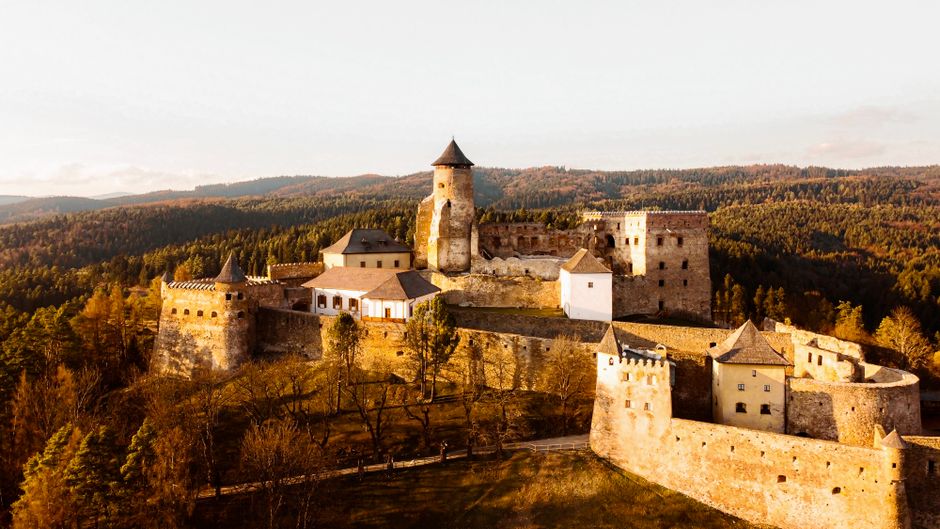
Drone view of medieval Ľubovňa Castle, surrounded by scenic forest in Slovakia, Komárno, Slovakia
Is Komárno safe for solo travelers? Absolutely. Komárno is one of the safest towns in Slovakia, with very low rates of petty crime. You’ll feel comfortable walking alone at night along the lit promenade, and locals are genuinely helpful if you look lost. The only caution is to watch your step on the uneven cobblestones near the fortress, especially after rain. Solo travelers often discover that the town’s small size encourages spontaneous conversations—you’ll find yourself sharing a table at a café with a retired historian or a young artist who will eagerly explain the city’s Hungarian heritage. The fortress tour groups are small, and the museum staff speak English, so you won’t feel isolated. For women traveling alone, the main square and Štefánikova Street are well-patrolled by police, and there’s a 24-hour pharmacy at Námestie SNP 1.
How much time should I spend in Komárno? Two days is ideal. On Day 1, start at the Fortress Museum (9:00–12:00), then walk the ramparts, have a late lunch at Rybičková, and spend the afternoon exploring the underground tunnels (guided tour at 14:00). In the evening, cross to the Hungarian side for dinner at a riverside restaurant—try “Halászcsárda” in Komárom, which serves outstanding fish soup. On Day 2, explore the old town in the morning (don’t miss the synagogue museum, open 10:00–16:00, €4), have a lángos at the market, and take a ferry across the Danube for a relaxed afternoon on the Hungarian bank—the Komárom Thermal Baths (open 8:00–20:00, entry €12) are perfect for ending your trip. If you have a third day, rent a bike (€10 at Hotel Podhrad) and cycle the 10-kilometer Danube floodplain trail southeast of town, passing bird-watching towers and tiny villages where you can buy honey from roadside stands.
Can I visit Komárno on a day trip from Budapest or Bratislava? Yes, but it’s a long day—you’ll feel rushed. By train from Budapest, you can arrive by 10:00 a.m. and leave by 6:00 p.m., which gives you about six hours of exploration. That’s enough to see the fortress, stroll the old town, and have a decent lunch. From Bratislava, the bus journey is 2.5 hours each way,

