
Where the River Whispers Secrets: Discovering Tshuapa, the Heart of the Congo Rainforest (2026)
In 1892, a young Belgian administrator named Jules Marchal stood on the muddy banks of the Tshuapa River, watching a pirogue slide silently past. The boat carried palm oil and rubber—two commodities that would soon stain this land red with blood. Marchal later wrote in his diary: “The forest speaks in a language we do not yet understand.” More than a century later, as you stand in that same spot near Boende, you’ll feel the truth of his words. The Tshuapa region remains one of the most remote, least-visited corners of the Democratic Republic of the Congo—a place where the rainforest’s ancient rhythms still dictate daily life, and where travelers discover a raw, unscripted Africa that long ago vanished elsewhere.
The Story Behind Tshuapa, Democratic Republic of the Congo
To understand Tshuapa, you must first understand the rubber. In the 1880s, King Leopold II of Belgium declared the entire Congo Basin his private domain. The Tshuapa River basin became a prime source of wild rubber, collected by forced labor under the infamous Force Publique. The horror stories are well documented: hands cut off for failing quotas, villages burned, entire populations decimated. By 1908, international outrage forced Leopold to cede the territory to the Belgian state, but the damage was done. The region’s population never fully recovered, and the deep mistrust of outsiders lingers in oral traditions you may still hear around evening fires.
Fast-forward to 2015: the Democratic Republic of the Congo reorganized its provinces, and Tshuapa was carved out of the massive Équateur province. Its capital, Boende, became the administrative hub. But history didn’t end with colonialism. In the 1990s, the chaos of the Congo Wars washed over Tshuapa—rebel groups, refugees, and militias passed through the forest. Today, the province is peaceful but scarred. Travelers often discover that the people here carry their history with a quiet resilience. You’ll hear elders recount the “time of the red rubber” as if it were last week, and you’ll see how the forest itself has been both a refuge and a prison for generations.
The real story of Tshuapa, however, isn’t just one of suffering. It’s a story of survival and adaptation. The Mongo people, who form the majority, have lived in harmony with this flooded forest for millennia. Their knowledge of medicinal plants, fish species, and seasonal migrations is encyclopedic. You’ll find that every village has a nkumu (chief) who presides over land disputes, marriages, and rituals. The arrival of missionaries in the 1920s brought schools and churches, but the traditional worldview—where ancestors speak through dreams and the river carries spirits—remains very much alive.
Neighborhood by Neighborhood

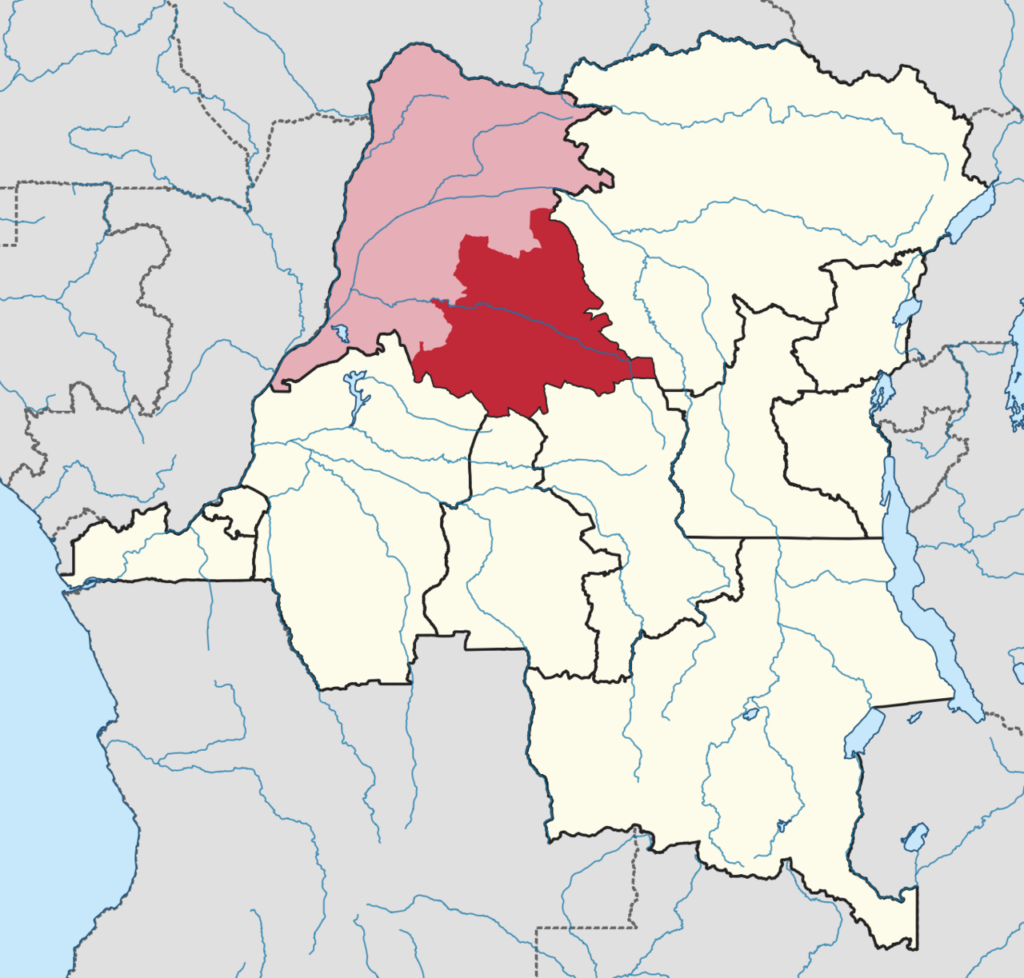
Location of Province (see file name) in Democratic Republic of the Congo, Tshuapa, Democratic Republic of the Congo
Boende: The Gateway on the River
Your journey almost certainly begins in Boende, the provincial capital of about 40,000 people. The town sprawls along the southern bank of the Tshuapa River, and your first impression will be the low rumble of pirogue outboards mixing with the chatter of the Monday market. The main street, Avenue de l’Indépendance, runs parallel to the river for about two kilometers. It’s a dusty, potholed ribbon lined with two-story colonial-era buildings—peeling yellow facades, rusted corrugated roofs, and hand-painted signs advertising fritures (fried fish) and phone credit. The heart of Boende is the Marché Central, which explodes every Monday and Thursday with mounds of cassava, smoked fish, palm oil in plastic jugs, and piles of bright orange nzombo (a leafy green similar to spinach). You’ll see women balancing baskets on their heads, children chasing chickens, and men playing checkers on overturned crates. The air smells of wood smoke, fried plantains, and the sweet rot of overripe mangoes.
A short walk west of the market leads you to the Port de Boende, a muddy landing where wooden pirogues unload goods from upstream villages. Locals recommend arriving at dawn, around 6:00 AM, when the mist hangs over the water and the fishermen return with their catch. You’ll see massive catfish and tilapia laid out on banana leaves. The port is also where you arrange transport deeper into the province—shared pirogues to Ikela cost about 15,000 Congolese francs (roughly $8 USD) per person and take two to three hours depending on the current. Be prepared to get your feet wet; the pirogue steps are slick and uneven.
Ikela: The Forest Capital
Traveling northwest from Boende along the river, you reach Ikela, a smaller town of about 15,000 people that functions as the administrative center for the northern part of the province. Ikela feels more like a large village than a town. Here, the architecture shifts dramatically: instead of crumbling colonial structures, you find rectangular houses made of baked mud bricks, roofs of thatch or corrugated iron, and shaded courtyards where women pound cassava in wooden mortars. The rhythm is slower, more intimate. The main intersection, known as Carrefour des Pirogues, has a single bar—Bar Chez Mama Zita—where you can sip a warm Primus beer while listening to soukous music crackling from a solar-powered radio.
Ikela’s real draw is the surrounding rainforest. Travelers often discover that the best way to experience it is to hire a local guide—ask at the Office Provincial du Tourisme (open weekdays 8:00 AM–4:00 PM; expect to pay about $20 USD per day for a guide) and arrange a forest walk. You’ll traverse narrow trails under a 40-meter canopy, past towering ironwood trees and vine-choked clearings. With luck, you might spot chimpanzees or the rare forest elephant—though, truth be told, the animals are shy, and you’re more likely to see troupes of red colobus monkeys leaping overhead. The guide will point out medicinal plants: the bark of the ombi tree used for malaria, the leaves of moli for stomach aches. You’ll also pass small, hidden villages of a dozen huts, where children run out to greet you, their hands outstretched for cadeaux (gifts). Carry small packets of iodized salt or colored pencils—they are far more valued than money.
Djombo and the River Villages
If you have a full week, push deeper into the province to the village of Djombo, a two-day pirogue trip from Boende. Djombo is not on any map you’ll find, but locals know it as the place where the Tshuapa River splits into two channels, creating a huge, flooded forest that transforms into a lake during the rainy season (October–April). The village itself consists of about 300 people living in longhouses with woven-palm walls. There is no electricity, no phone signal, no running water. You sleep on a woven mat in a guest hut (arranged through the chief; pay him a “cadeau” of about $10 USD and a bottle of palm wine). The experience is as raw as travel gets. You rise at dawn to the sound of fruit bats squabbling, spend the day fishing with handlines, and eat grilled tilapia with fufu (pounded cassava dough) dipped in a sauce of tomatoes and smoked caterpillars—a local delicacy.
What makes Djombo unforgettable is the night. Without any artificial light, the stars are a river of diamonds, and the forest around you hums with insects, frogs, and the occasional hoot of a potto. Savvy visitors know to bring a headlamp and extra batteries—not just for convenience, but because the villagers will ask to borrow it for their own tasks. You’ll also quickly learn that life here is governed by the river: it’s your highway, your bathroom, your source of water for cooking and cleaning. The Tshuapa River is not a backdrop; it is the main character.
The Local Table: What the River People Actually Eat
Food in Tshuapa is a reflection of the rainforest and river. You won’t find elaborate sauces or imported spices; instead, meals are built around three pillars: cassava, fish, and palm oil. The staple is fufu, a dense, dough-like ball made from fermented cassava flour (called chikwangue when wrapped in banana leaves and steamed). You use your right hand to pinch off a piece, roll it into a small ball, and dip it into a sauce. The most common sauce is madesu, a simple tomato-and-onion gravy enriched with palm oil and often containing bits of smoked fish or dried caterpillars (known locally as mbinzo). They taste earthy and nutty—far better than they sound.
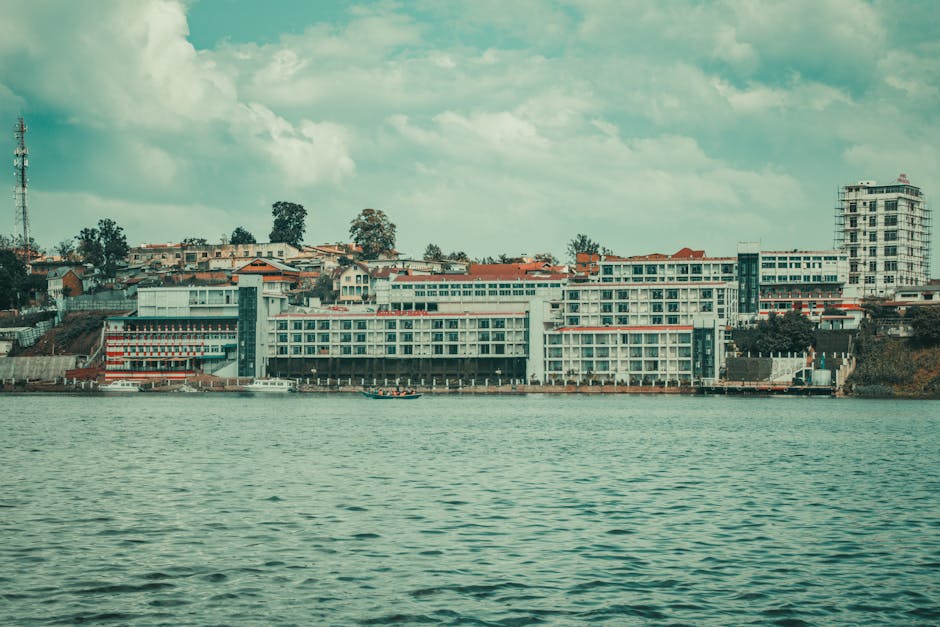
Tranquil view of the Bukavu waterfront with modern architecture and lake in…, Tshuapa, Democratic Republic of the Congo
The dish you absolutely must seek out is liboke ya mbisi—fish steamed in banana leaves with palm oil, garlic, and local greens. The best version you’ll find is at Chez Père François, a no-sign restaurant in Boende located behind the post office. You’ll see a woman named Maman Dorcas working over a charcoal fire wrapped in aluminum foil. She wraps a whole tilapia fillet, adds a spoonful of red palm oil, a pinch of salt, and a handful of fumbwa leaves (a wild spinach), then seals the package and steams it for 20 minutes. The result is a fragrant, silky fish that falls apart at a touch. A portion costs 3,000 Congolese francs (about $1.50 USD). Locals recommend eating it with cold fufu and a squeeze of lime. Wash it down with bilanga, a mildly fermented palm wine sold in recycled soda bottles at the market. It’s milky and sweet, with a kick that creeps up on you.
The weekly market is where you’ll encounter Tshuapa’s food culture in full swing. At 9:00 AM on a Monday, the Marché Central in Boende is packed with women selling pyramids of dried catfish, heaps of red palm nuts, and piles of shiny, black caterpillars. You’ll also see stalls selling kikwacha (steamed cassava bread) and makelele (grilled grasshoppers). Don’t be shy—buy a handful of grasshoppers (they cost about 500 francs, or $0.25). They’re crunchy, salty, and taste like roasted peanuts. Locals recommend eating them with a pinch of chili powder.
Art, Music & Nightlife
Tshuapa’s artistic soul is rooted in the Mongo oral tradition. Music here isn’t performed on a stage; it’s woven into everyday life—work songs for paddling pirogues, lullabies for infants, and the hypnotic polyrhythms of the likembe (thumb piano) played during village ceremonies. The best place to experience this is at the Festival de la Forêt, held in Boende every August 15–17 (check exact dates at the local tourism office; it follows the Catholic Assumption holiday). During the festival, villages from across the province gather to compete in traditional dance, storytelling, and boat races. You’ll see dancers wearing raffia skirts and carved masks representing forest spirits, moving to the pulse of drums made from hollowed tree trunks. It’s a riot of colour, dust, and rhythm—utterly authentic, not staged for tourists.
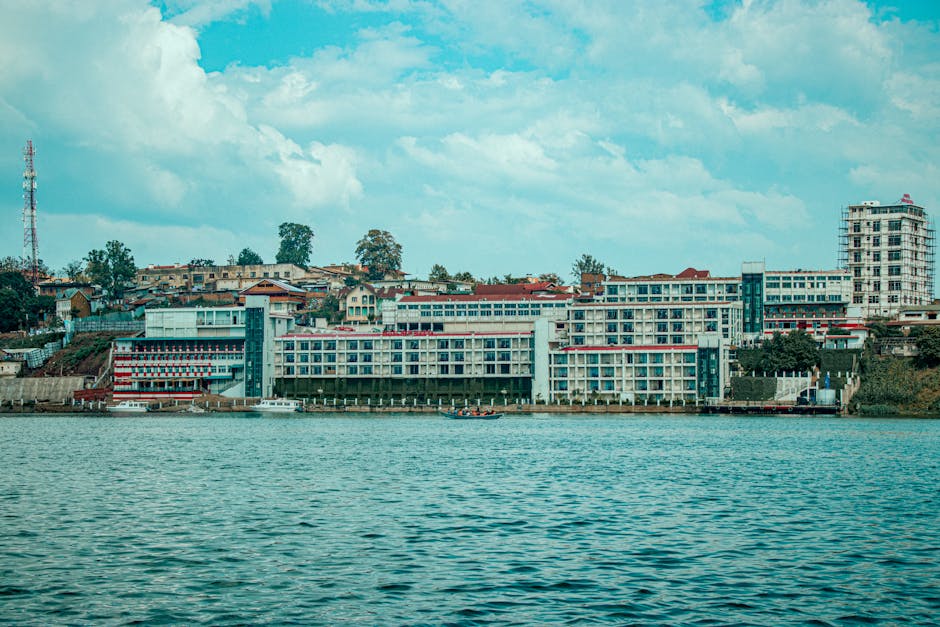
Urban landscape of Bukavu, Tshuapa, Democratic Republic of the Congo
For a quieter encounter with local craft, visit the Atelier des Artisans on Avenue de l’Hôpital in Boende (open Monday–Saturday 9:00 AM–5:00 PM). A cooperative of Mongo women weaves baskets, hats, and mats from palm fibers, dyed with local clays and leaves. You can purchase a small basket for $5 USD. The women are happy to explain the symbolism: a zigzag pattern represents the river’s bends; a diamond shape stands for a tortoise shell, a symbol of longevity. Nightlife as you’d know it in a city does not exist, but on Friday and Saturday evenings, the Bar du Port in Boende becomes a lively hangout with a generator-powered sound system playing soukous and Congolese rumba. Expect loud music, warm beer, and friendly locals who will ask you to dance—if you’re brave enough to try the soukous shuffle.
Practical Guide
- Getting There: Fly into Kinshasa (FIH), then take a domestic flight to Boende Airport (BND) via Congo Airways or Air Kasaï. Flights depart from Kinshasa on Mondays, Wednesdays, and Fridays at 7:00 AM; the flight takes about 2 hours and costs $150–$200 one way. Book at Skyscanner or directly through the airline. Alternatively, you can take a pirogue from Mbandaka (5–7 days upstream), but that’s for the hardcore adventurer only..
- Getting Around: Shared pirogues connect Boende with Ikela and other villages along the river. A seat costs 10,000–20,000 CF ($5–$10) per leg. For overland travel, motorcycle taxis (motos) are ubiquitous—a ride within Boende costs 500–1,000 CF ($0.25–$0.50). Negotiate the price before boarding. For forest walks, hire a guide through the Provincial Tourism Office in Boende (about $20/day).
- Where to Stay: In Boende, the best option is Hôtel Tshuapa Palace (Avenue de la Révolution; from $45/night for a double room with fan and private bathroom). It’s clean, has a generator, and serves a basic breakfast of bread, jam, and coffee. For budget travelers, Chez Mama Odette offers simple rooms with shared squat toilets for $15/night. In Ikela, the Mission Catholique has guest rooms for $10/night (must arrange in advance). Check Booking.com for Boende options (though inventory is sparse).
- Best Time: The best months are June through September—the dry season. The river is lower, making pirogue travel easier, and forests are less muddy. October to April brings heavy rain, swollen rivers, and brutal humidity. Avoid March when the rains are heaviest.
- Budget: A comfortable daily budget (private room, three meals, transport, a guide) is $60–$80 USD per day. On a shoestring (dorm sleeping, street food, walking) you can manage on $25–$

