
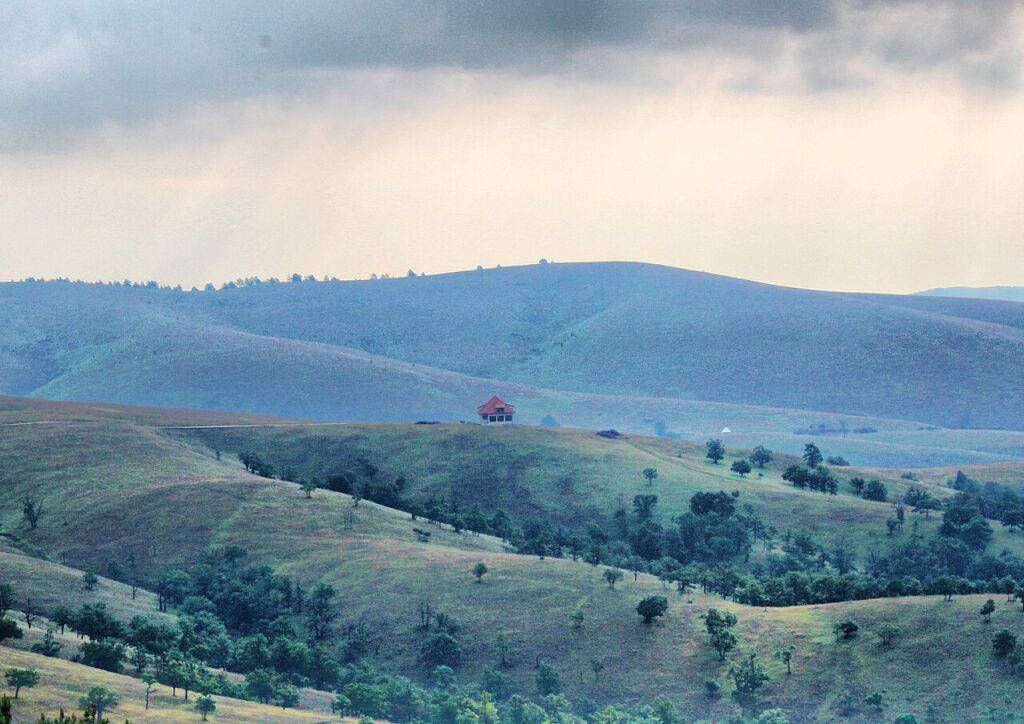
Where the Pines Whisper: Why Zlatibor Stays with Every Traveler Who Visits (2026)
In the summer of 1893, King Aleksandar Obrenović of Serbia stepped off a carriage near the village of Kraljeve Vode, took one long breath of the crisp mountain air, and declared this remote patch of western Serbia a royal retreat. That single moment transformed a forgotten shepherd’s crossroads into what would become Zlatibor—a name that locals swear comes from the golden glow of sunlight filtering through its ancient pine forests. Over a century later, that same golden light still draws travelers from across Europe, though what they discover here is far richer than any postcard suggests.
The Story Behind Zlatibor, Serbia
Long before the king arrived, Zlatibor existed as a secret kept by the Dinaric Alps. The Illyrians and later the Romans left only faint traces, but by the 14th century, the region had become part of the medieval Serbian state under the Nemanjić dynasty. The name itself—first recorded in 1530 in Ottoman tax registers—likely derives from “Zlatibor,” meaning “golden pine” in old Serbian, a reference to the resinous trees that blanket the slopes and, when struck by sun, seem to shimmer like precious metal. You’ll understand why the moment you see that honeyed light pour through the needles at golden hour.
The Ottoman period was harsh here, as it was across the Balkans, but Zlatibor’s rugged terrain made it a natural refuge. The local population maintained a fierce independence, and shepherds roamed freely with their flocks, developing the distinct culture you still sense today. In the 19th century, as Serbia gained autonomy, Zlatibor began to transform. The construction of the narrow-gauge railway from Belgrade in the 1920s—a feat of engineering that still inspires train enthusiasts—opened the region to wider tourism. Travelers from the capital arrived in droves, seeking the “climate cure” that Zlatibor’s clean air supposedly provided for respiratory ailments. By the 1930s, the first hotels and villas dotted the landscape, and the area earned its nickname: the “Serbian Switzerland.”
What strikes you today is how Zlatibor managed to modernize without losing its soul. The socialist era brought development—sanatoriums, holiday camps for workers, and paved roads—but after the 1990s, a new wave of private investment created the sleek hotels and apartment complexes you see now. Yet walk just a few minutes from the main square, and the scent of pine and the sound of cowbells remind you that this remains, at its core, a mountain village grown into a resort. Locals will tell you with a knowing smile: “Zlatibor doesn’t give its secrets easily. You have to earn them.”
Neighborhood by Neighborhood

Zlatibor, Serbia
Kraljeve Vode — The Heartbeat
This is where you’ll likely begin your journey, and where most travelers spend their time. Kraljeve Vode (meaning “King’s Waters,” a nod to that 1893 royal visit) is the main tourist hub, centered around the artificial lake that glitters like a mirror set among pines. The architecture here is a curious mix: socialist-era concrete hotels stand shoulder-to-shoulder with gleaming new glass-fronted apartments, while traditional wooden chalets peek out from side streets. The main promenade, Miladina Pećinara, bustles from morning until late night—families with strollers, couples sipping espresso at outdoor cafés, and always the smell of roasting meat wafting from nearby restaurants. Your best bet for a sense of local rhythm is to arrive here around 8 a.m., when the market stalls near the lake fill with fresh produce, wild mushrooms, and homemade cheese. Watch for the older women in traditional woolen aprons selling sour cream so thick you could stand a spoon in it. By 11 a.m., the crowds thicken, and the atmosphere shifts from village to resort. The real surprise? This neighborhood is built for walking. You can traverse its entire length in twenty minutes, yet you’ll find yourself lingering for hours.
Čajetina — The Old Soul
Just four kilometers from the tourist frenzy of Kraljeve Vode lies Čajetina, the historic municipal center that feels like a different world entirely. This is where locals actually live, work, and send their children to school. The architecture here tells a older story: modest family homes with red-tiled roofs, a sturdy Orthodox church built in the 1930s, and a main square that serves as a community gathering point rather than a tourist stage. Savvy visitors know to wander here on a Sunday morning, when the church bells ring and families spill out into the nearby bakeries for burek and yogurt. The highlight is the Čajetina Open Market, held every Saturday from 7 a.m. to 1 p.m., where you’ll find handmade woolen socks, jars of wild berry jam, and the region’s famous smoked beef pršuta. Prices here are significantly lower than in Kraljeve Vode, and the interactions are warmer. Do not skip the local milk bar—Mlekara Kovačević—where a glass of fresh goat milk costs just 50 dinars (€0.45) and comes with a story from the owner about her grandfather’s herd. This is Zlatibor before tourism, and it’s essential grounding for any thoughtful visitor.
Gostilje — The Mountain Retreat
If you want to understand what Zlatibor was like a century ago, you need to venture deeper into the hills, past the resort crowds and the modern villas, to the hamlet of Gostilje. This tiny settlement, about 12 kilometers southwest of the main center, is where the landscape takes over. The architecture here is pure traditional Zlatibor: log cabins with steep pitched roofs, called “brvnare,” many of which have been converted into guesthouses. The reason travelers make the journey is the Gostilje Waterfall, a 20-meter cascade that plunges into a turquoise pool surrounded by mossy boulders. The path to reach it is a gentle 15-minute walk through beech forest, and if you go at 7 a.m.—before the tour buses arrive—you might have the entire scene to yourself. Afterward, walk 200 meters to the village’s only konoba, Restoran Gostiljska Noć, where the owner, a third-generation shepherd, roasts lamb on a spit every Sunday. His lamb, seasoned only with salt and cooked for five hours over an open fire, is widely considered the best in the region. One plate with two portions of lamb, bread, and a salad will set you back around 1,200 dinars (€10). It’s a meal you’ll dream about for years.
The Local Table: What Natives Actually Eat
Zlatibor cuisine is built on a simple, ancient principle: what the mountain gives, you eat. This is not a place for complicated sauces or imported ingredients. The foundation is dairy, particularly the fresh “zlatiborski sir” (a soft, slightly salty white cheese) and “kajmak” (a clotted cream so rich it’s almost a solid). Locals spread kajmak on everything—bread, potatoes, grilled meat—and you’ll quickly understand why. The second pillar is meat, specifically lamb and beef, slow-roasted on a spit or cooked under a metal bell called a “sač.” But the true hero of the Zlatibor table is the potato. Grown in the region’s rich, mineral-heavy soil, these potatoes are smaller, denser, and sweeter than any you’ve had before. You’ll find them boiled, roasted, or mashed into a creamy puree called “zlatorog” that’s served alongside grilled meat.

Blue kerosene lamp hanging on wooden wall, Zlatibor, Serbia
For a meal that captures the soul of this food culture, you must visit Restoran Zlatiborac, located a short walk from the lake in Kraljeve Vode, at Trg Cara Dušana 8. This family-run establishment has been serving since 1965, and the dining room still feels like a mountain lodge—dark wood beams, a crackling fireplace in winter, and tables covered with traditional linen. Order the “zlatorog platter”: lamb under the sač, boiled Zlatibor potatoes buttered with mountain herbs, and a side of fresh cheese. Be warned: portions are enormous. One platter comfortably feeds two people and costs 2,400 dinars (€20). Seasoned travelers also swear by the homemade plum rakija that arrives as a complimentary digestif—a dangerously smooth 45-proof spirit that locals call “medicinal.” Finish your meal with “gibanica,” a layered phyllo pastry filled with cheese and eggs, served warm and drizzled with honey. Your waiter might tell you, as he pours another round of rakija: “We don’t diet in Zlatibor. We eat to survive the winter, even in summer.”
The epicenter of daily food life is the Zlatibor Green Market (Zelena Pijaca), located just off the main promenade in Kraljeve Vode, open daily from 6 a.m. to 2 p.m.. This is where local farmers bring their produce—wild mushrooms like vrganj (porcini) and lisičarka (chanterelles), jars of forest honey, fresh eggs still warm from the hen, and bundles of mountain herbs for tea. Do not leave without buying a bag of “zlatiborski suhomesnati” (air-dried beef) from a stall run by a farmer named Milojko, recognizable by his signature black wool cap. He’s been selling at this spot for 28 years, and his meat is aged for a full six months in the mountain breeze. A quarter-kilo costs about 600 dinars (€5) and makes the perfect hiking snack.
Art, Music & Nightlife
Zlatibor’s cultural life is more traditional than trendy, but that’s precisely what makes it memorable. The centerpiece is the Zlatibor Cultural Summer (Kulturno Leto na Zlatiboru), running from late June through mid-August, when the main square near the lake transforms into an open-air stage. You’ll find evening concerts of “narodna muzika” (traditional folk music) featuring the region’s distinctive instrument, the frula (a small wooden flute), often accompanied by a harmonica and a double bass. The dancing is just as compelling—circle dances called “kolo” that can draw dozens of participants, young and old. The most famous event, the “Sabor Frulaša” (Frula Festival), takes place on the third weekend of July, drawing master players from across Serbia. If you’re here in winter, the Zlatibor Music Winter in January offers classical and jazz concerts held in the beautifully restored Hotel Palisad concert hall. For contemporary art, visit the Bojana and Nebojša Gallery on Ulica Miladina Pećinara, a small space run by a local artist couple, open Tuesday to Saturday from 10 a.m. to 6 p.m., where you can browse paintings and ceramics inspired by Zlatibor’s landscapes. Admission is free, and everything is for sale, with prices starting at €50 for an original work.

A lone tree on a grassy hill with a blue sky in the background, Zlatibor, Serbia
Nightlife here is not about clubs or raves—locals prefer a slower, more social evening. The ritual begins around 9 p.m. at one of the outdoor cafés lining the lake, where friends gather over a bottle of local wine (try the “Prokupac” or “Tamjanika” varietals) or a round of rakija. By 11 p.m., the crowd migrates to the “salaši” (garden restaurants) on the outskirts of town, where live music plays until 2 a.m. Your best bet for this experience is Salaš Petrović, a 15-minute walk from the main square on Put Partizana, where a four-piece band plays everything from Serbian folk to pop hits. Expect a lively, multi-generational crowd—grandparents dancing with grandchildren, couples twirling in the aisles. The cover charge is typically nothing; you simply order a drink (a beer costs 180 dinars/€1.50, a glass of rakija about 100 dinars/€0.85) and join the fun. If you’re looking for something more modern, the newly opened Klub 55 at Hotel Mona Plaza on Trg 27. Marta plays house and pop until 1 a.m. on weekends, but it’s a small, subdued scene compared to Belgrade’s clubs.
Practical Guide
- Getting There: The nearest airport is Belgrade Nikola Tesla Airport (BEG), served by major airlines including Air Serbia, Lufthansa, and Turkish Airlines. From the airport, a direct bus service runs twice daily to Zlatibor at 10 a.m. and 3 p.m., taking 3.5 hours and costing 1,200 dinars (€10). Alternatively, you can rent a car at the airport. Book flights at Skyscanner
- Getting Around: The town center is walkable, but for exploring beyond—Čajetina, Gostilje, Sirogojno—you’ll need transport. Local buses run between Kraljeve Vode and Čajetina every 30 minutes, tickets cost 50 dinars (€0.45). Taxis are affordable: a ride from the lake to Čajetina is about 300 dinars (€2.50). For full flexibility, rent a car from Rent-a-Car Zlatibor at the bus station for about €25/day.
- Where to Stay: For convenience, stay near the lake in Kraljeve Vode. Hotel Mona Plaza (Trg 27. Marta 1) offers modern rooms from €60/night. For traditional charm, book a wooden cabin in Gostilje at Ethno Village Gostilje (€50-70/night). Budget travelers should check Booking.com for apartments starting at €30/night.
- Best Time: Late June to early September offers warm days (20-28°C) and vibrant festivals. For snow lovers, December

