
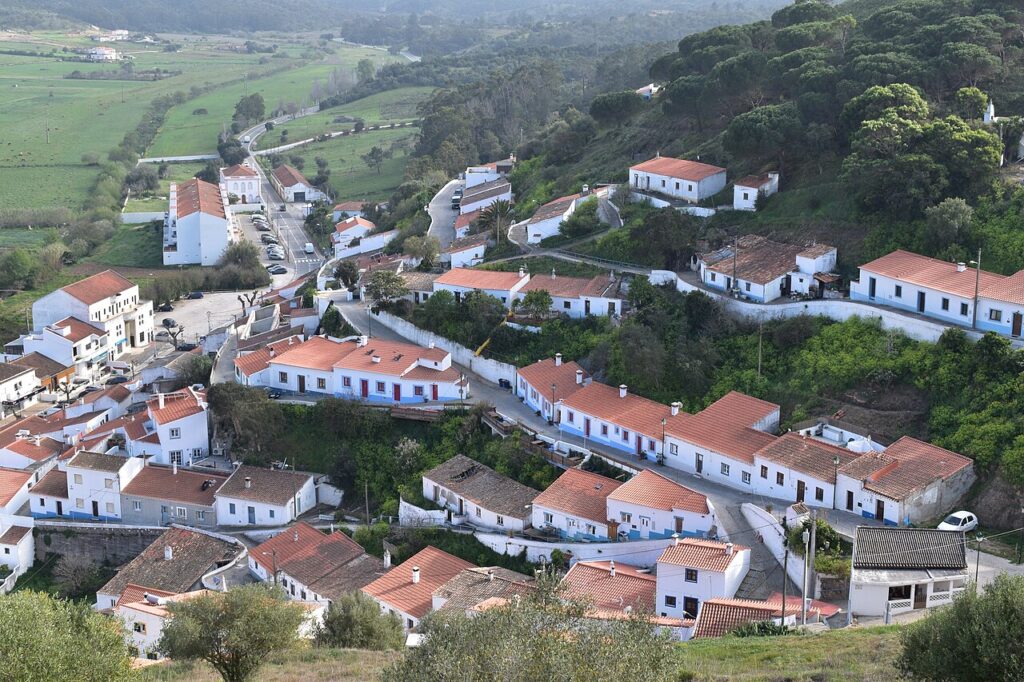
Where the Mountains Meet the Sea: Aljezur’s Untamed Soul (2026)
In the crisp autumn of 1249, a Portuguese knight named D. Paio Peres Correia stood atop the windswept hill of Aljezur, watching as his forces finally breached the red-walled fortress that had stood for nearly five centuries under Moorish rule. The Almohad defenders, who had called this place “al-Jazira” — “the island” — for its position between two rivers, surrendered not to sword alone, but to the promise that their ancient olive groves and irrigation systems would be preserved. That moment of cultural compromise, sealed in dust and diplomacy, still whispers through Aljezur’s cobbled streets today.
The Story Behind Aljezur, Portugal
Long before the Moors etched their geometric patterns into this landscape, the banks of the Ribeira de Aljezur held the remains of Neolithic farmers and Bronze Age traders. But it was the arrival of North African Berbers in the 8th century that truly shaped the town you’ll encounter today. They chose this valley for its strategic position — protected from Atlantic storms by rolling hills, yet close enough to the coast to fish and trade. By the 10th century, Aljezur had grown into a fortified settlement of considerable importance, its castle walls visible from leagues away to sailors navigating the treacherous Costa Vicentina.
The Christian reconquest in the 13th century brought dramatic change, yet the Moors left an indelible mark that savvy travelers still notice. The town’s name itself is a linguistic ghost of Arabic. The intricate irrigation systems — still used in the vegetable gardens along the riverbanks — are direct descendants of Moorish engineering. And the whitewashed, flat-roofed houses you’ll see in the old quarter trace their lineage directly to North African architectural traditions. By the 16th century, Aljezur had reinvented itself as a prosperous agricultural center, its farmers exporting figs, almonds, and the sweet potatoes that would become the region’s signature crop. The devastating 1755 Lisbon earthquake leveled much of the town, but the survivors rebuilt with characteristic resilience, creating the Aljezur you’ll explore today — a place where medieval, Moorish, and modern Portugal coexist without contradiction.
What surprises travelers most is how Aljezur remained relatively unknown until the late 20th century. While the Algarve’s southern coast exploded with resorts, this western edge stayed quiet, protected by the rugged cliffs and the establishment of the Parque Natural do Sudoeste Alentejano e Costa Vicentina in 1988. This protected status meant no high-rise hotels, no sprawling golf courses — just sweeping beaches, ancient cork forests, and a way of life that moves at the pace of the tides.
Neighborhood by Neighborhood
O Castelo — The Castle Quarter
Your first morning in Aljezur should begin with a steep climb up Rua do Castelo, the narrow cobbled lane that winds toward the hilltop fortress. You’ll feel the change in your calves and in the air — cooler, saltier, carrying sounds from the valley below. The castle itself, Castelo de Aljezur, dates primarily from the Almohad period (12th-13th centuries), though you’ll find remnants of later Christian additions. Plan to arrive just after opening at 9:30 AM (entry is a modest €3) to have the ramparts nearly to yourself. From the battlements, you’ll understand instantly why the Moors chose this spot: the Ribeira de Aljezur snakes below like a silver ribbon, and on clear days you can see the Atlantic glinting in the distance. This neighborhood, huddled around the castle hill, is a labyrinth of whitewashed houses with blue-trimmed windows and doors. Wander down Rua de São Pedro and you’ll find the tiny 16th-century Igreja da Misericórdia, its Manueline portal weathered by centuries of sea wind. Locals will tell you that the best time to be here is late afternoon, when the setting sun paints the castle walls in shades of amber and rose.
Ribeira — The River District
Descending from the castle, you’ll naturally find yourself in the Ribeira district, the historic heart of daily life. This is where the two rivers — the Ribeira de Aljezur and the Ribeira da Vales — meet and where the town’s pulse beats strongest. On Tuesday mornings, the weekly market takes over the riverside square, and you should absolutely time your visit to experience it. From 8 AM to 1 PM, farmers from the surrounding countryside set up stalls selling sweet potatoes (the famous batata-doce de Aljezur with Protected Geographical Indication), oranges still warm from the sun, wild asparagus in spring, and freshly baked broa de milho, the dense cornbread that’s a regional staple. The air smells of charcoal-grilled sardines and the sweet, earthy scent of ripened fruit. This is where you’ll find locals stopping for coffee at Pastelaria Colmeia, a no-frills spot on Rua 1º de Maio where an espresso costs €0.80 and comes with a small pastry. The real joy of the Ribeira district, though, is simply walking its streets — Rua da Igreja with its faded blue tiles, Rua do Porto with its views of the arched bridge (originally Roman, rebuilt in the 17th century), and the quiet lanes where bougainvillea spills over garden walls.
Praia da Arrifana — The Surfers’ Enclave
About six kilometers west of town, the neighborhood of Arrifana feels like a different world entirely. You’ll descend a winding road through eucalyptus and pine trees, and then suddenly the Atlantic opens before you — a vast, turquoise amphitheater framed by dramatic black schist cliffs. This beach community grew around the surf boom of the 1990s, and it retains a laid-back, international energy that contrasts sharply with the traditional feel of the castle quarter. The beach itself, Praia da Arrifana, is a crescent of pale gold sand protected by towering cliffs on both sides. You’ll find surf schools lining the main street — Arrifana Surf School and Kapa Surf among the most reputable — offering board rentals from €15 per day and group lessons starting at €35 for two hours. The best surf conditions run from October through March, when consistent Atlantic swells roll in, but savvy travelers know that spring (April to June) offers smaller waves and far fewer crowds. The cliff-top restaurant, Restaurante O Litoral, serves what many locals consider the finest grilled sea bass in the region — expect to pay around €18 for a whole fish with vegetables. Order a glass of local Vinho Verde and watch the sun sink into the ocean; you’ll understand why so many visitors come for a weekend and stay for a season.
The Local Table: What Natives Actually Eat

The new church of Aljezur, Algarve, Portugal., Aljezur, Portugal
You haven’t truly experienced Aljezur until you’ve eaten batata-doce assada com laranja amarga — sweet potato roasted with bitter orange, a dish that tells the story of this land in a single bite. The sweet potato arrived from the Americas in the 16th century and found its perfect home in Aljezur’s sandy, well-drained soils. Locals will tell you that the combination of the Atlantic breeze and the specific mineral composition of the earth gives their sweet potatoes a flavor you won’t find anywhere else — denser, sweeter, with notes of chestnut. You’ll find them roasted whole at roadside stalls along the N120 for €2 each, served with coarse salt and a squeeze of local oranges.
For the full culinary experience, make your way to Retiro do Isaias, a family-run restaurant on Rua de São Pedro that has been serving traditional Aljezur cuisine since 1972. Isaias himself, now in his 70s, still oversees the kitchen, and the menu changes daily based on what’s available at the market. You should order the cataplana de marisco — a copper-pot seafood stew with clams, prawns, and fish in a fragrant broth of tomatoes, coriander, and white wine — for €22. But the real insider move is to ask for the arroz de lingueirão, a razor clam rice that rarely appears on menus. If you’re lucky, that is. On Friday and Saturday nights, the place fills with local families, so you’ll want to book at least two days in advance by calling +351 282 998 132. The Saturday morning market in the Ribeira district is also where you should stock up on queijo de cabra (goat cheese from the hills) and mel de laranjeira (orange blossom honey) — both make exceptional souvenirs that taste nothing like their mass-produced counterparts.
Another essential stop is Padaria Pastelaria Primor on Rua 1º de Maio, where the bolos de batata-doce — small sweet potato cakes dusted with cinnamon — emerge from the oven at 10 AM sharp. Buy one (€1.20) and eat it while it’s still warm, the steam rising as you break the golden crust. The secret, the baker will tell you if you ask, is using the purple-fleshed sweet potato variety that grows only in the sandy soils near the coast. This is peasant food elevated to art, and it’s the taste that will haunt your memory long after you’ve returned home.
Art, Music & Nightlife
Aljezur’s creative scene thrives in unexpected corners, far from the polished galleries of the Algarve’s tourist hubs. At Galeria de Arte Pintor Samora Barros on Rua do Mercado, you’ll discover the work of one of Portugal’s most distinctive 20th-century painters — Samora Barros, who spent decades capturing the light of the Costa Vicentina in bold, expressionist strokes. The gallery is small and free, open Tuesday to Saturday from 10 AM to 5 PM, and the elderly caretaker, a retired fisherman, may offer you a glass of aguardente de medronho — the potent strawberry tree brandy that’s the region’s unofficial firewater. If you’re visiting in late July, the Festival de Música de Aljezur takes over the castle grounds for three nights, with fado performances under the stars alongside contemporary Portuguese artists. Tickets run around €15-25, and the acoustics within the medieval walls are surprisingly excellent.
For something more spontaneous, walk down to the Arrifana Surf Club on any Wednesday evening during summer. What begins as a surf shop and café transforms around 8 PM into an impromptu gathering of musicians, poets, and travelers. You might hear Cape Verdean morna one week, Portuguese guitarra the next, or a Norwegian traveler playing folk songs on a battered acoustic guitar. There’s no cover, no stage, no expectations — just candles in wine bottles, the sound of waves through open windows, and the sense that you’ve stumbled into a secret that belongs only to those who find it. The bar serves Sagres beer (€2.50) and, if you’re lucky, poncha — a Madeiran rum punch that locals have adopted as their own. Most nights, things wind down by midnight. This isn’t Ibiza, and that’s precisely the point.
Practical Guide
- Getting There: Your best bet is flying into Faro Airport (FAO), about 90 kilometers southeast. Ryanair, easyJet, and TAP Portugal offer direct flights from major European cities. From Faro, you can rent a car (essential for exploring the region) or take the Rede Expressos bus (€14, 2 hours, twice daily). Book flights on Skyscanner
- Getting Around: A rental car is nearly essential — the beaches and surrounding villages are spread out, and bus service is limited to twice-daily runs. Rental agencies in Faro airport start at €25 per day. Parking in Aljezur town is free along Rua 25 de Abril and at the municipal lot near the market. For the braver souls, bicycle rental at Bike & Surf Aljezur costs €12 per day, though you’ll earn every downhill coast with punishing climbs.
- Where to Stay: For authenticity, book a renovated townhouse in the Castle Quarter — try Casa da Rita on Rua de São Pedro (€80-120/night, booking on Booking.com). For surf vibes, the Arrifana Surf Hostel offers dorm beds from €25 and private rooms from €60. Check Booking.com
- Best Time: May to June and September to October are ideal — temperatures hover at 22-26°C, crowds thin, and the water is warm enough for swimming (17-19°C). July and August bring the crowds and heat (30°C+). Winter (November-February) is for surfers and solitude seekers; many restaurants close, but the dramatic storms are unforgettable.
- Budget: Expect to spend €50-70 per day for a mid-range traveler (accommodation, meals, activities). This drops to €35-45 if you’re cooking from the market and staying in hostels. A fancy dinner at Retiro do Isaias with wine will run about €30 per person.

Brown wooden staircase on mountain, Aljezur, Portugal
What Surprises First-Time Visitors
The first thing that catches travelers off guard is the darkness. Aljezur has virtually no light pollution, and on moonless nights, the Milky Way stretches across the sky with a clarity that feels almost theatrical. You’ll step outside after dinner and pause, frozen, as your eyes adjust to a canopy of stars that most Europeans have forgotten exists. The second surprise is the silence — real, profound silence broken only by the wind in the eucalyptus and the distant crash of waves. It takes a day or two to adjust, but when you do, you’ll notice that your shoulders drop and your breath deepens without conscious effort.
Most tourists also underestimate just how rugged this coastline is. You look at photos of the golden cliffs and turquoise water and imagine a gentle, Mediterranean idyll. But the Costa Vicentina is the Atlantic, and the Atlantic has teeth. The water is cold (15-18°C in summer), the currents are strong, and the beaches are entirely undeveloped — no sunbed rentals, no beach bars, no lifeguards at many spots. This is wild coastline, and you need to respect it. The upside, of course, is that you’ll often have whole stretches of sand entirely to yourself, even in August if you’re willing to walk 15 minutes from the main parking areas.
Seasoned travelers are also surprised by how affordable Aljezur remains compared to the rest of the Algarve. A coffee costs €0.80. A fresh fish lunch with wine runs €12. A week’s rental of a traditional townhouse in the castle quarter sets you back less than a single night at a resort in Albufeira. The challenge, and the secret, is getting here before the word spreads further. Aljezur is still the Algarve that existed before mass tourism — authentic, unpolished, and utterly captivating for those who make the journey. It won’t stay that way forever, so you should book your trip now, before the secret gets out.
Your Aljezur, Portugal Questions

Aerial photography of mountain near sea, Aljezur, Portugal
How many days should I spend in Aljezur? You should plan for at least three full days. Day one is for the castle quarter and the river district — walk the ramparts at sunrise, explore the market on a Tuesday, and have a long lunch at Retiro do Isaias. Day two is for the beaches — spend the morning at Praia da Arrifana, hike the cliff trail to Praia do Amado (about 90 minutes one way, with stunning views), and watch the sunset from the fortress of Arrifana, a 17th-century fishing fort perched on the cliffs. Day three gives you time for a surf lesson, a visit to the sweet potato fields of the interior, or a drive north to the dramatic cliffs of Cabo de São Vicente. Five days would allow you to truly relax into the rhythm of the place, but three is enough to feel its soul.
Is Aljezur safe for solo travelers, especially women? Absolutely. Portugal is one of the safest countries in Europe, and Aljezur is among its safest corners. Violent crime is virtually nonexistent, and petty theft is rare. You’ll feel comfortable walking alone at night in the castle quarter, though the cobblestones are uneven and you’ll

