
Where the Church Rises from the Lake: Why Mavrovo National Park Captivates Every Traveler Who Visits (2026)
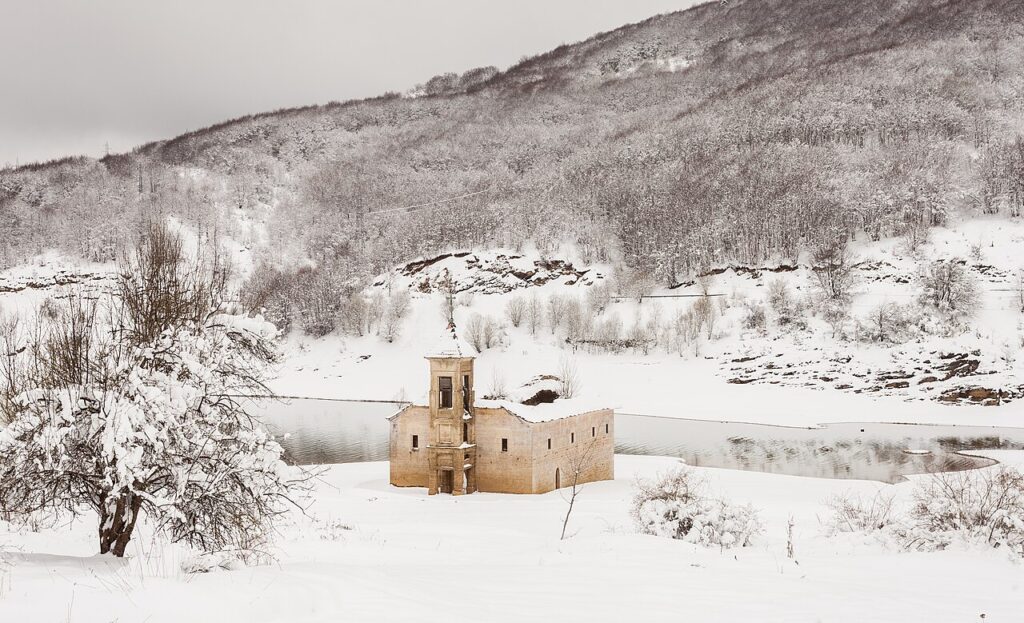
In the harsh winter of 1953, as the newly dammed Radika River began to fill the valley behind it, the villagers of Mavrovo watched their 19th-century Church of St. Nicholas slowly disappear beneath rising waters. They had agreed to sacrifice their sacred landmark for progress—electricity, irrigation, and a lake that would draw travelers for generations. What no one predicted was that every winter, when the lake level drops, the church would emerge again, cross intact, as if refusing to stay drowned. Your first glimpse of that stone bell tower rising from the ice and mud is the defining image that stays with everyone who visits.
The Story Behind Mavrovo National Park, North Macedonia
The history of this 73,088-hectare park, established in 1949 as North Macedonia’s largest national park, is a story of layered civilizations and hard-won survival. Long before the lake existed, shepherds drove their flocks across the Bistra and Korab mountain ranges, following trails the Romans had built and the Ottomans later widened. The region’s isolation preserved something precious: a way of life that outsiders romanticize but locals have lived for centuries. Travelers often discover that the names of villages here—Galichnik, Lazaropole, Tresonče—are synonymous with resistance and tradition. When the Ilinden Uprising against Ottoman rule erupted in 1903, these mountain communities were among the first to join, and their sacrifice is still commemorated in stone monuments that dot the park’s high pastures.
The turning point for Mavrovo came in 1953, when the Socialist Federal Republic of Yugoslavia decided to flood the valley to create an artificial lake. The decision displaced entire villages and submerged grazing lands that families had worked since the 18th century. But it also created the centerpiece of what would become a national treasure. By 1956, the Mavrovo Ski Center opened on the slopes of Zare Lazarevski, named after a local skier who would become an Olympic competitor. The park became a destination for Yugoslav elites and European travelers alike, a status it lost during the turbulent 1990s but has steadily reclaimed in the years since North Macedonia’s independence in 1991. Today, you’ll find a park that wears its history lightly: the scars of displacement softened by forest, the old stone villages slowly revitalizing, and the submerged church standing as the most photographed—and most resilient—symbol of what was lost and what remains.
Locals will tell you that the true history of Mavrovo is written not in dates but in the rhythms of transhumance—the seasonal movement of livestock from winter valleys to summer pastures. This practice, which UNESCO recognizes as an Intangible Cultural Heritage element through the related “Mountain Transhumance in the Dinarides,” still defines life in the park’s upper reaches. You’ll encounter shepherds moving their flocks along paths trodden for centuries, their dogs barking warnings, their cheese-making traditions unchanged. The park’s biodiversity—brown bears, wolves, Balkan lynx, and over 1,000 plant species—thrives precisely because human presence here has been sustainable for so long. Savvy visitors know that the real tour begins not at a museum but in the high meadows of Mount Korab, where North Macedonia’s highest peak at 2,764 meters offers a panorama that explains why every empire that reached these mountains stopped and turned back.
Neighborhood by Neighborhood

Mavrovo Dam, Macedonia, Mavrovo National Park, North Macedonia
Galichnik – The Living Museum of Stone
Perched at 1,340 meters on the slopes of Mount Bistra, Galichnik is the park’s most famous village and the one that will stop you in your tracks. Its architecture is a masterclass in traditional Macedonian stone-building: two-story houses with wide eaves, stone roofs, and wooden balconies that seem to grow from the mountainside itself. You’ll find the village centered around the Church of St. Peter and Paul, built in 1835, whose iconostasis you should examine closely—the woodcarving is among the finest in the Balkans. The real magic happens in mid-July, during the three-day Galichnik Wedding festival, when couples dressed in authentic 19th-century costumes recreate a traditional wedding complete with ritual dances, dowry processions, and the haunting sound of the gaida (bagpipe). Plan to arrive the day before the festival begins, as the village of 200 permanent residents swells to thousands and the narrow cobblestone streets become impassable. Stay at the family-run guesthouse Mijak (expect to pay around €30 per night for a double) and eat at Restaurant La Macina, where you’ll sample the region’s famous janija—lamb slow-cooked with vegetables in a clay pot—served with a side of local reputation.
Mavrovi Anovi – The Hub Before the Wild
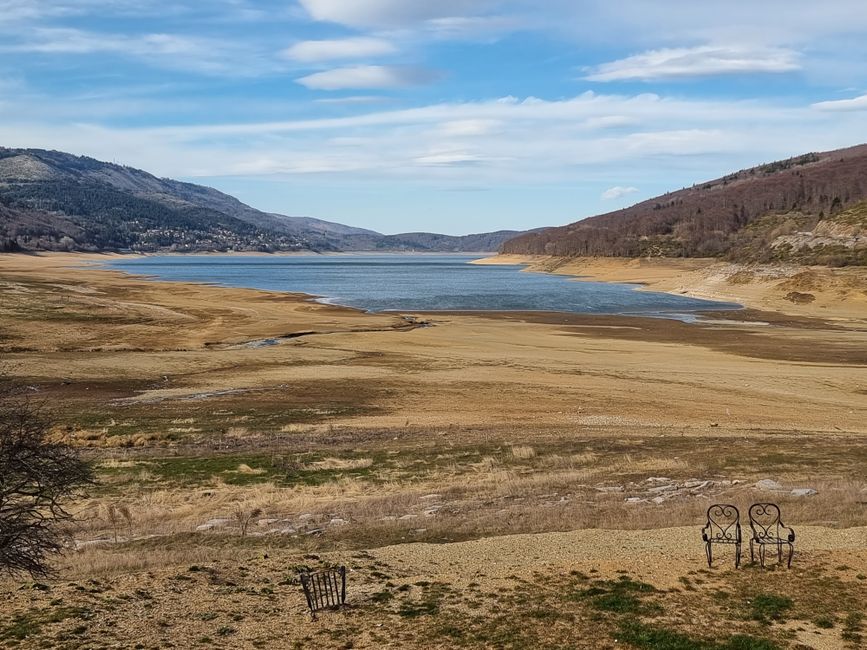
If Galichnik is tradition preserved, Mavrovi Anovi is the practical base camp that makes the park accessible. This small settlement at the lake’s northern edge, at an elevation of 1,230 meters, is where you’ll find the Zare Lazarevski Ski Center, the park’s main hotels, and the most reliable restaurants. The ski season runs from December through March, with 15 kilometers of slopes and a cable car that lifts you to 1,980 meters for views that stretch across the lake and into Albania. In summer, Mavrovi Anovi transforms into a hiking and mountain-biking hub. Your best bet for comfort is the Hotel Mavrovo, a Socialist-era behemoth that has been updated to a respectable four-star level (doubles from €60), but seasoned travelers prefer the smaller Villa Mavrovo (doubles from €45), where the owner, Kiril, will draw hiking routes on a napkin and pack you a lunch of burek and local cheese. Don’t miss the morning walk along the lakefront path from Mavrovi Anovi to the submerged church—in October and November, when the water is lowest, you can walk right up to the bell tower on a causeway of exposed mud.
The Lake Villages – Rustic Whispers of a Flooded Past
Scattered along the lake’s western shore and the remote valleys beyond are half a dozen hamlets that most travelers speed past but which reward those who linger. Tresonče, population barely 50, is where you’ll find artisans weaving kebapči (traditional woolen rugs) on wooden looms passed down through five generations. Stop at the House of Weaving on the main street—the only street—where Mara, a woman in her seventies, will demonstrate the process and sell you a rug for €20 that would cost ten times that in the capital. In the tiny hamlet of Leunovo, at 1,460 meters, the 14th-century Church of St. Nicholas stands with faded frescoes that predate Ottoman rule. Locals recommend visiting in late September, when the chestnut harvest begins and the air in every village smells of roasting nuts. These communities are where you’ll experience the park’s true pace: no shops, no ATMs, just stone houses and the sound of cowbells echoing across the hills. Accommodation is limited to private homes that rent rooms informally; your best strategy is to ask at the tourist office in Mavrovi Anovi, which maintains a list of families who host guests for €15–€20 per night, including breakfast and dinner.
The Local Table: What Locals Actually Eat

Scenic winter landscape of Mavrovo with snowcapped mountains and lake., Mavrovo National Park, North Macedonia
Food in Mavrovo is not complicated, but it is deeply rooted. The cuisine here is defined by three ingredients: dairy from sheep that graze alpine meadows, lamb from the same flocks, and vegetables that grow in the short mountain summer. You’ll find little olive oil, no seafood, and none of the Mediterranean influences that define coastal Macedonian cooking. Instead, locals eat kajmak—a rich, slightly fermented clotted cream spread on thick crusty bread—as a daily breakfast. The cheese culture is extraordinary: sirenje (white brine cheese), kashkaval (yellow aged cheese), and the rare kiselo mleko (sour milk cheese) that shepherds still make in the high pastures. Travelers often discover that the best dairy they’ll ever taste comes from a woman named Elena in the village of Lazaropole, who sells her cheeses from a small stand near the village square every Friday morning from 8:00 to noon.
The dish you must seek out is mavrovski pastrmajlija, a boat-shaped pastry filled with chunks of lamb that have been cured and smoked over beech wood. It’s a winter dish, served hot from the wood oven, and the ideal place to try it is at Restoran Turist in Mavrovi Anovi, where the owner’s family has made the same recipe since 1962. A single portion costs €6 and will easily feed two people. Pair it with a glass of rakija—the local brandy, often distilled from plums in the surrounding villages—but be warned: homemade rakija can reach 50% alcohol, so sip, don’t shoot. In summer, the markets in Mavrovi Anovi and Galichnik overflow with wild mushrooms—porcini, chanterelles, and the prized smrčci (morels)—which locals grill over open coals and serve with nothing more than salt and lemon. For the full experience, time your visit for the second weekend of August, when the village of Tresonče hosts the Mavrovo Gastronomy Festival, where shepherds compete for the year’s best cheese and the celebration runs until sunrise.
Art, Music & Nightlife
Serene landscape of Mavrovo Lake surrounded by mountains and two garden chairs., Mavrovo National Park, North Macedonia
Creative life in Mavrovo is seasonal and deeply traditional. The dominant musical expression is the izvorna muzika (original music), a style of polyphonic singing that dates back to pre-Christian times and is performed without instruments. You’ll hear it most authentically during the Galichnik Wedding festival, but also on any summer Sunday in the villages, when elders gather in the village square after church. The Mavrovo Cultural Summer, running from July 1 to August 31, brings concerts and folk performances to the lakefront stage in Mavrovi Anovi; tickets cost €3–€5 and programs are posted weekly at the park visitor center. For visual art, the small Gallery in Galichnik housed in the former school building (open June–September, 10:00–18:00) features contemporary Macedonian artists whose work engages with mountain life and rural identity. The permanent collection includes woodcarvings by the late Krste Nikolovski, a local master whose depictions of shepherds and wolves are considered the most authentic artistic record of the region.
Nightlife in the conventional sense barely exists, and that’s precisely why travelers love it. After 9:00 PM, the park’s energy shifts to the open fires and long tables of family-run tavernas, where conversations stretch past midnight over glasses of vranec—the bold Macedonian red wine—and the ever-present rakija. The one exception is the nightlife at the Hotel Mavrovo during ski season, where a DJ takes over the basement lounge on Friday and Saturday nights in January and February, drawing a young crowd from Skopje who drive two hours for the mountain air and cheap drinks (a beer costs €1.50, a cocktail €4). For a more memorable evening, savvy visitors arrange a dinner at the shepherd’s hut called Bajrova Koliba, a 45-minute hike above Galichnik, where you share a simple meal of lamb stew and homemade bread by lantern light. There is no website, no phone—you book through your guesthouse, and the experience costs a flat €15 per person. It is, without exaggeration, the most honest restaurant you will ever visit.
Practical Guide
- Getting There: Fly into Skopje International Airport (SKP), served by Wizz Air from across Europe and Turkish Airlines from Istanbul. From Skopje, it’s a 2-hour drive (120 km) west on the A2 highway to Mavrovi Anovi. Book flights at Skyscanner
- Getting Around: A rental car is essential—public buses run only once daily between Skopje and Mavrovi Anovi (€5, 2.5 hours, departing Skopje bus station at 7:30 AM). Rent a compact car from Budget or Sixt at Skopje airport for €25–€35 per day. The roads within the park are gravel in places; a small SUV is recommended from November to March.
- Where to Stay: For convenience, stay in Mavrovi Anovi (Hotel Mavrovo, doubles from €60). For character, choose a guesthouse in Galichnik (Mijak Guesthouse, doubles from €30). For solitude, rent a room in the lake villages (ask at the park visitor center for private listings, €15–€20 per night). Check Booking.com
- Best Time: For hiking and wildflowers, visit June through September. For

