
Wadi Bani Awf, Oman’s Best Canyons, Caves & Mountain Passes (2026)
While crowds flock to the paved walkways of Wadi Shab, Wadi Bani Awf delivers a raw, untamed Omani adventure without the tour buses. Here, your 4×4 is your ticket, navigating the legendary 36-kilometer Snake Canyon track that coils through the Al Hajar Mountains. This is where you trade curated photo ops for the genuine thrill of discovering hidden pools, ancient villages clinging to cliffsides, and silence so profound you can hear the wind sculpt the rock.
Why Wadi Bani Awf, Oman Stands Out
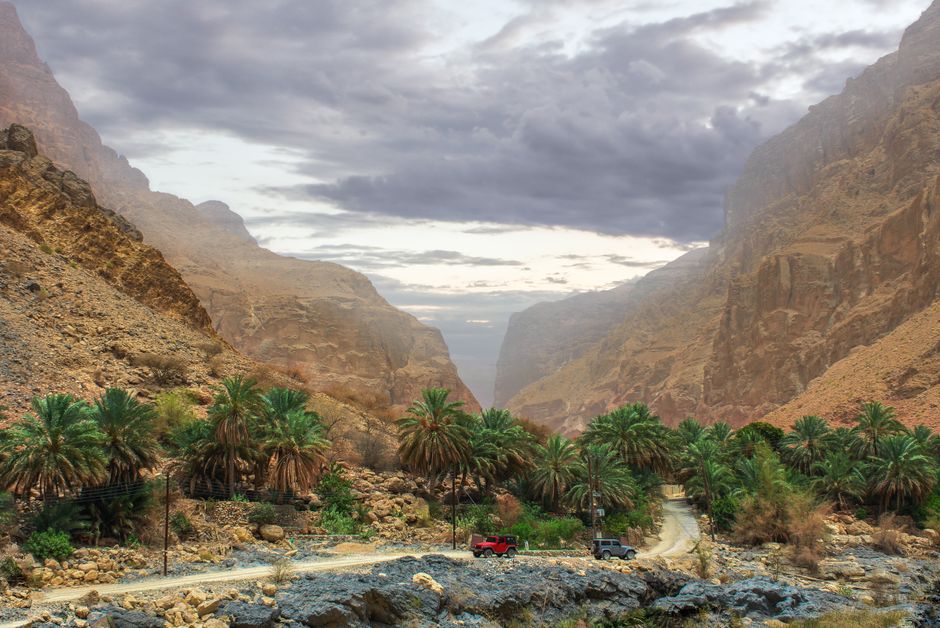
Dramatic valley in Muscat Governorate, Wadi Bani Awf, Oman
- Historic Architecture: The 300-year-old Al Hoqain Cave Village, a multi-level fortress settlement carved into a mountainside, showcases ingenious pre-modern engineering for defense and climate control.
- Cultural Scene: Experiencing the famed Omani hospitality through a chance invitation for *qahwa* (coffee) and dates in a village like Balad Sayt offers a genuine, unscripted cultural connection.
- Local Specialties: Don’t miss *Shuwa*, a celebratory dish of marinated lamb slow-cooked in an underground sand oven for up to 48 hours, often shared during community gatherings.
Pro Tip: The absolute best time to traverse the wadi is from late October to early April. Avoid the summer months (June-August) due to extreme heat and the real risk of flash floods during the *khareef* (rainy period). Start your drive from the Rustaq side by 7:30 AM to have the canyon largely to yourself and to complete the crossing before dusk.
Map of Wadi Bani Awf, Oman
Use these interactive maps to explore Wadi Bani Awf, Oman and plan your route:
📍 View Wadi Bani Awf, Oman on OpenStreetMap
🗺️ Open Wadi Bani Awf, Oman in Google Maps
Planning Your Trip: Practical Essentials
Getting There and Around
- By Air: Muscat International Airport (MCT) is your main gateway, served by Oman Air and major international carriers. The drive to the wadi’s start near Rustaq takes about 2 hours. Book flights at Skyscanner for best deals.
- By Train: Oman does not have a passenger rail network, so train travel is not an option for reaching this destination.
- By Car: A 4×4 vehicle with high clearance is NON-NEGOTIABLE for Wadi Bani Awf. The route from Highway 13 near Rustaq is well-marked. You’ll need full insurance and off-road confidence. Compare car rentals at RentalCars.com.
- Local Transport: There is no public transport within the wadi. Your rented 4×4 is your only viable option for exploration.
Best Time to Visit
Timing is critical for both safety and enjoyment in this rugged landscape. The window for ideal conditions is relatively narrow, centered on the cooler winter months.
| Season | Weather | Highlights |
|---|---|---|
| Summer (Jun–Aug) | Extreme heat (40°C+/104°F+), high risk of sudden, dangerous flash floods. | Not recommended for travel. Many tracks are impassable and the heat is hazardous. |
| Winter (Dec–Feb) | Pleasant, cool days (18-25°C/64-77°F), chilly nights. Perfect for hiking and driving. | Clear skies, comfortable exploration, and vibrant green patches in the mountains. |
| Shoulder (Mar–May/Oct–Nov) | Warm to hot days (25-35°C/77-95°F), low flood risk. Evenings are mild. | Great for swimming in the rock pools, fewer visitors than peak winter, ideal photography light. |
Budgeting for Wadi Bani Awf, Oman

Close-up of elegant arches at the Sultan Qaboos Grand Mosque in Muscat, Oman., Wadi Bani Awf, Oman
| Category | Budget | Mid-range | Luxury |
|---|---|---|---|
| Accommodation | Camping (free, with your own gear) | Local guesthouse in Rustaq or Al Hamra (~35-50 OMR/night) | Luxury desert camp or 5-star hotel in Muscat (80+ OMR/night) |
| Meals | Self-catered picnic supplies (5 OMR/day) | Local restaurants & cafe stops (10-15 OMR/day) | Fine dining in Muscat pre/post trip (30+ OMR/day) |
| Transport | 4×4 rental split 4 ways (~10 OMR/person/day) | 4×4 rental for two (~25 OMR/person/day) | Private 4×4 with guide/driver (60+ OMR/day) |
| Activities | Hiking, swimming, village visits (free) | Guided canyon hike (~20 OMR) | Private multi-day off-road tour (200+ OMR) |
| Daily Total | ~20-25 OMR | ~50-70 OMR | 150+ OMR |
*Note: 1 Omani Rial (OMR) ≈ 2.60 USD. Budget is per person, assuming some cost-sharing.
Top Attractions and Must-See Sights
| Attraction | Description | Hours | Entry Fee |
|---|---|---|---|
| Snake Canyon (Wadi Bimah) | A thrilling, narrow gorge requiring scrambling and swimming through stunning turquoise pools, best tackled with a local guide. | Daylight hours only | Free, but guide costs ~20 OMR/group |
| Balad Sayt Village | The iconic “picture-postcard” village of terraced date farms nestled in a bowl of jagged mountains, accessible only by 4×4 track. | Always accessible | Free |
| Al Hoqain (Haqleen) Cave Village | An abandoned mountain fortress settlement built into a colossal cave, offering a fascinating glimpse into ancient Omani life. | Sunrise to Sunset | Free |
| Wadi Bani Awf Drive & Pools | The epic drive itself is the attraction, with countless spots to stop for a picnic or a swim in natural rock pools along the wadi floor. | Daylight hours only | Free |
3-Day Itinerary: Wadi Bani Awf, Oman’s Highlights & Hidden Gems
Day 1: Conquest of the Canyon
- Morning (7:30 AM): Pick up your 4×4 in Muscat and drive 2 hours to the Snake Canyon trailhead near Al Mua’di. Meet your pre-booked local guide (essential for safety) for a 3-4 hour canyon adventure involving swims and jumps.
- Afternoon (1:00 PM): Enjoy a packed lunch by the final pool. Dry off and begin the epic Wadi Bani Awf drive into the mountains. Stop at the natural pools near the village of Bani Awf for a refreshing dip.
- Evening (6:00 PM): Arrive at your pre-booked guesthouse in the mountain town of Al Hamra. For dinner, try **Al Mazaar Restaurant** for a hearty portion of *Mandi* (spiced rice and meat).
Day 2: Villages & Vistas
- Morning (8:00 AM): Drive to the breathtaking viewpoint overlooking **Balad Sayt**. The walk down into the village takes 20 minutes; explore the falaj irrigation systems and terraces.
- Afternoon (12:30 PM): Drive to **Al Hoqain Cave Village**. Explore the multi-level ruins (allow 1.5 hours). For lunch, stop at a simple roadside eatery in Al Hayl for *Rukhal* bread with honey or cheese.
- Evening (5:00 PM): Continue the scenic drive towards Rustaq. Check into a hotel in Rustaq and visit the imposing **Rustaq Fort** (3 OMR entry) before it closes at 6 PM. Dine at **Bin Ateeq Restaurant** for classic Omani fare.
Day 3: Hot Springs & Return
- Morning (9:00 AM): Visit the **Al Kasfah Hot Springs** near Rustaq. These public, free pools are a local favorite for a relaxing soak. Then, explore Rustaq Souq for souvenirs like Omani daggers (*khanjars*) and frankincense.
- Afternoon (12:00 PM): Begin the drive back towards Muscat. Take the alternative route via the spectacular **Wadi Al Abyad** (The White Valley), known for its unique light-colored rock formations. Stop for photos and a final picnic.
- Evening (4:00 PM): Return your 4×4 in Muscat. For a final memorable meal, head to **Kargeen Caffe** in Madinat Qaboos for an atmospheric dinner under the trees, sampling a variety of mezze.
Cultural Insights & Etiquette
- Language: Arabic is official. Key phrases: *As-salam alaykum* (Hello), *Shukran* (Thank you). English is understood in hotels and by guides, but not widely in villages.
- Customs: Always accept offers of *qahwa* (coffee) or dates; it’s a sign of respect. Use your right hand for eating and greeting. Public displays of affection are frowned upon.
- Tipping: Not mandatory but appreciated. For guides, 5-10 OMR is standard for a full day. Round up taxi fares or leave 5-10% in sit-down restaurants if service charge isn’t included.
- Dress Code: Modesty is key. Wear loose-fitting clothing covering shoulders and knees for both men and women. Swimwear is only for designated pools/beaches; wear a cover-up to and from.
- Business Hours: Government hours: 7:30 AM – 2:30 PM, Sat-Wed. Souqs are open mornings and evenings, often closing mid-afternoon. Everything closes for prayer times (approx. 15-20 mins), 5 times daily.
Where to Eat: Wadi Bani Awf, Oman’s Best Bites
Dining in the wadi itself is about picnics and simple village hospitality. Your main meals will be in towns like Rustaq, Al Hamra, or Nizwa. Omani cuisine is aromatic and hearty, centered on rice, meat (chicken, lamb, goat), fish, and dates.
Must-Try Local Specialties
- Shuwa: The ultimate Omani celebration dish. Lamb marinated in spices, wrapped in banana leaves, and slow-cooked in a sand oven for up to two days. You’ll need to be invited to a celebration or find it at large festivals.
- Mishkak: Skewers of marinated meat (often beef or chicken) grilled over charcoal at roadside stalls. Perfect, flavorful street food. Best found in town souqs in the evening.
- Halwa: A sticky, sweet gelatinous dessert made from rosewater, saffron, nuts, and sugar. **Bin Ateeq** in Nizwa or Muscat is famous for its high-quality halwa.
Restaurant Recommendations by Budget
| Type | Restaurant | Specialty | Price Range |
|---|---|---|---|
| Budget | Roadside Grills (Rustaq/Nizwa Souq) | Fresh Mishkak, Rukhal bread with cheese | 1-3 OMR per person |
| Mid-range | Bin Ateeq Restaurant (Multiple branches) | Reliable for all Omani classics like Mandi, Maqbous, and fresh juices. | 5-8 OMR per person |
| Fine dining | Kargeen Caffe (Muscat) | Atmospheric garden setting with an extensive menu of Omani and Lebanese mezze and grills. | 10-20 OMR per person |
Where to Stay
There are no hotels within Wadi Bani Awf itself. Accommodation is based in gateway towns. Camping is free and permitted in many areas—always leave no trace. Compare prices and book at Booking.com or Airbnb for apartments.
Best Neighborhoods for Accommodation
- Al Hamra/Nizwa: The historic heartland. Staying here puts you close to Jabal Shams, Nizwa Fort, and the souq. Ideal for culture lovers and as a base for mountain exploration. Options range from heritage guesthouses to modern hotels.
- Rustaq: The western gateway to the wadi. A practical stopover with good hotels, the famous fort, and hot springs. Less touristy than Nizwa, offering a more local feel.
- Muscat: For luxury and convenience. Start and end your trip here. You’ll find all international standards, but it adds a 2-hour drive each way to the wadi. Best for those wanting comfort before/after the rugged adventure.

Explore the majestic sandstone formations in the desert landscapes of Wadi Rum, Wadi Bani Awf, Oman
FAQs: Your Wadi Bani Awf, Oman Questions Answered
1. Is Wadi Bani Awf, Oman safe at night?
Oman is an exceptionally safe country with very low crime. However, driving or hiking in the wadi at night is strongly discouraged due to the complete lack of lighting, difficult terrain, and potential for disorientation. Always plan to be at your accommodation or camp well before sunset.
2. What currency is used and are credit cards accepted?
The currency is the Omani Rial (OMR). In Muscat and major hotels, credit cards are widely accepted. In the wadi, villages, and small local restaurants, you will need cash (small notes). ATMs are available in towns like Rustaq, Nizwa, and Al Hamra.
3. How do I get from the airport to the city center?
From Muscat International Airport (MCT), you can take an official “Mwasalat” taxi (fixed fare of ~20 OMR to central Muscat), use the airport bus (much cheaper, ~0.5 OMR), or pre-book a private transfer. For a seamless start, book airport transfers at GetYourGuide for convenience.
4. Do I need to speak the local language?
No, but it helps. English is spoken in tourism hubs, hotels, and by guides. In remote villages, knowledge is limited. Learning a few basic Arabic greetings will be met with warm appreciation and can greatly enhance your interactions.
5. What’s the appropriate dress code?
Modest, loose-fitting clothing is required. For the
Explore More Destinations
- Jozani, Tanzania on a Budget: an Ancient Forest for $35/Day (2026)
- Nsumbu, Zambia on a Budget: Wild Africa for $40/Day (2026)
- Semporna, Malaysia on a Budget: Paradise for $35/Day (2026)
- Khuzestan, Iran on a Budget: Ancient Empires for $30/Day (2026)
- Ngerulmud, Palau on a Budget: Island Majesty for $45/Day (2026)
Ready to Visit Wadi Bani Awf?
Start planning your trip today. Compare hotels, find the best tours, and get insider tips.
Your adventure in Wadi Bani Awf starts here →
{“@context”: “https://schema.org”, “@type”: “FAQPage”, “mainEntity”: [{“@type”: “Question”, “name”: “What is the best time to visit Wadi Bani Awf?”, “acceptedAnswer”: {“@type”: “Answer”, “text”: “The best time to visit Wadi Bani Awf depends on your preferences. Generally, the dry season offers the most pleasant weather for sightseeing and outdoor activities.”}}, {“@type”: “Question”, “name”: “How many days do I need in Wadi Bani Awf?”, “acceptedAnswer”: {“@type”: “Answer”, “text”: “Most travelers spend 3-5 days in Wadi Bani Awf to see the main attractions. A week allows for a more relaxed pace and day trips.”}}, {“@type”: “Question”, “name”: “Is Wadi Bani Awf expensive to visit?”, “acceptedAnswer”: {“@type”: “Answer”, “text”: “Wadi Bani Awf can be visited on various budgets. Accommodation ranges from hostels to luxury hotels, and local restaurants offer affordable dining.”}}]}
Related Guides
Explore more destinations similar to Wadi Bani Awf:
- Daintree Rainforest, Australia: Best Ancient Wilderness, Unique Wildlife & Indigenous Culture (2025)
- Kisii, Kenya’s Epic Soapstone, Tea & Highland Vistas (2025)
- Shushtar, Iran’s Best Ancient Aqueducts, Date Palms & Living History (2025)
- Gorna Oryahovitsa, Bulgaria’s Best Railways, Ruins & Rustic Charm (2026)

