
Uummannaq, Greenland for Adventurers: 7 Trails That Put the Alps to Shame (2026)
Your ice-axe sinks into the blue‑white wall of a frozen waterfall. Fifty metres below, the Uummannaq Fjord glitters in the midnight sun. A gust of polar air whips your face, and you hear the faint crack of shifting ice. This isn’t a training film—this is a typical Tuesday morning in a town of 1,200 people, perched on a heart‑shaped island 600 kilometres north of the Arctic Circle. Welcome to the most vertical adventure playground you’ve never heard of.
The Main Event: Dog Sledding Across the Frozen Fjords
Nothing separates the casual tourist from the true adventurer in Uummannaq like a dog‑sled journey across sea ice. From late March to early June, the fjord freezes solid enough to support teams of 12–14 Greenlandic sled dogs. You’ll meet your musher at the edge of town, where the dogs—wolf‑eared, thick‑coated, and vibrating with energy—are harnessed to a handmade wooden sled. The typical half‑day trip (4 hours, including a break for hot tea and dried seal meat) costs 1,800 DKK (about $265 USD) per person, booked through Uummannaq Tourist Service (they’re reachable via the local hotel).
The terrain is otherworldly: you skim over pressure ridges, past icebergs the size of apartment blocks that have grounded in the shallows. The dogs run in utter silence except for the hiss of runners on snow and the occasional yip. Your musher—often a hunter who still relies on these animals for winter sustenance—will let you stand on the runners for a few kilometres. Insider tip: wear two pairs of wool socks and a windproof outer layer; the windchill at 20 km/h drops to −30 °C even on a “warm” spring day.
Activity #1: Ice Climbing on Uummannaq Mountain
Uummannaq Mountain rises 1,170 metres straight from the sea, its west face a frozen cascade of ice that forms every winter and holds until late June. Unlike the groomed ice falls of Norway or Canada, this is wild, alpine ice—vertical, brittle in places, and thrillingly unpredictable. You’ll meet your certified guide at the harbour at 8 a.m.; the short boat crossing (15 minutes, 50 DKK) takes you to the base. The climbing day runs about 8 hours, including approach and descent. Most routes are WI3–WI4 (moderate to hard in the ice‑climbing scale), so you need prior top‑roping experience and a basic understanding of crampon technique. Full gear (boots, crampons, ice tools, harness, helmet) is provided by Greenland Adventure Tours for 2,500 DKK. The best conditions are in April, when the sun warms the ice enough to make it plastic but not slushy. Locals recommend starting early to avoid the afternoon melt that sends shards of ice tumbling down the gully. One of the most memorable pitches is the “Finger of the Heart,” a narrow pillar of pure blue ice that forms in the centre of the face—you’ll feel like you’re climbing a giant sapphire.
Activity #2: Kayaking Among the Icebergs (Summer Only)
If you visit between July and September, the ice retreats enough to launch a sea kayak from the pebble beach below Hotel Uummannaq. This is a completely different kind of adrenaline—quiet, contemplative, yet laced with danger. You paddle through a maze of grounded icebergs that calved from the nearby Rink Glacier, some as large as football fields. The water is glass‑calm at dawn, but a sudden katabatic wind can turn the fjord into a washing machine within minutes. Rent a single kayak from Uummannaq Kayak Club for 800 DKK for three hours (they also offer tandem for 1,200 DKK). Go at 6 a.m. to avoid the afternoon boat traffic and to catch the low‑angle light that turns the ice into an emerald cathedral. Seasoned travelers bring a dry bag with a thermos of hot chocolate and a camera with a polariser—the reflections off the ice are blinding. Safety note: always stick within 200 metres of shore; the ferry captain in town will warn you of any calving zones. The club provides a dry suit and a personal flotation device. If you’re lucky, you might spot a ringed seal sunning itself on an ice floe.

Traditional peat house and Santas mailbox in Uummannaq, Uummannaq, Greenland
Refuel: Where Adventurers Eat
After a day on the ice, your body craves protein and carbohydrates—preferably in large quantities. Start at Restaurant Niviarsiaq, a cozy wood‑panelled spot in the town centre. Their suaasat (traditional seal stew with rice and onions) costs 180 DKK and is the kind of meal that makes you understand why Inuit hunters survived on this for millennia. The owner, Aleqa, is a former musher and will tell you stories of her 200‑kilometre sled trips to the next settlement. For quicker fuel, grab a whale‑meat burger (open‑faced, with pickled cucumber) at Polar Café—just 95 DKK and served with a side of crispy potatoes. On Friday evenings, locals gather at Hotel Uummannaq’s dining room for a buffet of Greenlandic specialties: musk ox, Arctic char, and reindeer. The cost is 350 DKK for the buffet, and the panoramic windows face directly onto the fjord—you can watch icebergs drift as you eat. If you have a sweet tooth, the café near the heliport sells kager (Danish pastries) filled with cloudberry jam for 30 DKK each; take one to go for your morning hike.
Base Camp: Where to Stay
Adventurers need a base that offers early breakfast, secure gear storage, and proximity to the harbour. Hotel Uummannaq (book via Booking.com) is the town’s most reliable option—47 rooms, most with private bathrooms and views of the mountain. They’ll pack a breakfast box for you if you’re leaving before 7 a.m. (ask at reception, 50 DKK extra). Rates from 1,400 DKK per night in low season (May/Sept) to 2,000 DKK in high summer. For a more budget‑minded choice, Uummannaq Guesthouse offers dorm beds (350 DKK) and private rooms (800 DKK), with a communal kitchen and a locked closet for your climbing gear. The guesthouse is a 10‑minute walk from the harbour, and the owner, Arnaq, is a former search‑and‑rescue volunteer who can give you real‑time ice conditions. Both properties have drying rooms for damp gear—essential after a day on the water or ice.

A purple flower sitting on top of a grass covered hillside, Uummannaq, Greenland
Gear & Prep Checklist
- Waterproof, breathable outer shell (Gore‑Tex recommended) and insulated bib pants
- Three layers of wool or fleece (avoid cotton – it kills in the Arctic)
- Aviation‑grade sunglasses or glacier goggles (UV reflection off snow is intense)
- Leather or synthetic mountaineering boots rated to at least −30 °C
- Big‑fitness requirement: you should be comfortable walking uphill with a 10‑kg pack for 4‑5 hours; ice climbing demands upper‑body and core strength
- Safety consideration: daylight varies wildly – in April you get 16 hours of light, in December only 4; time your activities accordingly and carry a headlamp even in spring
Getting There & Around
- Flights: Uummannaq’s heliport (UMD) is served by Air Greenland helicopters from Ilulissat (1.5 hours, 4,200 DKK round‑trip) and Qaanaaq (2 hours, 5,800 DKK). Flights operate daily in summer, less frequently in winter. Book at Skyscanner for the best fare from your home country to Ilulissat, then add the helicopter leg via Air Greenland’s website.
- Local Transport: The island is only 10 km², so you’ll walk everywhere in town. For activities beyond the settlement, you take the local boat taxi (50–100 DKK per ride) or the helicopter if your tour includes it. Snowmobiles and dog sleds depart from the harbour area.
- Best Season: For dog sledding and ice climbing, come between March 20 and June 10. For kayaking and hiking, July and August are optimal, though the mosquito season peaks in late July. September gives you the Northern Lights but most boat services have ended by mid‑month.

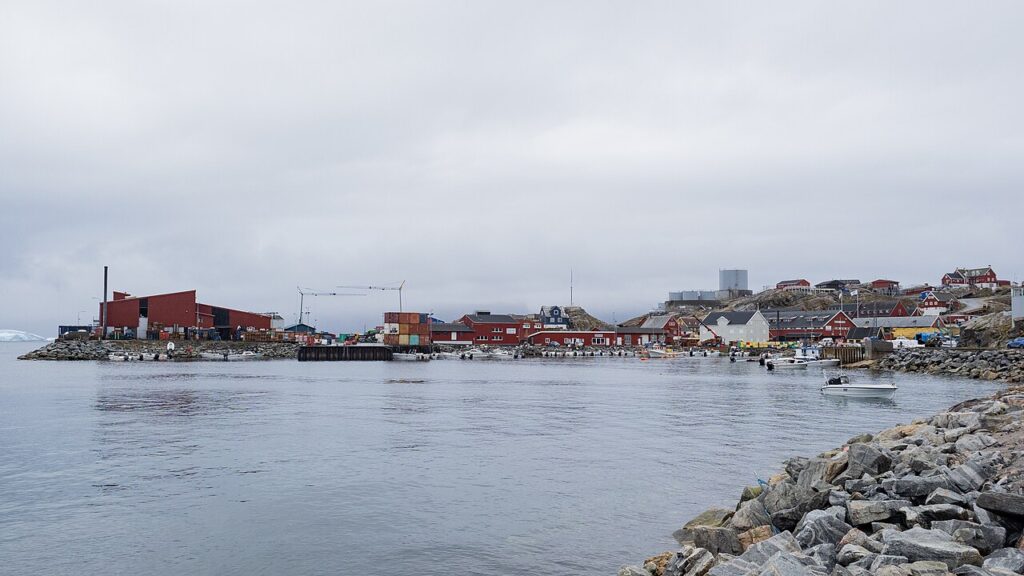
A small town on the shore of a body of water, Uummannaq, Greenland
Is Uummannaq, Greenland Worth It?
If you’ve skied in Chamonix or heli‑hiked in Alaska, Uummannaq will still feel raw and demanding. The infrastructure is minimal—no ski lifts, no groomed trails, no emergency services within hours. That’s exactly what makes it glorious for the right kind of traveller. You’ll love it if you’re self‑reliant, comfortable with decision‑making in variable conditions, and hungry for solitude. The costs are comparable to a week in Norway (about $300–400/day for a full adventure itinerary), but the experiences—standing alone on an ice‑climbed pillar, the dogs’ breath clouding around you—are unrepeatable. Less adventurous souls may prefer the more polished offerings of Ilulissat or Kangerlussuaq. But if you want to feel what the Arctic explorers of the 19th century felt, with the luxury of a warm bed and a hot meal at the end, Uummannaq is not just worth it—it’s essential. Book your helicopter slot early, pack your courage, and go.

