
Tuban, Indonesia (2026)
Ask locals about Tuban, Indonesia, and they’ll tell you about the sacred tomb of Sunan Bonang, the 15th-century Islamic sage whose legacy draws pilgrims from across Java every Thursday night. Most guidebooks speed past this ancient port city on the way to Bali or Bromo, missing entirely that Tuban offers the most authentic slice of coastal Javanese life you’ll find anywhere east of Surabaya. With 68 kilometers of undeveloped coastline, a living keris-making tradition that predates the Majapahit empire, and seafood so fresh the fisherman still beach his boat at dawn, here’s what savvy travelers are quietly discovering.
Why Tuban, Indonesia Stands Out
- Historic Architecture: The 15th-century Sunan Bonang Tomb complex features nine-tiered meru roofs and carved stone panels, blending Hindu-Javanese temple architecture with Islamic spirituality.
- Cultural Scene: Every Jumat Legi (Friday of the 35-day Javanese calendar), the Sandur ritual drama reenacts ancient forest spirits protecting rice fields, a hypnotic trance-dance found nowhere else.
- Local Specialties: Sate lalat (“fly satay”) — tiny pork skewers grilled over coconut husk charcoal, served with peanut sauce and ketan (sticky rice) at nighttime stalls in Kerek village.
Pro Tip: Visit during April or September for the best weather — the monsoon rains (December–February) can close beach access roads, while peak dry season (July–August) brings weekend crowds from Surabaya. Arrive at the Sunan Bonang complex by 7 AM on a Thursday to witness pilgrims before tour groups arrive at 9 AM.
Map of Tuban, Indonesia
Use these interactive maps to explore Tuban, Indonesia and plan your route:
📍 View Tuban, Indonesia on OpenStreetMap
🗺️ Open Tuban, Indonesia in Google Maps
Planning Your Trip: Practical Essentials

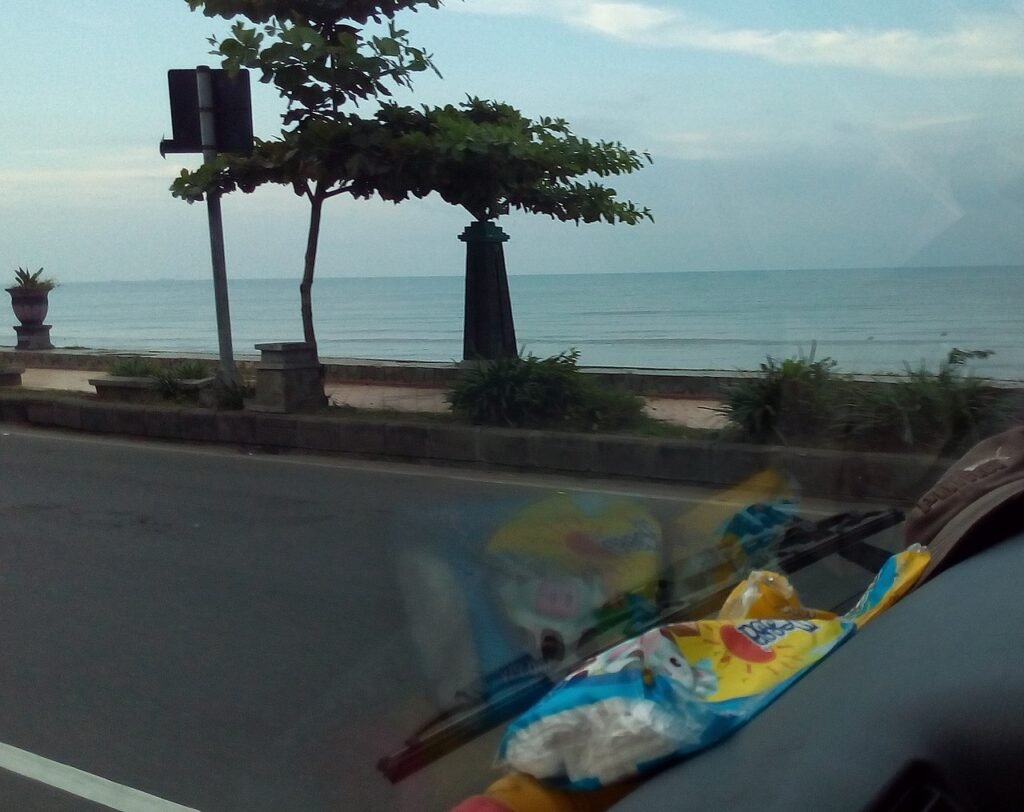
Pemandangan dengan latar kapal terdampar di tepi pantai kota Tuban., Tuban, Indonesia
Getting There and Around
- By Air: Fly into Juanda International Airport (SUB) in Surabaya, 100 km southwest. AirAsia and Lion Air offer daily flights from Jakarta (1 hour, from 450,000 IDR). From the airport, take a DAMRI bus to Surabaya’s Bungurasih terminal (20,000 IDR), then a connecting bus to Tuban (2.5 hours, 60,000 IDR). Book flights at Skyscanner for best deals.
- By Train: Tuban has no train station. The nearest rail hub is Bojonegoro (45 km south), served by “Kereta Api Ekonomi” from Surabaya (2 hours, 35,000 IDR). From Bojonegoro station, minibuses (angkot) run hourly to Tuban’s central terminal (60 minutes, 25,000 IDR). Reserve tickets at Trainline or the national railway website.
- By Car: The scenic coastal road from Surabaya (Jalan Pantura) takes 3 hours and offers ocean views near Manyar village. Toll roads (56,000 IDR total) speed the journey to 2 hours. Rent a car from RentalCars.com — expect 350,000–500,000 IDR/day including insurance.
- Local Transport: Angkot (shared minibuses, 5,000 IDR per ride) run fixed routes connecting the town center to beaches and villages. For flexibility, hire an ojek (motorbike taxi) at the central market — negotiate 50,000 IDR/hour. Download Gojek or Grab for app-based rides (available in town center).
Best Time to Visit
Tuban enjoys a tropical monsoon climate with two distinct seasons. The dry season (April–October) delivers cobalt skies and calm seas ideal for beach exploration, while the green season transforms the surrounding teak forests into a lush haven. Your best bet is to plan around cultural events rather than just weather — the Lebaran ketupat celebrations (one week after Eid) bring the most vibrant traditional performances.
| Season | Weather | Highlights |
|---|---|---|
| Summer (Jun-Aug) | 27–33°C, low humidity, clear skies | Prime beach weather at Pantai Boom and Kelapa Gading; busy with Surabaya weekenders; accommodation books fast |
| Winter (Dec-Feb) | 24–30°C, heavy afternoon rain, high humidity | Lush green landscapes; lower hotel prices (40% discount); few tourists; some beach access roads become muddy |
| Shoulder (Apr-May/Sep-Oct) | 26–32°C, occasional showers, moderate humidity | Perfect balance — fewer crowds than summer, greener than dry season; best time for pilgrimage visits and hiking to Air Panas hot springs |
Budgeting for Tuban, Indonesia

A person riding a bike down a street, Tuban, Indonesia
| Category | Budget | Mid-range | Luxury |
|---|---|---|---|
| Accommodation | 100,000–200,000 IDR | 300,000–600,000 IDR | 800,000–1,500,000 IDR |
| Meals | 15,000–30,000 IDR | 40,000–80,000 IDR | 100,000–200,000 IDR |
| Transport | 5,000 IDR (angkot) | 50,000–100,000 IDR (ojek/day) | 350,000 IDR (rental car) |
| Activities | Free (beaches, temples) | 10,000–25,000 IDR (museum, tomb) | 150,000 IDR (guided tour) |
| Daily Total | 150,000–300,000 IDR ($10–$20) | 400,000–800,000 IDR ($26–$52) | 1,200,000–2,200,000 IDR ($78–$143) |
Top Attractions and Must-See Sights
| Attraction | Description | Hours | Entry Fee |
|---|---|---|---|
| Sunan Bonang Tomb Complex | 15th-century Islamic pilgrimage site with nine-tiered meru roof, ancient ketipung drums, and a sacred spring. | Daily 6 AM–9 PM | Free (donation appreciated) |
| Pantai Boom (Boom Beach) | White-sand beach with limestone cliffs, natural swimming pools at low tide, and sunset views of Madura Strait. | 24 hours | 5,000 IDR |
| Museum Kerek | Open-air museum preserving the keris-making village of Kerek, with live forging demonstrations dating to Majapahit times. | Mon–Sat 8 AM–4 PM | 10,000 IDR |
| Air Panas Tuban (Hot Springs) | Natural sulfur hot springs at the foot of Mount Pandan, surrounded by teak forest — 38–42°C pools. | Daily 7 AM–5 PM | 15,000 IDR |
3-Day Itinerary: Highlights & Hidden Gems of Tuban, Indonesia

A group of people riding on the back of a horse drawn carriage down a street, Tuban, Indonesia
Day 1: Spiritual Heart & Coastal Vibes
- Morning: Arrive at Sunan Bonang Tomb by 7 AM to witness pilgrims in prayer. Climb the nine-tiered roof for a panoramic view of Tuban’s old quarter — you’ll spot the Java Sea stretching north. Locals recommend touching the sacred ketipung drum for blessings.
- Afternoon: Walk 10 minutes to Depot Ayam Penyet Wawan for lunch — their ayam penyet (smashed fried chicken with sambal) costs 25,000 IDR. Then explore Pasar Baru Tuban (central market) where you’ll find antique keris blades starting at 200,000 IDR and handwoven lurik fabric for 50,000 IDR per meter.
- Evening: Head to Pantai Boom for sunset — time your visit for 5 PM to claim a spot on the limestone cliffs. Dinner at Warung Makan Ibu Titin (on the beach road) serves grilled baronang (rabbitfish) with sambal dabu-dabu for 40,000 IDR.
Day 2: Keris Village & Forest Hot Springs
- Morning: Take an ojek (50,000 IDR one-way, 30 minutes) to Kerek village. You’ll arrive at 8 AM to see empu (keris masters) forge blades using iron and nickel from local meteorites — a technique unchanged since the 14th century. A 20-minute forging demonstration costs 10,000 IDR.
- Afternoon: Lunch at Warung Mbak Rina in Kerek center — their nasi pecel with tuban-style tempeh and lalapan (raw vegetables) costs 15,000 IDR. Then travel 20 minutes by ojek (40,000 IDR) to Air Panas Tuban hot springs. Soak for 1–2 hours in the 38°C pools surrounded by ancient teak trees.
- Evening: Return to town for dinner at Rumah Makan Padang Sederhana (Jalan Basuki Rahmat) — a nasi padang feast with rendang, ayam pop, and gulai costs around 50,000 IDR. Afterward, stroll Jalan Veteran where night food carts sell sate lalat — try 10 skewers with ketan for 15,000 IDR.
Day 3: Coastal Villages & Farewell Feast
- Morning: Hire an ojek for the full morning (100,000 IDR) and explore three hidden coves east of town: Pantai Kelapa Gading (coconut palm-lined, turquoise water), Pantai Pasir Putih Remen (white sand, gentle waves — best for swimming), and Pantai Air Gading (secluded, rock pools). Arrive by 8 AM for the best light.
- Afternoon: Lunch at Pondok Ikan Bakar Celebes (on the beach road to Kelapa Gading) — their ikan bakar (grilled snapper) with sambal matah and steamed rice costs 45,000 IDR. Try the fresh coconut drink (15,000 IDR) served in the shell.
- Evening: Your final stop: sunset at Pantai Sowan, a local fishing beach 15 minutes south of town. Watch fishermen haul their boats ashore. Dinner at Lemari Roti (Jalan Pahlawan) — an unexpected gem serving Javanese-Dutch fusion: bitterballen (35,000 IDR), biefstuk (75,000 IDR), and homemade es krim tape (fermented cassava ice cream, 20,000 IDR) — a perfect farewell meal.
Cultural Insights & Etiquette
- Language: Javanese (ngoko level) is the local tongue, but most people understand Bahasa Indonesia. Learn “Matur nuwun” (thank you in Javanese) and you’ll earn wide smiles. English is very limited outside hotels.
- Customs: When visiting the Sunan Bonang tomb or any village ceremony, dress modestly (long pants/skirt, covered shoulders) and remove shoes before entering prayer areas. Never point the soles of your feet toward someone — it’s considered deeply disrespectful.
- Tipping: Not expected but appreciated — round up angkot fares (5,000 to 10,000 IDR), leave 5,000–10,000 IDR for hotel staff, and tip ojek drivers 5,000–10,000 IDR per trip.
- Dress Code: Beachwear is fine at Pantai Boom and other beaches, but cover up when leaving the sand. For temple or tomb visits, wear a sarong (often provided at entrances) and a modest top. Women should avoid bikinis in town.
- Business Hours: Most shops open 8 AM–9 PM, but many close for midday prayer (11:30 AM–1 PM Friday). Government offices operate 8 AM–4 PM weekdays. Warungs often open early for breakfast (6 AM) and close by 10 PM.
Where to Eat: The Best Bites in Tuban, Indonesia
Tuban’s cuisine is a revelation — a mash-up of Javanese coastal cooking with Chinese, Arab, and Dutch influences from centuries of maritime trade. You’ll discover dishes that rarely appear in tourist guidebooks, centered around the freshest seafood from the Madura Strait and vegetables from the fertile teak-forest highlands. The town’s food scene rewards the curious and the early riser — the best sate stalls sell out by 8 PM, and the morning market yields the most authentic flavors.
Must-Try Local Specialties
- Sate Lalat: Tiny pork skewers (literally “fly satay” because they’re so small) grilled over coconut husk charcoal. The smoky flavor with peanut sauce is unmatched. Best at night stalls in Kerek village — look for the white banner at the crossroads.
- Nasi Pecel Tuban: Steamed rice with blacan (fermented shrimp paste), long beans, bean sprouts, and spicy peanut dressing — but the Tuban version adds crispy tempeh and a side of grilled chicken. Authentic versions at Warung Makan Bu Darmi on Jalan Basuki Rahmat (15,000 IDR).
- Es Krim Tape: Homemade ice cream made with fermented cassava (tape), giving it a natural sweetness and slight tang — a refreshing dessert you’ll find at Lemari Roti and night dessert carts in the town square.

