
The Alien Archipelago: Finding Earth’s Lost World in Socotra (2026)
The first morning light on Socotra is a silent, rose-gold revelation. You wake not to traffic, but to the distant, rhythmic crash of the Indian Ocean on a shore of blinding white sand. The air carries the dry, clean scent of frankincense resin warmed by the sun, a perfume that has drifted through these canyons for millennia. In 48 hours here, you don’t just visit a place; you step into a living, breathing alien landscape, where the rules of the familiar world no longer apply.
Quick Facts Before You Go
- Best Months: October to April. This is the dry season, with pleasant temperatures (25-30°C/77-86°F) and calm seas, perfect for trekking and beach visits. Avoid the summer monsoon (June-September) of strong winds and rough seas.
- Currency: Yemeni Rial (YER). Approximately 1,250 YER to 1 USD. Cash is king; bring enough USD or EUR to exchange. Credit cards are virtually useless.
- Language: Soqotri (a unique South Arabian language) and Arabic. Basic English is understood by guides and some hotel staff, but not widely spoken.
- Budget: $150-$250 per day. This covers a basic hotel, all meals, a 4×4 rental with driver/guide (mandatory), and park fees. It is not a budget destination due to logistical challenges.
- Getting There: Flights to Socotra Airport (SCT) from Cairo (CAI) via Yemenia or Air Cairo, or from Abu Dhabi (AUH) via charter services. Flight time is roughly 3-4 hours. Book at Skyscanner to track routes.
Day 1: The Alien Highlands & A Desert Oasis
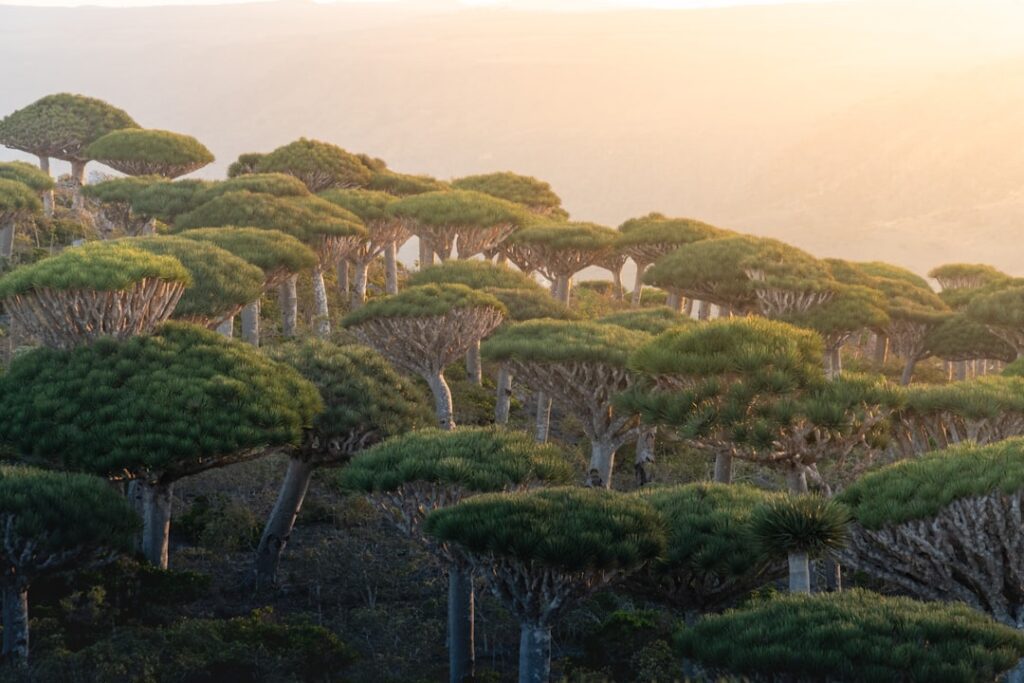
You start the morning early, your 4×4 leaving the sleepy coastal capital of Hadibo and climbing swiftly into the fog-wrapped Haghier Mountains. The tarmac disappears, replaced by a rocky track. As the mist burns away, the world transforms. You are not on Earth as you know it; you are in the realm of the Dragon’s Blood Tree.
- Morning (8-11am): Hike in the Firmihin Forest. Your guide leads you on a 90-minute walk through a silent grove of these ancient, umbrella-shaped trees (Dracaena cinnabari). There is no entrance fee, but your guide package includes it. Touch the rough bark and learn how its crimson resin—the “dragon’s blood”—has been traded as medicine and varnish since the time of the Romans.
- Lunch: A picnic prepared by your guide’s family. Expect fresh flatbread, local honey, tuna salad, and Socotri dates, enjoyed on a rocky plateau with views stretching to the sea. (Included in tour cost).
- Afternoon (1-5pm): Descend to the arid plains of Homhil. Here, you’ll find a natural swimming pool fed by a spring, a miraculous oasis fringed by more Dragon’s Blood Trees. Take a refreshing dip. Afterwards, visit a local Bedouin family at their simple homestead; it’s a profound cultural exchange, not a staged show. A small donation of $5-$10 for their hospitality is appropriate.
- Evening: Dinner at your hotel or a simple local restaurant in Hadibo like Al-Mashrabiya. Try the grilled kingfish with rice and molokhia (a savory green stew). As night falls, step outside. With virtually no light pollution, the Milky Way is a dazzling, thick band across the sky—your final, humbling spectacle of the day.

The sun is setting over the sand dunes, Socotra, Yemen
Day 2: From Dunes to Lagoons
Today trades mountain majesty for coastal wonder. You head east, the landscape shifting to vast, empty beaches and rolling dunes that meet turquoise water. The pace is slower, dictated by the sun and the sea breeze. This is a day for feeling the sheer, untouched scale of Socotra.
- Morning: Sunrise at the Hayf and Zahek Sand Dunes. You walk over soft, golden dunes that plunge directly into the bright blue waves of the Indian Ocean—a surreal, photogenic collision of desert and sea. For breakfast, your guide will prepare sweet, strong black tea on a camp stove, served with biscuits and more of that legendary Socotri honey.
- Midday: Swim and snorkel at Detwah Lagoon. This breathtaking, shallow lagoon near the fishing village of Qalansiyah is protected by a curved spit of white sand. The water is warm and crystal clear, perfect for spotting rays and colorful fish. Insider Tip: The “crowds” here might be one other Land Cruiser. For true solitude, walk 15 minutes west along the beach.
- Afternoon: Explore the coastline near Qalansiyah. See the traditional, brightly painted wooden fishing boats pulled up on the shore. If you’re lucky, you might witness the afternoon catch being brought in. There are no formal shops, but you can sometimes buy fresh lobster directly from fishermen for a few dollars.
- Final Evening: Your farewell dinner is a beach barbecue. Your guide grills the day’s fresh catch—perhaps lobster or tuna—over an open fire as the sun sets over the lagoon. Savor it with your hands, the taste of salt and smoke mingling, under a canopy of emerging stars. It’s a fittingly primal and perfect end to your Socotra adventure.

A person standing on top of a sandy hill next to the ocean, Socotra, Yemen
The Food You Can’t Miss
Dining in Socotra is less about fine cuisine and more about sustenance and simplicity, with flavors drawn directly from the sea, the date palms, and the hardy mountain herbs. You won’t find elaborate menus, but you will find memorable meals.
For breakfast, you must try Socotri Honey. Dark, thick, and complex, it’s harvested from bees that pollinate the island’s unique flora. Drizzle it over fresh bread or eat it straight. At lunch, look for Mendy—a festive dish of lamb or goat slow-cooked in a tandoor-like underground pit, served over fragrant rice. Your guide can often arrange this with advance notice for around $15-$20 per person.
For a true street food experience, in Hadibo, look for small grills selling shai haleeb (milky tea) and malawah—a flaky, layered pancake often eaten with honey or a simple egg scramble for about 500 YER ($0.40). One reliable local restaurant is Diyar Al-Socotra, where for about 5,000 YER ($4), you can get a massive plate of freshly grilled fish, rice, and stewed vegetables.

A strange looking tree in the middle of a rocky area, Socotra, Yemen
Where to Stay for the Weekend
Accommodation is basic but clean. Most visitors stay in or near Hadibo for access to services.
Hadibo: The “urban” hub. Staying here puts you near the market and a handful of restaurants. Options like the Summer Land Hotel offer simple rooms with AC and private bathrooms for $50-80/night. It’s functional and friendly. Check availability on Booking.com (though direct booking via email is often required).
Qalansiyah Area: For a more remote feel, a couple of eco-camps and guesthouses operate near the lagoon. Expect very basic shared facilities (compost toilets, bucket showers) but unbeatable locations right on the beach for $30-60/night. These are usually arranged directly through tour operators. For unique stays, browse local options on Airbnb, but communication and booking can be challenging.
Before You Go: Practical Tips
- Getting Around: You MUST hire a 4×4 with a local driver/guide. Independent travel is not permitted or practical. A 2-day tour for 1-4 people costs $300-$500 total, including vehicle, fuel, guide, and basic meals. This is non-negotiable for safety and access.
- What to Pack: 1) Sturdy hiking shoes for rocky terrain. 2) A high-SPF, reef-safe sunscreen and a wide-brimmed hat—the sun is intense. 3) A powerful flashlight/headlamp for nights with no electricity. 4) All necessary medications and a basic first-aid kit; pharmacies are limited.
- Common Tourist Mistakes: 1) Not bringing enough cash in clean, untorn US dollars. 2) Underestimating the ruggedness. This is not a resort island; it’s an adventure destination where plans change with the weather and road conditions.
- Money-Saving Tip: Form a small group. The cost for a 4×4 and guide is largely fixed, so splitting it 3-4 ways dramatically reduces your per-person daily expense. A solo traveler might pay $250/day, while someone in a group of four might pay $120.
Frequently Asked Questions About The Alien Archipelago
Is The Alien Archipelago worth visiting?
Yes, The Alien Archipelago offers unique attractions and experiences for travelers.
How many days do I need in The Alien Archipelago?
2-4 days is ideal for first-time visitors to The Alien Archipelago.
What is the best time to visit The Alien Archipelago?
Spring and fall offer the best weather for visiting The Alien Archipelago.
{“@context”: “https://schema.org”, “@type”: “FAQPage”, “mainEntity”: [{“@type”: “Question”, “name”: “Is The Alien Archipelago worth visiting?”, “acceptedAnswer”: {“@type”: “Answer”, “text”: “Yes, The Alien Archipelago offers unique attractions and experiences for travelers.”}}, {“@type”: “Question”, “name”: “How many days in The Alien Archipelago?”, “acceptedAnswer”: {“@type”: “Answer”, “text”: “2-4 days is ideal for first-time visitors to The Alien Archipelago.”}}, {“@type”: “Question”, “name”: “Best time to visit The Alien Archipelago?”, “acceptedAnswer”: {“@type”: “Answer”, “text”: “Spring and fall offer the best weather for visiting The Alien Archipelago.”}}]}
Ready to Visit The Alien Archipelago?
Start planning your trip today. Compare hotels, find the best tours, and get insider tips.
Your adventure in The Alien Archipelago starts here →
Related Guides
Explore more destinations similar to The Alien Archipelago:

