
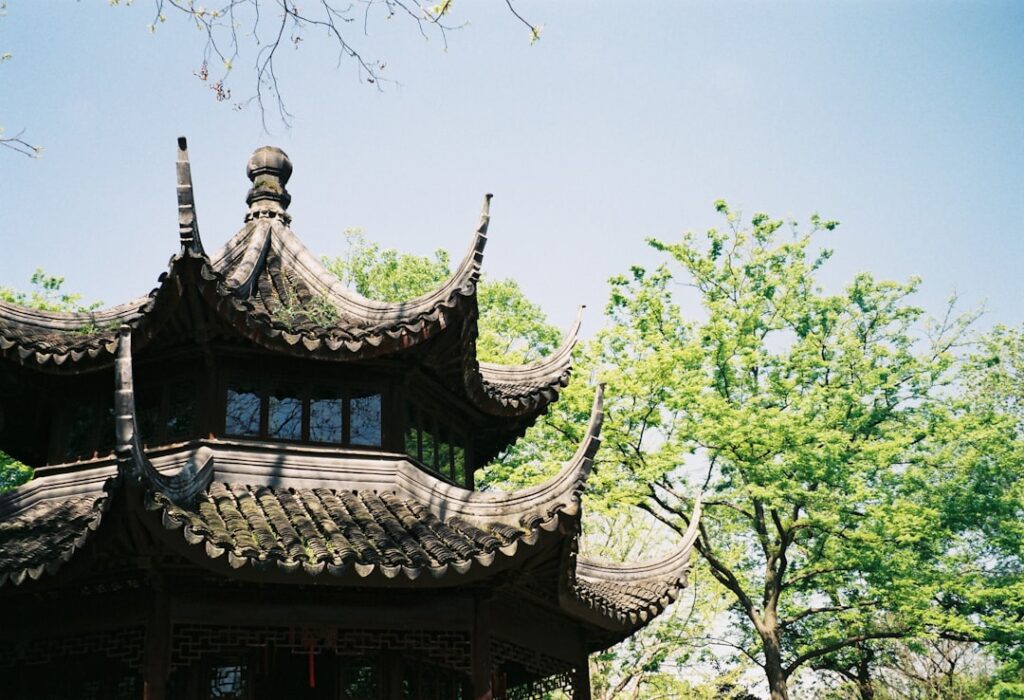
Suzhou, China’s Ultimate Canals, Classical Gardens & Silk Heritage (2026)
While crowds flock to Shanghai’s skyscrapers just 30 minutes away by bullet train, Suzhou delivers a profound sense of timeless Chinese elegance without the frantic pace. Here, you can sip tea in a 16th-century garden designed for poetic contemplation, then glide down a 2,500-year-old canal past whitewashed homes with black-tiled roofs. This is the living embodiment of the ancient proverb, “In heaven there is paradise, on earth there is Suzhou and Hangzhou.”
Why Suzhou, China Stands Out

A group of houses surrounded by trees, Suzhou, China
- Historic Architecture: The Humble Administrator’s Garden, a UNESCO site from 1509, is a masterpiece of Ming Dynasty landscape design, where every pavilion, rock, and pond is a deliberate philosophical statement.
- Cultural Scene: The ancient Pingtan storytelling and Suzhou Opera, performed in delicate, melodic Suzhou dialect, offer an intimate glimpse into the region’s artistic soul.
- Local Specialties: You must try a bowl of Suzhou-style noodles, like *Yangchunmian*, served in a delicate, clear broth with a symphony of subtle flavors, a far cry from heavier northern styles.
Pro Tip: Visit the most popular gardens like the Humble Administrator’s Garden right at opening (7:30 AM) or during the lunch hour (12:00-1:00 PM) on a weekday to experience their serenity without the tour groups. For the best light and atmosphere, explore the ancient Pingjiang Road canal area in the late afternoon.
Map of Suzhou, China
Use these interactive maps to explore Suzhou, China and plan your route:
📍 View Suzhou, China on OpenStreetMap
🗺️ Open Suzhou, China in Google Maps
Planning Your Trip: Practical Essentials
Getting There and Around
- By Air: Most travelers fly into Shanghai Pudong (PVG) or Hongqiao (SHA) airports. From there, a high-speed train is your best bet. Direct buses to Suzhou run from both airports (2-3 hours). Book flights at Skyscanner for best deals.
- By Train: Suzhou is a major stop on the Beijing-Shanghai high-speed line. From Shanghai Hongqiao Station, trains take just 25-30 minutes and cost around ¥40 ($6). From Beijing, it’s about 4.5 hours. Reserve tickets at Trainline or the national railway website.
- By Car: Driving is not recommended for visitors due to complex city traffic and parking scarcity in the historic core. Compare car rentals at RentalCars.com only if planning day trips to nearby water towns.
- Local Transport: The clean, efficient metro system (4 lines) is ideal for reaching major sights. Taxis and DiDi (China’s ride-hailing app) are affordable. For the authentic experience, take a canal boat tour or rent a bicycle to explore the old city’s labyrinthine lanes.
Best Time to Visit
The ideal windows are spring (April-May) and autumn (September-October), when the weather is mild and the gardens are at their most vibrant. Summer can be hot and humid, while winter is chilly but offers a stark, quiet beauty in the gardens, often with fewer visitors.
| Season | Weather | Highlights |
|---|---|---|
| Summer (Jun–Aug) | Hot & humid, 25-35°C (77-95°F), frequent rain. | Lotus flowers bloom spectacularly in the gardens; lively evening canal scenes; prepare for crowds and afternoon showers. |
| Winter (Dec–Feb) | Cold, 0-8°C (32-46°F), occasional light snow. | Peaceful, almost empty gardens; a unique, stark beauty; Chinese New Year decorations and festivities in late Jan/Feb. |
| Shoulder (Apr–May/Sep–Oct) | Mild & pleasant, 15-25°C (59-77°F), low rainfall. | Perfect garden-visiting weather with blooming peonies (spring) or fragrant osmanthus (autumn); ideal for walking and outdoor dining. |
Budgeting for Suzhou, China

A group of boats traveling down a river next to buildings, Suzhou, China
| Category | Budget | Mid-range | Luxury |
|---|---|---|---|
| Accommodation | Hostel/Guesthouse: ¥150-300/night | 3-4 Star Hotel: ¥500-900/night | 5-Star/Luxury Boutique: ¥1,200+/night |
| Meals | Street food/noodle shops: ¥20-50/meal | Local restaurant: ¥80-150/meal | Fine dining/Songhelou: ¥300+/meal |
| Transport | Metro/Bus: ¥4-10/day | Taxi/DiDi: ¥50-100/day | Private car & driver: ¥800+/day |
| Activities | Garden entry: ¥30-90, walking canals: Free | Multiple gardens, boat tour: ¥200/day | Private guide, silk factory tour: ¥600+/day |
| Daily Total | ¥250-450 ($35-65) | ¥800-1,300 ($115-185) | ¥2,500+ ($350+) |
Top Attractions and Must-See Sights
| Attraction | Description | Hours | Entry Fee |
|---|---|---|---|
| The Humble Administrator’s Garden | Suzhou’s largest and most famous classical garden, a water-centric landscape of pools, bridges, and pavilions. | 7:30 AM – 5:30 PM (Apr-Oct), 7:30 AM – 5:00 PM (Nov-Mar) | ¥90 (Apr-Oct), ¥70 (Nov-Mar) |
| Lingering Garden | A UNESCO site renowned for its magnificent Ming-era viewing pavilions and exquisite collection of scholar’s rocks. | 7:30 AM – 5:30 PM | ¥55 |
| Pingjiang Historic Road | A 1.6km ancient canal street lined with traditional houses, teahouses, boutiques, and whispering willows. | 24/7 (shops 9 AM – 10 PM) | Free (paid for specific museums/teahouses) |
| Suzhou Museum | Architect I.M. Pei’s modern masterpiece, blending contemporary design with traditional elements to house ancient artifacts. | 9:00 AM – 5:00 PM (Closed Mondays) | Free (book online in advance) |
3-Day Itinerary: Suzhou, China’s Highlights & Hidden Gems
Day 1: Classical Gardens & Ancient Canals
- Morning (7:30 AM): Beat the crowds at the **Humble Administrator’s Garden**. Spend two hours wandering its three distinct sections, focusing on the “Fragrant Isle” and the “Hall of Distant Fragrance.”
- Afternoon (12:30 PM): Walk 10 minutes to **Songhelou** on Guanqian Street for a legendary lunch. Order their signature *Squirrel-Shaped Mandarin Fish* (¥198) and *Biluo Shrimp*. Afterwards, explore the **Suzhou Museum** (booked for 2:30 PM entry).
- Evening (6:00 PM): Stroll down **Pingjiang Road** as the lanterns light up. Take a 40-minute canal boat ride (¥120/person) from the wharf near the *Pingjiang Lodge*. For dinner, find a table at **Wu Zhong Xing Kitchen** for authentic, home-style Suzhou dishes like braised pork belly.
Day 2: Silk, History & Local Life
- Morning (9:00 AM): Visit the **Suzhou Silk Museum** (¥15) to understand the city’s 5,000-year-old silk legacy. See live silkworms and antique looms. Savvy visitors often purchase silk items here for quality assurance.
- Afternoon (12:00 PM): Take the metro to **Shantang Street (Seven-Li Shantang)**. This restored Qing Dynasty canal street is bustling. Have lunch at **Chun Hua Xing** for superb *Xiefen Xiaolong* (crab roe soup dumplings). Then, visit the **Ancient Grand Canal** section and the **Shantang People’s Residence Museum** (¥45).
- Evening (6:30 PM): Experience **Pingtan** (storytelling and ballad singing) at the **Pingtan Museum** on Shantang Street (shows around 7 PM, ¥50-80). For a casual dinner, the street food stalls along Shantang offer delicious *jianbing* (savory crepes) and sticky rice cakes.
Day 3: Masterpiece Gardens & Panoramic Views
- Morning (8:00 AM): Take a taxi (¥20) to the **Lingering Garden**. Focus on its central complex of buildings and the famed “Cloud-Capped Peak” rockery. Then, walk to the nearby **Tiger Hill** (¥80), the supposed burial site of King Helü, and see the leaning **Yunyan Pagoda**.
- Afternoon (1:00 PM): Have lunch at **De Yue Lou** near Tiger Hill, known for its Suzhou-style pastries and noodles. Then, head to the **Master-of-Nets Garden** (¥40), a small but perfectly composed garden best known for its elegant evening performances.
- Evening (5:30 PM): For a final, breathtaking view, go to the **Suzhou Center Mall** in the SIP district. Take the elevator to the viewing platform of the **Gate to the East** skyscraper (¥120) for sunset over the ancient and modern cities. Enjoy a farewell dinner at **Jin Ji Lake** waterfront, choosing from its array of international restaurants.
Cultural Insights & Etiquette
- Language: Mandarin is standard. Locals speak the soft, melodic Suzhou dialect. Key phrases: *Nǐ hǎo* (Hello), *Xièxie* (Thank you), *Duōshǎo qián?* (How much?).
- Customs: A slight nod is a common greeting. Present and receive items, especially business cards, with both hands. Avoid loud conversations in serene places like gardens.
- Tipping: Not customary or expected in restaurants, taxis, or hotels. High-end international hotels may have a discretionary service charge.
- Dress Code: Modest, comfortable clothing is fine. Wear comfortable walking shoes. For fine dining, smart casual is appropriate.
- Business Hours: Shops generally open 9 AM-9 PM. Museums/gardens open 7:30/8:30 AM and close by 5:30 PM. Major holidays (Chinese New Year, National Day Oct 1-7) see massive domestic travel.
Where to Eat: Suzhou, China’s Best Bites
Suzhou cuisine, part of Jiangsu or “Huaiyang” culinary tradition, is known for its seasonal focus, subtle sweetness, intricate knife work, and emphasis on bringing out natural flavors. Dining is an art form here, with presentation matching taste.
Must-Try Local Specialties
- Squirrel-Shaped Mandarin Fish (*Songshu Guiyu*): A whole fish, scored to resemble a squirrel’s tail, fried crispy, and served with a hot, sweet-and-sour sauce. The hallmark dish of Suzhou. Best at **Songhelou**.
- Braised Pork Belly in Brown Sauce (*Hongshao Rou*): Suzhou’s version is exceptionally tender, sweet, and aromatic, often cooked with ginger and star anise. Find an excellent rendition at **Wu Zhong Xing Kitchen**.
- Suzhou-style Noodles (*Su Shi Mian*): Characterized by a delicate, clear broth and finely cut toppings. *Yangchunmian* (“Spring Noodles”) is the simplest and purest form. **Yu Ji Noodle Shop** on Pingjiang Road is a local institution.
Restaurant Recommendations by Budget
| Type | Restaurant | Specialty | Price Range |
|---|---|---|---|
| Budget | Yu Ji Noodle Shop (Pingjiang Rd) | Authentic Suzhou noodles in a no-frills setting | ¥15-30 per bowl |
| Mid-range | Wu Zhong Xing Kitchen (Pingjiang Rd) | Classic home-style Suzhou dishes in a traditional house | ¥60-120 per person |
| Fine dining | Songhelou (Guanqian St) | Historic restaurant serving imperial-grade Suzhou banquet cuisine | ¥200-400+ per person |
Where to Stay
Your best bet is to stay near the historic center (Pingjiang Road/ Guanqian area) for atmosphere, or in the Suzhou Industrial Park (SIP) near Jinji Lake for modern luxury and skyline views. Compare prices and book at Booking.com or Airbnb for apartments.
Best Neighborhoods for Accommodation
- Pingjiang Road / Historic Center: The most atmospheric choice. You’re steps from canals, gardens, and teahouses. Expect charming boutique hotels and guesthouses in traditional buildings, but rooms can be smaller. Perfect for culture seekers.
- Guanqian Street / Downtown: The bustling commercial heart, excellent for shopping and transit. Offers a wide range of international chain and business hotels. Very convenient, but less picturesque.
- Suzhou Industrial Park (Jinji Lake): The modern face of Suzhou, with stunning skyscrapers, wide boulevards, and lake views. Home to 5-star hotels like the Pan Pacific. Ideal for luxury travelers and those who prefer contemporary amenities.

A view of a city with a lake in the foreground, Suzhou, China
FAQs: Your Suzhou, China Questions Answered
1. Is Suzhou, China safe at night?
Yes, Suzhou is generally very safe for travelers, even at night. The canal streets and main tourist areas are well-lit and often busy until late. As in any city, practice standard precautions: be aware of your surroundings in less crowded areas and keep valuables secure.
2. What currency is used and are credit cards accepted?
The Chinese Yuan (CNY or RMB) is the currency. While major hotels, high-end restaurants, and large stores in malls accept international credit cards (Visa/Mastercard), cash is still king for small shops, taxis, street food, and most local restaurants. Your best bet is to always carry some cash. ATMs are widely available.
3. How do I get from the airport to the city center?
From Shanghai Hong
{“@context”: “https://schema.org”, “@type”: “FAQPage”, “mainEntity”: [{“@type”: “Question”, “name”: “What is the best time to visit Suzhou?”, “acceptedAnswer”: {“@type”: “Answer”, “text”: “The best time to visit Suzhou depends on your preferences. Generally, the dry season offers the most pleasant weather for sightseeing and outdoor activities.”}}, {“@type”: “Question”, “name”: “How many days do I need in Suzhou?”, “acceptedAnswer”: {“@type”: “Answer”, “text”: “Most travelers spend 3-5 days in Suzhou to see the main attractions. A week allows for a more relaxed pace and day trips.”}}, {“@type”: “Question”, “name”: “Is Suzhou expensive to visit?”, “acceptedAnswer”: {“@type”: “Answer”, “text”: “Suzhou can be visited on various budgets. Accommodation ranges from hostels to luxury hotels, and local restaurants offer affordable dining.”}}]}
Related Guides
Explore more destinations similar to Suzhou:
- Tingo María, Peru’s Best Waterfalls, Caves & Amazonian Adventures (2025)
- Tangier, Morocco: Hidden Mediterranean Vistas, Mystical Medinas & Literary Legends (2025)
- Almora, India’s Hidden Himalayan Vistas, Ancient Temples & Kumaoni Culture (2025)
- Koh Libong, Thailand’s Ultimate Dugongs, Seagrass & Untouched Beaches (2025)

