
Sagarmatha National Park, Nepal for Adventurers: 7 Trails That Put the Alps to Shame (2026)
You’re standing at Lukla’s Tenzing-Hillary Airport, the tiny runway tilting toward an abyss of cloud and granite. The propellers kick up wind that smells like ice and prayer flags. Below you, the Dudh Koshi River roars through a gorge, and ahead, sharp ridgelines poke into a cobalt sky at 5,000 meters. Your heart hammers with the altitude and the raw, wild promise of what’s to come. Welcome to the roof of the world.
The Main Event: The Everest Base Camp Trek (Via Kala Patthar)
The Everest Base Camp trek is your primary ticket to adrenaline in Sagarmatha National Park, and it’s not for the faint of heart or lungs. You’ll start in Lukla (2,860m) and push through the Khumbu Valley, passing Sherpa villages, swaying suspension bridges, and ancient monasteries before the trail thins into glacial moraine. The full journey to Base Camp (5,364m) and then up Kala Patthar (5,545m) takes 12–14 days round-trip. Cost? Expect around $1,200 to $1,800 per person including permits, a licensed guide, teahouse lodging, and meals. The park entry fee alone is $30, and the Sagarmatha National Park permit is added to your TIMS card. Book a guided trek with Intrepid Travel or Exodus Travels to handle logistics, but seasoned travelers often go with local operators in Kathmandu’s Thamel district for a better price. Your best bet is to start the trek at 7 a.m. from Namche Bazaar (3,440m), your acclimatization hub, and tackle the steep, switchbacked “Naulekh” hill before the day grows hot.
The real adrenaline spike comes on the final push to Kala Patthar for sunrise. You’ll leave Gorak Shep (5,164m) at 4:30 a.m. with a headlamp, crampons strapped to your boots, and a thermos of ginger tea. The trail is a rock-and-ice scramble—steep, icy, lung-burning—and after 90 minutes, you’ll stand on a windswept summit with Everest’s Khumbu Icefall directly below and Nuptse’s razor edge above. The rumor among mountaineers is that you can hear the ice crack like a rifle shot from lower camps. Pack a down suit or a heavy belay jacket, wool underlayers, a buff, and polarized sunglasses, because the glare off snow at 5,500m will sear your retinas otherwise. Insider tip from local Sherpa guides: save Kala Patthar for your second-to-last day, after you’ve acclimatized for at least 12 days—not your first attempt from Namche, or you’ll face altitude sickness.
Activity #1: Gokyo Lakes & Ngozumpa Glacier Crossing
If you want a different kind of high-altitude rush without the Base Camp crowds, your move is the Gokyo Lakes circuit. Starting from Namche, you’ll take a less-traveled path north along the Dudh Koshi, past tiny settlements like Phortse and Machhermo, to the third of the turquoise Gokyo Lakes (4,800m). The main event here is crossing the Ngozumpa Glacier, which locals call the “wide, dry river of rock and ice.” You’ll need a local guide ($30–$50 per day) to navigate the lateral moraine, where crevasses yawn open without warning. Plan a full day from Gokyo village to cross, then climb the nearby Gokyo Ri peak (5,357m) for a panoramic view of four 8,000-meter giants: Cho Oyu, Lhotse, Makalu, and Everest. Tour operators like G Adventures run a combined Base Camp–Gokyo itinerary, but do-it-yourself trekkers can book a lodge bed for $10 per night at the Gokyo Resort & Lodge. Acclimatization is non-negotiable: you’ll spend 3 nights at altitudes above 4,000m to complete this side adventure safely.

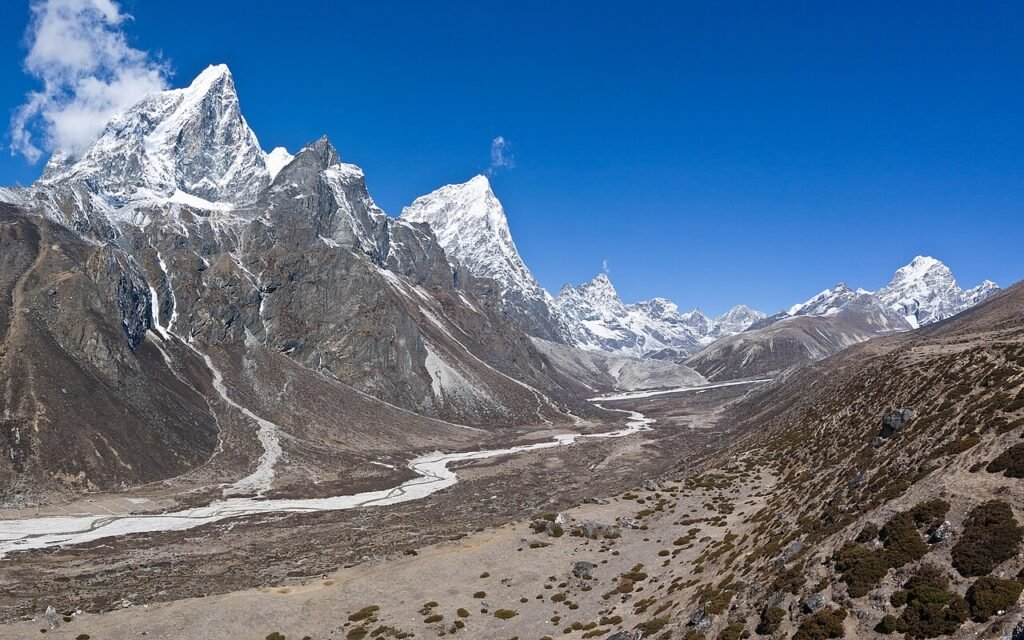
Ama Dablam base camp in Sagarmatha National Park in Nepal, Sagarmatha National Park, Nepal
Activity #2: Island Peak Climbing (Imja Tse)
For a true mountaineering tick, Island Peak (6,189m) is your best bet, and it’s a classic stepping stone before Everest expeditions. The name comes from its appearance: a sheer, island-like islet of ice rising from the vast Imja Valley. You’ll start from Chukhung (4,730m), a base camp for serious climbers, and spend 2 nights at high camp (5,600m) in dome tents. The climb demands fixed ropes, a harness, and basic crampon skill—you won’t need prior experience but you’ll want a fitness level that allows a 5-hour push from high camp to the summit. Firms like Himalayan Ascent offer fully equipped climbing packages for $1,200–$1,500, including guide, permits, and all technical gear. That sounds steep, but it beats hauling your own rope. Departure time is brutal: 2 a.m., when the ice is frozen solid and your crampons bite well. The final 300m headwall is near-vertical, and the view from the summit—with Lhotse’s south face towering over you—will make every lung-blasting breath worth it. Locals advise booking in October or April when the weather window is stable; winter conditions (December–February) add dangerous avalanche risk.

A Buddhist stupa with prayer flags before snow-capped Himalayan peaks in Nepal, Sagarmatha National Park, Nepal
Refuel: Where Adventurers Eat
After a day of oxygen debt, your body craves fuel, and the tea houses of Sagarmatha deliver surprisingly hearty sustenance. In Namche Bazaar, head to Buddha Bakery (top of the hill, opposite the National Park office). Locals recommend the apple pie and chocolate fudge cake, served with Tibetan butter tea—set you back about $4. You’ll also find their legendary “Everest Burger,” a yak-meat patty with local cheese, for $7. For a dinner with a view, claim a window seat at Danfey’s Restaurant, where you can watch the moon rise over Khumbila Peak while eating thukpa (noodle soup with vegetables, $5) and momos (steamed dumplings, 10 for $4). In Gorak Shep, near Base Camp, the Snowman Lodge & Restaurant is the only game in town—your $6 “Dhal Bhat” (rice, lentils, curry) comes with unlimited refills, a Sherpa tradition to keep climbers strong. Most importantly, skip the canned imported beer; instead, sip a hot lemon with honey, not just to survive the cold, but to avoid altitude headaches. Travelers often discover that a well-fed body recovers twice as fast at high altitude.

Colorful prayer flags strung across a frozen lake beneath snow-capped mount…, Sagarmatha National Park, Nepal
Base Camp: Where to Stay
You’ll want lodging that respects early starts and offers gear storage. In Namche, the Khumbu Lodge is a backpacker favorite: bunk beds at $8 per night, warm shared showers, and a breakfast buffet starting at 5 a.m. for $5—critical if you’re catching sunrise at Kala Patthar. For a touch more comfort, Yeti Mountain Home (villages of Lukla and Namche) provides clean, high-quality berths, with soft duvets and solar-heated private rooms for $40–$60 per night, plus a patio perfect for evening yak-spotting. Closer to the action, in Dingboche (4,410m), the Lhasa Guest House is run by a Sherpa climbing family who have summitted Everest 14 times collectively. They offer unlimited ginger tea and free use of a first-aid kit—and the wall of photos with famous mountaineers will fire you up. For booking flexibility, search Booking.com for “teahouses in Sagarmatha National Park” to lock in a room before you fly, though you’ll often get better rates on the ground. Pro tip: look for lodges that advertise a “3,000m altitude room” with extra oxygen, for around $10 more a night.
Gear & Prep Checklist
- Down jacket: A 700-fill or higher winter jacket (e.g., a Patagonia down sweater or Mountain Hardwear Ghost Whisperer) for the sub-zero summit mornings; you’ll wear it at Kala Patthar and over your base layers.
- Waterproof, insulated hiking boots: High-cut, crampon-compatible boots like the La Sportiva Nepal Cube. Break them in with at least 100 km of hiking before you come—blisters at 5,000m are a trip-ender.
- Sunscreen and lip balm: SPF 50+ and a high-altitude lip balm with SPF 30. Snow blindness and chapped lips are common complaints among unprepared travelers.
- Physical preparation tip: Begin leg-strength and cardiovascular training 3 months out. You’ll need to hike uphill for 6+ hours daily with a 15 kg pack, so incorporate stair-climbing sessions (60 flights a day) into your routine.
- Altitude sickness safety: Never ascend

