
Pursat, Cambodia Weekend: Marble Masterpieces, Floating Villages & Riverside Serenity (2026)
The first thing you notice is the rhythmic tap-tap of hammers against stone—a sound that follows you through dusty streets lined with half-finished Buddha statues. Then the air shifts: the sweet-sour perfume of grapefruit from roadside stalls mingles with the muddy breath of the Tonle Sap River. You step off the bus and already feel you’ve stumbled onto Cambodia’s best-kept secret. For travelers hungry for authentic encounters far from the Angkor crowds, Pursat delivers a weekend of sculptural wonders, floating life, and riverbank tranquillity that lingers long after you leave.
Quick Facts Before You Go
- Best Months: December through February—cool, dry mornings make exploring comfortable, and the Tonle Sap’s floating villages are fully accessible.
- Currency: Cambodian Riel (approx. 4,100 Riel to 1 USD). U.S. dollars are widely accepted; you’ll get change in Riel for small amounts.
- Language: Khmer. English is spoken at hotels, markets, and tourist spots, but learning a cheerful “arun suorsdei” (good morning) goes a long way.
- Budget: $20–$40 per day covers comfortable guesthouse, three local meals, and a few activities. Savvy visitors can stretch it to $15 by eating at market stalls.
- Getting There: Fly into Phnom Penh International Airport (3.5 hours by minibus, $8–12) or Siem Reap–Angkor International Airport (2.5 hours by shared taxi, $10–15). Book flights at Skyscanner.
Day 1: The Marble Trail & Floating Village Discovery
You wake early, not to an alarm but to the clatter of wooden shutters opening across the street. Over a bowl of steaming num banh chok—fermented rice noodles drenched in green fish gravy—you plan your day. Locals recommend starting with Pursat’s beating heart: the marble workshops that have made this town famous for decades. By 8 a.m., the chisels are already singing.
- Morning (8–11am): Head to the marble carving workshops along National Road 5, just north of town. You’ll find dozens of open-air sheds where artisans transform raw stone into intricate Buddha statues, elephants, and lotus flowers. Most masters are happy to demonstrate; expect no entry fee, but a $1–2 tip is polite. The highlight is Lucky Sculpture Factory (open daily 7am–5pm, free). You can commission a small statue starting at $10, delivered within hours.
- Lunch: Walk five minutes to Sovann Phum Restaurant (corner of Street 217 and National Road 5). Order their famous fish amok ($4)—coconut-spiced mousse steamed in banana leaf—and a fresh grapefruit juice ($1). The terrace overlooks the dusty marble yards, providing a front-row seat to the chisel symphony.
- Afternoon (1–5pm): Take a tuk-tuk ($8 return, including waiting time) 20 minutes south to Kampong Luong, one of the largest floating villages on the Tonle Sap. You’ll board a longtail boat (negotiate: $10–15 per person for 1.5 hours). Your guide will point out floating schools, vegetable gardens on rafts, and the stilted homes of the Vietnamese Cham community. Plan to arrive before 2pm to catch the fishermen returning—their silver catch glinting under the sun is a photographer’s dream.
- Evening: Return to town as the sky bruises into sunset. Dine at Mekong Garden Restaurant (St. 3, by the river). Their grilled snakehead fish with lemongrass ($6) arrives sizzling on a clay pot. Pair it with a cold Angkor Beer ($1.50). After dinner, stroll the Pursat River promenade—local families spill out onto mats, and you can buy roasted crickets from a vendor ($0.50 for a bag) if you’re feeling adventurous.

Phnum Kravanh, Cambodia, Pursat, Cambodia
Day 2: Market Mornings & Ancient Temples
Your second day feels slower, dreamier. Travelers often discover that Pursat’s charm lies not in packed itineraries but in unhurried moments—a taste of life as it has been for generations. You’ll start with a market that hums with the energy of a thousand daily dramas.
- Morning (7–10am): Hit Psar Tmei (New Market) on Street 118 before the heat sets in. This is where villagers sell everything from handwoven krama scarves to fresh jungle greens. Grab a breakfast of khao nom (rice cakes with coconut syrup, $0.50) from Auntie Srey—her stall is near the fruit section. Negotiate for a marble paperweight ($2–3) as a souvenir; locals say the best deals come before 8am.
- Midday (10am–1pm): Hire a shared taxi ($15 total, up to four people) for the 45-minute drive to Wat Bakan, an ancient temple complex dating back to the 11th century. Unlike Angkor Wat, you’ll have the ruins nearly to yourself. Most tourists overlook this site, so savvy visitors arrive just before noon to avoid the rare tour groups. The central sanctuary, with its weathered sandstone carvings of apsaras and nagas, feels like a secret you’ve been let in on. Entry is $5; bring water as there’s no shop nearby.
- Afternoon (1:30–4pm): Return to Pursat town and explore the riverside neighborhood around Street 1. Pop into The Little Shop (No. 12, St. 1)—a converted shophouse selling handwoven textiles and ceramic bowls made by local communities. Owner Sopheak speaks excellent English and will share stories of the town’s pre-war glory. Next, wander the back alleys behind the Provincial Market; you’ll stumble upon colonial-era wooden houses with ornate shutters.
- Final Evening (6pm onward): Your farewell dinner deserves something special. Make a reservation at Balcony Restaurant (above Sovann Phum, same owners) for a sunset view over the river. Their standout dish is amtok—ginger-spiced marinated beef wrapped in lotus leaves ($5). For dessert, order the grilled bananas with coconut cream ($2). Afterward, join the locals at the night market near the central roundabout for a final cup of sugarcane juice ($0.30).
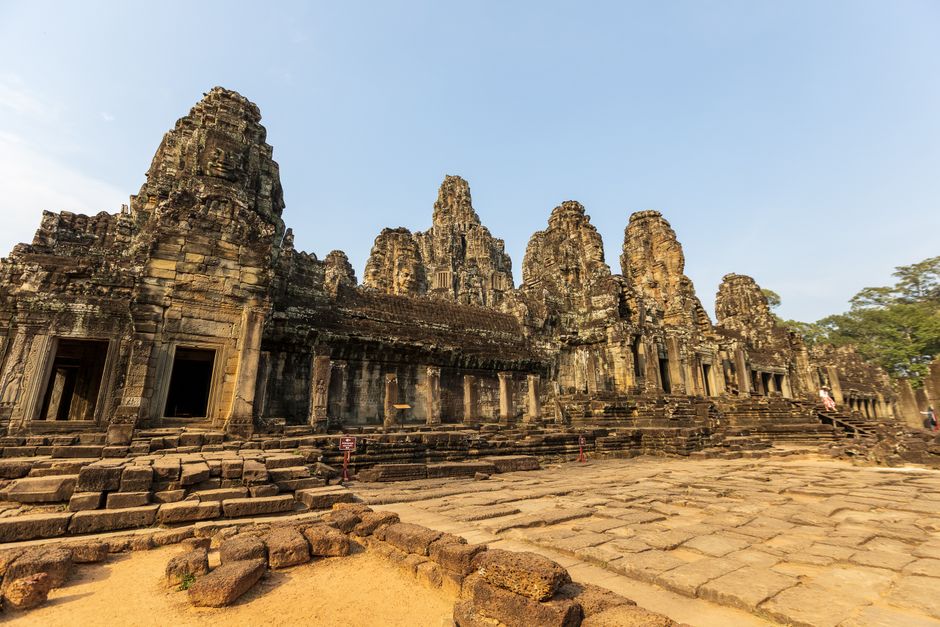
Stunning view of Angkor Wat temple ruins against clear blue sky, Pursat, Cambodia
The Food You Can’t Miss
Pursat’s cuisine is a love letter to the Tonle Sap’s freshwater bounty and the orchards that line its banks. Grapefruit steals the show—you’ll find it in everything from salads to cocktails. The must-try dish is lahng grapefruit: segments of sweet pomelo tossed with dried shrimp, shredded coconut, chilies, and a wedge of lime ($2). The best version is at Kimly Restaurant (St. 118, near the old market), where they add crunchy fried shallots.
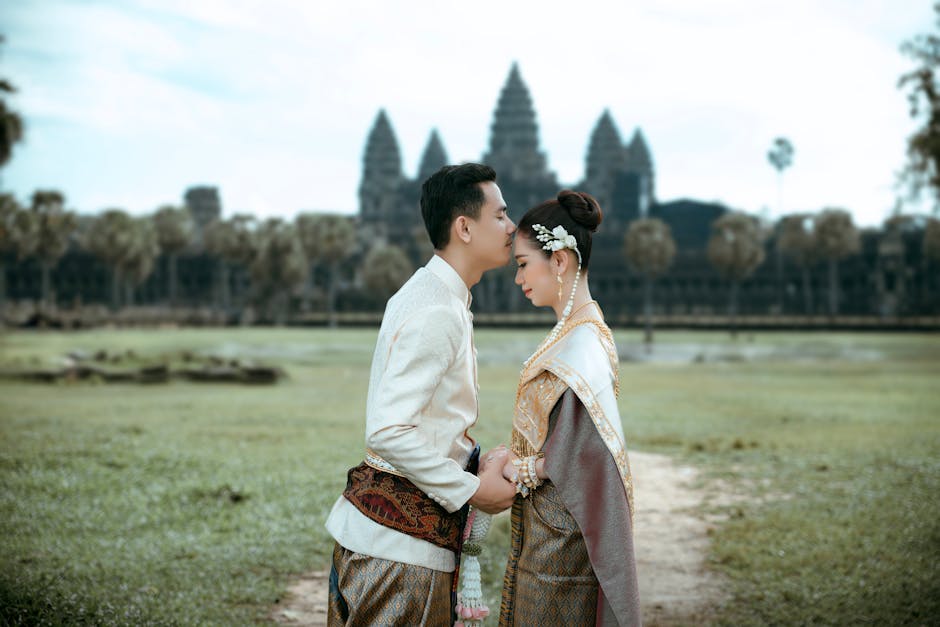
A couple in traditional Cambodian attire embracing at Angkor Wat, Pursat, Cambodia
Street food here rewards the bold. Along the riverside at dusk, vendors set up charcoal grills selling moot—pork skewers brushed with palm sugar and soy ($0.80 each). Locals recommend you order them with sticky rice and a dipping bowl of crushed peanuts and chili. For a sit-down meal, try the fish soup at Por Eang Restaurant (St. 3, opposite the Provincial Hall)—a sour, tamarind-laced broth that will wake up your taste buds for just $3. And don’t leave without a bag of roasted lotus seeds ($0.50), which you’ll see women selling on motorbikes around every corner.
For a true local experience, join the breakfast queue at Sopheap’s Kitchen (St. 215, open 6–10am). The specialty is num banh chok with fermented fish sauce ($1.50)—order it “extra sour” for the full Khmer taste. Travelers often come back for seconds, and you’ll understand why: the noodles are made fresh daily, the gravy is perfumed with turmeric, and every bowl comes with a handful of fresh herbs from Sopheap’s garden.
Where to Stay for the Weekend
For the most atmospheric base, choose a guesthouse near the Pursat River between Street 1 and Street 3. This area is walkable to markets, marble workshops, and the night market—you’ll hear the temple bells from Wat Preah Theat at dawn. Budget travelers love Pursat River Guesthouse (St. 1, from $12/night) for its clean fan rooms and rooftop hammocks where you can watch the river traffic. Mid-range visitors should book Angkor Chey Resort (National Road 5, 2km north of town; from $30/night), a charming complex of wooden bungalows set in a garden of frangipani and mango trees. Amenities include a saltwater pool and free bicycle hire—perfect for exploring the marble district on two wheels.
If you prefer rural tranquility, the floating village of Kampong Luong offers homestays on stilted houses (from $15/night, including dinner). You’ll sleep to the lapping of water and wake to the sight of children paddling to school. Search Booking.com or Airbnb for “Kampong Luong” to find a few options—book at least two weeks ahead during peak season (December–February).
Before You Go: Practical Tips
- Getting Around: Tuk-tuks are your best friend—most trips within town cost $1–2. For Kampong Luong or Wat Bakan, hire a driver for the half-day (negotiate $15–20). You can also rent a bicycle from your guesthouse ($3/day); the river route is flat and pleasant.
- What to Pack: Light, long-sleeved clothes (for sun protection and temple visits), a reusable water bottle (tap water is not drinkable, but guesthouses often have filtered refills), mosquito repellent with DEET, and a headlamp or flashlight (electricity can flicker in rural areas—and you’ll need it for the floating village after dark).
- Common Tourist Mistakes: Assuming the floating village boat tour includes a guide speaking English—always confirm and agree a price before boarding. Also, don’t skip Wat Bakan thinking “another Angkor temple”; this one offers solitude and unpolished charm that the big sites lack. Finally, locals recommend you avoid wearing shoes with thin soles inside the marble workshops—stone chips are sharp.
- Money-Saving Tip: Eat at the central market for breakfast and lunch—a full meal with rice, soup, and a drink costs under $2. Share a boat tour to Kampong Luong with other travelers you meet at your guesthouse; the $10–15 per person fee covers the same boat whether there are two or six people. If you’re really pinching pennies, skip the taxi to Wat Bakan and take a local minibus from the bus station (departs roughly hourly, $2 per person).

