
Pinrang, Indonesia on a Budget: How to Eat, Explore, and Sleep Well for $25/Day (2026)
While Bali’s tourist hotspots will charge you $12 for a single cocktail and $40 for a mediocre hotel room, Pinrang—a lush, overlooked regency in South Sulawesi—offers a full day of genuine Indonesian experiences for less than a single round of drinks in Seminyak. You’ll discover that $25 here buys you a private guesthouse room, three generous local meals, unlimited transport on shared minibuses, and a sunset over emerald rice paddies that costs exactly nothing. Travelers consistently report spending half of what they’d budget for comparable adventures in more famous corners of Indonesia.
7 Free Things to Do in Pinrang, Indonesia
- Wander the Rice Terraces of Mattiro Baji: Head to Desa Mattiro Baji, about 20 minutes north of Pinrang town by angkot, where you’ll find some of the most spectacular rice terraces in South Sulawesi. Travelers often discover that the best time to go is just before sunset (around 5:15 PM), when the light turns the paddies gold and the farmers are heading home. You can walk along the narrow irrigation paths for hours without spending a rupiah. The locals are incredibly friendly—expect waves and smiles from everyone you pass.
- Explore Pasar Sentral Pinrang: Dive into the chaotic, colorful heart of Pinrang at the central market, located at Jalan Lasinrang. Open daily from 5:00 AM until late afternoon, this market is a sensory overload of fresh produce, dried fish, spices, and second-hand clothes haggled over by local buyers. You’ll find it’s the best place to observe daily life, sample exotic fruits like sirsak (soursop) and jambu biji (guava) for a few thousand rupiah, and snap candid photos. Most tourists overlook this gem—your camera will thank you.
- Visit Lake Sidenreng’s Free Shoreline: While boat rentals cost money, the eastern shore of Lake Sidenreng near the village of Lompulle offers a completely free walking trail. You’ll follow the water’s edge past lotus blooms and fishing boats, often with no other tourists in sight. Late afternoon, around 4:30 PM, the light is perfect for photos, and you might catch local kids swimming or fishermen repairing their nets. It’s a slice of authentic rural Sulawesi that costs absolutely nothing.
- Walk the Old Colonial Bridge in Pinrang Town: Right in the center of town, just off Jalan Ahmad Yani, stands a rusting iron bridge from the Dutch colonial era (circa 1920s). Locals claim it was built using a design similar to bridges in Amsterdam. You can stroll across it and watch the river below, where women often wash clothes on the rocks. The area around the bridge is also a prime spot for evening street food—more on that below—but just walking it is free and historically fascinating.
- Hike the Hills at Desa Tiroang: About 30 minutes south of Pinrang by angkot, the rolling limestone hills of Tiroang offer free hiking with panoramic views over the surrounding plains. The best trail starts near the village mosque and takes about 45 minutes to reach a viewpoint. Travelers recommend bringing water and wearing sturdy shoes, as the path can be slippery after rain. You’ll feel like you discovered something completely off the map—because you have.
- Attend a Traditional Bugis Wedding (If Invited): Bugis culture is deeply rooted in Pinrang, and weddings are grand, open affairs. If you hear the sounds of traditional gendang (drums) and see a procession, you’re welcome to watch from the sidelines and take photos. Locals are proud of their heritage and often invite curious travelers to join the feast for free. Your best bet is to ask at your homestay or guesthouse if any weddings are happening during your stay—they almost always are on weekends.
- Watch the Sunset at Pantai Batue (Free Viewing Point): Batue Beach, about 40 minutes by angkot from town, has a free public viewing area near the fish market. You’ll find locals gathering there around 5:30 PM to watch the sun sink behind the horizon. The beach itself is black sand, and the water isn’t suitable for swimming due to currents, but the sunset is absolutely stunning—deep oranges and purples reflecting off the Sulawesi Sea. Save your money for dinner afterward at a nearby warung.
Cheap Eats: Where Locals Actually Eat
Your taste buds are in for a treat, and your wallet won’t even flinch. Start at Warung Makan Murni on Jalan Bau Massepe, a no-frills warung that’s been serving Pinrang’s workers for over 20 years. For just $1.00 (IDR 15,000), you’ll get a plate of nasi campur with fried chicken, tempeh, sambal, and a handful of fresh basil—locally called kemangi—that cuts through the heat. Locals recommend arriving before 12:30 PM, as the chicken sells out fast.
For seafood lovers, Pondok Ikan Bakar Mina on Jalan Poros Parepare-Pinrang offers massive grilled fish (ikan kakap merah) slathered in sweet soy and chili sauce for $2.50 (IDR 38,000)—including rice and a bowl of clear soup. You’ll sit on plastic stools under a tent, surrounded by laughing families, and wonder why you ever paid $30 for fish in a fancy restaurant. Open from 6:00 PM to 10:00 PM daily.
The real budget hero, however, is Pasar Malam Pinrang, the night market that springs up every evening from 6:00 PM to midnight along Jalan Andi Mappanyukki. Here you’ll find pisang goreng (fried bananas) for $0.20 (IDR 3,000), martabak manis (sweet stuffed pancake) for $0.50 (IDR 8,000), and sate daging (beef satay) at $1.00 (IDR 15,000) for a stick of five. The secret is to follow the crowd—stalls with long queues of locals are your guarantee of quality. Try the es campur (shaved ice with condensed milk, jelly, and coconut) from stall #7, run by Ibu Rina, for a refreshing $0.40 (IDR 6,000).
Don’t miss Bubur Sop Konro at Kios Ibu Asma, a specialty of South Sulawesi that you’ll find at a tiny stall near the main mosque on Jalan Jendral Sudirman. For $0.80 (IDR 12,000), you get a bowl of beef rib soup with a dark, spicy broth made from keluak (a local nut) and served with steamed rice. Open for breakfast only, from 6:00 AM to 9:00 AM—and once it’s gone, it’s gone.

Map of Pinrang Regency, South Sulawesi Province, Indonesia, Pinrang, Indonesia
Getting There Without Going Broke
- Cheapest Route: Fly into Sultan Hasanuddin International Airport (UPG) in Makassar using Lion Air or Citilink from Jakarta or Surabaya. From Makassar, take a non-AC bus from Terminal Daya to Pinrang (6 hours, $4.00 or IDR 60,000). Book your flight on Skyscanner at least three weeks ahead for the best prices—round trips from Jakarta often drop to $70.
- Pro Tip: Book the first bus departure at 5:30 AM from Makassar. You’ll avoid midday heat, get a window seat, and arrive in Pinrang by 11:30 AM with plenty of daylight to explore. Avoid booking through third-party agents at the bus terminal—pay the driver directly to save $0.50 in “booking fees.”
- From the Airport: Take the DAMRI airport bus from Sultan Hasanuddin to Terminal Mallengkeri (45 minutes, $0.50 or IDR 8,000), then take angkot 09 to Terminal Daya (30 minutes, $0.20 or IDR 3,000). A direct taxi from the airport to Terminal Daya costs $6.00—your total using public transport: just $0.70. You’ll save $5.30 and get a lesson in how locals truly navigate.
Compare flights at Skyscanner
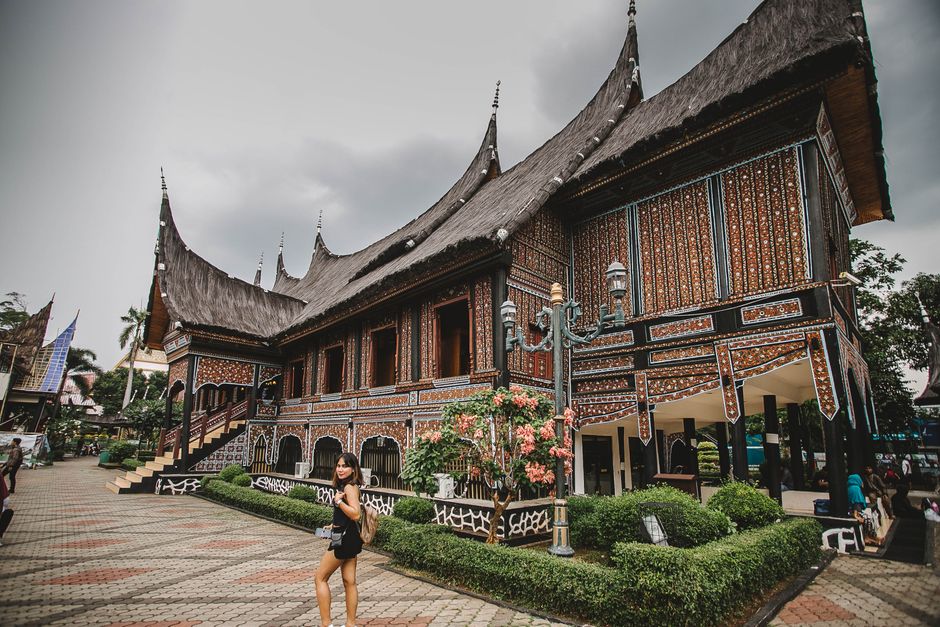
Beautiful traditional Indonesian building with detailed architecture and a …, Pinrang, Indonesia
Budget Accommodation Guide
Your best bet for true budget accommodation is around Jalan Bau Massepe in central Pinrang, where family-run losmen line the street. Losmen Sederhana Indah offers basic single rooms with a shared mandi and fan for $6.50 (IDR 100,000) per night. It’s not fancy, but you’ll get a clean mosquito-netted bed and a welcoming host who might offer you coffee and homemade pisang goreng in the afternoon. Travelers often comment on the warm hospitality here.
For a step up, try Homestay Pinrang Permai on Jalan Andi Mappanyukki, where a private room with AC and cold shower costs $12.00 (IDR 185,000) per night, including a simple breakfast of nasi goreng and tea. The family runs a small convenience store downstairs, so you can grab snacks and water without marked-up prices. Book ahead during the week of August 17th (Indonesian Independence Day), when local celebrations fill rooms quickly.
The safest area for budget travelers is within a 500-meter radius of the main market. It’s well-lit, has a police post at the corner of Jalan Lasinrang, and is walking distance to the night market and most warungs. Avoid the far eastern outskirts near the port area, which can be quiet and poorly lit after dark. For easy booking, check Booking.com or browse rooms on Airbnb, though walk-in rates are often cheaper—cash is king in Pinrang.
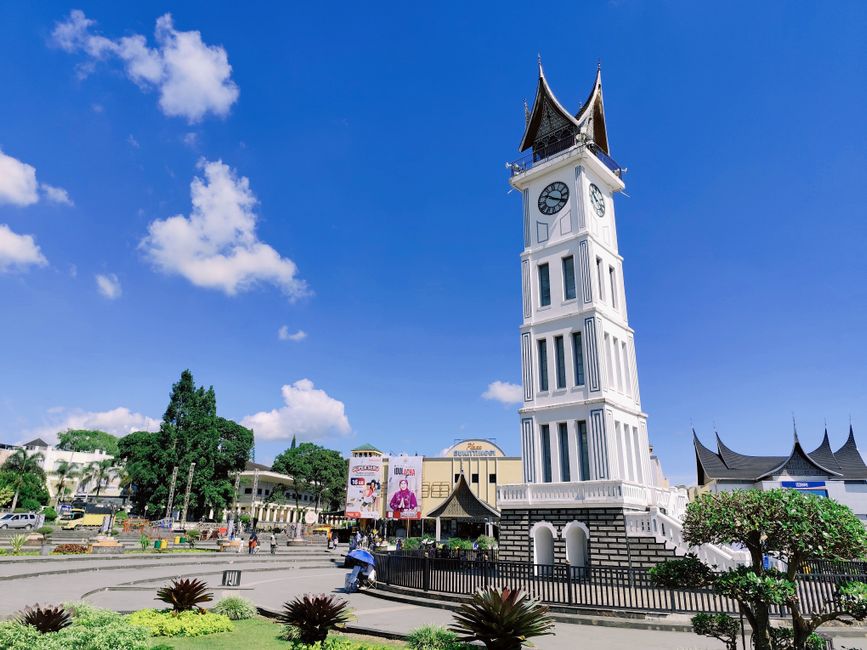
Scenic view of the iconic Jam Gadang clock tower under a blue sky in Bukittinggi, Pinrang, Indonesia
Money-Saving Tips Specific to Pinrang, Indonesia
- Bring cash in small denominations: ATMs in Pinrang are limited to two—Bank BRI at Jalan Bau Massepe and Bank Mandiri at Jalan Jendral Sudirman—and they often run out of cash on weekends. Withdraw at the airport in Makassar before you leave, and break large notes (IDR 100,000) at a shop or warung before visiting smaller market stalls. You’ll avoid the “no change” problem that can leave you unable to buy even a bottle of water.
- Eat where the workers eat: Look for warung with plastic chairs and a constant stream of local laborers. The busiest ones are almost always the cheapest and freshest. A good rule of thumb: if you see more than five parked motorbikes outside at lunchtime (12:00–1:00 PM), it’s a winner. You’ll save up to 40% compared to the few places targeting tourists.
- Use angkot like a local: Shared minibuses (angkot) charge a flat rate of $0.20 (IDR 3,000) per ride within town. To pay the local price, hand over exact change and say “satu” (one) for one passenger. If you hand over a large bill, drivers might assume you’re paying as a tourist and keep the change. Seasoned travelers carry a small pouch of coins for exactly this reason—it saves you $0.10 to $0.30 per ride.
- Buy your water in bulk: A 600ml bottle at a convenience store costs $0.20 (IDR 3,000), but a 1.5-liter bottle from a warung is just $0.30 (IDR 5,000). Better yet, refill at your guesthouse—most losmen have a dispenser with free drinking water. You’ll save about $0.50 per day, which adds up to over $3.00 in a week—enough for a feast of sate.
- Time your visit for Friday markets: Every Friday morning, the village of Lompulle (15 minutes by angkot from town) holds a traditional market where farmers sell direct. You’ll find fresh fruit like mangosteen at $0.80 per kilogram and cocoa beans for $1.50 per kilogram—both about half the price of the central market. Travelers who arrive by 7:00 AM get the best picks, and the experience is a beautiful glimpse into rural trade.
Is Pinrang, Indonesia Worth It on a Budget?
Honestly? If you’re looking for a polished tourist infrastructure with English menus, guided tours, and sunset cocktails, Pinrang is not your place. You’ll miss the convenience of Western-friendly amenities, and you’ll need to rely on your phone’s translation app to order meals. But if you want to experience a slice of Indonesia that hasn’t been sanitized for visitors—where the rice terraces are empty of Instagrammers, the markets are for locals, not tourists, and a genuine smile from a farmer is worth more than any attraction—then Pinrang is an absolute steal. Compared to the well-trodden budget routes in Yogyakarta or Bali’s Ubud, you’ll pay about 60% less for accommodation, and you’ll get a level of authenticity that money can’t buy in more developed destinations. For a budget traveler who values realness over comfort, Pinrang delivers a richness that no splurge day could ever match. Pack your patience, your curiosity, and your cash—adventure awaits in South Sulawesi’s best-kept secret.

