
Pelion, Greece for Adventurers: 7 Trails That Put the Alps to Shame (2026)
Your boots crunch on ancient stone pathways as the Aegean Sea glitters a thousand feet below. Salt-spray from hidden coves mixes with the scent of pine and wild oregano. You’ve just crested a ridge on the Centaurs’ Path, and the view stretches from Mount Pelion’s cloud-scraping peaks down to beaches that rival any Caribbean postcard. This isn’t a postcard—this is Pelion, where every switchback reveals a new challenge and every descent promises a plunge into turquoise waters that will leave you breathless.
The Main Event: The Centaurs’ Trail (Mt. Pelion to Milies to Kala Nera)
Your best bet for the quintessential Pelion adventure is the legendary Centaurs’ Trail, a 22-kilometer route that drops from the mountainous village of Milies down to the coastal gem of Kala Nera. Travelers often discover that this trail combines everything Pelion does best: ancient cobblestone paths, dense forests of plane and chestnut trees, trickling waterfalls, and a finish line that ends with a swim in the Aegean. Start at the picturesque square of Milies, where the 18th-century church of Taxiarches stands as your landmark. The trail is well-marked with red dots and takes roughly 5 to 6 hours at a moderate pace. Difficulty is moderate—you’ll tackle about 800 meters of descent with some steep, rocky sections that demand sturdy footwear. Best time of day is 7:00 AM to beat the midday sun; by 1:00 PM, you’ll be ordering fresh octopus at a seaside taverna in Kala Nera. Cost is free, though locals recommend paying €5 for a detailed trail map from the Milies tourist kiosk. What to bring: 2 liters of water per person, a swimsuit, and hiking poles for the descent. Insider tip: Just past the halfway point at the Agios Georgios chapel, take the 15-minute detour to the left to find the “Hidden Waterfall”—a 12-meter cascade where you can cool off in a natural pool completely invisible from the main path. Seasoned travelers know to pack a dry bag for this exact reason.
Activity #1: Sea Kayaking at Mourtias Beach
If you want to explore Pelion’s famously dramatic coastline from the water, sea kayaking at Mourtias Beach is your must-do. Located on the eastern coast, about 15 minutes by car from the village of Tsagarada, Mourtias offers a pebble beach launch point that puts you directly into a marine wonderland. Book with Pelion Sea Kayak (€45 per person for a half-day trip, including gear and a dry bag), and you’ll paddle south along cliffs that drop straight into crystalline water. Your guide will point out sea caves, hidden arches, and the occasional monk seal if you’re lucky. The route covers about 6 kilometers round trip, with stops at two remote beaches—Lemonies and Mikro—that are only accessible by water. Difficulty is easy to moderate; you don’t need prior experience, though you should be comfortable with 2 hours of continuous paddling. Best time is 9:00 AM when the sea is calm and the light hits the cliffs perfectly. Locals recommend bringing a snorkel mask because the water visibility exceeds 20 meters in summer. Savvy visitors know to ask for the “sunset paddle” option (€55) from June through August—you’ll watch the sun sink behind Mount Pelion while floating on glassy water, an experience that alone is worth the trip.
Activity #2: Canyoning at Loutsa Gorge
For pure adrenaline, nothing in Pelion compares to canyoning through Loutsa Gorge. Located near the village of Argalasti, this 1.5-kilometer-long canyon drops 200 meters through a series of waterfalls, natural slides, and plunge pools that will test every ounce of your nerve and agility. You’ll book through Trekking Hellas Pelion (€70 per person, all gear included—wetsuit, helmet, harness, and neoprene socks). The adventure begins with a 30-minute hike to the canyon entrance, then you’re in it: rappelling down a 15-meter waterfall, sliding down a polished granite chute into a deep pool, and jumping from ledges up to 8 meters high. Difficulty is hard—you need good upper body strength, no fear of heights, and comfort in deep water. The full experience takes 4 to 5 hours, and the best months are May through October when water temperatures are tolerable even without a wetsuit (though you’ll wear one anyway). Insider tip: bring an old pair of sneakers or water shoes with good grip—the rocks can be slippery, and your rental gear includes everything except footwear. Travelers often discover that the final jump—a 10-meter plunge into a pool called “The Blue Eye”—is the moment that separates the brave from the timid. Take a breath, commit, and the rush is unmatched.

This is a a picture of a Natura 2000 protected area with ID, Pelion, Greece
Refuel: Where Adventurers Eat
After a day of exertion, your body deserves proper fuel, and Pelion delivers some of Greece’s most satisfying post-adventure meals. First stop: Kritsa Taverna in Tsagarada, a family-run spot that locals recommend for its legendary spetzofai—a spicy sausage and pepper stew cooked in a clay pot. A generous portion costs €12 and pairs perfectly with a cold Mythos beer (€4). The owners, Maria and Yorgos, treat every customer like family, and you’ll find yourself lingering long after the plates are empty. Second: Taverna O Vangos in Milies, directly across from the trailhead. Their kleftiko (lamb slow-cooked with lemon and oregano, €14) is the stuff of legend—tender enough to eat with a spoon after a 6-hour hike. Third: Akrogiáli in Kala Nera, right on the waterfront. Order the grilled octopus (€16) and a Greek salad (€8) while you watch the sunset. Travelers say it’s the perfect reward for finishing the Centaurs’ Trail. For a quick, cheap breakfast before a big day, Bakalogiannis Bakery in Portaria sells incredible bougatsa—warm phyllo filled with cheese or custard—for just €3. Grab two and a coffee (€2) and you’re set for hours of adventure.
Base Camp: Where to Stay
Active travelers need a base that understands early starts and gear storage. The South Pelion Villa in Argalasti is a top pick: a restored stone mansion with a dedicated gear room, a kitchen for pre-dawn breakfasts, and direct access to the Loutsa Gorge trail. Double rooms start at €85 per night on Booking.com. For mid-range comfort, Hotel Archontiko in Tsagarada offers a generous 6:30 AM breakfast buffet (included in the €65 room rate) and a garden where you can stretch after hiking. The owners are locals who personally mark trail maps for guests. On the budget end, Camping Mourtias sits right at the kayak launch beach and offers tent pitches for €15 per night, plus basic cabins for €35. They have hot showers, a communal kitchen, and a bonfire pit where travelers swap stories. Book your stay on Booking.com for the best rates, especially in July and August when Pelion fills up.

A group of buildings next to a body of water, Pelion, Greece
Gear & Prep Checklist
- Sturdy hiking boots with ankle support—trails are uneven and rocky
- Dry bag (10–15 liters) for water, phone, and snacks on water-based adventures
- Quick-dry clothing—you’ll alternate between sweating on trails and swimming in the sea
- Fitness requirement: you should be comfortable with 5–6 hours of continuous activity at moderate intensity. If you can hike a 10-kilometer trail with 500 meters of elevation gain, you’re ready for Pelion’s top adventures
- Safety consideration: trail markings can fade after winter storms. Download the offline map for each route on Maps.me before you go, and always carry a whistle and a headlamp—even for day hikes, because Greek sunsets come fast in the mountains
Getting There & Around
- Flights: Fly into Thessaloniki International Airport (SKG) or Athens International Airport (ATH). Thessaloniki is closer—a 2.5-hour drive to northern Pelion. Book your flights at Skyscanner
- Local Transport: Your best bet is renting a car from Thessaloniki airport (about €35 per day with rentalcover.com). The mountain roads are winding but well-paved. Alternatively, KTEL buses run from Volos (the gateway city) to major Pelion villages like Portaria, Tsagarada, and Milies—€4–€8 per ride. Taxis from Volos to trailheads cost €20–€35
- Best Season: May–June and September–October are ideal: trails are dry, temperatures range from 20–28°C, and crowds are thin. July–August is hot (35°C) and busy, but you’ll have reliable sea conditions for kayaking. November–April sees rain and snow on higher trails—only for hardcore, well-equipped adventurers

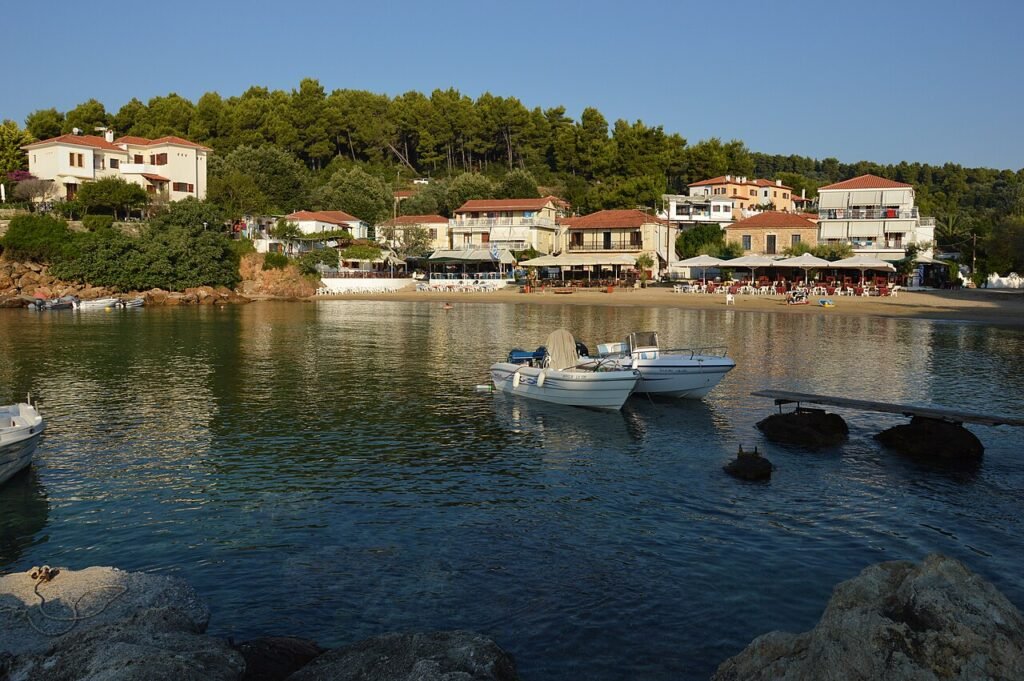
A body of water with boats on the shore, Pelion, Greece
Is Pelion, Greece Worth It?
Honestly? If you’re the kind of traveler who needs nightlife, beach clubs, or all-inclusive resorts, Pelion isn’t for you. But if you want to earn your swim with a sweat-soaked hike, if you crave the quiet thunder of a waterfall after rappelling into a canyon, if you believe the best meals taste like victory—then yes, Pelion is absolutely worth it. Compared to better-known Greek adventure destinations like Crete or the Zagori villages, Pelion offers a unique blend: mountain trails that meet the sea, a fraction of the crowds, and a mythological atmosphere that makes every ridge feel ancient. Your best alternative is the Mani Peninsula, but Pelion edges it out for variety of activities in a compact area. Specific recommendation: book a 5-day trip, base yourself in Tsagarada, and do the Centaurs’ Trail on day two, sea kayaking on day three, and canyoning on day four. You’ll leave with sore muscles, a full heart, and a new standard for what an adventure destination can be. Book your flights, pack your boots, and go before the secret gets out.

